The Oxen

As stories go, the Christmas birth story as it has been accumulated through the centuries is quite the thing, isn’t it? Let me be honest with you: the overall theological interjections, who Jesus is, what he means, what is his relationship with what is a godhead are philosophical questions. Perhaps they are of supreme importance (some believe this so), but philosophy makes my head hurt. I may be an indifferent singer, but as a poet or poetry audience it’s the song that attracts me. Music, even small music, is sensory, it resonates. And if one takes all the things that have been added to the Christmas story, it’s the shepherds in the field, not the big angelic hosannas or even salvation — it’s the details that grab me.

One of my favorite Christmas posts by this project was my adaptation of Longfellow’s “Three Kings”  from three years ago. My adaptation focused on a new mother watching the breathing of her infant while the wisemen wizard’s gifts are explained in eschatological terms. What a contrast that is!

This year I decided to set this decidedly rural Thomas Hardy poem “The Oxen.”  which deals with one of the miracles that have been added as details to the Christmas manger scene. Hardy brings a novelist’s gift to his poem. His Christmas birth story is told as a story within a story within a story: countryside English children of Hardy’s youth’s era being told around a fireside that since there were stabled oxen in attendance to the Incarnation on the first Christmas, they and their kin were struck then, and ever after on its anniversary, with the need to kneel and worship the babe.

The speaker in the poem, telling us of being told this story is savvy. He recalls that no child on that hearthside wondered if the elder telling the tale had made it up. Those workaday adults seemed to have no time for authoring fantasy tales — and, in point of fact, they didn’t make it up. Like all great folklore, it’s a miracle of which we don’t know the author of.

So, the poem closes with two Christmas miracles: the cattle bowing in worship every Christmas Eve as midnight comes, and the miracle of plain, ordinary folks telling a joyous tale. Hardy closes by saying he wants the continued promise of those miracles.

Manger 6

The ox may be worshipful, but the donkey may just be asking when baby Jesus can get out of the hay supply

.

As so often with things these days I had to set this poem to music quickly. As quickly as I wrote the music, I then had to wait for a couple of days for when the unscheduled time came that I could record it. I had trouble fretting the guitar that afternoon. I had had to scrub my hands hard to remove grease and dirt from doing some bicycle maintenance earlier that day, and my fingertips were still softened, a bit raw, and not ready for the wires. Still, I managed to get the basic tracks down. I added the rest of the parts you can hear in the performance below with my Little Plastic Keyboard which didn’t challenge the fingers so much. The sound I wanted to add, even in the drum parts, was bell-like — Clarence-angels getting their wings — but listening back to the result I think, unconsciously, I was recreating some of the sound of “Tim Hardin 3 Live in Concert,”  a document of a gig the addicted singer and guitarist performed so high, despite it being a recorded date, that the skilled Jazz musicians playing with him had to dance en-pointe to try to follow him. That tension, that seeking concord, that going to the stable expecting a miracle and dealing with what one finds instead, is to me the very spirit of Christmas.

You can hear my performance of Thomas Hardy’s “The Oxen”  with the audio player gadget below. No player to unwrap? This highlighted link is another way to hear it, as it will open a new tab with its own audio player.
Does your garden have ghosts, part 2: Hardy’s “The Shadow on the Stone”

Yesterday in our Halloween Series I mused on the appearance of ghosts in a garden with Millay’s blithe apparition. As I present today’s musical piece adapted from literary poetry, Thomas Hardy’s “The Shadow on the Stone,”  let me start by asking questions. Many others will follow.

Do you want to see a ghost? Is that wanting part of what makes it appear?

Hardy’s poem is poised in that first question. As I have performed it as a song with music that I wrote for it, I should wonder if the words are clear enough in themselves to tell us what the situation is. Looking at the text of Hardy’s poem, I think it’s mostly self-sufficient in that regard, though some mystery (possibly useful mystery) remains if nothing else is explained.

When I first presented this in 2021, I went into the biographical specifics that engendered this poem, but for today let me just say that the “she” that the ghost is supposed to be is Hardy’s dead wife who was completely estranged from him before her death.  Nothing in the poem spells that out, nothing tells us that when living she had grown to find Hardy completely unsuitable. Well nothing, save for a line that we can hear as modern idiom that Hardy may have intended only as a brief metaphor: “Her behind me throwing her shade.”

The Shadow on the Stone illustration 1024

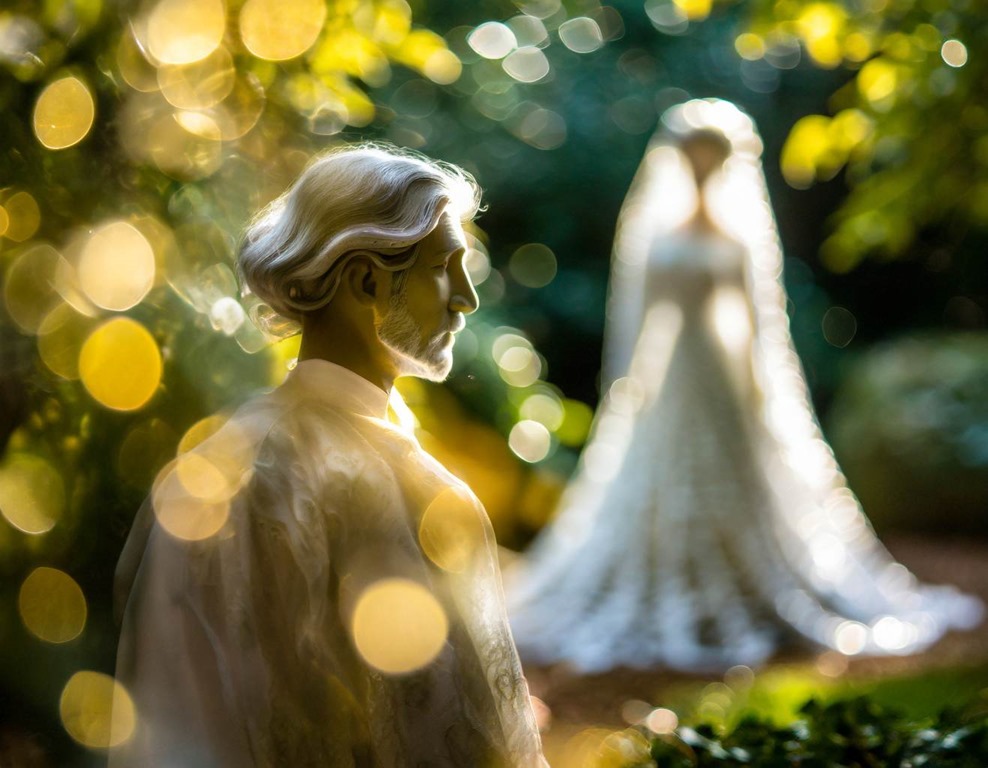
Ghost from a machine: illustration from Adobe Firefly, the AI engine that proclaims it doesn’t use uncompensated artists work.

.

Such a complex ghost, or a wish for a ghost, this is!

Does Hardy want to see the ghost? Does Hardy fear to see the ghost? Can either of them speak? Are either of them changed from what they once were? Is he haunted by her, or haunted from her? All the answers are all the answers here. The curly shape of the question mark the shifting curve of an ghost manifesting.

Spontaneously when doing the vocals for this piece I decided to throw in some more answers at the end of my song in the form of “inline epigraphs” that Hardy didn’t include with his poem, but this performer did.

You can hear my performance of Thomas Hardy’s “The Shadow on the Stone”  with the audio player gadget below. You don’t see a player?  This highlighted link will make one appear in a new tab.

.

Thomas Hardy’s “Transformations”

If you’ve noticed I’ve been gone for a while, I have as well. The last few weeks have had a lot of other things to attend to. Mostly happy things: travel, and work around the teenager’s graduation from high school. Still, I found myself picking up a book from my teetering “plan to read” pile that I thought would be mildly diverting:  Donald Hall’s Old Poets. This book is a hybrid, like one of my favorite books from last year, Lesley Wheeler’s Poetry’s Possible Worlds.*   Like Wheeler’s book, Hall’s book contains some memoir elements mixed with consideration of poets the writer knows, and from there the qualities and connections of poetry and poems with the poets. Hall’s memoir material covers the bildungsroman years, that life era of a few posts about my life I’ve done this spring, while Wheeler’s examines her relationship to her parents and poets well into midlife. The time settings of the two books are different: Wheeler more in this century, Hall centered around the last midcentury.

Here’s something I found striking in Hall’s accounts from his time and place. As an undergraduate he had access to not just his Harvard contemporaries** but to Robert Frost and T. S. Eliot. Since a good portion of Hall and my lives overlap, Hall being only about 20 years older, I found it strange to read that as a 20-year-old he had a series of informal interactions with these two while they were giants in a way that no poet today is. The effect was scarcely less shocking than some SF novel where the author dines and discusses poetic topics with Shakespeare, Milton, Keats, and Whitman. I suspect much of Hall’s access is due to Ivy League effects, whereas I think today’s poetry scene is more decentralized even while being more academic/MFA connected. If I was 20 in 1949, I would have been as likely to repeatedly meet the two great poets as I am to contact them by Ouija board today.

Hall’s book has 6 sections devoted to 7 poets, including ones on Frost and Eliot. Hall’s portrait of the older Frost is particularly vivid and special, while his stories of drinking with Dylan Thomas are less unique.*** Yet, within his Thomas chapter, Hall dives into why Dylan Thomas’s poetic stock fell off by the end of the century. Hall reveals that Thomas himself told him that he had only written about three good poems.**** The one Thomas poem we all think of, the villanelle whose refrain has become memeable, was not one of those three. Thomas and Hall agreed over potent-potables that “Do Not Go Gentle Into That Good Night” was only a skilled attempt to put on Yeats’ coat.

Now to get on to today’s new audio piece. Hall compares one of the poems Thomas thought was one of his best early works unfavorably to a poem by Thomas Hardy, and Hall’s Thomas chapter gives us that Hardy poem, “Transformations”  in full.

If reading Hall’s book was to be a portable replacement for work on this Project, that Hardy poem was stunning enough to cause me to try to get something composed and performed in the spaces between other things this week. Hardy’s “Transformations” is an account of the experience of a non-spiritual approach to immortality — not to life after death, but life as a thing that only changes form, of which we as people are only incarnations. Here’s a link to the text of this poem.

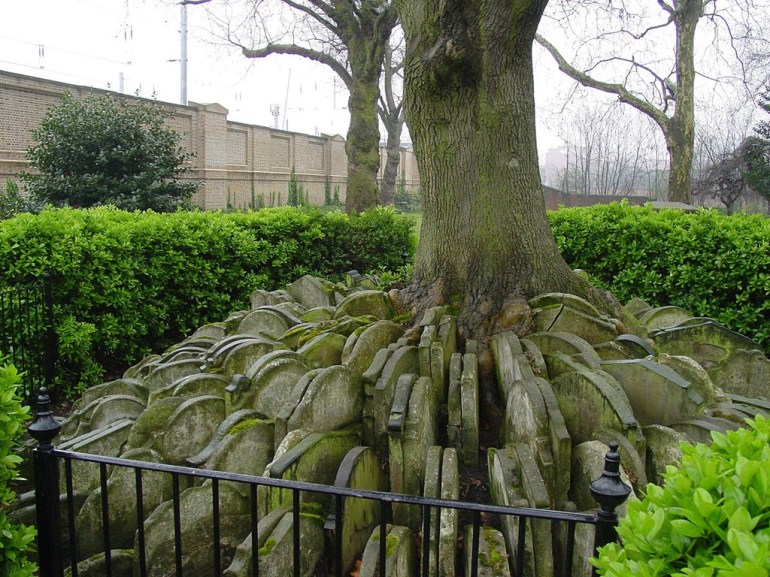
Hardy himself worked out this method of consolidating a graveyard’s worth of tombstones, and it makes a striking illustration for his poem.

.

Hardy, an Englishman born of the middle of the 19th century drops in but one or two anachronistic words in this poem — but while “grandsire” doesn’t sound natural on a 21st century American’s lips, the gist of this metrical and rhymed poem is easily singable in 2023 I thought. Down went Hall’s book and up went the efficient composer! I whipped up the music quickly. Long time listeners here will know that my music is usually not harmonically complex, but my simple cadences often try to confound the usual chords and progression resolutions. I hope I’ve done that with this one. The time to record the piece was scant, so I went with my go-to “I may have to hop a freight train shortly” folk music standby, the acoustic guitar and overdubbed a quick bass guitar part. You can hear it with an audio player below — or if you can’t see that graphical device, with this backup link that will open a new tab with its own audio player.

.

*Few click hyperlinks, so let me put this in a footnote. Wheeler’s book has these additional reasons to read it beside just being good: its story and poetry is contemporary, and as a writer and a woman Wheeler focuses on elements of our lifetime journeys that other poetic memoirs gloss over. Here’s those hyperlinks: Wheeler’s book. Hall’s book.

**Hall’s Harvard classmates circa 1951 included Frank O’Hara, Robert Bly, Adrienne Rich, Kenneth Koch, John Ashbery, and others. Eliot — and to a trivial extent, Frost — were Harvard alums. My personality, alas, is not socially skilled, but even at my most sociable, my circle of working-class Lake Street poets and state college teachers in my 20s is not as name-dropingly famous.

***It’s possible that everyone even vaguely literary in sundry metropolitan areas around this time had drinking with Dylan Thomas stories, even if Hall’s analysis of Thomas’ poetry is individually savvy.

****In his Eliot chapter Hall says that Eliot said more than once to him that no poet knows if their work is any good. When Eliot said this in an interview Hall did with him that was destined for print in a literary magazine, that statement was cut because it seemed too down-beat.

Winter 2022-2023 Parlando Top Ten

It occurs to me that it may have been a while since I’ve reminded new readers what the Parlando Project is, has done, and tries to do. It started as an idea around 2015 to focus on something I’d done off and on for decades: to combine other people’s words, usually literary poetry designed to be seen on silent pages, with a variety of original music.

I did this not only because I think it’s fun, but because the process allows me to more deeply absorb some sense of what the poets are trying to convey. At least for me, I can read a poem with my eyes and sense that there’s something wonderful there — but then to read it aloud, perhaps even to sing it, allows me to inhabit it, to visit the environment inside it, as if one is deep inside some forest, awash at a water-brink, or walking down its street or inside some meaningful building.

Reading a poem silently is like looking at a picture. Performing it aloud is painting the picture with the words still wet.

Early in the Project many of these performances were with others, most often my long-time musical partner Dave Moore. For a number of reasons those opportunities have decreased. These days the typical musical setting here is composed, and all the parts played or scored, by myself. I’ve done a handful of pieces in the Project without instruments, but that’s unusual. I think that even though they are played by a one-man-band I want the words to have companions. Even the loneliest poems can have these here.

I do these pieces myself, not because I have great confidence or a high appraisal of my musicianship. Far from it. I compose and play the parts because I’m available. I’m an amiable contractor to myself, I enjoy playing different instruments, and I’m unafraid to dive into a variety of musical environments. My estimate is that most musicians who hear what I produce for the Parlando Project are unimpressed by this work, in that I almost never get responses from them when they are exposed to it.*  My guess is that is because I use simple ideas, and my realization of even these basic conceptions via my own playing has imperfections. My musical “thing” is more at participatory folk music or the punk/indie ethos — and though I try to produce good work here, and I’ve put effort into that, I don’t consider many of the Parlando Project pieces the best realization they could have. When I’ve taken to putting up chord sheets of some of the simpler acoustic guitar pieces here in the past year, I’m thinking that a better singer or player might take them to a better musical place.

Hepcats of Venus

Imaginary band gets down in beatnik cellar. Illustration shows my younger self & spouse in the center. W. H. Auden taps his cig on the ashtray in the foreground. Behind the drummer, Gertrude Stein considers Virgil Thomson.

.

Now let’s get on to a brief rundown of the Parlando pieces that were most liked and listened to this past winter. I do this countdown style, from 10 to the most popular. The highlighted titles are links in case you’d like to see what I wrote about the pieces when I first presented it.

10. All Souls Night by Hortense Flexner.  Long-time readers here will know I like to go beyond “Poetry’s Greatest Hits” here, and this spooky piece by a little-remembered author from the time of WWI continued to be listened to long after Halloween.

.

9. “Uncle Sam Says” by Waring Cuney.  This one, jumping forward to the WWII era, is almost cheating, as Cuney, a friend of Langston Hughes, engaged here in straight-out songwriting with bluesman Josh White. I’ve been playing a bit more bottleneck slide guitar this winter, and that’s what I used to accompany this message song about a segregated military.

.

8. “Now Winter Nights Enlarge” by Thomas Campion.  Speaking of songwriters: poet, musician, and Elizabethan-age physician Campion also intended this to be sung — although, as with “Uncle Sam Says,”  I didn’t use the original music for my performance.

.

7. “The House of Hospitalities” by Thomas Hardy.  A poet who spanned significant chunks of the 19th and 20th centuries, Hardy was well-versed in poems of rich remembrances, as in this Christmas season memory of holiday celebrations past and gone.

.

6. “I’m Sorry for the Dead Today” by Emily Dickinson.  One of three appearances by this crucial American genius, this one a jolly remembrance of a cooperative harvest time in Amherst.

.

5. “I’m Afraid to Own a Body” by Emily Dickinson.  An opening line or two in a poem can grab even the most inattentive reader sometimes, and this poem’s opening pair of lines certainly did so for me this winter.

.

4. “Fairy Song” by William Butler Yeats.  Like many a Yeats poem, this one beguiles you and me with its lovely word music. Then I read the play whereupon the poem appears and discovered that its context is exactly that for the song’s singing fairy: a beguiling away of a distressed person from their heart, hearth, and home. That wind that opens this poem is chilling once you know.

.

3. “I felt my life with both my hands” by Emily Dickinson.  I cannot say authoritatively what Dickinson intended the context of this poem to be, but I read it as an examination of body dysphoria, though I’m unsure if anyone else has “read” her poem that way. As I have sometimes done, I’ve performed this with what I call an “Inline Epigraph,” quoting a line from a Lou Reed’s song “Candy Says”  before the concluding section of Dickinson’s text in my performance. I often think of poems as being in conversation with each other.

.

2. Railroad Avenue by Langston Hughes.  I spent an enjoyable but inconclusive time searching for the “real” Railroad Avenue, thinking it could be like Van Morrison’s Cyprus Avenue or a NYC address in a Frank O’Hara poem. Couldn’t find it. May be it’s only mapped in Hughes’ imagination, a construction for the purposes of the poem. Long-time reader rmichaelroman reminded us in comments that America’s separations often are lined by being right in one’s memories from the “wrong side of the tracks.”

.

1. “I’m Gonna Make Love to my Widow ‘fore I’m Gone” by Frank Hudson.  Another bottleneck guitar piece that readers and listeners liked a lot this winter. Well — a self-penned piece about good old-fashioned winter randiness made it to the top of the Top Ten. Go figure. They’re talking single digit wind-chills and a March snowstorm as this week ends up here in Minnesota. Codger cuddling is carbon-free heating people!

.

.

*I ascribe this to politeness on their part. I tell myself that I overvalue the audacity and aims of what I do, when simple competence with simple ideas might be preferable.

The House of Hospitalities

It’s Christmas morning, and besides spending time with my little family, I spent Christmas Eve wrapping a little present to myself and to you, reader and listener. It’s a poem by British poet Thomas Hardy, who has supplied several texts for pieces by this Project. “The House of Hospitalities”  is wistful, even melancholy, but I think its heart is in memories — which after all, each Christmas gives and becomes. That’s what we seek out, make, and gift wrap: memories of each other, of each other’s gifts and presents.

Hardy writes using some older words and phrases, a few seeking the rhyme here, and the nostalgic sentiment in his poem might remind us that he lived, and lived past, the Victorian age in Great Britain when some of the Christmas traditions that are still part of observances of this day emerged. There’s hearth, food, company, and music in this Christmas memory, but like a good 20th Century Modernist Hardy tells this story in things, not labels. Note the absence of words naming emotions in this old man’s poem. Oh, “tired” appears in Hardy’s second stanza — but I can testify as a fellow old man that tired is not a verb or adjective, it becomes a very noun in later life. His word-music is graceful, but careful readers of Hardy’s text* that I sing here will notice that I modified it a bit to fit the song music I made and sang this with.

New Year's Gifts

Music as a gift: later today I’ll be going out to hear the Midwestern Jazz combo The Bad Plus, a present from my wife.

.

While other members of my little household baked cookies, I worked on composing that music for “The House of Hospitalities.”   It’s a simple tune, but Hardy’s words and my sensibilities didn’t ask for more than that. I played it on an electric guitar as I sang — electric oddly, so that I could keep the sound lower and separate from the household’s other holiday tasks, for Hardy’s poem is solitary save for memories. Then late on Christmas Eve I worked on adding the bowed strings Hardy mentions in the viol that is now home to wood-worms, some treated electric piano, and the tiny lead instrument of the piece you can hear: glockenspiel. I finished after midnight’s noon, Christmas having entered in the dark.

This morning I give it to you to unwrap. You can play it with the graphical player below that most will see. Don’t see that? No problem, here’s an alternative highlighted link that will play my performance.

.

*I need to thank the Fourteen Lines blog who introduced me to this poem of Hardy’s this month. Lots of variety in the poems they share there. Here’s a link to their presentation of it with Hardy’s original text.

Fall 2021 Parlando Project Top Ten, numbers 7-5

Let’s continue our Top Ten countdown of those pieces that you liked and listened to the most this autumn. Regular readers here may not be surprised that death features in some way in each of today’s three poems, as illnesses, infirmities — and yes, folks I’ve known a long time dying — have been part of the year for me.

Everyone that dies or is limited by infirmities is a lesson, one you listen to more richly and intently as you get older. It’s a lesson that makes me press immediately against what limits age has put on me, gives me a sense to use what I have presently before it’s gone. Oh, I am sad that I’ll not hear Kevin or Ethna’s voices again, except in memory or recordings — thin mirrors those. Dave reminds me that it reminds him when I post older LYL Band recordings where he was able to pound and roll the keys. Our family continues to deal with my wife’s mother descending, as politely as she can carry it, into dementia. But those that go before us are meant to teach us. Don’t skip the lessons.

Why Now, Vocalissimus  by Frank Hudson. When I posted this audio piece, shortly after I wrote it, I said right out I wasn’t sure what I meant by it. That state may be unnerving for a writer. After all, aren’t you supposed to know? If you don’t know, how can you present anything vividly to the reader or listener?

Well, there’s a theoretical structure, a mythological structure, that seeks to explain that. It says that we are conduits for muses, external things. We don’t have to be outstandingly worthy, exceptionally preceptive, or precisely eloquent, since we are in this scheme conduits of something outside us. Frankly, this can lead to a lot of bad poetry: inchoate self-expression bearing the costume of inspiration. But then everything leads to bad poetry — all artists fail as I remind readers here often. But what of us readers, us listeners? We fail too, grasping partially what much art conveys.

My understanding of what I wrote back in September has grown as I live with this set of words. Part of our job as living, breathing artists is to carry forward the work of those who’ve left off working. We are not just creators, but also carriers. So, if you write poetry, bring words down onto the page or speak your own words, know that I’m charging you to also preserve and enliven those others who have no voices left to carry the spark. And that’s what I try to do here with the Parlando Project.

My performance of “Why Now, Vocalissimus”  is available below with a graphical player. Don’t see it? Then his highlighted hyperlink.

.

Heidi Randen’s picture of a milkweed husk spoke to me this autumn.

.

6. The Shadow on the Stone by Thomas Hardy.  A complicated ghost story, a complicated haunting. As I wrote when posting this, English poet Thomas Hardy had a dysfunctional marriage — and yet, like many folks forced by fact into the separation of death and mourning, he still felt the returning presence of the intimate dead.

I rather liked the music I composed and played for this one. It has a weird loping groove that I find attractive. To hear the performance, some will see the player, and the others can use this highlighted hyperlink.

.

5. God Made Mud by Kurt Vonnegut.  I decided to present several short excerpts from Vonnegut novels that work as poetry this fall on the occasion of the 99th anniversary of his birth. The LYL Band had recorded them well over a decade ago, on the week Vonnegut died. Why didn’t I wait for the nice, round 100-year birthday? See the start of this post for why.

In Vonnegut’s novel Cat’s Cradle  the text I used here is the last rights of an imagined religion. Like the theoretical/mythological structure of muses directing us to write poetry, Vonnegut proposes a useful if compressed Genesis story that asks us to recognize that the nagging mystery of death is no harder to explain than the overlooked mystery of living at all.

Yes, player gadget below for some, and this highlighted hyperlink for others to hear it too.

.

Halfway through this fall’s Top Ten. The rest will be posted here soon.

The Shadow on the Stone

Because they usually deal with brief moments in time, we sometimes think of lyric poetry as making do with simple thoughts, singular emotions felt distinctly. Today’s piece, English poet Thomas Hardy’s “The Shadow on the Stone”  shows us it can be otherwise.

I suppose one can say it’s a poem about grief, or you could say it’s another ghost story. If it’s a ghost story, it’s poised entirely between belief and disbelief in such afterlife visitations. If it’s a grief poem, and it is that I think, it points out that grief doesn’t mean simple, singular, feelings.

Let me summarize a few things that are biographically behind this poem, even though I think some of its ambiguity can be sensed, felt, and to a degree understood without them.

The poem’s author, Hardy, was married in his thirties* to another woman of the same age. There was something of a romance in their courtship story. She was beautiful, looked younger than her suitor, and loved to ride around the English countryside on horseback. She was a doted-on daughter from a well-borne family that had had some financial setbacks. Hardy was from a tradesman’s family and was not established successfully in a trade or as the controversial author of novels he would become. Not long into the marriage, the wife began to think of this as what would have been called then “a misalliance.” He was beneath her standing after all — and Hardy’s eventual emergence as a novelist of note if anything made her more estranged. She considered herself a writer, while others dismissed her work as all the while Hardy’s began to succeed.

Eventually she moved to the attic of their house, and their emotional separation was an open secret among their acquaintances. In 1912, after more than 35 years of marriage, most spent in estrangement from her husband, she died.**  In going through her attic quarters they was found a manuscript she had been writing. Some accounts give its name as Why I Hate My Husband  and others What I Think of My Husband.***

Emma and Thomas Hardy

For Emma, Forever Ago. Thomas Hardy and pre-ghost-wife wife Emma back in the 19th Century.

.

So, what happens in the moment of this poem, after her death, and after that life-history? Here’s a link to the poem’s text if you’d like to follow along. The poem’s speaker (I’ll just say “Hardy,” as Thomas Hardy was forthright about the subject of his grief poems) is working during the autumn in his garden and sees cast across a “Druid stone”**** a shadow shape which he says in his imagination brings to mind the shadow of his dead spouse when she would garden there. While he says this was “imagining” he’s not completely sure. Those aware of Hardy’s marriage history will hear a particular salience in the statement that the ghost of his dead wife is one “I long had learned to lack.” But this phenomenon, of intimates appearing in the imagination of the grieving is commonplace, and I can say in the experience of myself and my dead spouse, it’s not a simple wistful visitation. If one’s world has been turned upside down, you may not want it to spin some more, even backwards.

In the second stanza this “Is she really here, or my imagining” state is interrogated. Hardy speaks to whatever is behind him casting shadows, and says (perhaps just in case it’s a real, and maybe even a vengeful, ghost) “I’m sure you are standing behind me.” As if he’s conjured up a spirit and he’s letting them know he knows who/what they are, knows their name, and can query it.

The spirit doesn’t respond. I love the ambiguous skeptic’s final two lines here: “I would not turn my head to discover/That there was nothing in my belief.” Hardy wants to not face it  if the spirit is real, not an imagining, and we don’t even know if from fear or love.

Continuing in ambivalence, Hardy says next that he wanted to look  and disprove, a statement that he in action doesn’t do.*****   Instead he leaves the garden without seeking to disprove or confront the spirit or imagining he believes is representing his dead wife. Best as I can tell, the idiomatic expression “throwing shade” is of Afro-American origin. This Merriam Webster note says it was popularized on Ru Paul’s Drag Race  circa 2010, though I’m pretty sure I heard and used it before then. In my performance, I speak it in that meaning, even if Hardy didn’t mean it that way in his time. As in life, Hardy seems to say he must endure and miss his spouse, and so this ambivalence with a possible ghost resonates with his grief.

I mentioned performance above. I started composing here thinking about the Afro-American musical influences on the Velvet Underground, both in rhythm guitar figures and in Moe Tucker’s spare drum kit and approach. If I would have written the drums in this as a jazz-influenced piece, the high-hat would have marked the beat, but there’s no high-hat in this piece’s drum kit, though the tambourine playing does stand in for it somewhat. This didn’t turn out to be a Moe Tucker style drum part after all, but that’s where I started.

My original take had things ending on Hardy’s poem’s final word: “fade” — but overnight I decided it needed a reprise after that hung resolution, and while playing that I decided to riff on some other famous lyrical uses of the word “fade” as a trope of death and persistence. A player gadget is below for some to hear my performance, but if not, this highlighted hyperlink is another way to hear it.

.

*This is fairly late for a first marriage in the mid-19th century.

**She and Hardy were 72 in 1912. This is not one of those stories of the stricken young bride who died long before her time.

***We may wonder just what the real deal was with their relationship, who was meaner or more dismissive to who — and well, the patriarchy and all that may have colored within the lines, as most accounts by men and women seem to paint Thomas Hardy as the aggrieved party in the marriage. Interesting matters — but for the purposes of presenting this poem, beside the point. Flip a few gendered words in the poem, and imagine it being written by a widow who thinks of her abusive or belittling husband after his death.

****I wondered about this peculiar detail. Was this a characteristic English garden decoration, like a birdbath or garden gnome statue? No. A large flattened top stone was found during construction which Hardy thought was an actual Druid stone, perhaps used as an ancient altar. More evidence that while Hardy was a skeptic, the realness of a supernatural “apparition” is meant to be in question — and this may also allude to some metaphoric bone and ash sacrifices the marriage brought to their lives.

*****In a short essay on this poem, Jeremy Axelrod sees an allusion to the story of Eurydice and Orpheus in the underworld. Hardy doesn’t usually use classical Greek allusions in the poems I’ve read, but even if unintended, well, “death of the author” and “archetypes.”

At Day-Close in November

See, just as my son predicted, we’re back with more old dead poets, this time English poet Thomas Hardy. Today’s poem sort of pairs-up with Dave Moore’s piece from last time. Dave directly addressed youth in his song in the context of the cycle of generations, with the newer ones sure they’ve figured out something the old generation hasn’t—which is sort of true, at least enough to allow them the audacity to change things.

Hardy, in this fall poem written late in his life, isn’t so sure, but then Hardy never is. In the Hardy poems I’ve presented he’s very aware of the cycles of things, and he barely accepts that those eternal circles could have any inclined plane to their returning paths.

Thomas Hardy close up

That’s a prodigious cookie duster you got there Mr. Hardy.

Here’s the full text of Hardy’s “At Day-Close in November”  if you’d like to follow along as I discuss how I experienced it.

Since we’ve done so many autumn poems this year, we can see Hardy checking in with some perennial fall poem tropes: shorter days, birds leaving, colored and falling leaves. Hardy, whose late career overlapped the Imagists, is immediate and unfussy with his images in a modern manner. The one personified natural image in it: the waving evergreens like waltzers, is still not too far from one used by pioneering Imagist Richard Aldington. Note to, there’s not a single interior emotional term used here. To sense what the poet/speaker is feeling we need to take in the images and events.

The second stanza increases the originality, even while using colored and falling leaves. The light-yellow beach tree leaves floating in the air are like relics of the sun in a gray noontime. And as some old guys will recognize Hardy is saying they are also like inter-ocular “floaters,” tiny clouds that develop in the fluid of some aging eyes and drift across vision. The final two lines tell us that the poet/speaker is old enough that he planted trees in his youth that are now tall enough to block the sky in places. There’s some parallelism here: the leaves, like specks in his vision, block some of the sky like the trees he planted in youth do also. The former is transitory, moving, changing, the later seemingly less so.

The last stanza adds some children, who also are moving through the scene. Here the poem does resort to a internal term, though not an emotional one: the children we’re told “conceive” that those tall trees must have always been there (something the poet/speaker knows is not so—I set those damn trees in the ground myself is the implied thought). So those trees are not permanent things, and so like the leaves, like clouds in an old man’s eye after all.

I at first encountered the last line as puzzling, even awkward sounding. There seems to be two versions of the text. The one I found first and used has the last line as: “That none will in time be seen.” Others seem to have it as “A time when none will be seen.” The second version is less awkward and has a parallelism with it’s preceding line “A time when no tall trees grew here.” I had trouble singing that first version, I might have used the second one if I’d seen it before the performance. But now I’m thinking that the awkwardness, even the sense that the poem has ended on a “What’d he say?” note, may have value.

This line’s “none” has a hazy antecedent. I think we’re to first think it’s the children, who are unaware of the transient nature of themselves (something the poet/speaker knows and they don’t). But in the sentence it appears in, the statement can be referring to the trees (which the poet/speaker knows weren’t there until he planted them) that are not permanent.

In what ways are the trees not permanent? Well the poet/speaker is old, he may expect he will not see either those children or the trees he planted for many more autumns. Nor are the trees permanent to the children, rambling through in play. They will grow up, perhaps not stay there, or be at work inside and not outside in the fall air by the trees. I know little about Hardy’s particular English countryside, but is he even foreseeing a modern future where the trees will be cut down for progress? And by extension, is Hardy, taking as is his wont the long view, saying that any work he did in his long life will be forgotten by those children?

Musically, Benjamin Britten has set this poem to music. I listened to two performances which reminded me the problems I sometimes have with art song settings of poetry as a listener: a complex melody makes it hard to inhabit the words with humanity and feeling, and therefore obscures their meaning and makes everything empty decoration. I persisted and found a couple where the singers somewhat overcame these issues with Britten’s setting. Here’s the best one I’ve found so far.


Of the performances I’ve heard so far, Mark Wilde is best able to illuminate the words through Britten’s filigree.

Now of course I don’t mean to knock the skills of Britten as a composer. I could claim that I write music that has a wider variety in some sense, but let’s be serious: I don’t have 1% of Britten’s musical knowledge, or the knowledge of any other reasonably well-known “serious” composer. And as a singer I have trouble rendering even simpler melodies and for this reason I don’t try to write art-song style settings because I have no one handy to sing them.

So, what’d I do instead with my music for this Hardy poem? A rock band with three cranked-up Telecasters wailing away. I suggest you listen to it loud too. The player gadget is below.

The Parlando Winter 2018-19 Top Ten part 2

Moving on now with the most liked and listened to audio pieces from our just past winter. As we’ve done for the past couple of years, we’ll be counting down toward the most popular piece in the next few days.

7. The Darkling Thrush. Those of us in the Northern Hemisphere are now at least hinting at spring, but if you’d like to recall the frailty of a countryside winter, Thomas Hardy has you covered with this, one of his most famous poems. Though I like to vary the musical style I combine with words here, I’ve been working a lot with string and orchestra instrument arrangements recently, and I think this one came out pretty good.


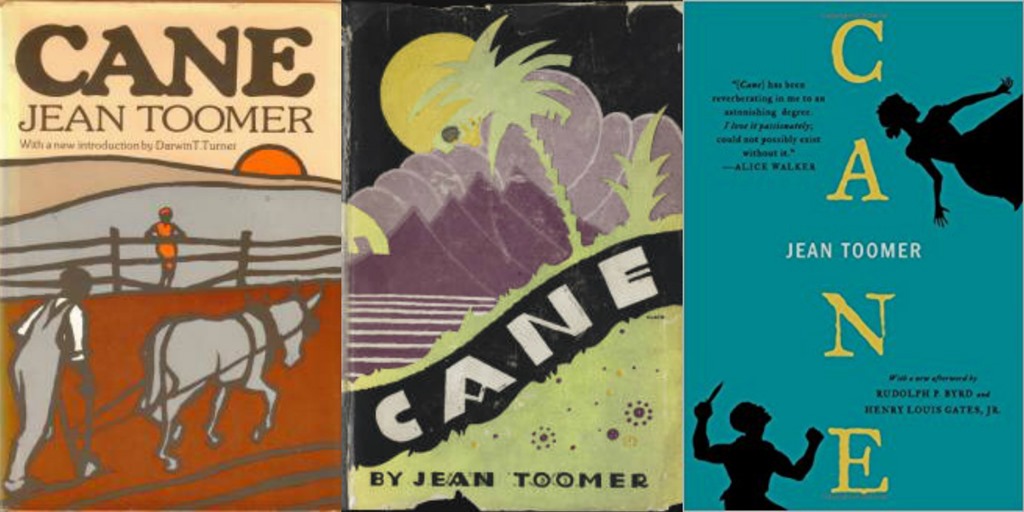
Book Covers of Cane

Can you judge a book by looking at it’s cover? After all, Willie Dixon wrote, and Bo Diddley sang “You can’t judge the sugar by looking at the cane…”


6. Her Lips are Copper Wire. Hardy was also known as a novelist, and Jean Toomer too moved between prose and poetry in his writing, using both of them to great effect in his impressive 1923 book Cane. Cane  is both a set of linked short stories (think Dubliners  or Winesburg Ohio)  and pieces of outright lyric poetry. As one of the poems, this one struck me immediately when I read it.

Cane  is one of those works that have just entered the public domain this year. Because gaining rights to present written work is somewhat difficult, much of what we present is from the 1923 and before era. Instead of strings or woodwinds, I decided to bust out the fuzz-pedal for a guitar solo to cap this performance off.


5. Five Kinds of Truth. You’d think it’s some clever plan to have this one come in at number 5, but I assure you that while the Parlando Project has goals and some principles, we don’t do plans. This was one of the pieces written and voiced by Dave Moore this winter. Dave has contributed to this project from the start, and “Five Kinds of Truth”  is an example of some of the differences he brings to the project. Though Dave wrote this, he was inspired by a fantastic graphic novel (what in my days in the old main street barber shop was called a comic book). The Parlando Project varies not only the types of music we create and play, but we also don’t want to stick to one style of poetry either.

If you like some kinds of musical or literary expression more than others, relax, you’re normal.  If you stick around here you’ll see that we may not present something every time that you’ll appreciate, but what comes next may not be anything like the last piece.

The Darkling Thrush

My teenaged son is proud of his mastery of modern youth slang and enjoys the idea that his parents and their generations will have no idea what such terms mean. This is of course part of the utility of language: it not only binds people together, it keeps them apart.*

No matter, new times and new experiences enjoy making fresh and untarnished words to describe them. Words must have their pleasures, even when we don’t quite understand everything someone is saying. Take Thomas Hardy, a man who wrote what may be one of the last poems written in the 19th Century, after he had spent 61 years in it. Published on or around New Year’s Eve in 1900, today’s piece is “The Darkling Thrush.”  In Hardy’s poem, as an old man looks at the changing of a year and century, we have the reverse of my son’s joy: old words from an old man.

Thomas Hardy Moustache wax abuser
Careful with the moustache wax Tom, you’ll put someone’s eye out!


“Darkling”, “coppice”, “spectre”, “bine-stems”, “lyres”, “outleant”, “illimited”—we meet the first one in the title, the second five words in, the third at ten words. Even if I was to quiz educated Americans, I doubt most could define the majority of these words, and I’m unsure how much better modern British residents would do.**

Coppicing is a European method of managing tree growth, in which mature trees are cut off to allow fresh shoots to continually propagate. Spectre is more known now as a trademark applied to laptops and James Bond bad-guys, but is an English word for a spirit or ghost. Bines are not vines to the knowledgeable horticulturist (bines twist their main stem around things to tangle and climb, vines use special parts of branches to hitch themselves up). Lyres are not supporters of disreputable political movements, but a stringed harp. Illimited is just another, rarer, form of the word unlimited, and I think Hardy may have chosen it because it starts with a sick word, ill, but also puns on illuminated. The titled adjective, darkling is a handy way to say it’s occurring in the dark. Although it’s a little-used word, like illimited, the sound of it brings to mind something else, the smallness of the title bird, as in duckling,  and darkling’s sound also lets us see dusk rather than deep night, when we can still see the winter thicket Hardy sets his poem in.

But outleant is the real mystery word. A short web search finds no online dictionary definitions, no examples of its use other than in Hardy’s poem. A simple deconstruction of the word’s parts would make it, inverted, saying “leaning out.” And that’s what it probably means. There’s textural evidence as it ties back to the poem’s second word, “leant upon the gate” to the coppice. Yet, did Hardy intend to infer two other close words in this word’s sound? Out-lent, a sense that the haunted and dreary winter scene of the poem is owned by the old, dying century and is lent out only to the present? Depending on pronunciation of the printed word’s “ea,” it could conceivably be pronounced out-lent (and Hardy does rhyme it with “lament.”) Does he also want us to hear a closeness to outlearnt, and that the old century’s corpus of belief has been superseded (by newer scientific discoveries?) That would be consistent with Hardy’s beliefs.

Perhaps this is my weakness as a reader, translator, performer and poet myself. If I sense an image is possible, I want to see it, hear it, perform it. Bare winter bines twisted around a copse of brush wood as a corpse leaning out of a coffin may be grisly, but it’s not to me a strong image.*** Even if it’s abstract, the second sense, that of this bare and haunted landscape being the cemetery plot owned by the old century of which we are only visiting seems stronger. For others, the sense that new knowledge has killed off the old beliefs (outlearnt) could be a choice. I can’t know that Hardy intended this ambiguity by choosing this unusual word outleant, but I, the reader, put it there.

The title calls attention to the central image, yet another messenger bird in British poetry, to go with the nightingales and skylarks of Keats and Shelley, poets of Hardy’s now dying century. I like that Hardy lets us see the bird, and it’s frail, gaunt, and -ling tiny, and that we can see feathers fluffed to best insulate its frame, which the wind is disputing.

So, there was Hardy, around New Year’s Eve, using his old and odd words at the end of an old century. For us, Hardy’s oncoming one (the 20th century) has now closed itself. Will things get better or worse in our new year? Something in us wants to foretell at every ending—yet even looking backwards, we have trouble making a simple better or worse judgement. Here, the battered bird, the darkling thrush, says better. Hardy says he knows he doesn’t know.

He knows he doesn’t know is the realist’s version of hope.

Anyway, one of the joys of combining poetry with music is that you don’t have to take a test on the words to enjoy the piece. My pompatus of a performance of Thomas Hardy’s “The Darkling Thrush”  is available with the player below.


*Right now he’s very generous in this however. He wants me to know these words so I won’t be left out.

**Before looking them up, I knew spectre and lyres for sure and I was fairly sure about darkling as an adverb, then taken to adjective. I had ideas (some from context) on the others—and in the case of coppice, my ideas were wrong. My son knew spectre and lyres and defined darkling as “a creature of the night” for which I’ll give half-credit. In the case of bines, I told him I learned how bines were different from vines, and he told me “Sure they are! Vines are 7 second videos.” (That last was a joke on his part.) My wife, a fine word-smith, also got 2.5 (“Bines, it that like a wood-bine?” got half-credit as understanding was there, even if a good dictionary definition it wasn’t.)

***Saplings and bines and “sharp landscape” would indicate a skeletal image is intended, but bare bones are not particularly scary or intense compared to rot and decomposition, much less animated brains-hungry undead. Hardy doesn’t mean scary so much as long-dead I guess. Interestingly, Hardy had a direct graveyard experience to draw on here.