Mr Nelson

It often takes a while to know who has died.

When Prince died a year ago, the shock-wave for fans was breath-taking, the air went out of the room, and for each of them there was something that went missing when they got the word: the promise of new music, a memory of concert or a night of dancing, a period of their youth now seemingly past all reliving, and probably a dozen or more other private things.

If it seemed impossible that Prince had died, it was because it was impossible that he had lived. About him it could be said that he could dance like James Brown, sing like Marvin Gaye, play guitar like Jimi Hendrix, write a song like Curtis Mayfield—and arrange it all, and play it all, and record it all for himself or other artists. He was the most astonishingly broad musical artist of our time.

And he did this over and over, for decades, to the point that no one could ever really keep up with all he did. I suspect the longer time we now have will allow us to discover, in his work, things that are still overlooked, ideas that he had that somehow weren’t understood, things we skipped over because we thought Prince should be doing something else.

Tonight, as I write this, I’m struck by one other thing: has there been enough recognition that Prince was in the vanguard of bringing women instrumentalists into the context of the rock band? Let’s propose a rock band gender integration variation of the Bechdel Test: name a successful band with two prominent women instrumentalists before The Revolution that wasn’t a “all-girl band.1” Every example that comes to mind (and it’s not like there are hundreds of them) stops the count of women players at one. I can think of only two 2, and neither achieved a modicum of the cultural prominence of Prince’s band.

Prince and the Revolution

It’s a little known fact that Prince was about two feet taller than the rest of the Revolution.


And he did it again performing with his late career power trio, 3rdEyeGirl.

That’s just a part of his career of course—but please, this isn’t some kind of rote identity politics thing, or merely a piece of trivia like “Name a band with two left-handed Canadians?”. This is half the human race!

With the Parlando Project I get to audaciously tackle the work of a lot of great writers. I use their words unashamedly and try to find something I can relate to you about their work. For some reason, perhaps because Prince Rogers Nelson embarrasses me as musician, I’ve been hesitant to post this episode, and to share this modest musical piece The LYL Band wrote and performed about his leaving.

But I’m going to do it anyway. The best parts of this piece “Mr. Nelson”  are the work of Dave Moore: most of the words and the electronic piano part. Footnotes at the end of this post for the obsessives. The audio player for “Mr. Nelson” is right below this. You can dance if you want to.


County Joe MacDonald and his All Star BandJoy of Cooking

Guy in the middle isn’t Prince.                  Joy of Cooking, pioneers.

 
1 I exclude the “all-girl band” not to denigrate the talents of those who performed in them, or because a band somehow needs men to be valid, but because however intended, the result in the 20th Century cultural context was seen largely for its novelty value.

2 The two bands I can think of: Joy of Cooking and the Country Joe MacDonald led “Paris Sessions” era All-Star Band.

Experience

Here’s another piece by Dave Moore. Dave plays almost all of the keyboards on the LYL Band music you hear here on this blog, and without his contributions I’d get tired of hearing my own voice all the time myself. Today’s audio piece “Experience”  started out intended as a poem, as Dave explains:

“My friend Ethna mentioned the Common Good Books poetry contest, which paid cash, on the theme of experience.

Naturally the next word in my mind was prurience, which in this version I ‘eschew.’ although I changed the printed version to ‘avoid.’  Still, I love the roll of ‘eschew prurience.’

I set out to state that every moment is an experience, and most of them are accidents, which constitutes the glory of the show.  But – But seriously…
When I brought this lyric to a LYL session, I draped it around a tune, trying to see how the words spilled over the dam.  Thus edified, I tinkered with it some before submitting to Common Good.

Of course, I lifted ‘life is but a joke’ from Dylan’s ‘All Along the Watchtower,’  but it worked so well in the stanza (is it a chorus?) of philosophy. I chose to leave the ‘do’ and ‘done’ lines as ironic music which states the case.

So, am I experienced?  Conclusively, I can say yes or no.”

LYL Are You Experience Faces

“For those of another generation, he’s all but to make fun of,
but they do not understand the experience…”  Eric Burdon

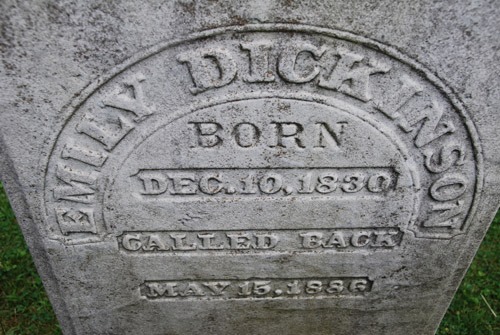
Experience is an interesting topic for this book store’s contest. William Blake titled one of his collections of short lyrics “Songs of Experience,”  after which I cannot think of the word without thinking of Blake—but Blake also put much store in the auguries of innocence. Ralph Waldo Emerson toured the country as a speaker, but his contemporary Emily Dickinson famously constricted her travels as she grew up. Emerson’s mind worked best traveling widely, as in his essays. Dickinson mind produced compressed words pinned in a matrix of her famous dashes, and it’s Dickinson’s poetry that we are more likely to turn to today.  “Like a dream, experience is being where you are” Dave says.

Vinyl lovers, don’t be mislead by the cover shown above, The LYL Band’s version of Dave’s “Experience”  doesn’t feature Stratocasters on fire, which is not say that we won’t do that later. Use the player below to listen to “Experience,”  or some innocent instrument might get hurt.

Maiden with a Lamp

When it was announced that Bob Dylan had been awarded the Nobel Prize for Literature there was a substantial reaction asking if songs could be literature—no, that’s not right, I’m mischaracterizing much of the reaction I read as if it was an honest inquiry into this question. No, the reaction I read was more of a conclusion that songs could not be literature, and so this Nobel award to Bob Dylan was a break with tradition, a loosening of standards.

This is complex subject, one I’ll probably return to, as I have much to say on this; but missed in the hoopla and questioning was this fact:  Bob Dylan was the second singer/songwriter to win the Nobel Prize for Literature.

In 1913 Rabindranath Tagore was awarded the Nobel Prize, the committee citing:

“Because of his profoundly sensitive, fresh and beautiful verse, by which, with consummate skill, he has made his poetic thought, expressed in his own English words, a part of the literature of the West”.

In 1913 when the prize was given, Tagore had only one such work they could be talking about: “Gitanjali,”  a 1912 collection of his song lyrics that Tagore had translated himself from Bengali into English prose poems.

Gitanjali title page 1912

The title page of the original English edition


Tagore is a fascinating man and artist, with achievements in so many fields that you might think I’m making him up. He wrote every kind of literature, started a university, seriously pursued modern painting, and gave Gandhi the title “Mahatma.” But he was no dabbler at songwriting, having written over 2000 songs. He’s even the only composer to score a hat trick for national anthems, having written the national anthems of India, Bangladesh and Siri Lanka.  His songs are so pervasive in Bengali culture that his thousands of songs have become their own genre.

tagore with Gandhi

“Let me lay it on you Mohandas: it means ‘Great Soul.”  Also, there’s this girl in Detroit who I’m going to call the Queen of Soul.”

Poet William Butler Yeats wrote enviously in his introduction to Tagore’s “Gitanjali”  of the power of songs:

“These verses will not lie in little well-printed books upon ladies’ tables, who turn the pages with indolent hands that they may sigh over a life without meaning, which is yet all they can know of life, or be carried by students at the university to be laid aside when the work of life begins, but, as the generations pass, travelers will hum them on the highway and men rowing upon the rivers.”

This spring as I read Tagore’s “Gitanjali,”  I hoped to find there on the page what is promised in Yeats’ introduction and what would normally be guaranteed by such acclaim. I failed at this. I couldn’t find it. The English of the prose translations seemed so archaic, the expression stilted, the voice vague. From accounts I’ve now read, this seems to be an acknowledged problem; and it appears that, for whatever reasons, Tagore purposely framed his translated work in an incomplete way. In the longer term, I will seek some of the newer translations. In the short term, I stood back and remembered something.

Song. These are songs.

Not only are they missing their music, but songs, like plays, are works for individual voices and talents to embody. Their creators are not claiming the real, complete thing exists on the page, that they are performing them mutely with ink on the white page. No, they expect, demand, that someone step in them, surmise their meaning, fill the blank white space with emotions, and speak them.

All art is like this really. Songs admit it. Songwriters generously say: I need you to fill these things, your humanity is better than any of my approximations.

So, today’s episode is the second of my attempts to bring something to a piece from Tagore’s “Gitanjali”  using his original prose translations, as that’s all I have for now.  With the last post here, “Light,”  I tried to meet Bengali music partway, but this time I’m staying firmly in the Western side, maybe even a bit on the Country and Western side. As I read this piece on the page I heard it as sounding like one of those weird Lee Hazelwood arrangements from a few decades ago, but since I was producing this myself, I had to sing the Nancy Sinatra part as well.
 
If you wonder about the floating light ceremony mentioned in the song I call “Maiden with a Lamp,”  it may be this one.

To hear me perform my vaguely C&W version of “Maiden with a Lamp,” use the player below.


I’ll Tell You How the Sun Rose

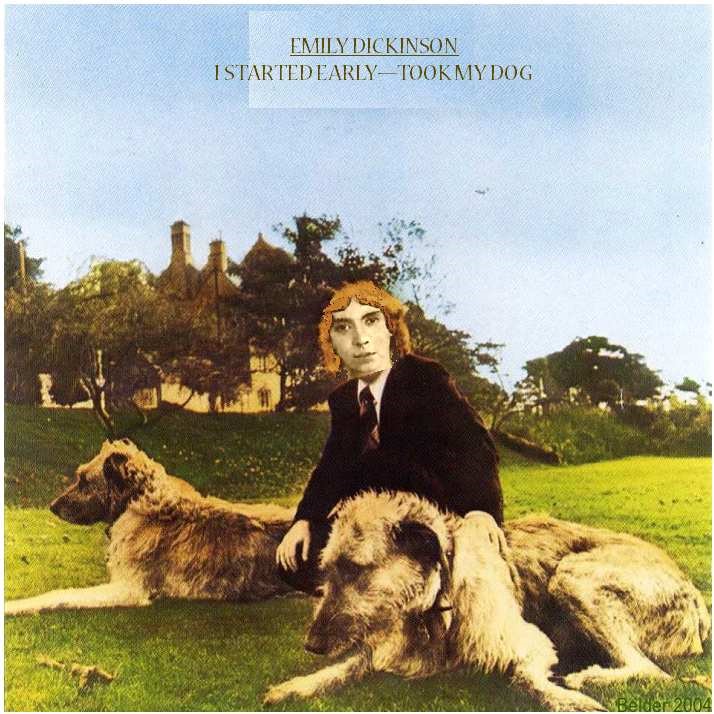
After our short trip to Chinese translation, let’s return again to Emily Dickinson, who is observing another morning.

This LYL Band performance of “I’ll Tell You How the Sun Rose”  is a bit imperfect. Alternative Parlando Project reader Dave Moore takes the lead here, but he and I are singing instead of our usual recitative, and we’re caught at the top of our singing range as well. Dave even bobbles a word in the line “The hills untied their bonnets.” So, yes, this leads to some imperfection—but this lyric is so perfect that perhaps it can carry us along anyway.

I suggest you listen to this piece now and then read my discussion of what I see in it afterward. Dickinson, like a good melody, doesn’t require understanding before enjoyment. The player to hear it is at the bottom of this post.

“I’ll Tell You How the Sun Rose”  begins with a homespun 19th century village dawn, and the singer starts right off almost bragging that they can tell us how the sun comes up. As proof, Dickinson unleashes a string of lovely, singing metaphors for sunrise, looking down from the dawn only once to let us see the squirrels running about as if with the news of the day. She concludes this section with finest simplicity: “That must have been the sun!”

Isn’t that a strange way to sum up dawn? It comes up and it’s already past tense, like Meng Haoran’s morning in the last post, and Dickinson comments on this common splendor as if she’s a surprised alien from another planet who has never seen the sun. Her boast that she can tell us “how the sun rose”—something she and all of us should already know, set in nothing more special than a prosaic town—becomes instead a small, whispered, apprehended wonder.

In the second section, Dickinson shifts gears so smoothly that no matter how many times you read or hear this poem you will never notice. There is a little engagement of the gears as she says of sunset “I know not,” unlike our first gear’s “I’ll tell you;” but we’re soon on to a rural scene with the sun rays like children climbing up and then down a stairway over a hedge or fence row (a stile).  At that point, there’s a bustle in your hedgerow as the dusk becomes a grey robed “dominie,” a strange and archaic word perhaps even in Dickinson’s 19th century, and a sure stumper for any modern English speaker.

A dominie is a Latin word meaning the leader of a congregation, a minister, a pastor—and ‘pastor” is derived from the word for shepherd—and that’s just what our grey dusk becomes as it leads the children of the dawn, now dusk, away like a flock, closing the bars, closing the gate, so that they cannot return.

Some readers are so charmed by Dickinson’s first section that they feel it is pedantic to think that this sunset section is describing a passage to death, “The undiscovered country from whose bourn, no traveler returns,” so no wonder that Dickinson moved from “I’ll tell you” to “I know not.”

That dominie seems so removed from the pleasant village of the first section, so foreign. Another subtle word choice contrasts the two sections. There’s only 88 words in this piece, and five of them are colors. “Rose” puns for dawn pink in the first line and then dawn is “amethyst,” a word for both purple and a semi-precious stone. The sunray children are “yellow”, and our strange dominie is dusky “gray.” The stile sunset stairway that the sunray children are climbing is “purple.” So out of our five colors, one of them is roughly the same color. In the first section, it’s semi-precious and wondrous, but in the second it’s just purple—a ruling, royal color perhaps—but those sunset ray children’s steps are ruled over not ruling, not shining like the amethyst steeples of the dawn.

stile sunset

Putting on the stile


Did you listen to the performance of “I’ll Tell You How the Sun Rose”  before reading all this? I feel a bit here as if I’m acting  like that dominie myself, leading you past the plain and beautiful dawn, over the stile, and closing the gate to simply hearing the sound and the manner of expression of Dickinson. Too often we make too much of the meaning of poetry, and particular the deeper meaning of poems. Just as Meng Haoran’s poem from last time can be understood well enough to be enjoyed by children, this poem too can be enjoyed as compressed observation. Perhaps it’s because I am an old man, one who has tried to write and make music for many years, that I care to see what is underneath the sun rays, to look over the stile, and to find what is inside Emily Dickinson’s expression.

To hear the LYL Band perform “I’ll Tell You How the Sun Rose,”  use the player below.

If Not For Ed

Here is a little Halloween sidetrack. Last year, before the Parlando project, when people asked me what I was doing, I’d tell them I was writing a rock opera.

Daft looks on their faces, particularly if they’d heard me sing. It was pretty much a conversation stopper.

“It’s about Vampira.” I’d follow up with.

Blank looks now.

But it wasn’t my idea. The idea was Dave Moore’s. Well, not the rock opera part—that was mine—but the idea of a series of pieces on Vampira was Dave’s. As I read those pieces they had voices, various emotional states, and a loose tread of events. It just seemed they needed music and I got working on that along with Dave. In the end, we had around 10 complete songs worked up as demos. This is one of them.

Vampira was the creation of Maila Nurmi, who in that character originated the concept of the drolly comic host presenting old horror movies on television in 1954 in Los Angeles; but by the time of this song in the sequence, she has left show business and is recounting one of her last roles, an appearance in 1958’s “Plan 9 From Outer Space,” often judged the worst film of all time. Oddly enough, that conspicuous badness gave the film a robust second life. Plan 9’s auteur, Ed Wood, the Ed sung about in this song, even got his own biopic.

Nurmi’s successful earlier TV work was never archived (save for this small fragment). Since her attempts to find other outlets for her character came to naught, for many people she was only known from her short appearance in this bad movie.

So here is the story of a true original who, alas, is largely remembered for being part of the worst project in her career. To hear the song selection from the Vampira project, click on the gadget below.