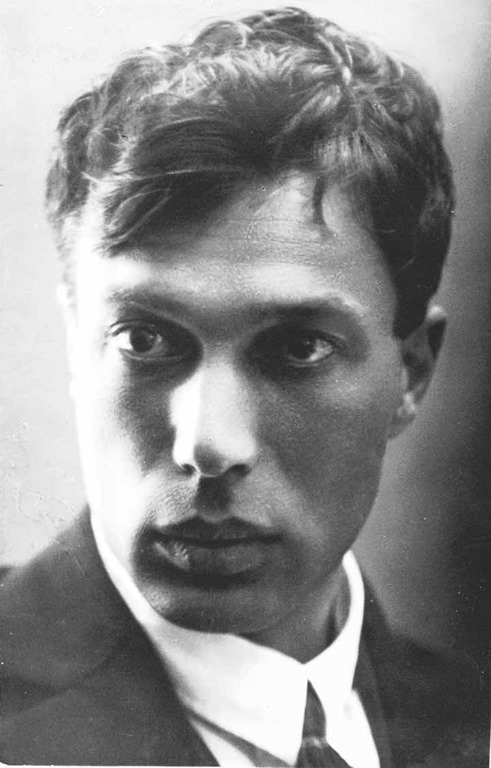
A couple of posts back I mentioned that we’d meet Yeats “rook-delighting heaven” again as we visit some more expressions of the month of February. Well, here’s one, Boris Pasternak’s “February.”
Coincidently, it appears that Pasternak wrote his “February” within a few months one way or another of Yeats’ “A Cold Heaven.” And both poets put ravens in these poems, though Yeats’ crows show up early, and Pasternak’s drop in near the end. Though Yeats wrote his “A Cold Heaven” in more temperate Ireland, it resonated with a Northern Midwesterner like me with its burning ice and unwarming sun. Pasternak, presumably familiar with a colder climate more like my own, sets the thermostat on his February to an early spring melt; but this is a muddy, sodden spring. His black spring holds cold rains, mud, and slush—more like a real early spring than a happy-butterflies-and-wildflowers May spring.
Bluesman?
I’m not fluent in Russian, but the challenge of translating this lyrical poem from Russian to English has attracted many. As I recall, when I tried to put together the text for this performance, I used several of those as gloss, tempered with Internet translator apps fed the Russian. I know nothing of Russian diction, so I aimed for an informal American diction, and unlike some translators, I didn’t try to keep the original poem’s rhyme scheme in English—after all, I knew I’d be supplying music for this.
I believe the music I choose here, bluesy rock’n’roll, while American, is fitting. I hear Pasternak here singing the Russian Blues: blues like unto our great American music of endurance, and rock’n’roll that cares only to seek the state he speaks of in the last two lines:
The more haphazard, the more true, the poetry that sobs its heart out.
So I’ll be putting this post up, and then I’ll go out in our haphazard too-early spring February myself. I too will head out past the noise of city church bells, past the cars, biking to the edge of my city where I’m going to buy George Saunders sad new novel.
Today’s episode is dedicated Renee Robbins, who once was lost on the edge of Moscow herself, the last passenger remaining at the end of a bus route. She found her way back long enough for us to know her.
To hear the LYL Band perform Boris Pasternak’s “February” use the player that appears below.
I feel I’ve been a bit long-winded lately with the notes for these posts. In my defense, I would say the topic of several recent posts, the relationship between art/artists and politics, is a complex subject. Today piece, “The Garden of Trust”, is shorter, and the notes are too.
Weston Noble was a long-time conductor and choral director at Luther College in Decorah Iowa. I never met the man, but shortly after he died at the end of 2016 I heard this lovely quote from him. In a matter of a few words, he moved from vulnerability to trust through music. Thanks to the permission of the kind folks at Luther College, I am now able to share that with you. Today’s piece, so appropriate for Valentine’s Day when we think about love, lets the man himself speak those words surrounded by the music I wrote to celebrate them. Other than urging you to listen to them by clicking on the player gadget below, I can add no more than that music.
Vulnerability really is the secret to life itself. Openness…Honesty. And music allows vulnerability to come so beautifully….it’s much easier to start to talk with a greater depth….And then you go a greater depth than that. And when you reach a certain point of vulnerability…and this is what I think is so beautiful…that’s when you enter the garden of trust. Isn’t that a gorgeous thing to say? You’ve entered the garden of trust.
The motto of the Parlando Project is “The Place Where Music and Words Meet,” but in practice it has been the place where music and poetry meet. However, just as I want variety in the music used (within the limits of the musician’s talents) I don’t plan to always use poetry for the texts here. Today’s post is an example. I’m going to use a short public speech, but as I have done with poetry in other episodes, I’m going to treat the words as if they are specifically meaningful, and I’m going to treat those words as if they want to sing.
We are also continuing the investigation of artists and politics, something I’ve touched on several times already this winter.
A few days ago, a cast of actors received an award, and the actor acting as spokesmen for the cast delivered the acceptance speech. Though not entirely a political speech, it was received as one, and it was almost certainly intended to make a political point.
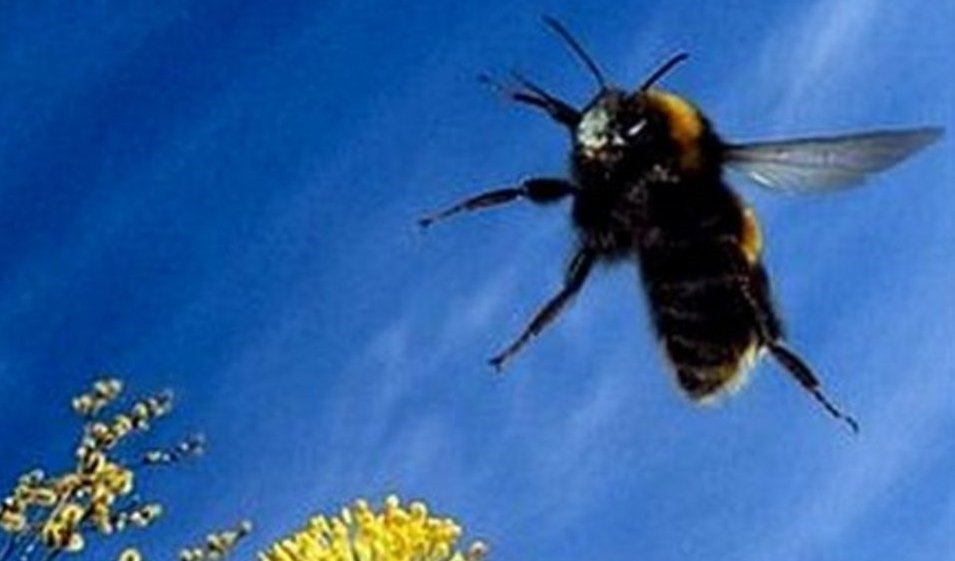
The actor, David Harbour, was speaking for the cast of a series available on Netflix called “Stranger Things.” That show is a sort of bumblebee. Like the famously un-aerodynamic bee, it shouldn’t fly, but it does.“Stranger Things” is a show that uses tropes of 1980s movies and books to tell a story set in that same decade. It should be a winking meta exercise where you spend more time noting the references than to the story itself, or a dreary “I’ve seen this one before” drama that plays as an unoriginal re-hash of ready-made plot points and incidents. Perhaps for some viewers it is one of those things, but for many viewers it’s an ingenious contradiction of all the ways it could fail, doesn’t, and instead flies.
I read on the Internet this is supposed to work!
As an actor, Harbour was part of that levitation. In his acceptance speech, he makes a choice as doomed to fail as the concept of “Stranger Things.” In his awards-banquet tuxedo, standing in front of an audience of actors, he gives his acceptance speech more-or-less in the person of his character, a gruff, down-on-his-heels Midwestern town sheriff.
What’s the percentages on this working? First off, actors are not their characters, often not even close. Humphrey Bogart wasn’t a grizzled tough guy, he was the son of a cardiac surgeon who grew up upper-middle class. John Wayne was a football player and son of a dirt farmer, not a cowboy or a military man. Actors themselves would know this more than anyone else. Secondly, whatever audience size “Stranger Things” has, that audience isn’t everyone. Will folks who haven’t watched “Stranger Things” get your message if it references tropes from your series?
Well, like the series, like the bumblebee, Harbour’s speech worked in the room none-the-less. You can view that short speech and the reaction here.
In turning this speech into today’s post, “Artists Hunting Monsters,” I changed a few things. First off, the video I first saw after the event did not include his prelude to the words I ended up using. In the part I didn’t have while composing, Harbour talks eloquently about his view of an artist’s role today. In editing the words I did have, sifting them down, and dressing them with music, I choose to universalize his rhetoric to the degree I could, so that even those who haven’t seen “Stranger Things” would have access the message; and in so doing, I changed things to address the role of artists in general, not only the actors that were his present audience.
I’m once more going to violate a principle I thought I would hold to here, and “explain” the text. Harbour, and my selection and recasting of his text, says that an artists’ job, an artist’s calling, is to offer succor to the disenfranchised: to show with our artifice, truth; with our play fighting, successful struggle; with our imagined detectives, the underlying monster. It’s a call to arms for artists to pick up blunted stage-swords and to deploy magnifying metaphors against oppressive decisions, systems and persons.
How did I speak with the music? Well, I won’t be so bold as to dance about that architecture. The main melodic line is a guitar played with an Ebow, a device that drives an individual guitar string into a cycle of feedback where it sustains with increasing volume until the device is moved away from the string. As the name implies it, it can mimic the sound of a bowed instrument, but that increasing volume feedback loop takes some finesse to manage. The secondary electric guitar line that emerges about halfway into the piece is a guitar feeding back with an amplifier, an even more chaotic effect. I was playing that part live in the main tracking session with bass, drums, and keyboards and was trying to get to the feedback “spot” with the guitar, but mics and other stuff were in the way, and it wasn’t until the track was nearly over that I finally got it to howl properly. And so, I was “hunting monsters” during the main tracking session for recording this piece.
This guitar D string is about to find out how bumblebees fly
Before we leave the music part, did you know that the way the bumblebee flies is the way those guitar strings vibrate?
There are still questions left to examine on the role of the arts, and more Parlando Project expressions of music meeting up with words to be posted here in the upcoming months. If you would like to be notified about these new pieces when they are posted, you can click the little orange “RSS – Posts” icon down on the right side of this post. To hear the LYL Band perform “Artists Hunting Monsters”, use the player you should see just below.
Today’s post returns to the issue we touched on last month with “Acting.” What is an artist’s proper role regarding politics and social issues? And why do artists who engage in politics draw especial condemnation for doing so?
This may be the wrong question. Does anyone ask, what’s the proper role of a lawyer, real estate tycoon, school teacher, doctor or fry cook in politics? None that I’ve heard of lately. My working answer to this possibly disingenuous question is going to be long, so if you can, bear with me.
Probably the only other profession that has its participation in politics questioned in any way would be clergy, and I think there are a pair of oddly similar issues with artists and clergy speaking on politics.
Artists, at least good ones, by their nature tend to be “progressives.” Please, if you can, skip by any associated political stances you attach to that label, it’s honestly the best word I could come up with. By “progressives,” I mean that artists naturally seek change, novelty, and the advancement of new ideas even if they are built on older ones. Scientists and technologists have a similar bent, but artists like to think of themselves as ahead of even the sciences in this regard. Religious leaders, teachers, preachers, tend to be “conservative.” Please apply the same caution to that word as I asked for “progressives.” By conservative, I mean that they see the values in cultural traditions as possibly being given by supernatural forces that are of a higher order than mere human thought, or at the very least, that traditions are time-tested in such a way that they need to be honored, and to extent that seems reasonable to them, for those traditions to remain unchanged.
Are there “conservative” artists. Yes, they are. It’s quite possible to be artistically progressive (important for good artistic work) and politically conservative. Shakespeare presents himself as conservative politically, but was a culture changing artist. And it’s easy for me to think of some 20th century artists who are not “conservative” but “reactionary,” Ezra Pound for one. Caution again, just a label, let me explain: I use reactionary as a label here to denote people who believe that some important elements have failed to have been conserved, and that change is necessary to return to that state or set of values that no longer effectively exist.
Are there religious “progressives.” Yes indeed. Remember that religious people overwhelmingly believe that certain values are given by superhuman forces, ones that exceed what humans themselves might honor. There has always been a large part of religious thought that says that mankind is “fallen” and so therefore is in constant need for change toward the good, a good that might never be properly illuminated by fallen human thought.
So for both our “conservative” label (clergy) and “progressive” label (artists) we’re talking associated tendencies, not absolute dictates. Humans are complicated after all; but I think that’s one thing that strangely joins concerns about artists and clergy in the political arena. Opponents to conservative clergy and progressive artists see these groups as respectively prejudiced, temperamentally oriented toward resistance to necessary change or moving toward too broad and untested change. In this outlook, their self-selected temperaments that lead to their professions blind them, and so they aren’t viewing things fairly or deeply enough because of who they are. One proof we can see in this is that it’s rare for conservatives to criticize conservative artists in politics, or for progressives to criticize religious leaders who champion progressive causes. The belief here would be that those who go against natural tendencies in their professions must be significantly immune to that issue of characteristic prejudice.
You might next think or ask: well doesn’t a fry cook or a real-estate tycoon have their own prejudices based on their livelihoods? What’s different about artists or clergy?
My answer to that moves to another thing those two professions have in common: they are both pretty much in the same business. When a religious leader gives a spell-binding sermon, or a writer moves us to tears, when a religious visionary tells us what the angels said to them, or the musician brings sounds together in a way that moves us, when the crowd rises as one, with one hosanna on their lips, does it matter here who is at the front of the house?
What is important to our question comes after these remarkably similar experiences. Are we in that crowd, and yet not moved to rise in praise like the others? Is there often a let-down, however vague and hard to explain afterward? A way in which we feel unworthy, a way in which we feel we thought we were changed and yet we are not changed? Do we ever feel tricked: fearing, or perhaps even knowing, that the artist or preacher has engineered this with the techniques of their craft, techniques that might work regardless of the content they convey?
Now what if the person at the front of the room is not an artist or a preacher, but a political figure? Don’t all the same things apply?
So all this is a prelude to a very short, yet puzzling piece, with words by William Butler Yeats: “On Being Asked for a War Poem.”
Why puzzling? Yeats is good example of an artist engaged both in spiritual concerns and politics. In the struggle for Irish independence, Yeats was a leader in the idea that Irish cultural independence as a pre-requisite for political independence. If skeptical of armed rebellion, Yeats consistently pushed for what eventually became the independent Republic of Ireland and he become a Senator after Irish independence. One of Yeats inspirations, Percy Bysshe Shelley had famously said “poets are the unacknowledged legislators of the world.” Yeats in effect revised Shelley’s passage by striking “Unacknowledged!”
Couldn’t make it in the NBA, but an artist engaged in politics
What would you expect from such a man in regards the use of his art for political purposes? You’d guess he’d be all in. Well, he was asked, just like the title says. Edith Wharton asked for a poem from Yeats for book meant to raise funds for Belgian war victims during WWI, and this was his response, which indeed was printed and therefore served its charitable purpose. Here is the entire poem:
“I think it better that in times like these A poet’s mouth be silent, for in truth We have no gift to set a statesman right; He has had enough of meddling who can please A young girl in the indolence of her youth, Or an old man upon a winter’s night.”
So why is Yeats seeming to refuse to put his artist’s shoulder to the wheel and write a “war poem,” as so many others did? Well first, Ireland’s position in WWI was complicated, as it was not yet independent. Ireland’s colonial ruler, England, was engaged. The ancient principle of “the enemy of my enemy is my friend” might make an Irish nationalist (at the least) abstain from taking sides.
He goes beyond that however, on the face of it saying that a poet—“a poet,” unqualified, not “this poet,” or “given that I’m a colonial subject against my will, don’t ask me for poetry about your war.” Poets, he says, have “no gift to set the statesman right.”
I don’t know what was inside Yeats’ mind, nor am any kind of expert on his work, but in thinking about these things, about how the artist, the clergy, and at times that statesmen, are all in the same line of work; an alternative reading has come to me.
That pronoun “He” that starts the fifth line, why did Yeats not make the antecedent clear? Most readers believe that the “He,” the one who’s suited to pleasing an indolent young girl or an “old man upon a winter’s night”—that last, a character who could be that frightened and lonely farmer in Frost’s poem we recently featured here—is the poet, or a poet performing his rightful role. If so, it’s a surprisingly modest, even dismissive, statement of a poet’s worth. However, the last noun before that pronoun “He” isn’t the poet, it’s the “statesmen.” English syntax rules indicate that “statesmen” could likely be the “He.” If I write “Frank went to a Minnesota Timberwolves basketball game, saw Karl Anthony Towns, and he scored 42 points.” We know that I couldn’t score 42 points, even in an empty gym, not because of my athletic ineptitude, but because we usually think the pronoun refers to the last applicable noun before it.
Not the author of this post, but he can play some ball
So did Yeats slyly mean to say that a statesman, like the poet, like the artist in general, is engaged in the same game, fooling the youth and the feeble old?
I have more to say about artists with political opinions in the upcoming week, but to hear the LYL Band and William Butler Yeats “On Being Asked for a War Poem” use the player below.
Today’s post, as I’m reminded specifically today about the clergy and political action by his life, is dedicated to Lester Moore, the father of Dave Moore. You’ve heard Dave reading and playing keyboards here (including the various keyboards in today’s piece).
Eric Burdon and the Animals had a considerable run of hit singles in the 1960s. To the degree that we remember that output today, it’s to recall songs that Burdon’s voice made famous, though they were written by outside writers: “House of the Rising Sun,” “We Gotta Get Out of this Place,” “Don’t Let Me Be Misunderstood.” All great songs, all great performances, but what’s forgotten are the songs Burdon himself wrote.
That’s not an accident. Eric Burdon as a writer was often topical, writing about social and cultural events while they were current, before the ink had dried on things; and he was heart-on-his sleeve sincere, without protective layers of irony that made Jagger/Richards or Ray Davies harder to pin down. These things sometimes make his writing seem dated or naïve, but I think folks don’t value his commitment to immediacy enough. And then there’s Burdon’s steady stance against racism, something he never gets enough credit for.
No joke. Eric Burdon and the New Animals
Fifty years ago Burdon and the Animals visited San Francisco and he commented favorably on the warm climate and the altruism; and while charmed by the chemically-enhanced visionary culture they found there, Burdon noted issues with police/public interaction and recommended that the American Dream should include Indians too. That bit of reportage was a top-ten hit record in the US and the UK.
To me, a lot of the charm of that record is its spoken word opening, a deadpan “Dragnet” parodying recital of the worth of experiencing San Francisco. Spoken word—sounds like a Parlando Project idea!
So this is my rough parody* of warm summer “San Francisco Nights” written in and for the cold winter city of Minneapolis. It’s 9 degrees F. as I write this, and the temp is dropping overnight. Snuggle someone if you’ve got the chance.
As Blue Oyster Cult once reminded us: “This Ain’t the Summer of Love”. To hear my Minnesota take on snow emergencies, tow trucks, and chilblains click on the play gadget below.
* Yes, I know Drew Carey did another San Francisco Nights parody, using Cleveland in his version. He got Joe Walsh to play guitar on his, so obviously better than my one-take approximation—but he skipped the opening narration, and that’s the best part!
You can be in my dream, if I can be in yours. Bob Dylan said that.
You may have noticed that blog post frequency has fallen off a bit this month. Well besides the usual struggle of an upper Midwest winter, both alternative Parlando Project reader Dave Moore and I have had some extra tasks this month. I’ve been helping transition my mother-in-law to new living arrangements, and Dave has been working on editing a book of his father’s sermons.
Today’s post is a piece that Dave wrote a few years back about his parents, and his father’s experience after Dave’s mother had died. Like many good stories, it seeks to find meaningful connections in the flow of coincidental events.
And speaking of coincidence or archetypes or something, I wrote another piece myself a few years back. Though I did not mention it explicitly, my piece was also engendered by thinking of my father now living alone after my mother had died. Both pieces used the image of a bird trapped in a house.
I’ll not attach any more meaning than that to this. Today’s piece is Dave Moore’s story, read by Dave. Click on the gadget below to hear his story. Tomorrow I’ll post mine.
I often wonder when reading opinions when someone stops or starts thinking.
Opinions generally come from two states. One is intuitive emotion the other is from reason, a thoughtful weighing of something or another. In the case of the former, thought has little to do with it. We know something is wrong, wonderful, disgusting, laudatory, whatever from something we feel innately. The child saved from the burning building, the willful act of unnecessary violence—but we feel intuitively about more complex and controversial things too: the results of an election, the worth of some work of art. In the case of art, many of us are comfortable with expressing that intuitive response, we like it or we don’t, we don’t know why, and don’t really care to know why. However, in politics and public policy, that sort of response can seem irresponsible. Furthermore, mere internalized like or dislike is no good for recruiting others to your side.
The other state, the opinion generated from thought, from some comparison of the options and a reasoned judgment brought forth on the results seems admirable. The problem is that too much thought seems to stop as soon as some conclusion can be reached. There’s no second thought on the thought, no deeper examination of one’s assumptions. There’s a worth to this—speed is a value in decisions not about art after all—and the nature of thought and questions is for them to be never-ending. At some point, one has to stop thinking to ever reach a working conclusion.
I opened this morning’s local paper and saw a man from Crosby Minnesota moved to think about political matters and how they intersect with art. Meryl Streep, a famous movie actor, has expressed political opinions about a TV actor—let me look this up, oh yes—Donald Trump, who has taken up politics and found himself with a prominent new job in the public policy field.
The man from Crosby feels he has found an important thought in this Meryl Streep matter, and his thoughts are expressed as a couple of questions and answers:
“Who wrote those words for her? After all, her whole life has been one of just reading and acting out the words creative thinkers have written for her. She has been good at it, but how can someone who has never had a thought of her own criticize others who have?”
Did he answer his questions too quickly? Did he not expand his inquiry enough?
So, assuming we think about something, when do we stop thinking? We have to stop sometime, but stopping too soon can leave us with meager conclusions and less rewarding art.
For that matter, when do we stop practicing our art? In 2013 a local actor (Kate Eifrig) made a decision to stop acting because she felt that continuing was harmful to her. She gave an interview about her decision, which I felt it was an honorable and insightful one, and this audio piece with the LYL Band performing the music was the result. The first sentence is a quote from her interview, which I then developed into the rest of Acting.
One thing she may not have accounted for in making her decision: while as an actor she would have been allowed to serve in a political office like Helen Gahagan, Arnold Schwarzenegger, Al Franken, Ronald Regan, Fred Grandy, Jesse Ventura, George Murphy, or Fred Thompson; but she would not, by our man from Crosby’s accounting, be qualified to comment on political matters.
I object to this too, but don’t compound it by saying something at the Golden Globes!
In one limited way I agree with the man from Crosby. While thought, sometimes even considerable thought, goes into acting and performing; the performance itself is not a thoughtful process: for it is entering into, embodying, a thought, often someone else’s thought. That is a visceral, not intellectual experience whatever thought went before it.
I would ask one more question, reformulating the man from Crosby’s rhetorical question to a familiar piece of folk wisdom: how can someone who has never lived someone else’s thought criticize others?
To hear the LYL Band perform Acting, use the gadget below.
This is the most difficult set of words to read coherently that I’ve presented so far in the Parlando Project. Robert Frost’s “An Old Man’s Winter Night” looks on the page like any other chunk of blank verse (“blank verse:” unrhymed iambic pentameter). Shakespeare wrote whole sections of plays with this rhythm, and the walking one/two with a backbeat of an iamb has a forward propulsion that leads the reader to flow through the words.
The problem is, that even the most iron-lunged and fleet-tongued rapper has to pause for breath sometime. In general, it helps to pause for meaning, where the break for breath adds meaning. However, in the Parlando project I’m seeking to merge the words with music, and the musical cycles also suggest pauses.
I saida hip hop,
The hippie to the hippie
The hip hip a hop, and you don’t stop
“An Old Man’s Winter Night” was tough because I decided on a cycle of chords for the music, rather than basing the harmony around a drone, or simply “through composing” the music to follow the words without a repeating structure. I made that choice unconsciously, but I think I was responding to Frost. The poem seems to repeat itself, and my sense of the syntax was that the sentences seemed to start and begin again, like unto the central incident in the poem of an old person in a room not remembering why he had gone to that room. So the problem was: where to break the cycle of the circular speaking, keeping to cycling verses of chords, while helping the listener understand the meaning.
I got it almost right I think. I was further inspired as I worked by being in the midst of a Midwest below-zero cold snap while recording this.
I normally do not base my readings on others, though it might have helped me to listen to other solutions to my reading problem. Only after committing to the version you’ll now hear, did I listen to Robert Frost’s own reading of his poem and another good reading which does an excellent job of bringing out the meaning. Of those two, Frost aims to bring out the music in his rhythms, but it’s not a perfect reading. Authors have an advantage, in that they likely know the poem’s meaning—but they are also disadvantaged by that—since they know, they cannot always choose what the listener will need to have emphasized. By combining “An Old Man’s Winter Night” with music, I have another advantage over Frost’s own reading: I don’t have to follow the word’s rhythms closely to bring out the music.
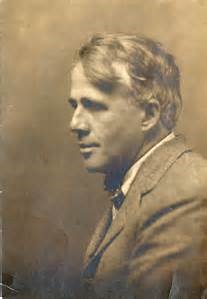
“An Old Man’s Winter Night” embodies aged rural loneliness, something that even today’s modern communications can do little to ameliorate. For those of my generation who only remember Robert Frost as an old man, I’d like to point out that Frost first published this when he was 44. Frost beautifully describes being alone, separated, cut off; evoking all the surrounding emotions of that situation—yet he doesn’t once mention loneliness or any of those allied emotions by name. A great trick to pull off, don’t you think?
To hear my reading combined with music, use the gadget that appears below.
We’re approaching the halfway point in the Parlando Project’s first year, and my plans for 2017 are to feature more 21st century words, when and if I can get permission from publishers/authors to use them here. Today’s audio piece features words from the first “external” 21st Century author to be used here: Philip Dacey.
Philip Dacey
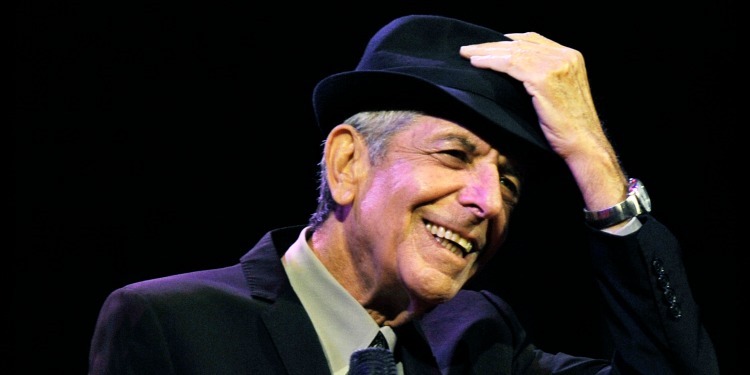
This year has been much commented upon for the death of musician/lyric writers, two great cultural stylists and movers, David Bowie and Prince, foremost among them. It would be careless to extend the list of 2016’s lost musician/poets for fear of who would drop off the bottom for reasons of length. After all, Merle Haggard or Phife Dog or Greg Lake mean as much or more to some listeners as Prince or Bowie. For me personally, two Fall 2016 musician/poet deaths hit me with specific force: Leonard Cohen and Mose Allison. You might have guessed that, for this is the place “Where Music and Words Meet”—though both are better composers than generally realized, both Cohen and Allison were known for their lyrics.
A Cohen and a Mose
But that’s not exactly why. You see Mose Allison and Leonard Cohen shared a writing sensibility that I particularly prize: they’re funny as hell. “Funny as hell”—not as merely the common idiom— “Funny as hell,” in that both saw clearly the fallen human limitations and made us laugh at it. Laughter can be a good teacher, and as the profoundly comic blues sensibility tries to teach us, even what we can’t learn or think our way out of can be better endured knowing that it’s not right, that it’s incongruous, illogical, unexpected—in other words, that it’s funny.
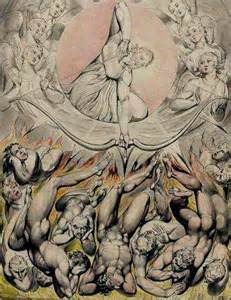
The importance of our musician/poets may be falling in the 21st Century, though the speed of that decent is hard to judge, as we, their human society, are falling too. And if we look below we see the poets of the past: Dickinson, Whitman, Keats, Blake, Frost, Sandburg, Yeats, Eluard and all their heavenly host, and Shakespeare, Sapho, Basho, Homer, Li Bai, and many more that we cannot name and have never heard. We are falling toward all of them.
not Phil Dacey
And Philip Dacey falls with us, and he smiles “Look, we are all falling.”
Dacey too is funny as hell. So if you are coming to this podcast from a musician/poet listenership, you could think of Philip Dacey as a Midwestern Leonard Cohen without all the sackcloth and ashes; or that Dacey is Mose Allison without the constantly modulating piano. And there’s another difference: Dacey’s poems find forgiveness more consistently and honestly than Cohen or Allison, or most any other writer.
We are all falling, and Philip Dacey falls with us, and he says “I’ll bet there is an end to this fall, but who knows?”
Butterly: Upon Mistyping Butterfly is a love poem based on simple mistake (as love sometimes is). Phil, like Leonard Cohen—but like Phil—wrote a great many love poems. This one is uncomplicated (as love sometimes is). Mose Allison, wrote far fewer love songs, though I can think of one that is goofy and joyful, like these words of Dacey’s.
It’s not a coincidence that I put my remembrance of Philip Dacey as one of the first Parlando posts, because when I heard that Phil had died I was working on gathering, performing, and producing material for the Parlando Project. I’m grateful for the permission to present the LYL Band performing my reading of this poem of Phil’s. If you like this, you may want to seek out one of Philip Dacey’s books or read more about him online at the philipdacey.com web site. If you’d like a taste of how Phillip Dacey presented his poems, there is a 30-minute video of a late reading by him here.
To hear the LYL Band perform Butterly: Upon Mistyping Butterfly, click on the gadget you’ll see below.
Ok, did everyone read those “click here to read” user agreements for their new gift gadgets, software, and computers? Good, because we’re going to have a little fun with them this time.
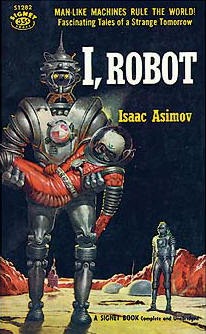
I suppose the purpose those ubiquitous agreements is to disabuse the user of any assumptions they may have about that new thing they now “own”. Will it work? Can you do with it what you will? Will it be fair and understanding to you? Does the software or device know about Asimov’s laws of robotics—even though those laws won’t be written down for another 41 years? Have I given up my money, privacy and self-respect for the price of a free app? The agreement will let you know that the answer to all but the last question is “no.”
He didn’t click “Accept”
It occurs to me that poets have been doing the same thing for a long time, intrinsically restricting their subject’s and reader’s rights in various ways, but they don’t even bother with the user agreement. So, let’s fix this right now!
Today’s audio piece, User Agreement for this Poem, spells out those expectations with the LYL Band providing the musical setting. To hear it, you can click on the gadget that will appear below. Please click, but acceptance is optional.





 Frank Hudson