Lightly, from Aldus Huxley’s novel “Island”

Death is a funny thing, mainly because dying is treated so damn serious. Have you ever asked yourself this: are you afraid of death or are you afraid of dying? If you answer, “Well I’m afraid of death.” I ask you to further question yourself. Non-existence is easy, a gimmie, a non-task. Dying on the other hand? You can fear pain, suffering. You can fear what is left unremedied, unfinished, left undone. One can fear you will not do it well. That you will show too much or not enough emotion. You can fear you will do it too slow and draw out suffering — or have it happen too fast before one can set an agenda for the occasion.

This weekend is the anniversary of the official launch of the Parlando Project in 2016. This weekend is also the anniversary of my late wife’s death decades ago. Last weekend I learned that a poet/blogger who I’ve followed through much of the seven years of working on the Parlando Project has received one of those months-to-live diagnoses.*

In-between those weekends, someone posted the text I’m going to present today by Aldous Huxley. Here’s a link to where I saw it. The poster knew it as if it was a poem titled “Island.”   Instead, it’s a passage from Huxley’s last book, a novel called Island.  In using this as text I decided to call this short excerpt after a repeated invocation in the passage: “Lightly.”

I’m not very well-read when it comes to novels, but as a teenager I read Huxley’s best-known book Brave New World.  I loved the SF world-building of it even if I likely missed good portions of the satire at that young age. After that I tackled Island  as well, promoted on the paperback cover as an updated companion to Brave New World.  I don’t recall much about Island,  certainly not this passage. What could I remember? That Island  had a bunch of ideas to present, but since I read it so long ago and so young, I retained nothing else. Looking at synopsis’s online this week, it appears that Huxley was trying to synthesize a long fascination with Asian spirituality and philosophy and apply that to his contemporary mid-20th century Western world.

Island cover

I think this is the edition I read as a teenager

.

Today I was able to look at a copy of Huxley’s novel, and the passage, presented as I first saw it in broken lines as if it was free verse, is indeed a block of prose within it. I said Island  was Huxley’s last novel. He died of cancer a year after it was published.**   I don’t know if Huxley had received one of those “months left” estimates as he worked on Island,  but the passage spoken by a character in his final book could be the author speaking from, or to, himself —  a reminder of how he felt he should approach dying.

In the book it’s spoken to a woman who is dying, attended by her husband and family. As I read the larger section the excerpt was from, I thought of being beside my late wife as she was dying. Yes, in essence, the teenage me with my youthful experience, could not have read the same book.

I was only able to do that reading for context this afternoon, a day after I had already completed the new audio piece. Maybe that’s of little matter. After all, even shorn of context as I saw it online, it immediately resonated this week with my thoughts for my distant faintly-colleague. Perhaps you will find resonance as you hear it too.***

I made a couple small alterations to the excerpt to generalize it. Then I composed the music for it on acoustic guitar, playing that instrument in a somewhat pianistic style,**** and then combined the two in the performance you can hear using the graphical audio player below. No visible player? This highlighted link will open a new tab with its own audio player.

.

*This poet and blogger, Robert Okaji, has been mentioned elsewhere here in the Parlando Project blog. Besides being a fine poet in general, Okaji helped me by example and brief comment to continue developing my penchant for freely translating classical Chinese poetry, something he also did. Sometimes we would adapt the same poems from the same literal glosses, producing two facets, two impressions, of the Tang Dynasty masters. I never met Okaji, though I’m glad I got to see him read his work online once during the pandemic.

Here’s a link to his graceful announcement of his diagnosis.  Wishing you the best living Robert: lightly.

**A darkly comic touch to Huxley’s death. His fame from Brave New World  was still considerable in the Sixties. After all, in many ways, his book was more relevant to the US/British culture in that era than its quasi-competitor 1984.  Another late work of his, The Doors of Perception about the benefits of psychedelic drugs (also a subplot in Island)  was a pioneering examination of that idea — and the source for a Californian rock band’s name a few years later. But instead of Huxley getting the few days of reassessment that would normally have attended his death, he got bupkis. You see, he died on November 22nd, 1963, the day the American President was assassinated. The world’s news-hole was filled with non-literary matters.

***As it turns out, this excerpt has been shared numerous times that I found when I searched for information about the words this week. Sometimes the passage retains its prose layout, other times it’s presented as if it is a poem. A small point, but most of the online quotes have slight wording differences from what I saw in a 1975 edition of the book I looked at today.

****By using the whole neck of the guitar and alternate tunings, one can expand the pitch and timbral range of the acoustic guitar beyond that of the more folk-song style pieces I present here otherwise.
Leonard Cohen’s Jukebox

I first encountered Leonard Cohen in one of those so serious  Sunday arts, religion, and culture shows that broadcast TV felt required to provide around the past mid-century. As he was consistently able to do throughout his life, Cohen was able to articulately weave a good deal of provocative thought into an interview. I was struck, and took to reading and listening to Cohen from that point on.

I was young then, and Cohen’s eloquence was novel to me. In the many decades since, I have heard others work the provocative angle in interviews, but never with the same level of quality as in Cohen’s spiel. Poetry, religion, music, politics, and more could enter into his answers — and often when the question didn’t determine which of those things would be in his response.

I cannot find any online video of that exact Sunday TV show from The Sixties, but his 1966 CBC interview is an example of what a Cohen interview would be like.

.

To some that could seem pretentious. And that is a risk: a lot of provocative interviewees when challenged are bluffing. Asked to show their cards, they will throw the cards and the table in the air, or will fold into muffled defensiveness. Cohen seems to have never done that. He always had, seeming at hand, another answer, deeper or funnier, or more provocative. And those Sixties interviews are even more remarkable in that many current televised interviews are prepared: a demi-scripted performance where the interviewer is tasked to ask questions prepared beforehand, so that the interviewee can be setup to tell their clever story or give a canned pitch for their current work, cause, or situation. My sense is that Cohen wouldn’t have followed such a scheme even if it was expected of him then.

Did you “huh?” at that “funnier” in the above litany? Maybe it’s the baritone voice or the unrestrained gothic concerns; to many superficial observers Cohen has always seemed the uncut expression of despair and sorrow — but with a little sex in it. Yet absurdity and satire were always part of his expression. Those looking for the correct and proper level of seriousness, those with the least sense of humor and the highest expectations for consonant entertainment, are the most likely to miss that element in Cohen.

This a longer-form documentary on Cohen from the mid-60s. Watch the first 3 minutes and ask yourself if songwriting might have lost a talent to stand-up comedy if Cohen had emerged a couple of decades later.


.

Today’s piece is a short passage from Cohen’s first novel, The Favorite Game, though the words (and I) perform it much like a poem in the Parlando Project manner with The LYL Band. I thought of this older performance today because I recently had a restless dream which had a jukebox in it, and that caused me to think of the disappearance of this phonebooth appliance that directly connected one to the sound of a voice for a coin in public places. How strange that seems now, with our earbuds and all-you-can-bear-to listen-to streaming. Cohen calls out the mechanism’s comic mystery in this passage, and you can hear it without a dime or quarter with the player gadget below — or if you don’t see that player, with this highlighted link.

.

God Made Mud

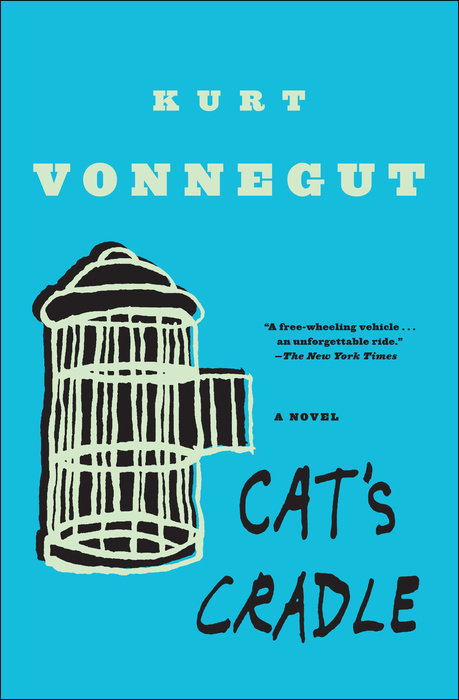
Let’s complete our series honoring American writer Kurt Vonnegut on the 99th anniversary of his birth with another piece taken from his novel Cat’s Cradle.  In the world of this novel there’s an imaginary religion created called Bokononism whose elusive founder writes psalms and prayers that reference Caribbean musical styles. Even though Vonnegut never set music to them, he seemed happy that others did during his lifetime.*

Cat’s Cradle is still in print, so why not buy or read it? Also for the curious, here’s a nice “behind the making of the book” listicle

.

The LYL Band, the loose organization of herded cats that Dave Moore and I have played under for about 40 years, performed several pieces using Bokonon’s psalms and other short passages we’d read in Vonnegut’s novels three days after his death was announced back in 2007. I wrote the music for these in that interim and did the vocals when they were performed “live in the studio” within two one-hour sets. As I mentioned in other episodes of this series, the performances aren’t perfect. For one thing, Dave is creating his keyboard parts on the fly after maybe hearing a quick run down and with nothing more than a chord chart. Given that I’m not a very good chord/rhythm player that’s a testament to him and what decades of playing together will do for a band. Another problem was that I was suffering from cold/allergies that day and my vocals had issues with congestion and phlegm.

I recorded those two sets, though I thought it a shame that my phlegm issues reduced the quality of the performances. Over the years since 2007 I’ve listened to those performances, and I found that I either had become inured to their sound or that the emotional moment of us honoring Vonnegut overcomes that.

“God Made Mud”  was the next to last song we did that day.** It’s probably the best of our Vonnegut Memorial stuff in terms of my vocals. “God Made Mud”  appears in Vonnegut’s novel as the text of “The Last Rites of the Bokononist Faith.”   The Bokononism that Vonnegut invented is used in the novel in various ways to satirize human nature and our search for meaning. For some readers — oddly enough, atheists and secure believers both — those insights into belief are the emotional core of the book. For those in non-Abrahamic religions, there are echoes of Buddhist teachings, intentional or otherwise, mixed in there too.

But by the time Vonnegut gets to “God Made Mud”  the sincerity of the final human situation, the miracle and the limits of our lives, completely overcomes the satire, and removed from the novel’s plot it moves me. It moved me then as we were performing it in the week of its author’s death, moved me later in consideration of other deaths and thoughts of gratitude for lives, and moves me again this autumn as I consider death and the approach of death by folks in my circle.

Click this highlighted hyperlink to hear the LYL Band’s performance of “God Made Mud”  —  or some of you may see a horizontal player gadget below this paragraph to play it. One last thing before I go: if you appreciate what this Project does and you think you know someone or some audience who might also appreciate these varied combinations of words and original music, help it continue by sharing links to the audio pieces or posts on social media or elsewhere. I almost never have the time to do that, and I’m bad at it anyway, so a good deal of this effort’s audience comes to it this way. Thanks!

.

* Oddly, most of those settings that I’ve heard make no reference to Caribbean musical styles implied in Vonnegut’s imaginary Bokonon texts. One of those styles, calypso, has lost most of its currency in North America, but in today’s piece I used a reggae feel as a reasonable substitute.

**The last song back in 2007? Dave Moore’s own meditation on last things “The Final Minute,”  which we presented here this summer.

The Great Machine (I Saw a Huge Steamroller)

Celebrating Kurt Vonnegut during this week that will mark the 99th anniversary of his birth allows two things to cross and connect, for he was born in 1922 on what would have been called Armistice Day then and will be called Veteran’s Day tomorrow in the US. Two decades later as a 20-year-old, he enlisted in the Army, served in WWII, and was rather famously a prisoner of war incarcerated in the German city of Dresden when it was subject to a massive firebombing raid from his own side.

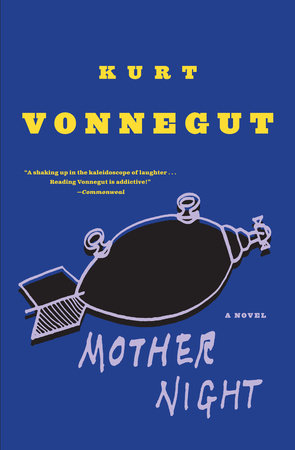
As one might imagine that experience impressed itself mightily on Vonnegut, who as a writer eventually dealt with the matter in his best-known novel Slaughterhouse Five.  But that was not his first novel to deal with WWII. That would be 1962’s Mother Night.

Mother Night, like all of Vonnegut’s novels remains in print. Mother Night does contain satire, but I’m not sure that as the cover blub above advertises that this one will shake up your kaleidoscope of laughter.

.

The short plot summary for Mother Night  is that it concerns the story of an American who was in Nazi Germany during the war, and who tells us that all-the-while working with American undercover efforts he made fulsome fascist propaganda broadcasts. This situation gives us all kinds of resonances: with important American Modernist Ezra Pound for example,*  with America’s own fascists, and with anyone who has ever found themselves working (for whatever reason) with a cause that they themselves feel they are not in alignment with.

The novel’s protagonist wrote “The Great Machine”  in the novel as a poem explaining how he and his beloved German wife had done what they felt was necessary to survive, and once again the novelist while in character allowed Vonnegut license to write poetry.

Abstracted from the novel, and as a stand-alone poem, it mentions nothing of the fascist double-life theme of Mother Night  however. Heard in this way, as the LYL Band performed it during the week of Vonnegut’s death in 2007, “The Great Machine”  speaks instead to refugees trying to escape violent situations by whatever means they can muster. In such events it’s not uncommon for the “you really must understand” class of commentators to mention that the refugees should not be fleeing but should stay and try to counter the violence in their own countries. I don’t know if it’s absolutely required, but such commentators almost never seem to have been in similar situations themselves. In the saddest reportage in Vonnegut’s poem, it says that most people do not, in fact, flee in these situations, but ignorantly or fatalistically accept becoming victims of The Great Machine that is History.

After our first two installments of our Vonnegut series it’s gotten darker here, but you can hear The LYL Band’s performance of this poem found in a novel with the player gadget below, or by clicking this highlighted hyperlink.

.

*Living during the war in Italy, Pound (who had been attracted to outsider political ideas, not just fresh approaches to literature) made propaganda broadcasts for the Italian Fascists. Pound, as with several other Axis broadcasters from Allied countries, was arrested at the war’s end and faced charges of treason, with a possible death sentence. American literary figures helped lobby to have Pound instead declared insane, reducing his culpability. British humorist P. G. Woodhouse was in Germany during the war and made Axis broadcasts, which his literary admirers and defenders characterized as not propagandistic.

It’s easy for us at this remove to forget how close at hand these issues were when Vonnegut was working on his novel. WWII was as close as September 11 2001 and the wars that followed are to us now in 2021Oddly though, American fascism, which had been a considerable issue during the ‘30s and ‘40s and is again now, was considered something of a comic non-entity in the 1962 world of his novel.

Hello Babies

Today I’m going to start a short series here celebrating Kurt Vonnegut, a writer generally filed under “novelist” on bookshelves.

Most of the words this project uses started out as poetry, and poetry is a form of literature. So, one might assume that I’ve read a lot of novels. I haven’t. I’ve set no ban against the form, and I’ll read one or two a year, but the ones I read aren’t usually considered great literature. Essays, poetry, poetry collections, biographies (and less commonly memoirs), non-fiction accounts long and short, historical and current — my reading dance-card is full, and at my age I’m not sure I’ll ever rebalance my reading investments.

As he aged, Vonnegut apparently fell out with the conventional ideal of the novel too. Even some of his earlier novels had elements in opposition to long fiction either literary or popular as generally considered, and so his reputation as a “great writer” or as a “best seller” were both constrained.

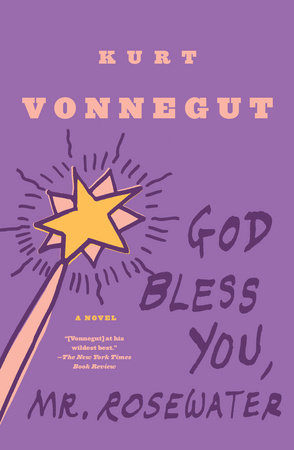
Luckily for this project, which likes to combine words with music in various ways, and prefers short, condensed forms of expression for that, Vonnegut is very quotable. Fictional characters who are quote collections and makers of short speeches are not the stuff of literary esteem, but then the results have other uses. Today’s piece is an infant-baptismal litany that a character in one of Vonnegut’s earlier novels* proposes to give, and it’s become one of Vonnegut’s most remembered and requoted passages.

For all his literary eccentricities and opinions, Vonnegut and his novel does remain in print.

.

The performance here, and probably the rest in the series to follow, was performed live in one-take by the LYL Band on April 15th 2007, the week that Vonnegut died, and these presentations are taking place in the week of the 99th anniversary of his birth. All these performances are imperfect in one way or another, but at least for me I still hear the emotions in-between the notes as Dave Moore and I made note of a departed writer’s spirit. Today’s piece was the first one we preformed that day.

A player gadget for “Hello Babies”  is below for some of you, but not everyone reads this blog in ways that display that, so I offer this highlighted hyperlink which will also play this short performance.

.

*The Vonnegut novel this passage appears in is God Bless You, Mr. Rosewater,  which I must confess I haven’t read. I say that just as a matter of honesty, not as a review or recommendation which I’m obviously not qualified to give. I suspect I’d like it when and if I get around to it. For counterpoint, here’s a review, contemporary with the novel’s publication, from the New York Times were the reviewer proves a maxim that I often repeat here: “All artists fail.”