Triad

I find it a wonderful “Parlando – Where Music and Words Meet” coincidence that one of Christina Rossetti’s sonnets and one of David Crosby’s songs share a title, “Triad.”

David Crosby is a musician and songwriter who first came to prominence in The Byrds and then as part of another triad, Crosby Stills and Nash. When I first came upon his songwriting many years ago, I was attracted to his distinctive abstract melodic and harmonic sense. Almost no one before, and few since, wrote music for songs that sound like his did then, with the exception of some Joni Mitchell tunes. Lyrically Crosby styled himself as unconventional as well. His “Triad”  is a blissful ode to free love—well at least free love as long as David Crosby is the one explaining how things will be.
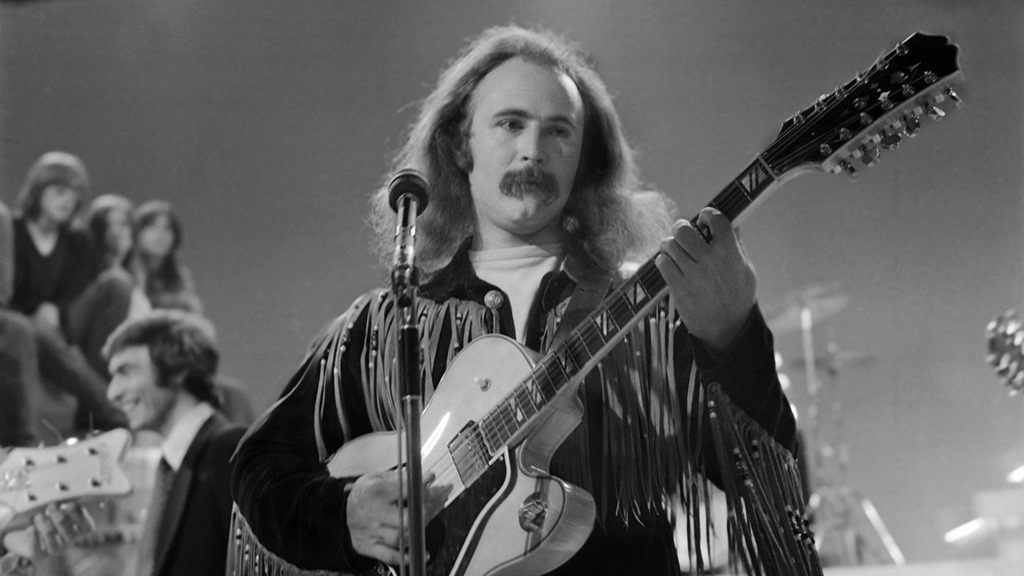
David Crosby

David Crosby’s song starts by asking “You want to know how it will be?” and then he mansplains it


Christina Rossetti was a pioneering British 19th century female poet. Her biographical triad was that she had two brothers William Mitchell Rossetti and Dante Gabriel Rossetti, also writers, who went on to form the Pre-Raphaelite Brotherhood. Hmmm, “Brotherhood”—I wonder if girls get to join? Not officially, though she was used a model in some of their paintings.

Girlhood of Mary

Her brother Dante used Cristina Rossetti as the model for the Virgin Mary, far right.


Christina Rossetti’s “Triad”  is a not-so-happy look at romantic love, and the writer is none-so-sure how it should be either. Rossetti draws her portrait of three women who once sang together. One the stereotypical harlot, one the blue spinster, one the smooth compliant wife. Each of them finds the dead end of the limited paths available for passionate women. Conventionality decrees the hot harlot is shamed and the cold virgin dies for love, but Rossetti steps outside conventionality to tell us that the “temperate” spouse grew gross in her compromise until left with the devastating line droning “in sweetness like a fattened bee.” How much has changed since Rossetti’s Victorian England in this regard? Some things, not all things. New Rules are still rules, look at who makes them.

Musically here with our “Triad”,  the LYL Band somewhat refer to the psychedelic vibe of Crosby’s musical style to accompany Rossetti’s sad and lovely words. To hear it, use the player that appears below.

Frances

Here a piece based on a short, incomplete poem written by a teenager who went on to do other things. You can tell he’s a clever young man. He’s infatuated with a neighbor girl, but there’s no such thing as texting yet—no such things as telephones either. Thankfully, love songs are a well-established technology, so he sets to work on one.

To make sure that she knows he’s serious about her, and not the other young ladies he’s been seen cavorting with, he decides it’s not just going to be a poem, it’s going to be an acrostic. The first letter of each line will, if read downward, spell out her full name.
 
If John Lennon had wanted to write “Oh Yoko” as an acrostic, it wouldn’t have added much difficulty to his verse. Alas, our teenager’s object of affections is Frances Alexander. Well it could have worse, if he was a teenager who wanted to write a love song to the New Zealand singer who performs as Lorde, and wanted to use her full name, he’d have to write a 27 line poem to Ella Marija Lani Yelich-O’Connor.

He only needs 16 lines to prove his love.

GW Poem

OK, he’s finished the “Frances” part, now onto “Alexander”


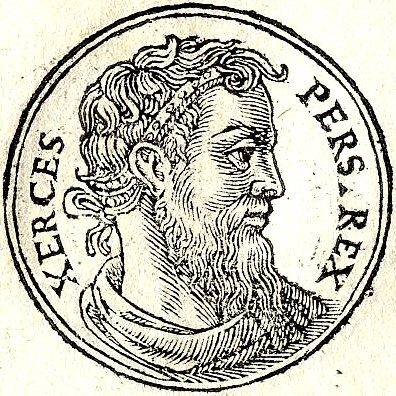
He gets to line 11. Gotta start with “X.” He grabs onto Xerxes, the famous Persian leader and general to fill out his acrostic, but one line later he runs out of gas and just drops the poem before finishing.

Xerxes_I

Our poet got his face on some money too


Didn’t finish the poem, didn’t get the girl, but our teenager like Xerxes became a famous general and eventually his country’s leader. He’s got a birthday coming up on the 22nd, but they celebrate our boy George Washington’s birthday as a US holiday today.

In writing the music for this piece, I decided to just take Washington’s words seriously. Even if the sentiments he uses are somewhat conventional (the “my love outshines the sun” trope was old enough that Shakespeare made fun of it more than 200 years before Washington got to it). Love songs sometimes make no effort to be original, and if done well, the human commonness of the experience of love becomes the point.  Here, even if he was following his acrostic plan, young Washington takes a darker turn as he starts the second part of his poem, and I tried to bring that out in my version. To hear it, use the player below.


The Garden of Trust

I feel I’ve been a bit long-winded lately with the notes for these posts. In my defense, I would say the topic of several recent posts, the relationship between art/artists and politics, is a complex subject. Today piece, “The Garden of Trust”,  is shorter, and the notes are too.

Weston Noble was a long-time conductor and choral director at Luther College in Decorah Iowa. I never met the man, but shortly after he died at the end of 2016 I heard this lovely quote from him. In a matter of a few words, he moved from vulnerability to trust through music. Thanks to the permission of the kind folks at Luther College, I am now able to share that with you. Today’s piece, so appropriate for Valentine’s Day when we think about love, lets the man himself speak those words surrounded by the music I wrote to celebrate them. Other than urging you to listen to them by clicking on the player gadget below, I can add no more than that music.

Vulnerability really is the secret to life itself. Openness…Honesty. And music allows vulnerability to come so beautifully….it’s much easier to start to talk with a greater depth….And then you go a greater depth than that. And when you reach a certain point of vulnerability…and this is what I think is so beautiful…that’s when you enter the garden of trust. Isn’t that a gorgeous thing to say? You’ve entered the garden of trust.


This House Is 100 Years Old

This one isn’t quite as old as yesterday’s post. American poet Dave Moore wrote this only a few years ago.

Americans have a history, but for most of us it’s not a long one. And Dave lives in Minnesota, which was only widely settled by Europeans less than 200 years ago. Even given this short history, people sometimes like to research the history of their homes, and to find out who the former owners and occupants were. I don’t know if Dave did this with his house, but he didn’t, he imagined it well.

I set this to short acoustic guitar tune, and I am again the reader of this piece. Although it may take a moment to load and appear, the player should appear just below this and allow you to hear it.