I Have Fallen in Love with American Names

Anyone remember those sentry questions that would be used in to determine if some straggler in the soldier’s darkness was an American or foreign foe? “Who plays first base for the New York Yankees?” they’d ask.

Native Iowans have a similar method to catch those from out of state. They might start right off with asking about the state capital. “Dezz Moynens.” Wrong! Not an Iowan. “Day Moyne.” Native. Poweshiek, that fine county with a Brooklyn no one knows. “Poe’s He Eck.” Nope. “Powa Sheek.” How about that nice small town founded by lost Swedes in Boone County, Madrid. “Ma Drid?” Outsider, it’s “Mad Rid!”

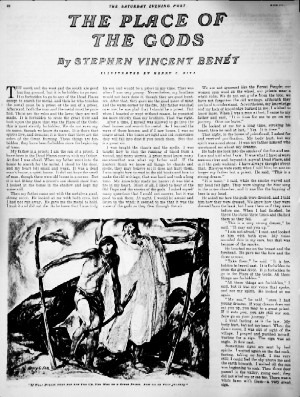
While overseas in France in the early 1920’s Stephen Vincent Benet wrote his own catalog of place names that I have adapted for today’s piece “I Have Fallen in Love with American Names.”  In it, Benet contrasts American place names with European ones, perhaps to staunch a little homesickness on his part, but also as part of his claim to something he and Carl Sandburg helped to define in the first half of the 20th Century, something that’s now used to label a musical genre: “Americana.”
 
To briefly define Americana, it’s the featuring of things that are distinctive to our country, most often things that are in the past tense, things that we are asked to pay attention to as our heritage. If these things seem a little odd, old-fashioned or provincial to us, that’s the tang the artist wants us to taste.

I came upon Benet’s poem after reading a Phillip Roth memoir in the New Yorker last month, where Roth takes off from Benet’s poem to discuss how a literary sense of a greater America he did not yet know expanded his horizons westward from his childhood neighborhood in Newark New Jersey. Roth remembered how, in the 1940s, even though one of the most cosmopolitan cities in the world was a river and a marsh away from his town, New York City was a world away, perhaps as far away as America seemed to Benet in Paris.
 
Roth doesn’t mention it, but as I read Roth’s piece, I thought of Benet’s story “By the Rivers of Babylon,”  were a future neo-indigenous youth ventures across that same river into the ruins of New York on a vision quest.

The original title

This was “By the Waters of Babylon’s” original title

In the nearly 100 years since it was written, Benet’s “I Have Fallen in Love with American Names”  has not fallen to ruins, but it has gained some tarnish or patina. I’ve cut a stanza because the notables referenced are now obscure, and I modified another line in it, not out gentility, but because it frankly stuck in my craw. By chance, one of the obscure and colorfully named towns in Benet’s catalog, French Lick, now is slightly better known as the hometown of basketball great Larry Bird—but that’s the not the greatest resonance the poem has picked up over the years.

As the poem builds to its ending, Benet uses something like the thought used by Rupert Brooke in his famous war poem “The Soldier”,  the idea where even if Brooke was to die and his body was buried overseas, that his Englishness would remain. Benet sets up a series of places he might be interred in England or Europe, and ends with a line that later became the title of a landmark book about the cruel and unjust treatment of indigenous Americans. Did Benet choose to end his poem with the evocative place name of Wounded Knee because of the massacre that occurred there a bit more than 30 years before he wrote his poem, or because of legends that Crazy Horse was secretly buried there, or was it only something that caught his eye on the page of an atlas? I don’t know enough about Benet to say. His litany of American places does include “a Salem tree” which sounds to me like a reference to the Massachusetts witch trials and executions. If we are to remind ourselves of the greatness in our heritage, we are likewise obligated to remind ourselves of the sins there too.

I Married A Witch Poster

Fall in love with a Salem tree? I have a tenuous connection to the story made into this film.

In my performance, I made the choice that, author’s intention or not, modern audiences will hear it as intentional, so I should perform it that way.  The American name of my home state, Iowa, comes somehow from it’s indigenous people, but over 400 years passing, we no longer know what it’s meaning is. How strange to say that I come from a place of no meaning, knowing the pass-word to tell the magic ghosts of native sentries, but knowing not what I’m saying.

To hear “I Have Fallen in Love with American Names” use the player below.

Sonnet 18

We’ve made it to more than 90 posts into the Parlando Project without doing any Shakespeare, which I believe may be some kind of record. It’s not an intentional slight, it’s just that we’ve been busy with other words.

I grew up in a little Iowa town named Stratford, the same name as Shakespeare’s birthplace, and this coincidence instituted by land speculators a hundred years or so before, impressed on me the importance of poetry. This was not the only misapprehension of my youth, but it was long lasting one, as here I am countless decades later, delighting in words being costumed in music.

Avon RiverBoone River

Two summer’s days: one of these is the Avon river through the forest of Arden in England,
and the other is the Boone river near Stratford Iowa in the U.S.


Today’s episode uses the words from Shakespeare’s Sonnet 18, “Shall I compare thee to a summer’s day.”  Like many Shakespeare pieces, there are lots of performances of it around, which is one the of the values of Shakespeare—you can contrast your performance against others. Many performers of Sonnet 18  like emphasize the wit in it; and wit there is, with it twisting around the idea of comparing one’s beloved with the beauties of nature, which is developed further as the idea that the inconstancies of nature necessarily include aging and death.

Others like to embody the sensual in the poem, the lush language. The third line ends with “the darling buds of May,” a phrase, good enough to be swiped for the name of a fine Welsh 90’s indie-rock band. I don’t think you can escape from that musical language. The entire second quatrain uses near and exact rhymes for each line, a sound that rubs and slides against the ear.

I made two choices in emphasis that differ from others. First, I wanted to bring out the brag in this. The speaker in this poem, who the author is at the least pretending to be, is claiming that he can make his beloved immortal by the power of his verse. No small claim—but in Shakespeare’s case, it’s not bragging if you can do it. And to add to the swagger, I stressed the beat a bit more than I might usually. I made the speaker a little less coy, a little less playful, and little more assured that he’s more than the “upstart crow” that he was seen as by some early in his career when he was writing his sonnets.

Musically I declined to use my main instrument, the guitar, this time. Once I had the drums and bass down, I thought they were enough to support the words on their own, so I added only some scattered piano chords to help outline the harmony.

To hear my performance of Shakespeare’s “Sonnet 18, Shall I compare thee to a summer’s day”  use the audio player that appears below. Today’s piece is quite short, less than two minutes long, so it’s a good way to sample what the Parlando Project is doing. If you like it, we have more than 90 other audio pieces available here using various words combined with various music.


Love Is Enough

I drove to Des Moines Iowa this past weekend for a wedding of a niece. The reception was in a tap room attached to a small indie brewery. My 12-year-old son asked “Why is it in a brewery?”

I asked my son if he knew what a hipster was. “Yes, it’s someone who always needs to have the latest iPhone the day it is released.” My son likes to remind me that he is not  a millennial, and that he will have no truck with their ways.

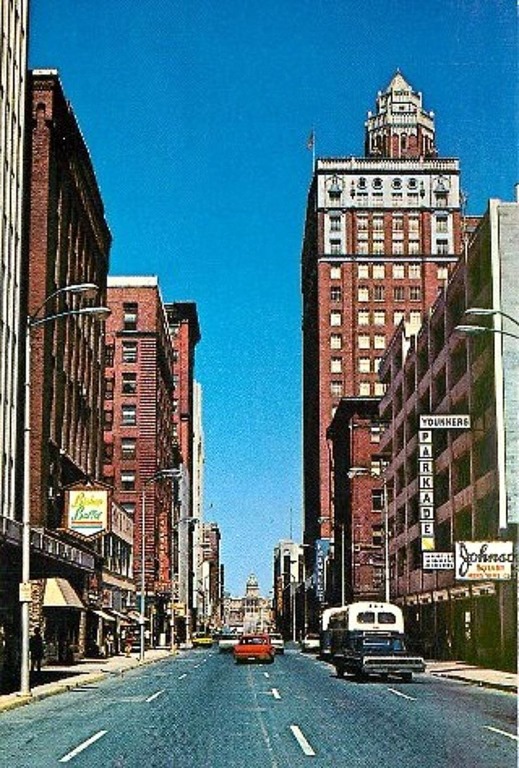
I laughed and said that it’s more than that though. I tried my best to explain, doing badly, as I usually do when speaking. What I was aiming to say was that hipsters are interested in things that are different and off-beat, that in doing so they often revive things from the past and redo them in the now different context of the present. This kind of rebellion against the too-ordinary incumbent culture eventually changes the culture, remaking cities and what they offer. “When I was a kid and went to Des Moines, there were no small breweries serving their own beer, or restaurants that serve those Asian noodles like you like. Instead I’d get to go to Bishop’s Cafeteria.”

“What did you like about Bishop’s?” my wife asked.

“I liked that you could choose your own desert. Usually something with whipped cream on top.”

Des Moines Early 60s

News from Nowhere: Des Moines dreams of hipsters to come. Shop at Younkers, eat at Bishop’s.

Now that isn’t a complete explanation of what a hipster is either. Nor does it tell how hipsters are seen and labeled by others, or that to call someone a hipster generally has a negative connotation. If you want a hyper-precise definition with lots of reasons to be wary of being called a hipster you can read one here.

Every cultural change movement like this gets made fun of, and provides lots of rich examples of foolishness. And unlike frankly political change movements which often generate mutual veneration between generations, many cultural rebels see the next generation of young novelty seekers as a bad, devolved outcome; while the young often find and fix their cultural novelty in rejecting the enthusiasms of their immediate predecessors. Can anyone be sure that hipsters are any more or less authentic than punks, hippies, beatniks, or swing era hepcats and so on? I can’t. Is some rampant cultural appropriation going on? Yes, and that has its foolish and even harmful side-effects for all these cultural movements—but are their benefits as well? I believe there are, and anyway, rigidly contained cultural silos seem stifling.

This rejection of immediate predecessors, doesn’t mean an inevitable total rejection of the past. Small breweries were common in America a century ago. Beards, mustaches, fedoras—the clichéd markers of the male hipster, all are revivals of past fashions.

Remember with the Christina Rossetti poem last month. I mentioned her brother Dante Gabriel Rossetti’s boys club “The Pre-Raphaelite Brotherhood?” Formed by art students, they signed their paintings with a “PRB” as secret tag for their movement. They hated the classical art and design standards of their day, and even though they were living in the original Steam Punk era, instead of fetishizing brass, well-oiled gear trains, and leather, they propagated their love for Medieval art and hand-made crafts.

Dante Gabriel Rossetti - Ford Madox Brown 1867

Dante Gabriel Rossetti. Can he interest you in some beard oil?

Sound familiar? The Pre-Raphaelites seem to me to be late 19th Century versions of early 21st Century hipsters. If they were ironically enjoying Midwest beer in a can, would they have signed their paintings “PBR”?

Today’s audio piece is William Morris’ “Love Is Enough.”  Morris was intimately connected with the Pre-Raphaelites. Like them, he was fascinated with Medieval art and culture, but he was a man with many interests—many more than I can touch on this time—including writing influential fantasy and speculative fiction. In that vein, we’re going to time-travel the Englishman William Morris like we did with Americans Walt Whitman and Emily Dickinson, so that this 19th century poet can sing a nugget of garage band blues with the LYL Band.

Watts painting of William Morris

William Morris fading into the wallpaper. He did just about everything but start a brew pub.

This one is a good song for a wedding and for lovers. To hear “Love Is Enough”  use the player gadget below.

The Garden of Trust

I feel I’ve been a bit long-winded lately with the notes for these posts. In my defense, I would say the topic of several recent posts, the relationship between art/artists and politics, is a complex subject. Today piece, “The Garden of Trust”,  is shorter, and the notes are too.

Weston Noble was a long-time conductor and choral director at Luther College in Decorah Iowa. I never met the man, but shortly after he died at the end of 2016 I heard this lovely quote from him. In a matter of a few words, he moved from vulnerability to trust through music. Thanks to the permission of the kind folks at Luther College, I am now able to share that with you. Today’s piece, so appropriate for Valentine’s Day when we think about love, lets the man himself speak those words surrounded by the music I wrote to celebrate them. Other than urging you to listen to them by clicking on the player gadget below, I can add no more than that music.

Vulnerability really is the secret to life itself. Openness…Honesty. And music allows vulnerability to come so beautifully….it’s much easier to start to talk with a greater depth….And then you go a greater depth than that. And when you reach a certain point of vulnerability…and this is what I think is so beautiful…that’s when you enter the garden of trust. Isn’t that a gorgeous thing to say? You’ve entered the garden of trust.


Homeopathic Hometown

Today’s piece recounts a common Midwestern experience, returning on a holiday to the much smaller town where one grew up.

For my post WWII generation, these smaller towns retained in our youth much of the vibrancy they had gathered in the first half of the 20th Century. The American rural world was larger then. Car travel was still not universal. Small farming and small manufacturing and small schools hadn’t been efficiently improved to larger sizes. Mass media, which seemed so large and potentially dangerous then, amounted to radio, newspapers, magazines and eventually a trio of gray and silver TV stations as the little rounded screens hovered into homes like flying saucers. So these little autonomous towns continued, 1950 like 1920.

How many of us, old now, can still, in memory, walk down main streets of their towns and small cities of their youth, seeing the storefronts, and hail silently the adult walkers and lost peers who might be walking there too? As I meet and talk to people near my age whose childhood was in larger cities, I find that they too had similar memories of neighborhoods. These neighborhoods were in effect, villages inside their cities—but this piece is about small Iowa towns in particular.

When we grew up, went to college, or left for adventure, marriage, or other work, we left a town and a time. When we went back to these towns, to visit our parents, our parents and our towns are found changed, not into coral bones and pearls, but into places slowly emptier and less vital. The storefronts empty and the eyes less bright; the houses, faded with dead paint and backs swayed.

Full fathom five thy father lies.
Of his bones are coral made.
Those are pearls that were his eyes.
Nothing of him that doth fade,
But doth suffer a sea-change
Into something rich and strange.

Eventually, it is as if the thread of memory has been unraveled from a large ball of yarn, and now the ball is no more.

In this way, our hometowns disappear, becoming gradually diluted of everything we could return to. Today’s piece “Homeopathic Hometown” is about this. Homeopathy is the theory that you can dilute a medicine until it, like our hometowns, retains nothing—or next to nothing—of the the medicine, and yet the solution will somehow “remember” the medicine and its effects.

That of course is how nostalgia works. We remember our personal version of the hometown, and find there is a hole between the molecules as we revisit our hometown. I suspect those without the specific gravity of our memories live now in a different appreciation for the place. It will take time for their own dilution to complete.

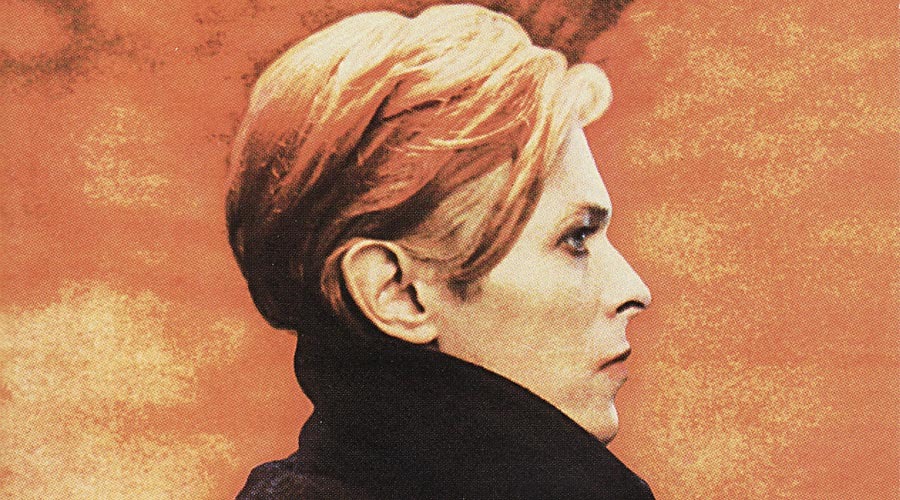
Bowie Low

Iowa! What am I doing in Iowa instead of Berlin?
I wanted to see late 20th Century decay, but, hog lots?


Musically, I was trying to emulate here the sound and feel of the David Bowie/Brian Eno “Berlin Trilogy” when I wrote and recorded this in 2015, about a year before David Bowie would suffer his own sea-change. Much of what sounds like keyboard syths in the mix is instead “normal” guitar filtered and delayed. I think the mix works especially well with headphones or earbuds on this one.

The School Year Begins

Tomorrow many US schools begin their school year, so here’s an audio piece about a child going through that first week back in school after what seemed to be an infinite summer.

The schools in Iowa, where I grew up, began a week earlier than the “day after Labor Day” start that is more common elsewhere in the US. I’m not sure why. Maybe farms needed kids more in the spring to summer transition weeks than in the summer to fall interval. Maybe it was an advance allowance for the inevitable “snow days” that would cancel school during the winter, days that if made up in the spring would move the end of the school year into June. Maybe it was, in some way, a gesture to say Iowans cared more about getting down to education than slacking neighbor states.

All I know is that as a kid I thought this terribly unfair. A whole week! My cousins in Minnesota got a whole week more of summer! That next week was always going to be the best week of summer, the one that you got to do whatever you hadn’t done, or done enough of, during the rest of the summer vacation.

Now my son goes to school, and the school yard the kids are walking across to get to the first day of school is like my schoolyard was. Maybe all schoolyards are like this. The grass is still a little beaten down from every independent path the kids have taken too and from, still worn from every recess outside last spring.

To hear the spoken word/music piece “The School Year Begins” as performed by the LYL Band, click on the gadget below this.