Dolphins (Heroes)

I live in a city where 12-string guitars are over-represented. Since I’ve only lived in Minneapolis for 50 years, I can’t say for sure why that’s so. Folk-revival pioneers Leadbelly and Pete Seeger, likely the ur-source for the instruments post WWII use, have no direct connection, but by The Sixties™ this powerful but awkward branch of the guitar family had a nexus of players here. The guitar playing other two sides of the Pythagorean Koerner, Ray, and Glover trio played 12-string. Leo Kottke made the beast a virtuoso instrument while working the small clubs and coffeehouses of the Twin Cities. John Denver had fallen in love with a Minnesota girl and played a lot of 12-string (and who can say what is the cause and effect there). By the time I arrived in the Seventies, Ann Reed, Peter Lang, and Papa John Kolstad also played 12-string in small venues. The year my ten-year-old Pontiac rolled into town, a local college student, Steve Tibbetts, was self-recording his first LP featuring 12-string landscapes pebbled with percussion over which roamed howling electric guitar wolves.

At that point I owned my J C Penny’s nylon string guitar and a weird amorphously shaped Japanese electric guitar I’d bought at a flea market and for which I couldn’t yet afford an amp.  Accommodating my new hometown, I soon felt I should get a 12-string guitar. A year or so after arriving I managed to afford a Cortez 12-string acoustic which was sold as a sideline item at the local Musicland record store. My memory was it cost $79. Designed to outwardly look like a “professional” instrument at the lowest cost, it could have been the music equivalent of costume jewelry or a stage prop. As these sorts of things go it wasn’t as bad sounding as modern forum-dwelling guitar aficionados would suspect, and mine had pretty good “action,” reasonable string height to allow easier fretting.

Later in the Seventies I added a DeArmond sound-hole pickup and I played this guitar with the LYL Band, and for the rest of the 20th century. With their double sets of strings, 12-strings sometimes warp and self-destruct under the increased string tension – but cheap and cheerful as the Cortez was, it’s held up, though the top has bellied-up over the years.

I eventually got a better 12-string, but I kept the Cortez around. A few years back I set it up to use Steve Tibbetts stringing variation where most of the octave strings are replaced with unison strings.*

Now let’s jump the month just ending, January 2026. As a writer I can’t paper over the immense mood shift this entails: from oddities about the types of guitars, to lives being mangled by intended government action.

I still feel unable to write fully about my reactions to the many injustices and atrocities that are incurring at the hands of thousands of federal agents that are roaming my city and the rest of Minnesota this winter. The first of the murders this month, the shooting of Renee Good in front of her wife happened on the street just across the alley of my home office and “Studio B.” If I hadn’t been wearing headphones and working on music for this Project I would have heard the gunshots – instead, it was my wife who rushed in to tell me. As of the end of the month, we’ve had a non-fatal shooting and one more murder by the federal agents, and a daily grind of sufferings. I won’t be the one to try to catalog all the careless to cruel things that are happening day after day. It sorrows me, and perhaps you, and at least for now, this information is available elsewhere. Nor will I offer enough praise for the ordinary people in this city who are trying to mitigate that suffering and plead for its ending. I will call out one thing many of them are doing: they’re seeking to be “Observers,” the term that has come to be used for folks who feel called to witness and record with their phones what our own government agents are doing to the people living around us. Think about this for a moment as you read this: these Observers are intending to go to where cruel things are being done by armed bullies who will use their weapons – issued along with pledges from their leadership that they will face no consequences – to rough up, to detain with and without charges, to attack with chemical and “less-lethal” munitions, to in two infamous cases, to kill them. Folks were doing this before Renee Good was killed – and after she was shot, more signed up. After the next murder of Alex Pretti pushed to the ground holding his cell phone camera: more again signed up.

I think of the incredible bravery of the American Civil Rights movement of the mid-20th century, and this is like unto that. But here’s something else I think concerning that role, something I don’t recall being written much about yet. There’s a chance that these observers are going to see armed agents of our government kill someone in front of them, and they’ll be tasked with recording that. The infamous murders of the Sixties’ Civil Rights movement happened in darkness and rural separation, though the corporal brutality of clubs, dogs, and firehoses was done in public and was sometimes filmed.

Along with bravery, that’s an additional heavy burden to take on. And some are now carrying that specific burden. We have memorials to Alex Pretti and Renee Good, but I want to stop and think of those that witnessed their killings, and what they must be carrying in their minds. My mind is once removed, however close to me these things happened, and yet it’s filled with conflicting and intense reactions – but they were there, in that instant as this happened. Dozens of people in my city, some intentional observers, some protesters, some just bystanders, are carrying that as I write this.

So, the name that most often arises in my heart this month after the many insults to justice and mercy isn’t one of the detained or murdered, but is instead, Rebecca Good, Renee Good’s spouse, who was apparently observing ICE action on the broad avenue near her house and mine. When the federal agents came up to their car and began to hassle Renee, Rebecca tries to draw their attention away from her partner. In that moment, I read her actions as saying: detain me, let Renee get away, throw me down onto the ice and snow and get a few punches or sprays of mace into the eyes while you strap cuffs on me. Rebecca can’t get in as Renee puts the car in drive, the doors are locked. On one of the videos you can hear her say “Drive babe,” allowing herself to be left behind with the agents. And then the shots.

You hear her voice in another video, moments later, sitting on the side of that broad road just behind my house, saying that they’ve killed her spouse, and moaning that she was the one that suggested they move to Minneapolis. I should transcribe her exact words, but I can’t bear to watch that video again just for journalist precision tonight.

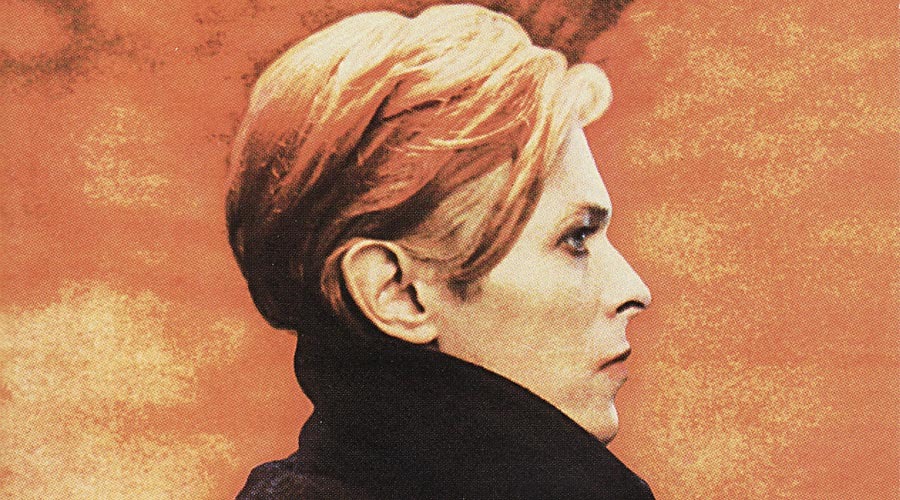
Another jarring transition I can’t engineer now. In between Renee Good’s murder and Alex Pretti’s, and thinking of Rebecca and other survivors, and of the witnesses, observers, I somehow fell to thinking of a song written by another 12-string guitar player of The Sixties,™ Fred Neil, “The Dolphins.”   Neil’s songwriting was a mixture of earnest and off-hand, an unusual combination. “The Dolphins”  is a somber wail about the cruelty of the world compared to the swimming pods of the famously playful aquatic mammals, and it’s just a handful of words.** Neil’s career was one of those “better known to other musicians” ones, and his song was covered by others back then, particularly those who played the 12-string guitar. Now if we move onto the Seventies – that off-brand extension of The Sixties™ – I’ve always thought that when another songwriter who played a lot of 12-string guitar in The Sixties, David Bowie, had to have been thinking of Neil’s song when, in the midst of his Cold-War-Berlin masterpiece “Heroes,”  he has one of the lovers kissing next to the armed guards around that inland city’s border wall think of dolphins again.

Fred Neil had a rich baritone voice, and David Bowie was a talented singer. I, alas, am mostly singing things here myself, yet I wanted to make a realization of those two songs while thinking of Rebecca Good, and others I didn’t (and still don’t) know how to number and name in this time. That would mean no first-rate vocalist, and I also decided to go primitive on the 12-string guitar, using that old Cortez 12-string. As the song progresses I strummed that 50-year-old box loudly, and I didn’t necessarily want a pretty 12-string with a rich sound.

.


*One of the features of the Cortez is a “zero-fret,” a still unusual feature that brings two benefits: it insures optimum string height in the “cowboy chord” first position area for easy playing and allows greater freedom in using different gauge strings at the player’s whim. Conventional 12-strings use a thinner string tuned an octave above the regular string for the low E, A, D, and G strings. Steve Tibbetts (like Leadbelly) instead uses two regular gauge, unison not octave tuned, strings for some of the courses. My Cortez 12-string has unison D and G strings.

**Neil’s choice of the dolphins, however casual it seems in his song, was a serious one. He drifted out of the music business in the Seventies and spent the rest of his life working on a dolphin support/conservation project.
The First Cuts are the Deepest

Earlier this month I posted the Parlando Project audio pieces that were the most listened to as of the start of this Spring. Turns out it’s a pretty good mix of what Dave and I are trying to do with this combination of music and words. However, in looking at the stats for the Parlando pieces, it looks as if a lot of readers and listeners are coming in partway into the project, starting around the beginning of this year. That’s fine. I think I’m getting a little better as I work intensively on the goal of 100 Parlando Project pieces by August of this year, but I think some of the early pieces are missing the listenership they otherwise might have gotten if I’d posted them later.

Since we’re still in National Poetry Month (#npm17), it stuck me that this might be a good time for some of our audience to catch up. So here are a few of the 2016 Parlando Project “deep cuts” from last year that you might want to check out:

Stars Songs Faces.  I wrote the music for this Carl Sandburg poem as my tribute to David Bowie in January of 2016, and it was the piece I choose to kick-off Parlando. Although I’m not the first to write music for these Sandburg words, I still like what I did, and the LYL Band performance realizes my intention well. This piece also reminds me that it’s been awhile since I posted a Carl Sandburg-based piece here. I’m working on one this week, but the orchestration is not going as well as I’d like it to yet.

The Prairie.  One of things I enjoy most about coming up with material for the Parlando Project is finding things in the public domain poetry cannon that I’d never read or even heard of. This is one of them. William Cullen Bryant was not on my radar until Dave Moore visited the Mississippi river valley mounds last year and began to write about them himself. This audio piece is on the longer side, which may account for the lower number of listens.

The Green Fairy.  Here’s a good piece written and performed by Dave Moore that hasn’t been listened to as much as some other pieces he’s written here. My notes in the accompanying post were written in mystery about the actual intent of Dave’s words. I’ve probably got some other poets’ intent wrong too, but remember that’s one of the points of the Parlando Project: you can appreciate poems when they are accompanied with music just as one appreciates song lyrics (or even music without words at all), as bits and pieces of language that sound good, or as lines or phrases that attach themselves to you with little pieces of meaning without any requirement that you understand the whole thing.

This is the Darkness.  I ascribe the lower listenership on this one to the dark tone. And indeed it might be an odd piece to listen too in the late Spring as days get longer and eventually warmer here in the upper Midwest. None-the-less, living around the 45th Parallel Minnesotans and Canadians should understand this.

Christ and the Soldier.  When I was my son’s age, I was following a day-to-day summary in the newspaper, a series called “100 Years Ago in the Civil War”  which covered the events just out of memory of the living in the American Civil War.  And now, since 2014, I’ve been informally following the centenary of World War I, which has similarly passed out of the memory of the living.  Siegfried Sassoon’s poem is a biting comment on WWI from a veteran of that war’s trenches. You know that old saying “There are no atheists in a foxhole?” Sassoon has a more complex view.

This One’s for David Jones

Names are funny things. I was recently watching an old TV show from 1969 where Janis Joplin sat on the talk-show couch with a young British-accented rock critic named Michael Thomas. A Platonic dialog of sorts broke out on that show. Janis, the more intellectual than she liked to pretend singer, proposed that rock critics fundamentally obfuscated the experience of music. Thomas, self-evidently aware that he was a member of said tribe, tried to counter that all he was doing was presenting in words the same subjective experiences that Joplin said were the essence of music.

He could have said more, said that he was providing meaning and context for those experiences. She could have replied that meaning was beside the point, or at least meaning was beyond the point of the approximate trivialities that he writes. They could have agreed that experience was the greater part of the meaning of art, but that something remains, and can be changed and reflected upon after the experience and in doing so they could come to the conclusion of poet William Wordsworth, that it’s “Emotion reflected in tranquility.”

But they didn’t say that—commercial breaks stopped the dialog just as it was getting interesting, but I wondered about that guy, Michael Thomas. What had he written? Did he evolve a unique understanding of music as he developed as a critic? There he was, young and good looking, a member of the generation that was going to, like most generations, reform and reconstruct our culture. How did his individual story turn out?

I found a couple of magazine articles online he had written by the time of this TV appearance. Elaborate little hip-bourgeois celebrity profiles of no great import—but then most magazine articles are like that. And he was fairly early in writing about “Rock,” that more serious outgrowth of rock’n’roll that was still new in 1968. There as a lot everybody had to learn then. So, what did he learn?

Turns out there’s no way to tell. Wikipedia has over two dozen Michael Thomases listed on its disambiguation landing page, and none of them are him. Rolling Stone’s archives list a few articles by Michael Thomas, the earliest written in 1970 seem to be by the same man, while the last under the byline are about buying stereo equipment at the end of the same decade.  After that? More than 35 years of nothing I can find on the web. If I want to catch up on what, for example, Jaan Uhelszki did after writing about music in the Seventies, it’s pretty easy. Michael Thomas—not so much.

Like I say, names are funny things. My name is shared by several. There’s a Frank Hudson with some elaborately decorated big-rig trucks. There’s a hand-made English furniture-making firm with my given name. If I narrow it down to music and poetry, I’m still not unique. There’s a jingoist Australian poet, and a  fine Travis-picking Kentuckian guitar player. I’d like to think I might be related to that last one, after all I have some family tree roots from around there, and we both seem to play Seagull guitars at times.

Frequent keyboardist and alternate voice here, Dave Moore has his own eponymous issues, but let’s cut to another name issue.

In 1964 a young English guy wanted to get into the performing business as a singer. Lots of folks did in those days. His first recording, a single with his teenage blues band Davie Jones and King Bees came out that year. He kept plugging away at English pop-blues to no great success, until 1967, when he had a problem.

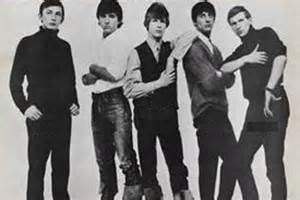
Davie Jones and the King Bees unlabeled

Davie Jones is the teenager in the middle


Well, he had a couple of problems. First, no one was buying any of this records; but secondly, his performing name Davie Jones, the informal diminutive of his given name David Jones, was more-or-less the same name as the performing and birth name of much more successful performer and teen heart-throb: Davy Jones of the Monkees. So, he changed his performing name to David Bowie and remained unsuccessful for a couple more years without being confused with the Monkee or the roughly 100 other David Joneses on the Wikipedia disambiguation page.

Eventually, he got his first hit. Eventually he started changing more than his name. Eventually he helped change our culture, making some dazzling records along the way. There was an immediate experience, and then something remained to be reflected on over time.

A year ago, he died. The official launch post of the Parlando Project here last August was the tribute I choose for Bowie, my setting of Carl Sandburg’s “Stars Songs Faces” that the LYL Band recorded the day after Bowie died. Now for our 41st official Parlando Project post, here’s Dave Moore’s self-written tribute “This One’s for David Jones.” Dave recorded this the same session as we did “Stars Songs Faces.”  It’s a rockin’ little number, because it seems like it’s been a bit since we rocked out. If you see it, you can click on the gadget below to hear it, or if there’s no visible gadget, this highlighted hyperlink will work too.

Homeopathic Hometown

Today’s piece recounts a common Midwestern experience, returning on a holiday to the much smaller town where one grew up.

For my post WWII generation, these smaller towns retained in our youth much of the vibrancy they had gathered in the first half of the 20th Century. The American rural world was larger then. Car travel was still not universal. Small farming and small manufacturing and small schools hadn’t been efficiently improved to larger sizes. Mass media, which seemed so large and potentially dangerous then, amounted to radio, newspapers, magazines and eventually a trio of gray and silver TV stations as the little rounded screens hovered into homes like flying saucers. So these little autonomous towns continued, 1950 like 1920.

How many of us, old now, can still, in memory, walk down main streets of their towns and small cities of their youth, seeing the storefronts, and hail silently the adult walkers and lost peers who might be walking there too? As I meet and talk to people near my age whose childhood was in larger cities, I find that they too had similar memories of neighborhoods. These neighborhoods were in effect, villages inside their cities—but this piece is about small Iowa towns in particular.

When we grew up, went to college, or left for adventure, marriage, or other work, we left a town and a time. When we went back to these towns, to visit our parents, our parents and our towns are found changed, not into coral bones and pearls, but into places slowly emptier and less vital. The storefronts empty and the eyes less bright; the houses, faded with dead paint and backs swayed.

Full fathom five thy father lies.
Of his bones are coral made.
Those are pearls that were his eyes.
Nothing of him that doth fade,
But doth suffer a sea-change
Into something rich and strange.

Eventually, it is as if the thread of memory has been unraveled from a large ball of yarn, and now the ball is no more.

In this way, our hometowns disappear, becoming gradually diluted of everything we could return to. Today’s piece “Homeopathic Hometown” is about this. Homeopathy is the theory that you can dilute a medicine until it, like our hometowns, retains nothing—or next to nothing—of the the medicine, and yet the solution will somehow “remember” the medicine and its effects.

That of course is how nostalgia works. We remember our personal version of the hometown, and find there is a hole between the molecules as we revisit our hometown. I suspect those without the specific gravity of our memories live now in a different appreciation for the place. It will take time for their own dilution to complete.

Bowie Low

Iowa! What am I doing in Iowa instead of Berlin?
I wanted to see late 20th Century decay, but, hog lots?


Musically, I was trying to emulate here the sound and feel of the David Bowie/Brian Eno “Berlin Trilogy” when I wrote and recorded this in 2015, about a year before David Bowie would suffer his own sea-change. Much of what sounds like keyboard syths in the mix is instead “normal” guitar filtered and delayed. I think the mix works especially well with headphones or earbuds on this one.