The usual remit of this Project is to take words — somebody else’s words, words that were intended as literary poetry — and to combine them with original music in some way. Every so often, I’ll use my own poetry, but the journey there is similar, not like most songwriting where the songwriter will as likely as not begin with a tune, or a set of words that seem to emerge with a tune.
But I have written that way. No one can spend as much time with music as I do without having the music muse show up dancing with the lyric muse sometimes. Today’s piece is an older composition, one that I considered posting for the Parlando Project since its beginning years ago. You haven’t seen it before today because of that difference, because it always was a song.
I recall distinctly how this song began. I was reading an interview with Brandon Flowers, the lead singer of the modern rock band The Killers. In it he wanted to make plain that for all the traveling showmanship and flash of that part of his life, he was a guy who grew up in a small town where one could see a farm tractor driving down a main street as an unremarkable occurrence.
Bang!
As I read that I thought of the small mid-century Iowa town I grew up in. A tractor on main street? Yes, that had never registered as unusual until this other person made a point to remember that. A version of this song came quickly from that moment of coincident remembrance. Taken back to my mid-century small town in my mind, I could see this teenage schoolkid who had a springtime crush on a fellow classmate, but who couldn’t get up the nerve or words to speak to her of his feelings. And then it would be summer vacation. In my town, my school, in my time, most of the kids lived in the surrounding countryside and disappeared from the town outside of the school-year.
And eventually, as I saw this kid in my mind, this time of year, late August, would arrive. He’d have another chance to speak to her. Would he have the courage? He knows half-way at least that he might not. Does he? We never find out.
Another AI generated image. I couldn’t get the AI genie to generate one of the tall, narrow farm tractors I remembered from my youth, so I had to settle for this.
.
A version of the words came out fairly quickly as I inhabited that kid’s mind and the tune was nearly there simultaneously. The somewhat odd phrase that became the refrain and title was there from the beginning. I don’t know why that phrase came to me. Researching, I see there was a 1961 Rock Hudson movie with the title Come September. Not a small-town setting, more the Italian Riviera. Our little town did have a movie theater then, or that film might have played on our black & white TV as a “movie of the week.” Bobby Darin was also in the film and wrote music for it, including a title-tune “Come September.”* That title laying fallow in my unconscious is plausible — but whatever, I like my variation, as the overlap from late August to September seems a distinct “month” on my calendar, and perhaps yours.
Maybe I should have performed this with a full rock-band setting in honor of The Killers, but my mood and logistics brought this voice and acoustic guitar version out instead. You can hear it with the graphic audio player below if you see that. No player? This highlighted link will open a new tab with its own audio player.
I released the 700th Parlando Project audio piece earlier this month. I consider this an extraordinary achievement. I’m unaware that anyone has ever done anything like this* at this scale.
Sometime around 2015 I had an idea: that while poetry and music had long been combined, the ways you could do that hadn’t been fully exploited. I thought of the strains of Modernist poetry that were presumed to be obscure and non-musical, and believed that they had musical elements that would allow those poems to seep into one’s consciousness under the decoration and repetition of music. And I thought too of dusty words safe in their paper alabaster chambers — obsolete poetry, or lesser-known poets — could some of them be asked to come out and sing and dance?
If one would combine these words with music, how could the music illuminate or vivify them? I knew there were answers that’d already been given, so I wanted to try some of the other answers and maybe even find new ones. I knew the traditions of Art Song a bit, admired much of that; but I sometimes felt that Art Song settings and performance styles, while beautiful, didn’t always communicate all a poem’s possible environments and emotions. I knew the old-fashioned mid-century traditions of Jazz and Beatnik poetry pretty well, and despite Rap owing something to those things ancestrally, Rap’s insistent flow of words sometimes seemed more demonstrative than denotative to my ear. Indeed those two traditions, Art Song and Rap, poles apart in cultural associations, often suffered from a similar flaw: they needed to demonstrate talent and skill in the singer or rapper to execute tricky stuff, vocal feats. I’m not against that per se, I just thought there could be more than that.
Musically I was more aligned with two movements, also closer than superficialities might lead one to suspect: “folk music” and what was called variously punk rock, alternative, and indie music. These two musical movements could allow virtuosity, but they didn’t require it. They knew that simple could be as effective as complex, that one could be both simple and distinctive, that expensive equipment and recording perfection wasn’t essential.
I originally thought that the Parlando Project could best be done by other people. I even pitched it as an adlib series of collaborations between various musicians, bands and ensembles with words that might not be overly familiar to them. Sensible radio network people listened and wisely chose not to try this. They were wise because such an effort has opportunity costs, and the results could fail embarrassingly. My idea was not a good bet and would take resources from safer bets.
So, I decided to try another route, one most consistent with my alignments: Do It Yourself. Like hootenannies, sing out, kick out the jams, get in the van, DIY is a way to bypass the might-have-been, the we’re-not-ready, we-haven’t-been-given-permission obstacles. My singing voice didn’t suit Art Song, my less than agile speaking voice didn’t suit Rap.**
Who’d write the music? Mostly, I would. Who’d perform the music? I planned to pitch-in on what I could play as things started out, but later it was often myself playing all the instruments. Who’d select the words and present them? I would. Who’d record the music? Me. Who’d promote this and call proper attention to it? Alas, mostly me.
The result? It got done, however imperfectly. Things that hadn’t even been imagined had realizations that now exist, that others could hear. What was beyond my imagination? How many writers work I’d have meaningful encounters with. Those writers are almost always long dead, yet the work of composing, performing, and recording these combinations with music means I have hours of collaboration with them. The poem I start out with is often not the understood poem I’d write about at the end — and frankly, my understanding sometimes changes after I finish presenting the audio piece to you. We understand poems, if we understand them, with our whole lives.
I’ve learned new things musically out of necessity. I’ve become a somewhat better vocalist. As a recordist, I’ve figured out some things that work well enough. Would the pieces be better if someone more talented in each of these fields did these things? In most cases, yes. But that didn’t seem the choice. The choice seemed to be: nothing, silence, possibilities that remained “how about/what if…” thoughts and nothing else.
Then there’s that last part of the DIY bargain, promoting this Project and bringing it to attention, something that was done badly. I’m a lousy self-promoter. Many artists are. When I get up the courage to do it — which I consistently fail to do — I often do it badly with insufficient skill at figuring out the hook that draws interest. It’s also quite possible that the general idea here: a variety of words (not always “poetry’s greatest hits”) combined with a variety of musical styles has a very narrow appeal. That musical eclecticism, a choice that suits me, I suspect reduces appeal. The listener who might like my simple folk music style examples will not care for the electronic pieces will not like the let’s give it a go live small rock combo stuff, will not care for the “Punk Orchestral” pieces, will not care for the weird drone and minimalist stuff, and so on. I fear it may only take one or two examples someone doesn’t like to end their engagement with the Project. Yet, I can’t help myself, all different kinds of music are always in contrasting discussions in my head.
In summary, as I look over the more than seven years I’ve been doing this, I’m left with pride at what I’ve done. The self-questioning and pitying part of my emotions whispers to me “No one else is astonished. Are you the fool for thinking it astonishing, or are they the fool for not?” The sensible me judges those self-whispers. Replies that a few hundred read or listen on the best days to things that would not exist otherwise. I’ve received kind words from some of you, and if I haven’t replied enough to those messages it’s because I’m so grateful for them I can’t think of adequate words to respond. Some readers and listeners have gone even further and re-blogged or re-posted some of the things from the Parlando Project on your own blogs or on social media, something that’s been important in growing the audience for this.
But still the question sits in my mind on my doubting days: literary poetry and approximately realized indie music are both smallish groups. The combination of the two may not be additive as in my initial hopes, but subtractive. It’s possible I’ve done the most substantial job ever toward a goal inherently of not-much-interest. Or that I’m not good enough at it. Sobeit, it’s what my soul wants to do, and if such doubts try to stay me from doing this, I’ll listen to them and try to continue.
Earlier this month, as this post sat in drafts as I wondered how embarrassing, needy, or self-aggrandizing it was, I saw this quote in a column by someone who I never really knew, though she was technically a co-worker.*** In a final column in a local arts and entertainment paper, The Dispatch, that was itself folding its tents, long-time local radio host Mary Lucia wrote:
“Ultimately the world owes you nothing, but it’s OK to secretly believe it does.”
How can I tell if that’s true or not? I can’t even tell how I could tell. It’s one of those things that might take more than one lifetime to know. I remember that quote and I remember the trio of things I wrote above examining myself: “embarrassing, needy, self-aggrandizing.” I may not have enough time in my aging lifetime to find out what is most true in the balance — and any younger person reading this, even you may not have enough time for whatever you bill out to the world. Doubt has value, doubt may keep you from doing something foolish, but as of now, doubt doesn’t tell me what else to do. If I’m a fool, I must do what fools do, or nothing.
I can’t draw for beans, but I’ve had fun generating illustrations this year using Adobe’s new AI technology that claims it doesn’t use uncompensated work of artists.
.
* New here? What’s this? Words, usually literary poetry from a range of eras, combined with a variety of original music, with posts here discussing my impressions of the poets and poetry as I encountered them in the making of those pieces.
**More than 50 years ago, in my naïve solitude, I imagined a type of music that would use a chorus of rhythmically spoken words to represent music. I even composed a couple of short pieces that I imagined could be performed that way, and eventually a script for a short play that expanded on these ideas. A year or so later, I heard The Last Poets recording and heard something partway like what I had imagined. I looked with admiration at the beginning of Rap, but I honestly have to say that I haven’t kept up with it. Besides my lack of speedy vocal chops, and generational distance from the modern masters of this form, the word-music I hear in my head sounds more like Carl Sandburg and Langston Hughes. I’m just as generationally removed from that latter pair as from today’s rappers, only in another direction. I guess I’m just weird that way.
***She would come to work about the time I was leaving my shift at a radio network, so I knew her more the way ordinary listeners did, as an on-air host.
This is a modest little piece — a small number of words, a simple musical setting — so it may seem odd to choose it as the 700th audio piece from this Parlando Project. Well, this whole project is odd, isn’t it? You, for reading this and listening to the audio pieces are unusual. I’d say I’m odd too for taking the uncounted hours this Project has taken: looking for available words that strike me as worthwhile for performance, composing the music, performing most of the instruments, recording them, and figuring out what to briefly say about my experience of these words.
I plan to say more about reaching this milestone in a follow-up post, but I will put that off so that we can get to American author Mark Twain’s words without overwhelming them with my particulars.
I came upon this as if it was a poem written by the famous novelist, something I took immediate note of. Poets who publish novels at least once or twice aren’t extraordinarily rare. Established novelists who take to writing poetry may be slightly more unusual, but there are examples. The two arts are unlike enough that the list of those whose expression in both fields remain worth considering exists, but that list isn’t likely to take more than one page. But Twain’s poem was specifically unexpected. If you have followed this Project completely for a while you will have encountered most of what might be considered poetry by the great novelist Twain. One was a little monolog that performs easily.* That piece is a still-acute skewering of poète maudit literary stances. Twain’s other poem used here was a satire produced by a character in a novel who wrote rafts of terrible elegies, a poetic form that Twain’s era loved more than any other: Tennyson’s book-length, multi-part, In Memoriam elegy was a Victorian best-seller. Twain’s USP while he worked in the book trade was instead books full of life and absurdity written in garrulous American vernacular. Yet, here’s a poem by Twain that is:
Heartrendingly sincere
An elegy
Short enough to be engraved on a headstone
Where did this come from? It has both a biographical and literary inheritance. The biographic one: the headstone it was engraved on was for Twain’s beloved eldest daughter, a talented young woman who died at age 24. If you’ve got a few minutes, click this link and read her Wikipedia entry, so that you can mourn along with Twain. The literary antecedent, who Twain credited on the headstone as the author, was a contemporary poem written by an Australian expat-to-Scotland named Robert Richardson. Richardson is next to unknown and I’ve only glanced at the collection in which his poem titled“Annette” appears. He was a newspaper and periodical poet who wrote (as did Twain) for popular audiences — but unlike the Twain we best remember today, he is (at first glance) conventional in his literary diction and full of the usual Victorian sentiments. Richardson’s “Annette” takes up three pages and many stanzas, and Twain’s adaptation uses only the final stanza. Twain’s poem is 27 words long. Only 20 of those words come from Richardson’s stanza.
Here’s Richardson’s stanza followed by Twain’s poem as it appears on the headstone:
Here’s a link to a page where I found this picture of Olivia Susan Clemens’ headstone in Elmira New York. The link also includes the full text of Richardson’s Annette.
.
What are the alterations, which I’ll presume to be Twain’s, and which I assume are changes, not Twain using a different version than I found in an 1893 Richardson poetry collection?
“Friendly” is dropped from the description of the sun. “Kindly” is moved to the sun in Twain. “Softly,” a more objective adverb is used for the wind by Twain. Imagists (who’ll arrive only a decade after Twain’s poem) would have preferred kindly to be dropped entirely for an objective word, but on balance Twain is just slightly more modern. “Southern wind” not western may be localizing weather patterns between Richardson and Twain’s locales, but making this change shows a careful choice is being made.
Both Richardson and Twain make the choice to move from the above world of the living to the below ground world of the buried in their stanzas. Richardson has the sod “resting,” personifying in Victorian fustian. Twain has the weightier and more objective “lie.” Small difference, but I hold with Twain’s choice.
“Dear heart” for “Annette” removes the inapplicable specific from Richardson. In the final phrase Twain again adds power in my judgement by refraining “good night” rather than using the specific Victorian term “sweetheart.” Although Twain intended his poem as an inscription, the refrain adds to the effect when sung in performance.
Tiny poem, tiny changes, but of course the greatest difference, one made by a novelist (of all trades) was to presume that these spare 27 words from the end of Richardson’s longish poem make an apt summary of the situation: a beloved, talented daughter struck down by illness in her youth. This may have been a practical choice: carving it on a headstone (though larger headstones with longer inscriptions are found in Victorian graveyards). Intent and practicalities aside, I was moved.
You can hear my performance of Twain’s epitaph/elegy with the following audio player. No player? This is a backup link that will open a new tab with it’s own audio player. As I said, simple music today. Just me playing a nylon string “classical” guitar, the kind of instrument that I first played when I started out.
.
* Besides being credited by Hemingway as the progenitor of “All modern American literature,” Twain pioneered what today we’d call standup comedy.
My Project says it’s about where music and words meet, yet I’m still surprised and gratified when I encounter literary poets whose connection to music is significant. Most poets enjoy music — hell, most people do. And the arts of poetry and music have long been siblings. Who can count how many poems have the word “song” in their titles, or how many poems speak of birds or unfeathered human musicians making music? Yet the number of poets who have publicly taken to composing and performing music is limited.
One might think that songs with words, the music most listeners prefer, would be already halfway accomplished by any good poet. In practice, that’s not always the case. A great deal of literary poetry doesn’t work like a song that captures listeners in real-time once in and through their ears.
What you say: “You do this all the time, you take literary poetry and you combine it with music!” Yes, but I’m choosing what poetry to use, rejecting much more than I even attempt to compose music for. And while I appreciate the audience this project has developed for your open-mindedness and tolerant ears, by Internet standards my Parlando musical pieces have a small audience. Part of that is my voice, which has its limits, and my reach-exceeds-my-grasp musicianship — part of it too may be that I’m no one’s young, good-looking, begging-to-be-discovered talent.
Last time I said I’d leave a fourth example of someone combining poetry with music that I’ve discovered recently for a future post. That one is poet, novelist, teacher and promoter of poetry* Joseph Fasano. In the midst of his very active social media presence this summer, Fasano let it (rather casually) drop that he had publicly released an album of songs, The Wind That Knows the Way.
Fasano is an effective promoter of his own work on Twitter, and he’s amassed (by PoetryTwitter** standards) a sizeable number, thousands, of followers. “Followers” in the social media world is something of a hollow stat. Many in the count are proforma or “polite” followers mutually responding to follows from others, and then there are bots and insubstantial accounts seeking merely to draw attention to their causes & businesses. But when Fasano posts a poem of his or a series of notices about his latest novel, he gets (by literary standards, or mine, whatever I am) lots of eyeballs, re-tweets, and at least a bit of replies and response. By PoetryTwitter standards, people are paying attention to him.
To my knowledge, he’s not followed up to that single notice about his album of songs. For someone showing such effective and continuous effort to promote the other things he’s doing, that’s odd. Even though getting ear-time from me for musical work is tough — composing, recording, mixing the Parlando Project pieces take away from those opportunities — I listened to the album (available on Apple Music, Spotify, and likely some other current music streaming services) within a few days of the announcement.
It’s good, and a particular surprising adds to that goodness. I guess I expected a typical modern musical production — either pop in pretense or a rougher indie one. When someone tells me they have a recording these days, that’s what I’ll most often hear. Instead, the album’s sonic approach is a remarkable duplication of an early 1960s Folkways, Sing Out, folk-venue-appearing guitarist-singer with original songs record. In arrangements and general vibe, it’s like the early records of Gordon Lightfoot, Tim Buckley, Jackson C. Frank, or Eric Anderson. For musical particularists, let me add I’m not talking about post 1965 records. At times Fasano’s voice and musical approach reminds me of a less gruff Tim Hardin, but Hardin’s most popular later ‘60s records used highly skilled bandmates to fill out his sound. The Wind Knows the Way is just Fasano and his acoustic guitar, but like the early ‘60s records I’m referring to, his voice is pleasant and his music appealing, while his lyrics express more emotional complexity and range than the average pop song.
Here’s the title song from Fasano’s album for those that don’t use Apple Music, Spotify, et al.
.
I don’t know who engineered this recording, but the recording is technically well done too. My favorite cuts on the album are “In My Time,” “The Trouble,” and “The Wind and the Rain.” I’m an outsider to Fasano’s creative process, but it appears to me that he already has a “song lyric” mode that both borrows from and differs from his page poetry. These songs don’t come at you with a strange torrent of unusual metaphors with hermetic connections between them. Song lyrics forgive, even arguably benefit, from less originality in tropes, from commonly returned to, simple, elemental words. Many literary poets have trained themselves to avoid those things — and so the Parlando Project sometimes asks the listener to allow more weird words and similes that one hears with most songs. Fasano seems to know that as a songwriter he can write differently for song.
I assume he wrote the music, though the modern streaming services and his sparce posting about the record make this only an assumption. His melodies are fine, not showy, catchy and very singable. Harmonically he shows some variety in this set of songs, but he’s not from the Joni Mitchell or Nick Drake school of advanced guitar composition. This isn’t a pioneering, challenging, or world-changing record, but then too our contemporary world doesn’t have many records like this anymore: a voice, a guitar, and tuneful well-written songs that don’t require anything more than that.
In summary if you are a fan of those early ‘60s records (as I am) or if you would like to hear an intelligent record that usefully uses simplicity and a direct unadorned presentation, there’s a good chance you might like Joseph Fasano’s “The Wind That Knows the Way.”
.
*Fasano’s “promoter of poetry” element appeals to me. I’m forming a number of things I’d like to say about his efforts in that area, and if time and fate allow me, there’s maybe yet one more Joseph Fasano post to come this summer.
**Twitter, its faults and its problematic owner, is a current topic that’s launched a thousand takes, which I won’t add to today. I will say that PoetryTwitter is not overly large, but there are interesting people there. Part of what draws me to poetry is that I’m a naturally long-winded, run-on-story kind of person, and poetry’s compression lets me pare that back. The off-the-cuff, short-answer nature of Twitter lets me exercise the same muscle, and it fits my current fate of having few assured blocks of time to compose more complicated music or thoughts.
The route today’s musical composition took to existence was almost comically round-about. I added a new virtual instrument (VI)* drum set this week, one with a drier, more retro sound. I decided I should try it out. I grabbed an acoustic guitar track I’d recorded weeks ago, but not used for anything, and went to creating a simple drum track using the new kit’s sounds to see how they meshed.
It sounded pretty good, but that track-of-convenience guitar part had bleed from other stuff into the acoustic guitar mic, and so I used a tool I have that extracts a chord progression from an audio file, and then had that extracted progression played with a VI piano.
That cleaned things up enough that I figured I should make a little instrumental piece with this. Why not complete a trio and play some bass? Just over my shoulder in my little bedroom-now-home-office sits a Squier fretless Jazz bass.** I love its sound, but my old fingers need to be in good shape to get a clean sound out of it. Yesterday, my fingers were feeling strong, so that’s what I grabbed. I found a bass motif and played it in my best attempt to fit into the “pocket” of the drum groove.
A great musician or a more meticulous recordist might have perfected this, but something in me accepts a certain looseness and imperfection. Even if I’m recording one track at a time in one-man-band mode I’m often looking to get that spontaneous live-take feel, and my resulting trio had that I thought.
At this point my little house was filled with a half-dozen late-stage teenagers, all looking to have an autonomous time playing video games and watching YouTube. I holed up in my little office to let them be young. Might as well look to add another VI to my trio — if nothing else, to pass the time. The computer I work with virtual instruments on doesn’t have speakers, only headphones. Returning to the world between the cups of the headphones, I wouldn’t be bothering them.
What could be that another instrument? I decided to try cello. What articulation should I choose? My cello VI has a dozen or so articulations to choose from: different bowing techniques, styles for flowing legato or choppy stabs. I auditioned a few, and found two finalists I liked with the existing trio. Two roads diverged within a wood. Which one to take? I decided I’d use both of the finalists.
I set the cello part to echo the keyboard part, a simple choice. I often enjoy simplicity in music, and my use of orchestra instruments often reflects that. I’ve taken to calling some of my pieces “Punk Orchestral” for this reason. Hey, ho, let’s go!
It was 11 PM by the time I finished the instrumental. The teenagers decided to decamp for a Perkins restaurant*** in a late-night post-modern way. Listening to the rough mix of the trio with the cello section I now thought this is good enough for a Parlando Project piece — I just need to find a poem for the words. I didn’t have much collected for possible imminent use. I had some Emily Dickinsons, but I fear I’m doing too much of Dickinson lately, as much as I like the results. I tried a Robinson Jeffers, but the mood of the poem didn’t match the jauntiness of the music’s groove. Then I tried a short poem I’d drafted in June, inspired by watching waterfowl in my city’s urban parks, lakes, and ponds. That fit!
The poem that became today’s lyric
.
I revised the music slightly to use with these words. Guided by the instrumental’s chords and using my imperfect voice, I devised an expeditious melody. I tried a couple of takes singing the words, and found that my poem sung better with some mild editing of its text. It was around midnight when I tracked the final vocal take you can hear today before going to bed. It was just after that final tracking that a comic turn happened. The drum track, the new VI sound I started with, that, which had inspired the course of this composition, stopped playing, muted itself. A bug perhaps? But in the early AM hours I decided it sounds better without the drums, as the other instruments now have absorbed the groove conception I started with within themselves.
Today I mixed the resulting piece “All These Wild Geese Poems.” Mixing involves placing the instruments within the soundfield in stereo width and volume depth, and using other audio processing on their dynamic envelopes and frequency ranges. I then created the final mix using some computer tools to adhere to current streaming services loudness levels, and uploaded it to the service that shares my audio to play here and on the podcast platforms of Google, Apple, etc.
You, poet, you’re not much of a goose, or much of a Yeats either, so get out of my way!
.
“All These Wild Geese Poems” takes off from the many romantic poems about geese, cranes, swans and such large waterfowl. The urban geese I meet in my city nature are instead cantankerous beasts, and I thought our contemporary poems often take a similar stance, no pristine “Wild Swans at Coole” musings for these birds — more at the famous Dustin Hoffman Midnight Cowboy “I’m walkin’ here!” self-involved swagger with a limp. You can hear the performance with an audio player below if you see that, or with this alternative link that will open a new tab with an audio player.
.
*Virtual Instruments are precisely recorded sounds of the various notes and timbres of a physical instrument. Either by using compositional scoring, or the computer equivalents of that; or by playing the notes with a MIDI controller equipped keyboard or guitar, one can make reasonably convincing performances of instruments that one cannot play or afford in real life.
**I play interesting but relatively inexpensive guitars. Squier is an entry-level brand devised by Fender to sell low-cost versions of their famous instruments. Back in the 20th century any aspiring player found with a Squier was considered non-serious. “Real musicians” used “pro instruments” — but in the past decade or so the quality of the better Squier instruments has increased substantially.
***Perkins restaurants are like a Denny’s. Big menus with lots of senior-citizen specials and tastes —but open early and late for the time-expanding young person.
If you’ve noticed I’ve been gone for a while, I have as well. The last few weeks have had a lot of other things to attend to. Mostly happy things: travel, and work around the teenager’s graduation from high school. Still, I found myself picking up a book from my teetering “plan to read” pile that I thought would be mildly diverting: Donald Hall’s Old Poets. This book is a hybrid, like one of my favorite books from last year, Lesley Wheeler’s Poetry’s Possible Worlds.* Like Wheeler’s book, Hall’s book contains some memoir elements mixed with consideration of poets the writer knows, and from there the qualities and connections of poetry and poems with the poets. Hall’s memoir material covers the bildungsroman years, that life era of a few posts about my life I’ve done this spring, while Wheeler’s examines her relationship to her parents and poets well into midlife. The time settings of the two books are different: Wheeler more in this century, Hall centered around the last midcentury.
Here’s something I found striking in Hall’s accounts from his time and place. As an undergraduate he had access to not just his Harvard contemporaries** but to Robert Frost and T. S. Eliot. Since a good portion of Hall and my lives overlap, Hall being only about 20 years older, I found it strange to read that as a 20-year-old he had a series of informal interactions with these two while they were giants in a way that no poet today is. The effect was scarcely less shocking than some SF novel where the author dines and discusses poetic topics with Shakespeare, Milton, Keats, and Whitman. I suspect much of Hall’s access is due to Ivy League effects, whereas I think today’s poetry scene is more decentralized even while being more academic/MFA connected. If I was 20 in 1949, I would have been as likely to repeatedly meet the two great poets as I am to contact them by Ouija board today.
Hall’s book has 6 sections devoted to 7 poets, including ones on Frost and Eliot. Hall’s portrait of the older Frost is particularly vivid and special, while his stories of drinking with Dylan Thomas are less unique.*** Yet, within his Thomas chapter, Hall dives into why Dylan Thomas’s poetic stock fell off by the end of the century. Hall reveals that Thomas himself told him that he had only written about three good poems.**** The one Thomas poem we all think of, the villanelle whose refrain has become memeable, was not one of those three. Thomas and Hall agreed over potent-potables that “Do Not Go Gentle Into That Good Night” was only a skilled attempt to put on Yeats’ coat.
Now to get on to today’s new audio piece. Hall compares one of the poems Thomas thought was one of his best early works unfavorably to a poem by Thomas Hardy, and Hall’s Thomas chapter gives us that Hardy poem, “Transformations” in full.
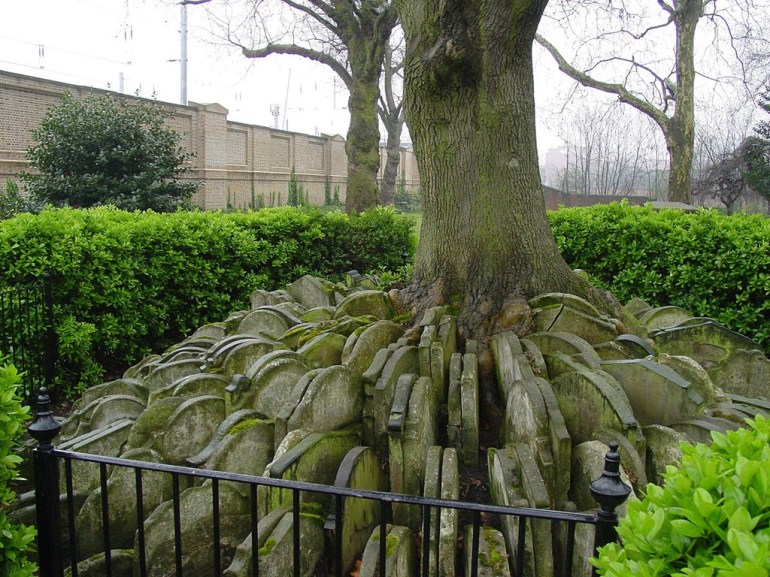
If reading Hall’s book was to be a portable replacement for work on this Project, that Hardy poem was stunning enough to cause me to try to get something composed and performed in the spaces between other things this week. Hardy’s “Transformations” is an account of the experience of a non-spiritual approach to immortality — not to life after death, but life as a thing that only changes form, of which we as people are only incarnations. Here’s a link to the text of this poem.
Hardy himself worked out this method of consolidating a graveyard’s worth of tombstones, and it makes a striking illustration for his poem.
.
Hardy, an Englishman born of the middle of the 19th century drops in but one or two anachronistic words in this poem — but while “grandsire” doesn’t sound natural on a 21st century American’s lips, the gist of this metrical and rhymed poem is easily singable in 2023 I thought. Down went Hall’s book and up went the efficient composer! I whipped up the music quickly. Long time listeners here will know that my music is usually not harmonically complex, but my simple cadences often try to confound the usual chords and progression resolutions. I hope I’ve done that with this one. The time to record the piece was scant, so I went with my go-to “I may have to hop a freight train shortly” folk music standby, the acoustic guitar and overdubbed a quick bass guitar part. You can hear it with an audio player below — or if you can’t see that graphical device, with this backup link that will open a new tab with its own audio player.
.
*Few click hyperlinks, so let me put this in a footnote. Wheeler’s book has these additional reasons to read it beside just being good: its story and poetry is contemporary, and as a writer and a woman Wheeler focuses on elements of our lifetime journeys that other poetic memoirs gloss over. Here’s those hyperlinks: Wheeler’s book. Hall’s book.
**Hall’s Harvard classmates circa 1951 included Frank O’Hara, Robert Bly, Adrienne Rich, Kenneth Koch, John Ashbery, and others. Eliot — and to a trivial extent, Frost — were Harvard alums. My personality, alas, is not socially skilled, but even at my most sociable, my circle of working-class Lake Street poets and state college teachers in my 20s is not as name-dropingly famous.
***It’s possible that everyone even vaguely literary in sundry metropolitan areas around this time had drinking with Dylan Thomas stories, even if Hall’s analysis of Thomas’ poetry is individually savvy.
****In his Eliot chapter Hall says that Eliot said more than once to him that no poet knows if their work is any good. When Eliot said this in an interview Hall did with him that was destined for print in a literary magazine, that statement was cut because it seemed too down-beat.
It’s been said of poets that they go out into a perfectly good morning only to think of glum existential thoughts. When I read something like that and look at the pieces this Project does, reflection is called forth. That certainly calls out a lot of subject matter I deal with here.
There’s a rebuttal, songwriter Townes Van Zandt said “There’s only two kinds of music: the blues and zippety doo-dah.” Poetry of course is music’s sister muse, but despite Steve Earle’s cowboy boots,* Van Zandt isn’t likely to be recognized as the world’s best songwriter. A dialectic of “blues and zippety doo-dah” risks falsely reducing Blues to a synonym for “sad songs.” One reason that Van Zandt, who was an excellent songwriter, won’t get the World’s Best award is that his songs vary between sad, sadder, and saddest. Doesn’t make them less perfect for what they are, just makes them suitable for certain moods while other songwriters might portray a range of outlooks and characters. I like Townes Van Zandt, I think “Flyin’ Shoes” is as near a perfect song as ever written, but a playlist of 20 to 30 Van Zandt songs would not carry my attention as well as a similar-length selection of Bob Dylan, B. B. King, Joni Mitchell, or Mose Allison.
An Emily Dickinson playlist would be equally as varied as anyone in that latter quartet. There’s the goth-girl Dickinson, the satirist of religion Dickinson, the legalistic philosopher, the altered-states psychedelic Dickinson, the secret bisexual passion Dickinson, and then there’s the Dickinson I’ll perform today: the botany nerd Dickinson. Part of what makes Dickinson such a fascinating writer is that all those personas talk to each other, seem to know each other.
I’ll not go into thousand-words territory on today’s Dickinson piece — I’ve been too long-winded lately for that. I’m going to treat her poem as a simple delight in the oddities of fungi. I have every reason to estimate that that was Dickinson’s intent, and we can enjoy that intent’s achievement. Here’s a link to the full text of the poem if you’d like to read it. To briefly brag about my restraint, there’s a possible deeper, subconscious, reading of the sporocarp fruiting body — but let’s be done with that. All the other Dickinsons may have been there when this poem was written, but we can simply enjoy one of them today.
Apostate mushroom, pleased grass, surreptitious summer. Emily Dickinson not pictured.
*A famous quote by fellow Texas songwriter Steve Earle was plastered on a Van Zandt album cover: “Townes Van Zandt is the best songwriter in the whole world, and I’ll stand on Bob Dylan’s coffee table in my cowboy boots and say that.” Wikipedia reports Van Zandt had a comeback when asked about that blurb too.
I have a new audio piece today, combined with a continuation of my Parlando Project influences-as-episodic-memoir series. The audio piece uses text from Gertrude Stein’s Tender Buttons — worthy in itself — but what suggested it was a question that reading about Stein brought to my mind during The Seventies when I started to look into her life and work a bit.
Despite being nothing like an expert on Stein, I could fill this post with stuff about what she did and how she went about doing it. I’m going to make a summary of that a footnote, though that’s worth reading if you know even less about her than I do.* There’s one detail from Stein’s life that hooks into my story as I entered The Seventies. I’ll come back to that. Watch for it.
In the last post I’d left college in 1970, disconnected in the aftermath of the political activism post Kent State and my failure as a young editor of my college’s student newspaper. I wrote of some musical and poetry experiences in the early Seventies there. Another thing was both continuous and changed at this point: I needed to find a job. This was continuous because I’d most always worked from my middle teens. I’d had paper routes, did odd jobs for the local bank, and besides my work in my second year with the school paper, I’d been what was called a “work-study” student working most days in the college cafeteria. Although it didn’t occur to me then, I suspect the more well-off students may have noticed that I was doing kitchen work while they were only concerned with regular college life, but this continuousness of work was ever more complete from the time I was 20 until I was past the age of 65. Another way to say that was that I worked full-time hours all those year with no more of a break than a worker’s vacation. After leaving college I worked frying hamburgers at a fast-food restaurant and on a factory floor making vertical blinds, but in 1971 I was back in my small Iowa college town looking for work. I went to a nursing home in the town, thinking they might have kitchen work. Instead, they asked if I wanted to work as an orderly/nurses aide.** I took that job.
So, if work was continuous for me, what was changed? In some expectations one is supposed to find one’s career in their 20s. I had decided earlier that I wanted to write. In some other lifetimes perhaps I would have found an entry-level writing job, in another I might have wandered into something with politics. I’m not sure however if those alternative livelihoods would have suited me, for reasons I may discuss later in this series.
My job in the nursing home was in the Extended Care Facility, the wing for those patients who needed more-or-less complete bodily care for the rest of their lives. Many were completely bedridden, and many of that portion also unable to communicate. I worked the overnight 11-7 shift with one RN. I’m guessing we had around 20 patients in the unit. Our night work was turning the incapacitated every four hours to prevent bed sores, to clean up the incontinent and their bed linen, and to occasionally minister to those who awakened, often with some level of anxiety and agitation. It was hard physical work, and I will confess that I let the physical work deaden me somewhat at first to the Sisyphean nature of their lives and my tasks with them.
If one has a lot of triangles to move from Iowa to New York…
.
I moved to New York state to stay after a few months of that, carrying everything my wife and I owned in the bed of a rusty 1960 Chevy pickup truck that I’d purchased for $200 from my wages. The truck was so rusty that I could see the tires through holes in its floorboard, but other than a hydraulic clutch that would reengage itself if depressed too long, it ran OK in its rattly way. Back in New York I was living in a poor, mostly Black section of Westchester, renting a room from an elderly Mrs. Whitted who had a framed life-time membership certificate to the NAACP on her living room wall. I worked there first in another nursing home, a much fancier one in upscale Westchester, on the day shift this time. There were more staff there, but some elements of the care bothered me.*** Being low on the care system org chart I chose not to try to remedy that, and left for a job working on a med-surg floor at a Catholic hospital on the overnight shift again. The regular charge nurse on my floor was Miss Watson, a young highly competent Black Anglo-Jamaican with an impeccable English accent that would match a Sidney Poitier. We worked along with an LPN and at least one female aid (usually one of several Afro-Americans with a Great Migration southern-American accent) to complement my coverage of the male side of the patient census. I fully enjoyed working with Miss Watson. The most peculiar absurdity of her life that I got to observe was when patient relatives came in around the change to the morning shift after talking on the phone with Miss Watson. They’d assumed a starched-white Englishwoman, and so the recognition scenes when they arrived and saw her dark black skin always had me stifling a laugh. How much humor Miss Watson could consistently find in this might be another matter.
These orderly/nurse’s aide jobs paid a dime or so over minimum wage. The work was physically hard and even at its most basic levels it involved deep responsibilities all out of proportion to what it paid. Around this time, I came to embrace this necessary and underpaid work. It provided an inescapable, palpable, meaning to my life, something that struggling over a poem or prose draft could not demonstrate objectively. It allowed me access to all kinds of people in a wide range of economic classes and backgrounds. Occasionally, I thought of the members of my generation who served in the military, some drafted, and I told myself this was my service.
Eventually I moved up to Newburgh, New York, which will need to be another post. I worked my last overnight shift at the hospital and then I hitchhiked up to Newburgh at the end of my shift. I’d already gotten a job at St. Luke’s Hospital there in the Emergency Room. I’d work the 3-11 shift there the next day.
Are you waiting for Gertrude Stein to return? Here’s the connection. I can remember reading about the little Paris apartment she and her partner, edibles pioneer Alice B. Toklas, shared with Stein’s brother and a wall-smothering collection of Modernist art bought directly from artists that she knew, and the world would know later. It was there Stein lived from 1903 after leaving Johns Hopkins Medical School short of a medical degree.
As a time-travel destination that place is five-star. Artists, writers, critics, composers who once needed only to travel geographically to go there, wrote of it in their memoirs. A famous place.
Gertrude Stein in front of some of the Modernist paintings collected in her Paris apartment.
.
You know what I thought reading of that apartment? Yes, there was wonder. How did they figure which artists to collect? He, she, they, all of them were there, people before the pronouns. So and so met so and so there? Hemmingway finding part of his prose style in this small apartment — and from a woman? But my most nagging thought? Something else, another question: “Who paid the rent?”****
Many (most?) writers have the ability to be motivated by that experience, though in reading I can tell some are, and others are not. I myself am inconsistent. I have written and performed poems here that the richest and most comfortable person in my time might have written or could easily relate to. And then again, I may overselect poems whose speakers are in extremis.
Some take a commercial-first approach to their art, making sure it earns the rent money. My nursing work from age 20 to nearly 40 illustrated a variety of life to me, but it also allowed me (with worries) to pay the rent.***** Others take a cause-first approach, advocating with their art resolutely for remedies to what they see. Could my nursing work have reduced that aspect of my writing? That has just occurred to me. I’m not sure, though looking back I’m more at glad I didn’t have to point to my writing, and later my music, as what justified my life. And “Other People’s Stories?” Each day in the Emergency Room you’d meet up with other people’s stories. If your own were limited, or intractable, you could move their stories forward.
I had found a job that in those days allowed one to pay the rent. Inside that conceptual room, paid for by working with the sick and injured, I worked on the writing. And those years of unbroken work, of clock-in every working day, and rotating shifts? I suspect a habit retained as this Project approaches 700 pieces this year.
Today’s audio piece is from Gertrude Stein’s still controversial, still avant-garde, collection of “Cubist poems” Tender Buttons. That book is divided up into three sections: People, Objects, and Rooms. I performed the opening to the final section, Rooms today. Tender Buttons remains gnomic. Though the words themselves are plainspoken, a straightforward meaning is most often hard to make out. My performer’s working theory during the recording was that she’s making a statement about Modern Art and Cubism. Rather than a center and conventional panorama, Stein holds for more perspectives at once. She seems to be advocating for something not just decorative or the easy dessert of sentiment (“silver and sweet”). She sounds a “Life is real, Life is earnest” almost Longfellowean note when she says “A preparation is given to the ones preparing.” She perhaps compares a conventional painting with a center and a border to an empty dress, flat on a hanger. The final paragraph/stanza moves, synesthesia-wise, to music where the flowing facets of a Cubist painting may show a sequence of time.
.
Though printed as prose, the musical rhythm and rhyme of this poem arises with any earnest effort to read it aloud. If one was to modify it to conventional lineation, parts might almost pass as Emily Dickinson, albeit the more obscure and compressed Dickinson.
You can hear my performance with a drums, bass, piano, and electric guitar quartet with the player gadget below. No graphical gadget? This highlighted link is an alternative way to hear it.
.
*These footnotes are going to be long, and are for the more curious. They’re not necessary to enjoy the audio piece. Stein is easily classifiable as equal to Apollinaire and Ezra Pound (both of which she knew and interacted with) for influence on the emerging Modernist movement in the first quarter of the 20th century. Her influence on English language Modernist writing is not consistently admitted or admired, but her influence also extends to Modernist music — and along with her brother Leo, she’s absolutely central to the development and appreciation of Modern art.
The most amazing thing about her pre-Paris youth is that in a 19th century when women’s education and careers were constrained, she attended Radcliff (meeting, being mentored by, and admired by, William James) and then sought to become a medical doctor through graduate work at Johns Hopkins Medical School. Her center of interest was how the mind and its perceptions work, something she was studying at a time when Sigmund Freud had just started publishing. She dropped out of Johns Hopkins before graduating however.
**Job titles and even jobs listings were routinely gendered in 1970. Orderly was a male job, nurses’ aide the woman’s. Training for either was generally informal and on the job. Later in the Seventies I barely started an academic RN program, but affording the classes and especially the time and automotive costs of traveling to the nursing school put the brakes on that. Since I worked in teaching hospitals for over a decade after this as an aide hand-in-hand with nurses, interns, residents, and staff doctors, I learned a great deal of practical knowledge along the way. Administering medicine was not legally allowed, but I eventually did much of everything else the LPNs and RNs did. Afterwards, I always called what I did nursing, as it was a better description of my role for most of that decade-plus. In the middle 70s I helped in a small way to train early EMTs and given how much I liked the pace and variety of work in Emergency Rooms, I might have gotten into that line of work if I had come along a few years later.
The gendered job titles may have faded out as the Seventies progressed, but some of the work remained gendered. Despite having a poet’s level of athleticism and large muscle development, I was often called on to move or lift heavier patients, or to help restrain out-of-control people. Given how many stories there have been in recent years of people killed while being restrained (one in the news this month) I have wondered retrospectively if a different fate could have involved me in such a case. As things worked out, I never injured anyone while restraining them, though besides wear and tear I got a couple of minor injuries.
***I suspected a co-worker of patient abuse. I was new — they’d been there for some time. I had nothing concrete, and other longer-tenured coworkers thought they’d seen more, and that was part of my unease. A better person would have tried to organize a complaint and urge an investigation.
****Did you go to this footnote to find the answer? I’m not enough of a scholar to know all the details. Paris was dirt cheap then, there was some Stein family wealth, and the idea of artistically curious Americans of some means being gifted with broadening time abroad was common. Another Stein sibling, Michael, who also lived in Paris, has been cited as the man who handled the family finances there. The Stein bought-cheap-then paintings eventually became capital gains. At one later point someone noted a missing painting from the crowded apartment walls and Stein explained “We are eating the Cézanne.”
*****I’m no economist, but it’s my understanding that rent and housing costs have risen compared to the wages that of job earns now. It’s not my intent to engage in a walk-uphill-both-ways misery Olympics, just to explain some things that led to making this Project. Has any economist explained how jobs like the ones I held then, which are physically hard, unpleasant in some elements, demanding of all-shifts work, are at least mildly dangerous, have a chronic shortage of workers (much less good ones), and can have a life-and-death level of need and responsibility, yet pay less than much easier jobs for which there is a surplus of applicants? In my last few years of hospital work I moved to being a ward-clerk: typing, paperwork, general workflow organization and support (all of which I did as a nurses aide, as well as patient care) —and I then got a small raise.
There’s a saying, oft shared with a wink among my post-WWII generation, “If you remember The Sixties, you weren’t there.” In many cases I think this misses its mark. The forgotten decade should be The Seventies. And this is not true just of that generation’s personal stories — while objectively the Seventies has just as many years and minutes as the preceding decade, there’s much less romance to it.
Earlier this spring I indulged in writing in a condensed yet round-about way about some influences that led me into creating the Parlando Project. To remind readers, I’d decided as a teenager that there was something attractive, even exalted, about poetry and this was entwined with an eclectic appreciation for music as a listener. Let me also be clear in summary about this: this was instinctive on my part, mysterious in that no one encouraged these interests.
Now more than 50 years later, these things are still somewhat beyond my understanding. I believe I have some ability to create phrases that seem a good shape and use for language, but I did not understand poetry all that well. Nor was I particularly well read. Even now, if one goes beyond poetry to novels, nearly everyone interested in literature has read more than I have. And poetry? My reading of contemporary poets was not extensive. My observation was that this was not so unusual in my generation of young aspirational poets then. Sure, we knew the greatest hits in the anthologies. A City Lights Ferlinghetti or Ginsberg might be on our shelf of books, maybe an e. e. cummings or a selected or collected here and there.* But at least among the non-upper echelon college creative writing students I crossed paths with, there was less reading of our contemporaries than I believe one would find currently.
Yet, on these small bits of evidence, I had decided that I was a poet.
Music? Note that I said “listening” above. Despite that single song I wrote on a borrowed guitar late in The Sixties, as I entered The Seventies I neither owned nor played an instrument. I was a howlingly bad singer, even more problematic than I am now. Therefore, my connection to music was as a listener.
As my story now enters The Seventies, what had changed there? Rock music in the Sixties and The Seventies shared many overlapping musical stars, and for those of my age, a likely compiled survey of greatest records would roughly balance in numbers between the two decades. But, somewhere around 1973 something had changed in the music scene —and it wasn’t merely the “27 Club” deaths. My own summary analysis, informed by reading a great many first-hand accounts written by others, was there was a change in drug usage. Heroin addiction wasn’t even the worst of it. Cocaine seems to have inflated egos and tasked musicians with a need to accumulate working capital to keep being famous and high. **
So much framing to start my Seventies condensed memoir —and yet incidents of my life to extract to explain the eventual Parlando Project from the early Seventies are slim! After the post-Kent State flame-out of my short college career and the associated failed college paper editorship, I ended up moving to New York. I hung out at colleges with my peers sometimes, though college for credit was an Eden I was exiled from. I got married, another story too complex, and too peripheral to the eventual idea of the Parlando Project. Still, I can think of three things in the first half of The Seventies that connect somehow to the Project.
I hung out for a season with a college radio station at Westchester Community College. Though the “radio” part was limited to wired connections to audio speakers on the grounds, the students worked to do their best to portray the newly expanded playlists on FM radio. New promotional records came in constantly, expanding what music I would have been able to afford to hear. One young host I hung out with had an informed interest in and programmed contemporary Jazz records. Other students taught the student DJs how to slip cue vinyl LPs on the turntables, which I found fascinating. The hosts worked their own basic but serviceable board to mix in the records or their mics. I gained appreciation for the perfect segue or flow in a set of cuts. Once in a while since, I’ve thought of an alternative, hip-hop or club DJ infused life I might have developed. Didn’t happen, though I later got to watch radio on another level.
Here’s the second story: when I had enough money free, I enrolled in an American literature class at SUNY New Paltz and lucked into the classroom of H. R. Stoneback. I recall one class were Stoneback asked us what relationship music, and folk poetry and music, might have with literary poetry, the very question I deal with in this Project now. He continued examining some points while playing an acoustic guitar. He was also the person who first informed me that many Emily Dickinson poems could be sung to the tune of “The Yellow Rose of Texas.”
This last one is a more peripheral story, but it connects. At another non-enrolled college situation I was ghostwriting a column and stories in the school newspaper ostensibly under the name of the woman I would marry, who was an enrolled student there. Now I’m not sure if the student newspaper editor was enthralled by the writing or his more carnal desires to sleep with the young woman, which he eventually did. He also edited the school’s student literary annual. I got the wild idea to see how many poems I could publish in it. I grabbed my portfolio of poems I had written at this point, retyped up some of those poems on a variety of typewriters attributing them to various assumed names, and submitted them. As I still do, I wrote in several styles, further establishing the numerous poets as plausibly different people. When the annual came out, I was around a third of the issues’ selected poems, and one was singled out for an award by an English department professor. He couldn’t find the student. “Did anyone know him?” he asked around.
That last story in itself, like many a good poem, has several facets to gleam or blind you. I could explore those — but perhaps I, the author of the scheme and the telling, has a distorted or glare-obscured view. What is it I draw from that tale, that might apply to this Project? I enjoy variety. I enjoy not being myself, and I often am most accepted when I am not myself.
I recall writing this sitting in a old college classroom building, not sure what it was to be about, but knowing the poor condition of the brick tuck pointing. 7 years later in the ‘70s,, I made it into the song the title says it could be.
.
I’ll continue later here with another post on how The Seventies developed for me — but let’s honor this Project with a musical piece. Today is the anniversary of Emily Dickinson’s death, so maybe I should honor her and Professor Stoneback? Shame, not enough time after so much writing about myself. How about an example of one of the kinds of poems I was writing then? I looked through old recordings digitized from cassette tapes, and found this one from the 1990s which is an example of one type of poem I wrote near the end of The Sixties and set to music in the later Seventies. It’s a different gothic sensibility from Dickinson, and I may have been starting to show an interest in French Symbolists, though I don’t recall reading them until later in The Seventies. It’s called “Branched Song.” Graphical player for many below. No player? This is an alternative link to open a tab with a player in it.
.
*Note these poets, while alive during The Sixties, were obviously much older than my cohort, but they were also for the most part post the textbox canon inclusion line. Frost, Eliot, Sandburg, Wallace Stevens made it under the wire for the tail-end of the canon in the Sixties, though all but Stevens were still living in The Sixties. Marianne Moore and William Carlos Williams, were special cases, maybe there or not, though I recall seeing them first in textbooks in that decade. I did read, as did some others of my generation, Richard Brautigan and Leonard Cohen, who like the Beats were not considered canonical then. But both of those “young” poets were born in The Thirties. I also read poets in the New York School, particularly Frank O’Hara (born in The Twenties!). Black Arts and Afro-American poets came into my ken later in The Seventies. Note also, how scarce-to-none were the women. Not even Millay, who my father knew and read.
**”Rock” was a tag that started to be used in later Sixties to separate “serious” popular music from what was felt then to be the merely commercial and only incidentally and accidently artistic “Rock’n’Roll.” This transition is a complex subject, and it can’t be reduced to a footnote. Rock was open to a variety of influences then, but it was also far whiter and therefore less American than Rock’n’Roll.
And here’s a question that could be debated at length. Would the music changes have happened without then-illegal drugs? And even if something like the Rock transition happened, would it have been as wide-ranging and open to altering expectations? But beyond the Sixties’ evidence on those questions, the Seventies says there’s a rat-train of pipers to be paid. Another imaginary question: if everyone magically went into rehab in 1972, how much better would later Seventies music and what followed on have been?
What I’ll write about today’s piece might be needlessly complex. I’ll try not to take too much of your time so you can get to the simple performance of the poem below and you can decide.
The usual job of a critical essay on a poem or other work of art is to explain how something works and doesn’t work, usually making use of, or in the context of, criteria for artistic value. Within these efforts, the spread of essays praising or condemning a poet, poem, or poems is maintained. There’s no contradiction here. How can there be good art if we don’t have bad art? Judgments, pointing out good and bad, are equally creative, just as when we are writing and revising ourselves.
Is this a critical essay? I’m not sure it is. Instead, I think of these pieces of prose as short notes about my experiences with the texts, nearly always literary poems, as I combine them with music and perform them. And in the case of today’s audio piece using Kenneth Patchen’s “Instructions for Angels” my experience so contradicts what criteria I believe I have that it calls into question that I have them or really believe in them.
What do I think are the things I look for in a successful poem? First, I think poetry is musical speech. “Instructions for Angels” is free verse, something formalists take as problematic. I doubt I’m a formalist. I admit the effects of rhyme and meter, but my musical sense admits also that the amount of symmetry and regularity can and should vary. There’s some underlying da DUM da DUM iambic back-beat feel here in Patchen’s poem, that King James version 17th century English thing that can itself now feel overused or overfamiliar. But familiarity is not always bad, no more than regularity in structure. “Instructions for Angels” does clearly use one musical feature: the refrain. Perhaps this is what drew me to it when skimming through a book-length selected poems looking for what would be good to set with music. I’m not alone in choosing this poem. I’ve found several other musical settings online.
Today’s piece is easy enough to play on guitar, so guitarists have at it.
.
I do think we too often confuse imagery with poetry’s essence, praising coded word-play rather than word-music. But imagery is a more abstract version of word music isn’t it? That this-is-like-that, or things arrayed in an as-above-so-below manner is an intellectual harmony. The intervals and combinations are pleasing as audible music is. “Instructions for Angels” is plainsong in this regard. Yes, I suppose angels and God have a certain majesty, but as a recent coronation reminds us, tired pomp can bore quickly. The rest of the poem is full of threadbare, generalized counters isn’t it? “pretty girl,” “red mouth,” “baby,” “beautiful,” “rain,” “snow,” “flowers,” “trees,” “winds,” and “fields.” If one looks for fresh and arresting imagery this poem doesn’t seem to have it. If I was revising this poem or it was being workshopped, it would be easy to imagine changing a few of those general terms to more specific ones. I can see someone asking “But Ken, what flower exactly do you like? Give us the name so we can see it.”
How about a poem’s message? Shouldn’t that count for something? Yes, I think it should, yet over the ages critics can worry that worthy messages are too common, too cheap — or that art for art’s sake has judged any meaning as secondary. Writing in the 1930s Patchen was often reacting to a Modernism that was too inhuman, too concerned with form, and too unconcerned with the fates of its readers. I sense the present pendulum has once more swung and we are now again asking poems to tell us worthy things, and for the poets to be worthy people. I should be happy, yet I’m not always happy with poems on the right side of the issues. I wouldn’t like it if that was all the poetry I read and sing. Am I just cursed with contrariness? Should I note here that Patchen’s pacifism continued throughout WWII? That was a contrary position and not helpful to his poetic career at the time.
If a poem’s message is important, shouldn’t it be as clear as prose about saying it? How obscure can or should poetry be? Again, poems and critics differ on this, but there’s a consensus that a poem shouldn’t be harder to understand than it has to be.
That “has to be” is a broad thing however. Proponents of exciting and fresh images and language will say beauty and skill allows indirection, ambiguity is true to life, a little, even a lot, of mystery can compel, and that irony combats blandness and tiresome cliché. The greatest benefit of workshopping poems, or at least second readers, is for a poet to find out they are sometimes unintentionally obscure.
One could say that “Instructions for Angels” is clear. But on first and later readings, even into my performance, there was one small thing that was less than clear and more at odd. We don’t have to wait long for it: the first sentence says “Take the usual events/For your tall.” “The usual events” is clear, it’s a statement of purpose for the everyday and common that Patchen will praise as the poem continues. But “tall?” It looks like a typo.* I could make more immediate sense if it was “tale,” “tail,” “toll” or “tell.” Is Patchen saying “Angels pass this info up (way up, like to heaven) the chain?” A phrase soon to come, “Blue weather,” is fine, and there is some nice ambiguity there: blues or blue skies? Patchen returns and expands that image with “The weather in the highest soul” indicating he intends that ambiguity.
So where does that leave me, all this applying of what I think and have been taught to understand might constitute a “good poem?” In my present, poems have two states: ones that interest me, often because I can see performing them; and then, the ones I skip over. It may not be the fault of the poet or their poem that I skip them — that poem just doesn’t exist with me in my moment. I’m not totally without criteria, some things I can predict, but this poem is an example of a poem that met me emotionally in my moment, the place where some poems live while others are undressed tombstones. Is Patchen’s poem technically perfect? Unlikely, but there’s a ruined recording take were I just started crying a bit as I tried to sing.
I don’t believe every poem needs to do that. Pleasure in the words, images, and music of some other poems will make them live for me. Amazement at virtuosities can compel at times. If every poem in the world was like “Instructions for Angels,” I’d be a rebel angel, and crawl into a John Ashbery volume and never come out. As it is, I’d instruct the angels to not poop on my head and to pass it up the line that I’m grateful for Kenneth Patchen.
You can hear my performance of “Instructions for Angels” with the graphical player below. No player? This highlighted link will open a new tab with one.
.
*I have a scanned pdf of the published collection presumably OK’d by Patchen, but the typo theory remains possible. Patchen was recorded reading some of his poems, sometimes with music. That would answer this doubt, but as far as search goes I haven’t found him reading this poem.






 Frank Hudson