Meeting Music and Words, a personal history. Chapter 3

Here’s more of my condensed history of what showed me ways the Parlando Project could be done. I’m continuing, though I’m needing to disregard some fear or wisdom (can we ever tell which is which?) that I’m talking too much about myself, a person of little consequence. What keeps me going? While I write this expecting that what I’m trying to talk about is of interest to only a few, I continue in the hope that for those few it’ll be of value. While I love some music loved by millions, that’s not all of musics to me. And poetry, the supplier of the words used here, is a strange art: omnipresent yet under-considered. Combining literary poetry with non-commercial music is not the way to millions of Internet clicks. I’m hoping for individual interest — yours, valued readers and listeners, and I appreciate that attention.

There are democratic and utilitarian reasons to care about majorities, but most majorities upon a closer look are made up of smaller groups. And too, few majorities are born that way, they start and accumulate smaller groups. “I contain multitudes” said Whitman — multitudes of smaller groups, inconsequential taken to themselves. He called his book Leaves of Grass,  not The Biggest Damn Lawn You’ve Ever Seen.   If we’re lucky in life we will have found small places, families, affinities, constrained spaces we can contain and explore. In some of those places people will make art, that encapsulated way we exchange our inward handful-grasps of the outward world.

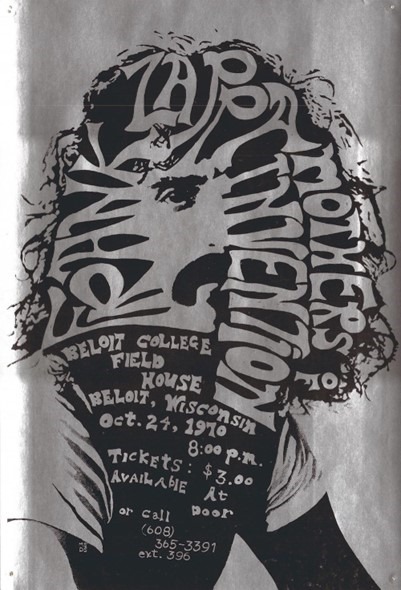
So, I was talking about the end of my teenage years, as I was off to what would be a shortened not quite 2-year experience of college in The Sixties. I’m going to next write about three artists of that time that I was introduced to while still in Iowa, each of which left seeds of what years later would make up the Parlando Project.

In my very first day at college, I was walking in the center of the little campus when I happened to strike up a conversation with a stocky man in a cape. I’m not talking a Superman or Batman cape. No, this cape had a full collar and could be buttoned at the top. It was more of a 19th century woolen military cape, or like the green cape that musician David Crosby liked to sport around the same time, though Crosby and his scene wasn’t anywhere near the two of us in Iowa. This caped crusader had an interesting conversation starter: “Do you know who the Fugs are?” he asked.

Here’s what I knew: I seen a mention of them as an outrageous act in the New York City area, with unprintable lyrics that could only be cited by their suggestive titles. “They’re a dirty rock’n’roll group” I replied. I was better or worse then for capsule descriptions.

“Do you know who the Mothers of Invention are?”

“They’re another one.” This was nervous inarticulateness on my part. Though I had not heard a note of their music, I had read their leader’s insightful essay in a Life magazine round-up of what was starting to be called “Rock,” the “’n’Roll” having just been significantly dropped by doughy critical burghers due to a new appreciation of the all-protein counter culture. Zappa’s essay perceptively pointed out that culture is always present, always countered of fitness and absurdity in some mix.

This minimal performance on my part must have encouraged the caped one. We immediately conspired to get our dorm room assignments switched around to share a room. I think he may have had a preliminary dorm assignment secondary to being a football player. Later I would see that both his legs had simitar scars from knee operations secondary to his high school football career.

The caped guy’s name was Jimmy Scanlon, he was from Chicago. He’d seen those groups perform, had their records. His plastic record player was a little fancier than mine, and had two small speakers that swung out from each side, a stereo. I soon got to hear all those two group’s records.

Let me write first about The Fugs because they are by far the least known and admired of the three artists I’m going to write about, and that’s odd since they were pioneers who I believe directly influenced other artists we now remember as the pioneers. Richie Unterberger, a man from a later generation who looks back at this time calls them “Arguably the first underground rock group.” That’s something I’d say too, even though the core of the Fugs were not musicians in any functional way. They were instead anarchist/beatnik/poets from New York City who just on guts decided that they could get together and sing in 1964. In this instinct they were directly influenced by the short-lived jug band fad that emerged in the folk music revival. The idea of the folkie jug band was this: rather than relying on the individual stage presence of a single performer at the mic (underrecognized: that’s difficult!) you could get up with a bunch of vaguely related instruments and make a somewhat coordinated noise. But the Fugs were distinct from that fad in these ways: their material was politically and socially outrageous, clearly making no play for commercial markets, they soon added musicians who played electric instruments, and they couldn’t sing. Am I being too blunt about that last part? Call me experienced here: this is a pot calling that kettle. They were pitch challenged, they didn’t have, nor did they attempt, pleasing vocal timbres, and they recorded anyway.*

Does this sound indie AF? Does this sound akin to what earliest rappers did with what they had a few years later in NYC? Does this sound like punk rock to you? It should. A decade before CBGBs that is what this was. And they performed a lot in the city. The Velvet Underground had to be aware of them as they were both forming within blocks of each other simultaneously. Did Bob Dylan think of them when creating the most ribald and playful Basement Tapes songs? No matter how fully formed Frank Zappa’s ideas were, did he at least see his Mothers as competing in the same atmosphere when they both had extended runs in rented theaters in NYC?

Does this sound indie AF? Does this sound akin to what earliest rappers did with what they had a few years later in NYC? Does this sound like punk rock to you? It should.

Those things happened from going on guts. From believing the things you are apprehending have value. It’s too limiting to call this competition, or rivalry, it’s the mutual demonstration of possibility.

Before I leave The Fugs, here’s a very Parlando Project thing about the Fugs. They were poets themselves, and yet they formed a band. They performed other poets work regularly.** When Dave Moore and I started performing ten years later I (we?) described what we were aiming for as the Fugs performing with the Yardbirds.

The Fugs repertoire was political, satiric, scabrous and — well, very sex-positive. But they could carpe that diem with the poets too. Here’s my rendition of a Tuli Kupferberg song “The Garden is Open” that I performed a few years back.

.

Since I wasn’t in New York or connected directly with any of this, here are a couple of accounts of the Fugs from those who where there. One by Fugs founder Ed SandersOne about Tuli Kupferberg’s life.  And this account of how the musical scene including the Fugs interacted with the general poetry and art scene in NYC.

What about the Mothers of Invention and Frank Zappa? Wait. Though Jimmy Scanlan and that same year Dave Moore too, introduced me to these two groups almost as a pair, you’ll need to wait for my Frank Zappa story. And there’s a third artist that I was discovering in my late teens that helped me formulate this Project. We’ll get to him too.

.

*I’ve had long suffering partners in my life, what with the kinds of music I am too well drawn too. Most of them couldn’t stand more than a few minutes of the caterwauling of The Fugs. I wouldn’t blame you either — but I’m reminded of Bob Dylan’s parable about what a beautiful singer, Sam Cooke, said about this: “Voices ought not to be measured by how pretty they are. Instead they matter only if they convince you that they are telling the truth.” I love music. I love the beauty it can manifest, even without words. If I had to choose a world with only beautiful singers or only truthful singers, I’d take the latter.

**Ted Berrigan, William Blake, Allen Ginsberg, Algernon Charles Swinburne, William Burroughs, Charles Olson, and of course band founders Ed Sanders and Tuli Kupferberg were poets themselves.

Meeting Music and Words, a personal history. Chapter 2

As we celebrate National Poetry Month this spring, let’s continue with my condensed memoir with footnotes of how and why the Parlando Project came to be. Last time I was leaving home for college in The Sixties.

I was an undistinguished student, able to connect with some teachers and subjects and unable to connect with others. I think I went on to college because I still had curiosity and desire to learn about some things and because I had no other firm idea of what I wanted to do other than write poetry. Even the naïve teenager in me knew that poetry was an exalted vocation but a dreadful-paying job. The fool in me thought that if I was good enough with poetry, things would take care of themselves. Is there a word for a fool that stumbles upon wisdom for other reasons than their own? There should be. That was me.

Is there a word for a fool that stumbles upon wisdom for other reasons than their own? There should be. That was me.

There was another reason to attend college in The Sixties if you were male. There was a military draft. Depending on where you lived (draft bards were local, county-sized, units and their quotas and pool of 18-26 year olds to fill them varied) most of the most eligible would be drafted to serve 2 years in the armed forces. The “most eligible” part was the trick of the inequality of this system.*  Those married with kids or students were put in a “deferred” level. With the rising deployments in the Vietnam war in The Sixties, concerns about the common inconvenience of military service were escalated into a fear that “I’ll be drafted, sent to Vietnam, and I’ll be killed.” **

Because my experience with school was in a small town, small school, I went to a small college of just about 1000 students, one still in Iowa, Simpson College. Road not taken thoughts could wonder: what if I had been more adventuresome? The English Literature department was largely younger professors who taught the smallish classes directly. One of those younger teachers was a quiet but scholarly type who loved St. Thomas Aquinas and Gerard Manley Hopkins. I’m no Thomist but he did introduce me to Hopkins. Another had a full John Berryman beard and curl-dangle cigarette ash while he talked on. He loved Norman Mailer and encouraged unconventional thought. I picked up the idea that French poets were important in the emergence of modern English poetry, so I tried to take French for my language requirement. As remains the case to this day, I found myself entirely unable to form the correct sounds to pronounce the words. My young French teaching professor had a great story though. She’d taken the position at Simpson, located in Indianola Iowa. That summer she went to Indianapolis Indiana ready to start her professorship, and upon arriving asked for directions to Simpson.

Here are two people near my own age who I met at Simpson who changed me and eventually the Parlando Project.

One was Dave Moore, who readers and listeners here already know. How’d we meet? I met Dave in my first year at Simpson when he led an unconventional service at the school’s chapel. He read the words to Dylan’s “With God on Our Side”  and made them vivid even as unaccompanied spoken word and then he read a poem of his own. I had to get to know him — and did — because here was another poet. Dave’s influence on the Parlando Project is impossible to understate, but in this era, Dave left Simpson for another school to further his education at the end of my first year. He’ll necessarily return often as this memoir continues.

In my second year at Simpson I took an inexpensive catalog-store acoustic guitar with me to college for just a few weeks at the beginning of the school term. It was an instrument that belonged in common with my siblings. In an act of cargo-cult magic one day, I remember walking around the little campus with it hanging by a strap across my back, like I was on some cover of a folk music magazine. I ran into this skinny guy wearing a Levis jean-jacket who said he played guitar too, and he invited me to his dorm room.

When we got there did I notice then that his guitar was likely better than my family’s shared plywood egg-slicer string-action guitar? No, I didn’t know anything about that then, but it was no-doubt a quality instrument. When he took it out of its case (his guitar had a case!) he tuned it up quickly and started to play a bit of this or that, and then launched into a piece he informed me was called “Vaseline Machine Gun.”

One or two of you may startle as I say the name of that guitar piece. It appeared later at the very end of The Sixties on a record by its composer Leo Kottke with the it-can-afford-its-understatement title of “6 and 12-String Guitar.”   Within the smallish world of steel-string acoustic guitar instrumental music that record is a landmark. The album’s energetic playing in an original style, the polyphonic lines going on all at once from a single instrument was impressive — still are, though players have had decades since to try to work at that level. The record’s showpiece, the cut that was meant to make your jaw drop the farthest is “Vaseline Machine Gun.”   So, you one-or-two know what I felt sitting a couple of feet away from someone playing it live in a small Iowa college dorm room in The Sixties. Here’s a 2-minute live version of the young Kottke playing it for the rest of you.

.

OK, you’re back. That skinny kid, a year younger than me, nodded at me with my plywood catalog-store guitar, one that I’d figured out three or four reliable chords on to be rung up with vigorous strums. His manner was hip, cool. “What do you play?”

One could  write a whole chapter on that moment, that interchange. I write poems and attempt-to-be-short blog posts. I said, “I don’t really play.”

The skinny guitar player kid’s name was Don Williams. Like Dave Moore, there are other Don Williams, some of them better known than others. With that common a name, I’ve never been able to find him later in life. He was from the Minneapolis area, where Kottke was based and where he could have heard him in local coffee houses. His family had money enough to afford him the better instrument. He had the funds and inclination for lessons in that city, and the wherewithal to absorb them. He dropped the names of Twin Cities guitarists Dean Granros and Dean Magraw, who I suspect he may have taken those lessons from. I hung out with him some, heard him play more. He had an amp and a Howard Roberts model Gibson electric guitar too. If I was to meet him again, all these years later, I’d thank him for initially imprinting me with the broad possibilities of the guitar, acoustic and electric, and in particularly with bottleneck slide.

I went back to my dorm room. Sometime that fall before I had to return the guitar to the family home, I took a short poem by another Simpson student I knew, Keith Hill, and using that and those few chords played with some make’em pay up strums, I wrote what I will later call the first Parlando Project song, decades before there would be a Parlando Project. The poem was called “Eat At Joes”  and Keith Hill was aiming for a gently satiric mood. I adapted or misconstrued it as an indictment of go-along acceptance. More than 40 years later I still remembered it well enough to attempt it with Dave Moore and the LYL Band. You can hear that remembered version with this highlighted link, or with the graphical music player below.

What happened next? Why did I stick with the idea of literary poetry combined with music?

.

*There were other deferments. Some professions were still deferred as I recall. Homosexuality along with mental illness was considered a no-go, though as throughout history, gay people served. Medical deferments were issued, and for those in the know during the era there was a saying “No one is too healthy to not have a reason for medical deferment.” If the proponents of conscription debate that it promotes an equality of service and sacrifice, the reality of the system manifestly reflected racial and class-based castes. I wasn’t analyzing this at 17, but it wasn’t subtle people!

**Like a lot of historical remembrances, this is accurate in terms of the believed myth and inaccurate in terms of the reality. In generational talk of “Boomers had it easy compared to…,” this level of existential risk for teenagers seems somewhat forgotten. Still, not only did most Boomers not get drafted — due to that range of deferments and the size of the pool — most draftees never went to combat even during the height of the war. None-the-less, this perception of a real risk is an under-acknowledged motivation for the growth in the antiwar movement then. I don’t know if anyone has written of this, but it seems to me that this was also one substantial reason that college enrollments increased even above the demographic bulge, which then helped set the expectation that college was a pre-requisite for many more jobs. Racial and class-based caste systems again.

Meeting Music and Words, a personal history

While continuing my observance of National Poetry Month, I must apologize for resorting to regular blogging form and writing about myself today. That sort of thing works for many, but I tend to run on a bit when I do it. It must take a long time to bore myself.

Why, when, did I decide to do the Parlando Project, this odd little idea to combine words, mostly literary poetry, with not-exactly commercial music? It wasn’t something I toddled off to grade school knowing I wanted to do. I had no great early childhood connection to poetry. I was exposed to the children’s poetry in my mid-west, mid-century tastes: Longfellow appeared, illustrated. The D. Seuss of my time then was Dr. Seuss, not Diane. My interest in music was greater, despite having no discernible musical talent or outlet. The wife of my little town’s school superintendent taught a music class, which was mostly music appreciation, little samplings from records of the orchestral repertoire. My peers found this impenetrable and boring. Since I was something of an outcast I decided to listen to what was so outré in their just-teenage world. Around the time I myself entered teenagerhood I got a gift of the mid-century handheld device, the transistor radio. I would bike around my town and outskirts with its faux leather case strap wrapped around my bicycle handle-grips, twisting the little plastic radio’s orientation with my fingers so that the stations from far-off towns aligned with its antenna. Was I listening to rock’n’roll, that mid-century strain? No. At first I was listening to an AM station that was one of the pioneers of what later became public radio, and this station programmed classical music.

Rock’n’roll was the music of those that distained that music appreciation teacher and distained me. If many then and now read the sneer or assertion in rock’n’roll as the music of when-in-the-course-of-human-events independence and freedom, I heard it as the music of those that didn’t care much for me. But I eventually relented. I wanted to look at the music the rest of the teenage world was hearing, thinking it might be a window into their interiors. Maybe it was a bit of survivor’s reconnaissance.

I found some of what the Top 40 station played interesting. This was in the era which the American pop music histories sum up as post-Elvis, pre-Beatles, describing it as dire and worthless. Were the teenagers of that Ike to Kennedy time, even if subconsciously, wanting more, wanting better? I dunno. For myself, I didn’t know any better. It was a mix of Brill Building girl groups, Black R&B, folk music/country and western* crossovers, late period crooners, and novelty records that would shame a modern TikTok sensation in their silly sensationalism.**  Unlike my peers who were closed-off to me, there were voices there speaking secrets, their moods and moments.

Want to know why the Parlando Project musical pieces are all over the map in terms of musical flavor? This is the child-is-the-father-of-the-man reason.

Poetry? I admire the knowledge and deep interests of academics, while somehow worrying that poetry is seen as having an academic requirement for reading or writing it. You didn’t need to go to school to listen to the radio. There was no MFA for the Brill Building, Motown, or Slim Harpo, at least not then. Still, I have to be honest, like many who continue to read poetry that they won’t be graded on, it was a teacher again, Terry Brennan, a recent St. John’s of Collegeville grad, who taught an English literature class in my little 100-person high school who introduced me to poetry as possibility. Did I understand poetry? Does one need to understand what one is drawn too? I don’t think so — a little mystery may even help. Much of it was beautifully inarticulate to me, phrases that said with inevitability, descriptions that were exotic, situations that I hadn’t lived, or lived in any understanding whatsoever. I loved Keats and Blake. I found out Blake was the original DIY Indie, who wrote, illustrated, engraved, and published his work, mastering what technical, logistical, and creative work was needed to realize his art. I loved a capsule description of Blake I found in the back of one of my parents’ old textbooks that they had saved. It went something like this: “He wrote early charming lyrics showing real talent, but later descended into incomprehensible writing suggestive of madness.” Writing without limits! I was ready to sign up.

On the day after Christmas, riding in a Dodge station wagon filled with my sisters and parents, rolling between Minnesota and Iowa, I wrote my first poem. I was 16. I thought it rather marvelous that I could write such a magical thing. A year later, the last Christmas I was to spend in my childhood home, I got enough money to buy a cheap record player and three LPs. These inscribed, foot-square, vinyl circles were the adult music, the things that could contain the igneous something that was starting to get called “rock.” Rock as a name seemed solid, monumental, permanent. I suppose in much of my cohort it still is — childhood transition music sticks with you. These are the three LPs I bought with the leftover money: The Doors “The Doors,”  Bob Dylan “John Wesley Harding,”  and The Rolling Stones “Their Satanic Majesties Request.”   In reverse order they imprinted me with love for Mellotron and ramshackle pretension, spare acoustic guitar arrangements and one-room songs without bridges or choruses, and poets who wanted to front a rock band that had listened to some Jazz and Blues records.

Parlando Inspiratins 1

Of those 3 LPs, maybe only the Dylan retains current esteem, yet all were considered significant in their time.  Blake & Keats? Well, it’s poetry, so the answer is complicated, particularly in the United States.

.

Music, various, and words, mostly poetry, exploring other people’s stories — yes, I can still see the damage there. While we’re not to the Parlando Project yet, this is enough for one post. Let me leave you with a Parlando Project audio piece, words from another poet recalling that era, Ethna McKeirnan’s poem of “Stones”  that seemed permanent as she moved through her life.  Player below for most, backup link for the others. McKiernan’s final new & selected collection including this poem is available here.

.

*Little known fact: C&W and folk music were often thought of as the same or aligned genres then. The 21st century Americana thing was how things were considered circa 1960 as well.

**Look up “Ahab the Arab”   for one such example. Can I call it transgressive? Can you call it cultural appropriation? Fatima has less agency in this tale than Clyde (the girl-group Brill Building songwriters might have made her the main character.)  If you’re on the borderline of acceptance, I’ll tell you that Jimmy Saville had the UK cover-version hit with this.

National Poetry Month 2023 and I introduce this Project to newcomers

In the nearing 7 years since the Parlando Project launched we’ve normally celebrated the US National Poetry Month with increased activity. This year that celebration is conflicting with some other factors which are keeping me from a focused plan for NPM. That said, one goal of the #NationalPoetryMonth activity here has been to draw new readers and listeners to what we do. So, it’s probably a good idea to let new eyeballs and ears onto what to expect if they visit our archives of over 650 audio pieces released, pieces featured and expanded on with the nearly 900 posts since we kicked things off in 2016.

You see one motto up in the header of this blog and elsewhere: “The Place Where Music and Words Meet.”   I take words — usually not my words, but words their authors likely intended as literary poetry — and combine them with various original music — music that I generally compose, and increasingly often play myself in one-man-band ways.

2023 NPM poster_800

Sometimes what we mean takes time to discover. How do we relate to something else, the differences, the things similar? That’s a metaphor. Make the metaphor musical, however you do it, and that’s poetry.

.

A few readers may figure — perhaps even a listener of a stray Parlando piece they see linked somewhere — that there’s a convention, a style I follow when I do this. I hope they’re mistaken. I’ve always intended to not do that. The people that have influenced, or unintentionally given me permission to do what I do, made music and word combinations in different ways.*  I try to use all those ways, and hope to stumble on some others. I will sing the words, but just as often chant them, talk-sing them, or resort to a freer, spoken word cadence — thus the origin of my Project’s name.

I try to keep the audio pieces short, almost always less than 5 minutes. I try to keep these blog posts shortish too, less than 1,000 words — and though I sometime fail in keeping those goals, I try to keep my failures in check. And not all the realizations of the words with my music and performance work for everyone, or most, or perhaps anyone. Some of them are even embarrassing to me, but I leave them up in our archives you can see separated into months to the right of this post.

Why do I do this? Manyfold reasons. Some of them? I like the challenge, the variety of verse, the variety of music. I think poetry is musical speech, and making even more of the musical component offers a different way to enter the words for the listener. Consider how you might enter into a song you grow close to, over listens, over time. At first it might be a phrase, riff, or refrain that catches you, or a general tone you feel, but then some new nuance may come to the fore. Or how a song you thought an abstract construction of words can from new experiences, experiences inside or outside of the song, somehow become more realized and concrete.**

This is how poetry lives, it’s the only poetry. Poetry does not live on reputations or silent copies printed, it lives inside you, a single reader or listener, as sound that may eventually saunter up closer in sense. This is what I celebrate all year, and some more so during National Poetry Month.

.

*Perhaps I’ll write more about, and thank more, those possibility creators this month? To name some of the models for Parlando: Beat poets and their immediate predecessors Rexroth and Patchen reading to music, Patti Smith, Bob Dylan, Joni Mitchell, Leonard Cohen, The Fugs, those English lute composers like Campion and Dowland, Tom Rapp, whatever William Butler Yeats planned to do with his bespoke psaltery, Rabindranath Tagore, what alternative hymnal Emily Dickinson was internalizing when she played her Homestead piano, Frank Zappa, Carl Sandburg, Langston Hughes, the American blues poets from Charlie Patton to Gil Scott Heron, Anne Sexton and her rock band, Laurie Anderson and her expansion of Ken Nordine and his “word jazz.” I’m also aware of “art song” — and appreciate both the achievements and the limitations for my purposes of that long established form of combining literary poetry with complex musical settings and melodies using orchestral instruments.

**One of the reasons I trust that you may find these experiences when the poem is carried to you inside a musical environment, and buffered there, is that I very often have had that experience composing and recording the Parlando musical pieces. I start out not sure what a lyric means or thinking I know something of what it means, only to find that there’s an entire other something or somethings there the 5th, 10th, or 20th time through it. The very act of putting the poems words into my mouth illuminates things, the exact question of how to utter them throws light from out of my dark throat.

Winter 2022-2023 Parlando Top Ten

It occurs to me that it may have been a while since I’ve reminded new readers what the Parlando Project is, has done, and tries to do. It started as an idea around 2015 to focus on something I’d done off and on for decades: to combine other people’s words, usually literary poetry designed to be seen on silent pages, with a variety of original music.

I did this not only because I think it’s fun, but because the process allows me to more deeply absorb some sense of what the poets are trying to convey. At least for me, I can read a poem with my eyes and sense that there’s something wonderful there — but then to read it aloud, perhaps even to sing it, allows me to inhabit it, to visit the environment inside it, as if one is deep inside some forest, awash at a water-brink, or walking down its street or inside some meaningful building.

Reading a poem silently is like looking at a picture. Performing it aloud is painting the picture with the words still wet.

Early in the Project many of these performances were with others, most often my long-time musical partner Dave Moore. For a number of reasons those opportunities have decreased. These days the typical musical setting here is composed, and all the parts played or scored, by myself. I’ve done a handful of pieces in the Project without instruments, but that’s unusual. I think that even though they are played by a one-man-band I want the words to have companions. Even the loneliest poems can have these here.

I do these pieces myself, not because I have great confidence or a high appraisal of my musicianship. Far from it. I compose and play the parts because I’m available. I’m an amiable contractor to myself, I enjoy playing different instruments, and I’m unafraid to dive into a variety of musical environments. My estimate is that most musicians who hear what I produce for the Parlando Project are unimpressed by this work, in that I almost never get responses from them when they are exposed to it.*  My guess is that is because I use simple ideas, and my realization of even these basic conceptions via my own playing has imperfections. My musical “thing” is more at participatory folk music or the punk/indie ethos — and though I try to produce good work here, and I’ve put effort into that, I don’t consider many of the Parlando Project pieces the best realization they could have. When I’ve taken to putting up chord sheets of some of the simpler acoustic guitar pieces here in the past year, I’m thinking that a better singer or player might take them to a better musical place.

Hepcats of Venus

Imaginary band gets down in beatnik cellar. Illustration shows my younger self & spouse in the center. W. H. Auden taps his cig on the ashtray in the foreground. Behind the drummer, Gertrude Stein considers Virgil Thomson.

.

Now let’s get on to a brief rundown of the Parlando pieces that were most liked and listened to this past winter. I do this countdown style, from 10 to the most popular. The highlighted titles are links in case you’d like to see what I wrote about the pieces when I first presented it.

10. All Souls Night by Hortense Flexner.  Long-time readers here will know I like to go beyond “Poetry’s Greatest Hits” here, and this spooky piece by a little-remembered author from the time of WWI continued to be listened to long after Halloween.

.

9. “Uncle Sam Says” by Waring Cuney.  This one, jumping forward to the WWII era, is almost cheating, as Cuney, a friend of Langston Hughes, engaged here in straight-out songwriting with bluesman Josh White. I’ve been playing a bit more bottleneck slide guitar this winter, and that’s what I used to accompany this message song about a segregated military.

.

8. “Now Winter Nights Enlarge” by Thomas Campion.  Speaking of songwriters: poet, musician, and Elizabethan-age physician Campion also intended this to be sung — although, as with “Uncle Sam Says,”  I didn’t use the original music for my performance.

.

7. “The House of Hospitalities” by Thomas Hardy.  A poet who spanned significant chunks of the 19th and 20th centuries, Hardy was well-versed in poems of rich remembrances, as in this Christmas season memory of holiday celebrations past and gone.

.

6. “I’m Sorry for the Dead Today” by Emily Dickinson.  One of three appearances by this crucial American genius, this one a jolly remembrance of a cooperative harvest time in Amherst.

.

5. “I’m Afraid to Own a Body” by Emily Dickinson.  An opening line or two in a poem can grab even the most inattentive reader sometimes, and this poem’s opening pair of lines certainly did so for me this winter.

.

4. “Fairy Song” by William Butler Yeats.  Like many a Yeats poem, this one beguiles you and me with its lovely word music. Then I read the play whereupon the poem appears and discovered that its context is exactly that for the song’s singing fairy: a beguiling away of a distressed person from their heart, hearth, and home. That wind that opens this poem is chilling once you know.

.

3. “I felt my life with both my hands” by Emily Dickinson.  I cannot say authoritatively what Dickinson intended the context of this poem to be, but I read it as an examination of body dysphoria, though I’m unsure if anyone else has “read” her poem that way. As I have sometimes done, I’ve performed this with what I call an “Inline Epigraph,” quoting a line from a Lou Reed’s song “Candy Says”  before the concluding section of Dickinson’s text in my performance. I often think of poems as being in conversation with each other.

.

2. Railroad Avenue by Langston Hughes.  I spent an enjoyable but inconclusive time searching for the “real” Railroad Avenue, thinking it could be like Van Morrison’s Cyprus Avenue or a NYC address in a Frank O’Hara poem. Couldn’t find it. May be it’s only mapped in Hughes’ imagination, a construction for the purposes of the poem. Long-time reader rmichaelroman reminded us in comments that America’s separations often are lined by being right in one’s memories from the “wrong side of the tracks.”

.

1. “I’m Gonna Make Love to my Widow ‘fore I’m Gone” by Frank Hudson.  Another bottleneck guitar piece that readers and listeners liked a lot this winter. Well — a self-penned piece about good old-fashioned winter randiness made it to the top of the Top Ten. Go figure. They’re talking single digit wind-chills and a March snowstorm as this week ends up here in Minnesota. Codger cuddling is carbon-free heating people!

.

.

*I ascribe this to politeness on their part. I tell myself that I overvalue the audacity and aims of what I do, when simple competence with simple ideas might be preferable.

A video about “Stage Fright,” or then about being a public artist

I just spent a half-hour watching this video recommended to me by a stranger elsewhere online. I knew. and still know nothing, about the man who talks here, despite a documentary being made about him a few years back.

Why did it hold my attention, even though it’s partly about that documentary and a career I don’t know? Well, he’s an engaging talker, and the interviewer here too is excellent, but that wouldn’t be determinative. One of this project’s mottos is “Other People’s Stories,” but obviously in a world of current billions and more than a millennium of poetry to consider, I’m going to ignore or pass by most people’s stories. Maybe it’s his age and his obvious engagement with art, while being old enough to be my father? I’m old. I’m still engaged in this Project. Old people still facing that situation may be the link that connected me.

As someone who currently rarely performs live in a room of listeners, the subject of “stage fright” isn’t a pressing issue for me. The early parts of this interview do speak to that issue, reminding us that it is not a unique, shameful, issue — but one that is rather common among performers. No, it’s not so much stage fright that I myself am most interested in. Rather, I’ve been increasingly promotional with the more than 650 audio pieces and accompanying posts that have accumulated here over the past six years. I frankly feel a mix of unseemly self-interest and objective self-delusion as I do that. These acts of promotion are still novel enough for me that I can, for now, press on past those feelings. And since it’s been harder to create more pieces, or as complete a realization in them of what this Project tries to do, this task — which embarrasses me — allows me to think I’d doing something in place of that.

.

What I find is the deeper message then of this man’s account is that there is an element in art — subject, yes, to the clouding of our egos and neurotic urges — that is beyond ourselves. More than 20 minutes in, in what becomes the conclusion of the interview’s story arc — the thing everything before has been building to — Seymour Bernstein articulates that place.*

Can we visit that place consciously, acknowledge that we want to abide there at least a little while?

For an audio piece, here’s one of the early pieces of this project I’m most proud of, another older man of music speaking about that art. Weston Noble, spoke this about music at his retirement, and I wove his words into some original music. You can hear it with the player gadget below, or with this highlighted link.

.

*So, should I give it to you in pull quote form, a TL:DNR assistance to the harried reader who doesn’t have time for the half-hour interview? I debated this, but decided that no, it would lack impact without the build of the story telling itself by the method of it’s telling. I decided, you might be too likely to shrug, and the precept would roll off your consciousness. And earlier in the interview Bernstein makes another recommendation that may be valuable to writers and composers: that a balance of re-creation and creation is helpful.

Wrapping up the 1926 Fire!! magazine story

I hope some of you enjoyed this Black History Month look at the premier 1926 issue of Fire!! Devoted to Younger Negro Artists. This landmark of the Harlem Renaissance announced a new generation of young Black writers, many just out their teens — artists who not only filled its pages, but organized and edited the publication. Today I’m going to tie up some loose ends and tuck in the laces on the Fire!!  story and give you a few links in case you want to do your own exploring.

Here’s a fine website done recently by a group of young people who present the entire magazine itself and some of their own encounters with the meaning of the work inside.

It was there I found a link to this completely scientific and accurate Buzzfeed quiz from 2018 “Which Fire!! Magazine Author Are You Most Similar To?”

The quiz says I’m Gwendolyn Bennett. My wife’s results: Richard Bruce (Nugent). Richard Bruce too for longtime keyboard playing and alternate voice contributor to this Project Dave Moore. Dave’s artist partner joined me in the Gwendolyn Bennett result.

So, we looked at the first issue of Fire!!  this month. What about the next issue, other issues? There wasn’t one. The magazine, founded by young artists, was not well funded, and selling and distributing didn’t go well. The gatekeepers were at least privately aghast at some of the content, so their advice and word of mouth was to disparage and discourage this effort. I’ve already mentioned when presenting two of the four poets I selected for musical performance that publication in Fire!!  did not guarantee lasting readership or note for these young people. So, Fire!!  folded, and in a lead-eared note of irony, the mostly unsold print run was destroyed in a storeroom fire. John Keats epitaph says his name was writ in water. Fire!!  and some of its writer’s names were writ in fire, and it all died down.

I often suspect many folks who find these blog posts are looking for homework help or teaching resources. To what I (an old person) can understand, being a teacher or a student covers wider territories than in my days, but there are still skirmishes at the borders and difficult areas under the control of different warlords. Fire!!  magazine sought to cross those borders then — and if one is to study it and its contributors in any depth, it still does. Not only did Fire!!  bring forward new young writers — many committed to Modernist art and radical politics — it purposefully sought to express elements of life that the older generation of gatekeepers wanted to suppress or keep only within the tribe. One of those things was sexuality. So teachers and students, here we have a group of young creators in 1926 writing on race, injustice, and sexual expression that isn’t in committed relationships or straight. On what authority did these audacious writers take to break through those barriers? Not only were the instigators and contributors of Fire!!  young, gifted and Black, they also were often somewhere on the spectrum we could label today as queer.*

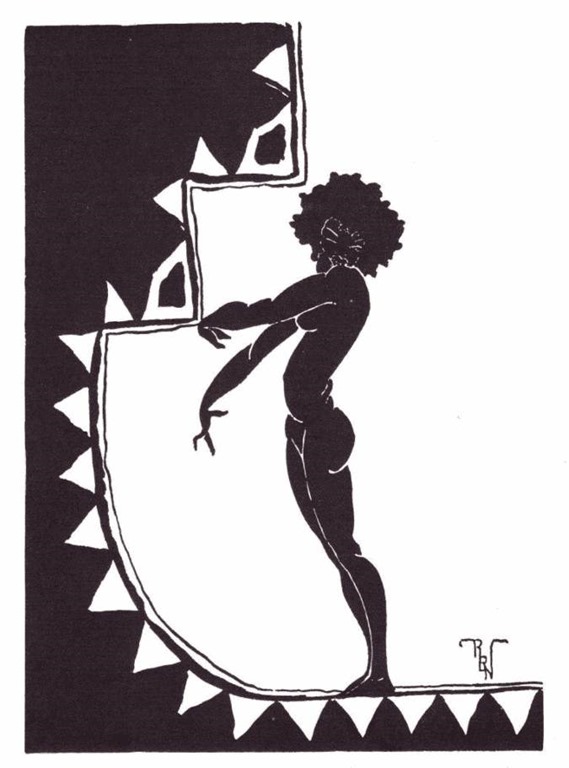
Drawing by Richard Bruce Nugent

A drawing by Richard Bruce Nugent from Fire!!

.

So, to teach or discuss Fire!!  and its creators beyond a surface is to go to places where teaching and learning is still constrained. I’d say to learners (a class that includes nearly all teachers) you may choose to go there even if traveling alone. Literature, music, the arts are the forged identity papers that let you cross borders. Though the writers of Fire!!  are all dead, they won’t mind speaking with you.

In the spirit of gratitude to Afro-Americans and their vital contribution to American culture let me repost my Buzzfeed Fire!! contributor-like Gwendolyn Bennett’s summary in poetic “Song.”   Graphical player below, or a backup player will open in a new tab link here.

.

*Here’s one web post by someone who taught school, doing a better job than I can today of discussing the queer aspects woven into the Harlem Renaissance. There is also this low-budget indie movie Brother to Brother  made nearly a decade ago centering on Richard Bruce Nugent, Wallace Thurman, and the non-straight circle that organized Fire!!   The film has some PG13 level sex scenes and self-violence. I found it available for rental from the usual online sources like Apple TV or Amazon Prime.

Reading One’s Own Poetry in Public

It’s one of those things that is hard to do well but is none-the-less important to do anyway. Why is it hard? Why is its realization often imperfect? What might one do or aim for when attempting to read one’s own poetry for the public? Well, before I write down some responses to those challenges, let me say that these are not the opinions of an expert or the summary judgements of some important critic, but only observations of someone who attends readings and occasionally reads my own verse aloud before a live audience.

Why is it hard? Perhaps I’d rather say it this way: there’s no good reason it should be easy. The writing of poetry, emphasis on the second word in that sentence, is not a public act. For many of us it takes extraordinary private concentration to create our poetry — and too, we often put in it things we would otherwise never share face-to-face. As a result, a great deal of poetry, particularly our present age’s poetry, derives its power from whispers to ourselves in the dark. Why should the same person who does that writing be any good at reading it aloud?

I attend at least one poetry reading every month and I’ve seen over a hundred poets read. Let me be honest about myself: I’m not a very good listener. I have a racing mind, and any spark that a reader’s words set off, has a tendency to cause my mind to follow it off into my own bonfires. And if the reader’s own tinder is damp, I as a poet myself will spend internal time noting how poorly the campfire chances are progressing. How much better (or worse?) is the average poetry reading audience member in listening? I can’t say, but I fear I’m a bit worse than the average audience member, but that doesn’t mean I don’t notice some ways poets reading may fail more than others.

I’ll summarize one class of failure with a general statement of an issue: not convincing me that the words the reader is sharing are important to be shared. Yes, yes, I know this is hard. Most poets don’t have the audience or objective awards and rewards to be reinforced that their stuff is any good. And those that do (or those that inflate what small elements of that they’ve received) can forget that there may be audience members who still need to be convinced. If you make that case in your manner of presentation and in any introductory speaking you do before and between poems, you’ve improved the chance of the audience paying attention.

Oddly, general posture and “stage presence” doesn’t seem to have as much effect as I might guess it would. Readers who make extensive eye contact vs. those whose heads are downcast to the page on the podium — is the former better than the latter? Probably, but I’ve seen success and failure with both. I’ve seen a few poetry readers with more extensive motion moving around the stage or reading area. This has been rare, and I’ve seen it work (for me as audience member). If I’m not otherwise compelled, it might seem off-putting or artificial. Literary poetry readings do not seem the same as general public speaking or stage performance in expectations or needs in this regard.

Beatnik Crime

Taking steps to earn the audience’s attention can pay off.

.

Pacing, setting audience expectations, and “set-list structure” does seem important. Don’t read too fast or too slow. Help the audience understand what you’re going to do (even mundane things like “I’m going to read six poems today” or “This is the last poem I’m going to read tonight”). Musicians most often work out the order of pieces they will present with some thought. It may help the performer (and therefore the audience) if you start with a “greatest pop hit” that you know how to consistently perform without making any extraordinary demands on either audience or reader. Place your most emotionally or intellectually demanding piece at the end, or next-to-last.*

Because we have to get over two obstacles when reading our own poetry, I’ve suggested to poets that they consider splitting their task into two parts. First, practice by reading other poets’ work aloud, even with no audience. Pick poets whose work is meaningful or influential to your own writing style, and figure out how to make them sound their best and most compelling in your voice.**  Then, move on to your own poetry, and read it in the same voice and manner, as if it was as important and “certified” as your poetic models.  The self-doubt, the “who am I to…?” factor can possibly be tricked with this path. However, what should you do if, when you get to the second task, you choke at how it sounds? It’s possible that your models, your influences, may need to be expanded. I myself started loving romantic era 19th century poetry for example, but later wanted to develop a more conversational style in my own writing. I could try reading Keats or Blake as if they were talking to me, or I could try reading aloud some Frank O’Hara instead.

How do you know how you sound when reading other poets or your own work. You need to record yourself. Your basic smartphone or laptop will do well enough. In the Parlando Project I make efforts to make my recorded voice sound better on recordings, but that’s not important in this effort. Will you feel self-conscious listening to your own voice? Almost certainly. Get over that it won’t sound right — it will sound more like what the audience hears. Do you feel your reading voice has a weird or unappealing timbre? That’s likely of less importance, so get over it.

It’s a good idea to practice your “set” before a public reading. Highly experienced readers can skip this step,***  but inexperienced readers should not.

In summary then, most readers of their own poetry are not great readers, even those who’ve widely published or won awards — so congratulations, it’s OK to be an imperfect reader, most of us are! Yet it’s still worthwhile becoming a better public reader.

A week ago I decided to read a love poem at a rare open mic session for a longstanding local reading series. I picked a slightly revised version of a poem I presented here a few years ago “The Phones in Our Hands (are so Magical).”   The organizers’ instructions said that we should read only a single poem of our own and keep it under four minutes. I prepared for the reading by informally recording myself reading my poem about three times, to get a quick sense of if I had it down as to its presentation. On the night of the reading, I was able to present it at about 75% of what my third and best practice reading was. Where was the fall off? I read it just a bit too fast (nervousness) and I probably was less than optimum in handling some of the phrasing. I’ll give myself a middle grade in my overall presentation. I did try to set the expectations in introducing the poem, but in the end, the overall effect was less effective than it could have been for two reasons. I didn’t properly setup or convey the tonal shift in the poem, so the surprise when the poem shifts from the mysterious/playful to the experience of the separation of death from one’s partner confounded the audience. The difference between pleasurable surprise and confusion is subtle to describe, yet critical in effect. The other issue was “set-list” related. Most of the readers disregarded the one poem request and read 2-3, and as a Valentine’s Day themed reading, many of the poems were light-hearted and playful. My single poem was a “downer” and a “thinker” poem. I had considered doing two poems (still well within the four minutes) and would have led off with the Valentine’s poem I presented here last time, which is a more informal and joyous poem, even if it addresses the same issues of old love and eventual widowhood. In retrospect, that would have improved my “set” considerably. The bottom line I’ll convey from my most recent public reading: accepting imperfection is an important skill, ever more so if you are trying to do things well, and I enjoyed taking my swing at sharing my poem.

Today’s audio piece is the third take of my practice run-through of “The Phones in our Hands (are so Magical)”  with an impromptu two-handed improv over a synth pad, one track a soft grand piano and the other a more plaintive high-in-its-range violin. Apropos to the above discussion of recording your own voice, the poem coincidently mentions how odd our recorded voice seems to most of us. You can hear it with the player below or this alternative highlighted link.

.

*If next-to-last, your last poem can then be another “greatest pop hit,” a poem of clarity that seeks to leave the audience energized and feeling they’ve comprehended what you’ve presented, rather than drained or perplexed.

**Does this sound like the Parlando Project, where 90% of the time we present performances of other poet’s words? I guess it does, but the main reason that I do the Project is that spending extended time with those words and integrating them with music tricks me into listening to them in a deeper way. It gets me past those issues I have being distracted while listening to another reader. In melding their poem with my breath and music, I’m forced to inhabit it.

***A great many (not all) musicians go through an intense practice regimen while developing their skills on their instrument, but a more relaxed and informal one later. Someone who’s gigging and playing regularly (using their bank of skills deposited from their own-room practice) is often able to maintain or even sharpen those skills without the need for as much solo practice. Similarly, if you are regularly reading, there’s much less need to practice your set.

The Absent Poetry of World War II

It’s been sometime since I’ve posted here. Having fewer blocks of uninterrupted time to compose and record the audio pieces for this Project, I’ve spent time instead with that proudly designed to be a time-waster Twitter in the past week or so. Twitter* has its own news stories this week — but that’s not my subject today.

I have a tiny number of followers there, and what I tend to talk about on Twitter is poetry, and then less-popular types of music. Really, not unlike what I do here on this blog, but more cut-up and off-the-cuff — and with more typos from typing on a small tablet screen and screen-keyboard. While working with poetry and music might cross-train you to fit things into constrained spaces, the Twitter short post-length limits challenge even this fan of compressed verse and sub-1000-word essays.

I came upon this Tweet this morning though that brought to mind something I’ve not revisited here on the blog for a while. One of the regular Twitter poetry-posters put up the devastating Wilfred Owen poem “Dulce et Decorum Est,”  and I once more thought of how powerfully the soldier-poets of World War I wrote about their war from the front lines — how to this day England recalls what they said combined with their presence as example casualties from that war, and in the sum, the tragedy all that entails. Long-time readers of this blog will know how thoroughly I’ve extracted poetry from WWI for presentation here.

War Poets in Poets Corner Westminster Abbey

Here’s a picture of a specific memorial to WWI poets in the Poet’s Corner of Britain’s Westminster Abbey

.

Perhaps it’s the Public Domain limitations of what can be freely reused in a Project like this, which puts my attention on pre-1927 work — but I was caused again to wonder, why don’t we have dozens of effective poems about WWII, many of which will be commonly anthologized and recalled by the general audience poetry retains? If called to find examples I might start (as would many others) with Auden’s “September 1, 1939” — but this isn’t a first-person “report from the front lines” poem like Owen, Sassoon, or T. E. Hulme presented back then. It’s not even as close to harms way as the incisive poems of Edward Thomas who wrote about his approach to volunteering for the British Army that led to his death in the conflict, or Apollinaire’s equivalent to Auden’s poem about the outbreak of WWI, “The Little Car.”  It’s not that poets or writers didn’t serve, and a great many novelists who served had a war book in them it seems.**  So, we can easily think of the novels about WWII written from frontline experience. But poems?

Was WWI poetic and WWII novelistic? I can’t make that case. Maybe you can. Is it down to the changes in the literary marketplace? Plausible, though within poetry’s more limited audience in the second half of the 20th century you think there’d be room for poetry as vivid as those of the WWI soldier-poets. Here’s a short list of a few of the notable American poets who did serve in WWII: James Dickey (Air Corps airborne navigator, though some reports say fighter pilot), Richard Wilbur (Army Signal Corps in Europe), Frank O’Hara (sailor on a destroyer in the Pacific), Richard Eberhart (gunnery trainer), Lawrence Ferlinghetti (Captain of a submarine chaser), Karl Shapiro (medical corps clerk in the Pacific theater), Kenneth Koch (infantryman in the Philippines), Randall Jarrell (“Celestial navigation tower operator,” which he claimed was the most poetic job in the Air Force).***

Of that list only Shapiro and Jarrell wrote what might be called “from the front” poems. Jarrell’s “Death of a Ball Turret Gunner”  may be the  example of an anthologized WWII poem, and Shapiro had his first book about his overseas, but not exactly in front line combat, V-Letter,  published as the war was still ongoing.

What happened? Why didn’t more of these poets write more about the details and moments of their service? My general observation is that instead they wrote consciously and unconsciously about how the war changed their outlook on the world. David Haven Blake wrote a short journal article on Wilbur’s World War II poetry, but instead makes the case more for this theory. He quotes Wilbur as saying “The war challenged me to organize a disordered sense of things, and so prepared me to write a poetry of maximum awareness and acknowledgement.” I’ve seen another quote from Wilbur circling the same thought “One does not use poetry for its major purposes, as a means to organize oneself and the world, until one’s world somehow gets out of hand.”

This non-scholar will now generalize wildly, but the WWI war poets used poetry, often structured metrical/rhyming poetry, to demonstrate the world out of joint, a genteel form container for barbarity and chaos. The WWII poets muted all that as unspeakable (or even over-spoken?) and sought to portray in poetry (that wasn’t always as formal) the values and observations of a peacetime more precious, however ambivalent and imperfect, from the militarized brutality of combat.

Let me dedicate this little essay to Robert Tallant Laudon. Laudon sought out the Lake Street Writers Group early this century as an 80-something veteran who had served in a logistical role in England during WWII. Though he became a music professor after the war, he seemed not completely sure of his skills as a poet, but he wanted to use poetry to portray something of his experiences during the war. By the time he was 86 he published a small chapbook “Among the Displaced — World War II”  with the resulting poems. I now view the younger me who heard him workshopping drafts of these poems as a much younger man than I thought I was then. Such is the progression of age! His poetry, like much good poetry, was written in an immediate present while depicting the 1940s, and I’ll always treasure that experience.

I mentioned at the start no new music, but here’s a piece, a “found poem” I created out of a recorded interview with another music professor, Weston Noble, who had served in WWII and which I set to my own music early in this Project. The voice you’ll hear in this must-listen-to piece is Noble’s. He commanded a tank in Europe during that war. In other parts of that interview, he recalled that when under fire, another member of his crew would ask him to sing. Inside that steel turtle shell the war outside existed mostly audibly, and the fate of those vibrating inside was unsure. The voice of Noble somehow calmed his crew. And this person now, here, who writes this? I’m still afraid to sing, worried that the unpleasant sounds that I too-often utter will embarrass me and displease any listeners. When I hear this man, now far in age from the war he fought in, decades from the interior of that tank, speak to the recorder of “The Garden of Trust”  claiming that it can be found in music, I invariably start to mist up.

Listen to this two-minute audio piece with the player below — or if you don’t see it, with this highlighted link provided as a backup.

.

*A new sole-proprietor owner has led many — who have through long activity and posting on this online service built up it’s usefulness for themselves and others — to worry about its continued existence.

**Kurt Vonnegut did two WWII novels . One, Slaughterhouse Five,  is one of the last first-person-experience-informed WWII novels, and another, Mother Night,  is a personal favorite, and includes this WWII poem that this Project performed.

***I was able to start this list from an article on the Poetry Foundation’s web site linked here.

Five Ways of Looking at “The Waste Land”

I’ve seen some takes celebrating the centenary of the publication of Eliot’s Modernist landmark poem “The Waste Land”  this month. To the smallish degree that Twitter recognizes poetry, there have been several threads there — and general arts and literature sections of publications and websites have taken notice as well. I think this notice is greater in the UK,* since the poem has more purchase in Eliot’s adopted homeland than in the US, but long-time readers here know that I spent five years serially performing the whole thing as part of my annual National Poetry Month observance.

Some of the notices disappoint me a little. Maybe I think of it too much as a poem I “own” in the same way you may feel about another poem you’ve kept in your consciousness over time. I was going to write, and may still write, a personal memoir piece on how the poem entered and mixed with me over the years — but those same long-time readers will know that isn’t my most common mode. Instead, I think it’s more important that you take some art, poetry and/or music, inside yourself. I’m here by my intent and your accident to raise the shades or turn on a light.

More than the centenary pieces themselves, what most causes me to rise to write this month is a response that commonly follows where comments or replies are allowed. Let me create a composite example of that: “The Waste Land’  is an over-intellectualized bunch of incomprehensible nonsense that requires footnotes to understand.**”

This may be how the poem first struck you, or the way school caused you to see and discard it. Let me open some shutters and offer five ways of looking at “The Waste Land”  that may allow you to see it with fresh eyes.

1. It was written after a great war in which nearly everyone in England knew casualties—and after a great deadly flu pandemic.  English culture had trouble confronting this, and the man who wrote “The Waste Land”  was in depressive crisis usually without the emotional capacity to confront these events, personal and national. Miraculously, the poem’s art is none-the-less that confrontation.

2. The poem doesn’t require you to understand some secret encoded message, it isn’t constructed to ask you to do that, at least immediately. Instead, it’s an intensely musical composition with various voices, motifs, and tones. Its words and images can gather more specific meaning over time, yes, but the experience is still saturated with the variety of voices and their moods.

3. If you think of Eliot as all the voices in the poem, then the poem plays with gender and sexuality more than you might expect.  The speaker in the poem is male, female, indeterminate, and in the case of Tiresias, canonically intersex. This in 1922 people! Some read the poem as misogynist, a logical deduction from Eliot himself being easily indicted as a misogynist. Yet I didn’t find it so. The men and women in the poem are degraded, damaged and distressed more or less equally. I do see two plausible gender inequality issues in the imagery woven in the poem: sexual violence in the underlying Philomena-related refrains which we may read as a female-role specific event; and if we read the final section as mostly in the male poet’s voice then only one character, a man presumably, Eliot himself presumably, is allowed to emerge from the waste land and into some consoling resolution. If I ever write my long personal piece I’ll go further into those things. In summary: I found that I could read, experience and perform the poem with sympathy and shared grief for those sufferings regardless of the faults of Eliot.***

4. Eliot, a smart, talented, but also wounded and limited soul could not have made this poem himself.  Ezra Pound and his wife Vivienne Haigh-Wood were necessary editors and midwives. While I resonate with “The Waste Land”  I’m not particularly connected to Eliot’s work in general, though the musicality of it can charm me. “The Waste Land”  may be an example of how muses speak through, despite the limits of authors. And just this year it occurred to me why so many of the poem’s words are paraphrases or quotes—used musically as samples might be if this was a hip hop record. The new thought that came to me: the damaged and constricted Eliot couldn’t (or wouldn’t) allow himself to write those words in his closed-in depression.**** I think that later in his life, the emotional expression of “The Waste Land”  frankly scared Eliot.

5. Want a demonstration of the points made above, that “The Waste Land”  wants to primarily convey emotions, not sense?  That it becomes vivid when performed, like music? That its voices are gender-fluid in their variety? This highly recommended Fiona Shaw video below is better than a raft of scholarly papers or old-men’s Internet posts in empirically demonstrating the poem’s impact. It does ask 35 minutes of your attention however.


You can find all of my musical performance of “The Waste Land” here, but this 20 minute section may best show what I hoped to achieve.

.

I plan to return with more musical pieces and encounters with other poems here shortly with a focus on Halloween, ghosts, and the gothic.

.

*For example, there was a new documentary this week broadcast on the BBC which I cannot yet see since I’m a US resident. I posted an earlier version of this piece on Twitter myself, but the Twitter audience and algorithm is smaller for me than this blog. Want another blog post with an incisive take on the critical blind-spots in representing “The Waste Land?”   Lesley Wheeler’s recent take caused me to jump in a bit too hot and barking in my shared frustration with those cold, shiver and sliver of humanity, appreciations of “The Waste Land.”

**The infamous footnotes — which I now explain in a footnote — were a makeshift tactic to lengthen the poem for hardcover publication. They may have also helped a closed-off fellow like Eliot cover the emotional tracks of the poem his name was now on, but even Eliot later admitted they weren’t the secret decoder ring to his poem.

***Plausibly, I should be more concerned with authorial intent, or how some misogynist or anti-Semite could view or perform the poem differently from me. The points that gender, joyless power-unequal sexual acts, and sexual violence are integral to the events and imagery of the poem is incontrovertible to me, and were overlooked or down-played by the “let’s find the secret scholarly message” critics for decades until queer and feminist readings emerged. Saying above that you can appreciate the poem without stopping for deeper analysis isn’t denying that deeper thought and examination isn’t worthwhile. Even given the professional format of many scholarly papers, I read some of them and out from me comes a “Yes! Someone else finds, sees, feels this too.” Lesley Wheeler again gives us links to one such set of papers from a 2020 conference. Oh, and if the idea of how one can personally resonate with poetry, how it can change how poetry works, her most recent book, Poetry’s Possible Worlds,  written for interested readers and requiring no scholarly pre-requisites is recommended.

****If you’ve ever suffered depression, you may relate to this.