Twelfth Night

As we near 170 audio pieces posted here, we now get our second set of Shakespeare’s words, but instead of one of his sonnets, here’s a short scene from one of his plays (Twelfth Night)  which, by his design, includes a song.

The play’s title indicates it was an occasional piece for an English holiday that takes place on the 12th day after Christmas. I read that the traditional English Twelfth Night partakes of various “floating” winter/winter solstice traditions, some dating back to Roman Saturnalia, with much party-play acting of role-reversals, selections of short-term random royalty, eating, drinking, and song.

Here in modern commercial America, the extending of Christmas is via a prelude, with ever extended shopping days before the holiday; but in the past, Christmas was instead broadened after the December 25th date, with the “Twelfth Night” being the end of the “12 Days of Christmas”—yes, those same 12 days the famous listing song counts off. Given the dreary length of winter in northern climes, the holiday season was sometimes extended even further to February 2nd, Candlemas.

And it was on Candlemas, 416 years ago that Shakespeare’s Twelfth Night  was first performed. The play has a complex series of plots, but the one central to today’s audio piece is that of a young woman, Viola, who’s been shipwrecked in a foreign land, has taken to dressing as a man, Cesario; and while still disguised and cross-dressing, she has fallen in love with Orsino, an older Duke of the foreign land. Orsino is sad because he’s in love with Olivia, a local lady, who refuses his attentions. Only one thing keeps Orsino going in his melancholy: music.

As we enter into the play with today’s audio piece, the “meta” gets laid on thick. Orsino, though unlucky in love himself, seeks to give the “young man” Cesario advice in love. And Cesario (infatuated Viola in disguise as a young man) tolerates this mansplaining in hope that Orsino might someday see something in her/him. And in Shakespeare’s time the young woman passing as a young man would have been played by—well, a young man passing for a woman. To simplify things, I read both actors’ parts myself in the audio piece.

As the scene ends, Orsino asks for an “old song” to cheer him up.

The song Orsino requests “Come, Come Away Death”  is so dour I wonder if Shakespeare is making more comedy against the excess of melancholy and the foolish suffering of unrequited love. It’s a cheery little ditty about refused love causing or requiring death, and the spurned lover wishing only that his grave be unknown so that there’s no chance his unresponsive sweetie will ever hypocritically mourn there.

Representative lyrics: “On my black coffin, let there be strown./Not a friend, not a friend greet/My poor corpse, where my bones shall be thrown.” If Judas Priest had recorded this, it certainly would have been brought up in the 1990’s trial where the heavy metal band was accused of driving listeners to suicide.

But, after all, Twelfth Night  is a comedy. No spoilers here, but despite multiple love triangles and more disguises and misunderstandings, fate is kind to multiple sets of lovers, something we can all wish for lovers this upcoming year.

twelfth night by Walter Howell Deverell

Melancholy Duke Orsino bids Feste to Kick Out the Jams while Viola/Cesario ponders gender roles

Since Orsino in the play’s text asks for “Come, Come Away Death”  to be sung, we know it was indeed sung with music in Shakespeare’s time, and there are several extant settings of it. The ones I’ve heard are in the Elizabethan style, usually for a high, plaintive tenor—and even when Elvis Costello sang it, it was in that manner. I went counter to this, taking a more rock stance, allowing the singer to mix some anger into his self-pity. To hear that, use the player below.
Winter Milk and Carl Sandburg Revisited

Today is the 140th anniversary of Carl Sandburg’s birth. Sandburg began his long and broad career as an American Imagist poet, political activist, and journalist, and he went on to add prize-winning biographer, folk-song revivalist, and goat farmer to his resume. If one was to make a list, he would be in a small group of American cultural forces in the first half of the 20th Century who created what we today call “Americana,” and helped make sure that this label could be applied, as it can be today, to a musical genre. I won’t have time to go into this today, but in 1927 he published “The American Songbag,”  which is as important a landmark in the American folk song revival as “The Wasteland”  is for high-art Modernist English verse.

I’ve spoken about Sandburg here a great deal in the past couple of years because I believe he’s too-little read, too-little considered in academic circles, and too-often misunderstood from the effects of this quick (mis)understanding and dismissal. To the degree that people encounter him in school or surveys of poetry, it’s for two poems. One, sometimes effectively used as an introduction to metaphor even at the grade school level, is his short Imagist poem Fog.”

The other, better known as the  Carl Sandburg poem, is his Whitmanesque “Chicago,”  with its famous opening litany of praise for Chicago that is ever quoted whenever that city is to be characterized. Some things are odd about the case of “Chicago.”  First, while folks remember and re-use it’s opening stanza of praise, they forget the three lines that follow it, which though stated in century-old language, is unmistakably as stark a report as any OG rap laying out hos, gangsters, and poverty:

“They tell me you are wicked and I believe them, for I have seen your painted women under the gas lamps luring the farm boys.

And they tell me you are crooked and I answer: Yes, it is true I have seen the gunman kill and go free to kill again.

And they tell me you are brutal and my reply is: On the faces of women and children I have seen the marks of wanton hunger.”

Though “Chicago’s”  Whitmanesque/expansive-litany style is one that Sandburg would continue to use at times, its prominence has overshadowed Sandburg’s sparer Imagist voice, the one that he used for the rest of the poems in his landmark “Chicago Poems”  collection.

It’s easy to think that if Sandburg had spent time in Europe hobnobbing with its cosmopolitan demi-mode, if he had included more Latin and Greek in his poems, and if he’d kept his political outlook to something between Tory and crypto-Fascist, that he might have scored more academic cred in the second half of the 20th Century. And his more general popularity, like that of Edna St. Vincent Millay, is in danger of dying out after the death of the fire-starter without the hard-blowing bellows of academia keeping the embers glowing.

If that’s so, who does that leave to keep Sandburg’s poetry more broadly heard?

If anyone remembers Sandburg, particularly the spare, Imagist Sandburg, it’s musicians and composers. He gets set to music often, and his free verse often sings easily. And, it seems to me that musicians, rather than page-poetry curators, more often remember the innovative modernist in Sandburg. One of my favorite records of 2017 was Matt Wilson’s “Honey and Salt”  which, like the Parlando Project, seeks to use a variety of music combined with Sandburg’s underappreciated broader pallet of literary expression in unexpected ways.

A promotional trailer for Matt Wilson’s Sandburg “Honey and Salt” recording

Today’s piece, a slightly remastered version of one I used to test streaming audio here before the official launch of the Parlando Project, is Sandburg’s tender “Winter Milk”  as performed by the LYL Band a couple of years ago. You can hear it with the player below.

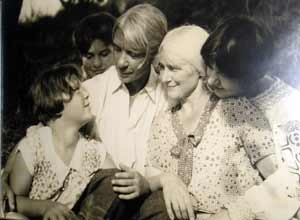
Sandburg Family with Helga Sandburg on the left

A slightly older Helga Sandburg on the left with her parents and sisters.

A gentle reminder, I encourage readers and listeners here to share the links to these pieces on social media as it helps spread the work that Parlando Project does very effectively.

Clear Winter

Once more I’m going with a fresh translation for today’s words. And once more, they’re from the French, as I take on Pierre Reverdy’s “Clair Hiver”  in English as “Clear Winter.”  Unlike my last French translation, Apollinaire’sMirabeau Bridge,”  this one hasn’t already been translated a dozen times, though the one translation I could find was by no less than John Ashbery, so I’m still a bit audacious in taking my swing at this.

Like Apollinaire or Tristan Tzara, Reverdy’s work isn’t well-known in English, but even more than those two Paris contemporaries of his, he’s been acknowledged as a substantial influence on post-WWII American poetry. Reverdy’s been studied, cited as an influence, and translated by Ashbery, Kenneth Rexroth, and Rod Padgett. Others connected with the 20th Century “New York School” of poetry were inspired by his work too.

Indeed, it’s through Frank O’Hara that Reverdy’s name may be best known in English, for as O’Hara took his famous summer stroll in Manhattan in the lines of his poemA Step Away from Them,”  he takes care to mention that “My heart is in my pocket, it is / ”Poems by Pierre Reverdy.”

My Heart is in my pocket, it is

“Poems by Pierre Reverdy”

When Pierre Reverdy died in 1960, Ashbery asked O’Hara if he had any poems to contribute to a memorial issue of a magazine he was curating. O’Hara replied, deferring, “I just couldn’t stand the amount of work it would seem to take, since the minute you mentioned it I decided that everything I’ve written…has been under his influence.”

I used that O’Hara connection as my entry point into Reverdy and to my translation of “Clear Winter.”  Unlike Ashbery, I’m not a French speaker, and my high school French classes have long worn off—but O’Hara’s voice in English is somewhat ingrained in me, and so I used that as a guide as I completed my Reverdy translation.

But now I’m not so sure that was the right choice. Reading a trenchant analysis of Reverdy by Kenneth Rexroth, I may have overdetermined the images in my first translation of Reverdy—but for better or worse, this is my tendency as a translator. I try to sense in the foreign language the experience the poem speaks of, and then to vivify those sensations and thoughts I find in that examination into English. That often takes the form of using clear idiomatic, contemporary English to sharpen those images. Often in this process, I’ll take imaginative leaps into the poet’s intent—and, well, sometimes when one steps boldly into what one thinks is a pool of light in the darkness, it turns out to be a large pothole filled with ditch-water instead.

If my suppositions are mistakes, perhaps they are at least vivid mistakes.

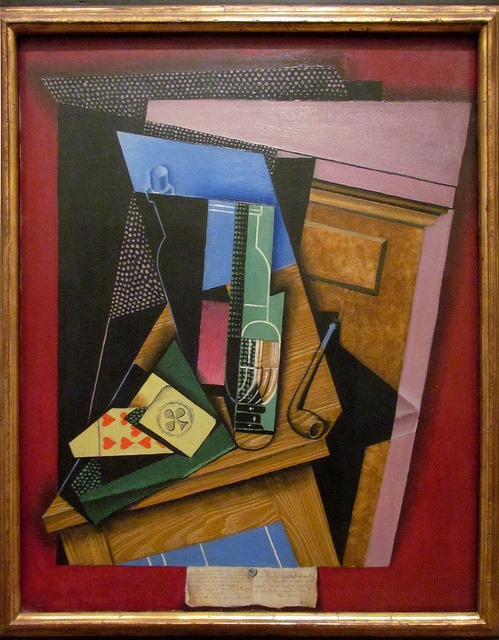
Still Life with Poem by Juan Gris

Post-It Notes™ go Cubist?  Juan Gris’ “Still Life with Poem.”
And that poem is by his friend and collaborator, Pierre Reverdy.


Reverdy, like Apollinaire, has been called a cubist poet, and like Apollinaire he knew many of the painters who formed that faceted multi-perspective style in the Paris of the first part of the 20th Century. As the style developed, found objects such as newspaper, tickets, and wallpaper were pasted into the paintings. To reflect this musically this piece uses some various audio loops for melodic elements—something I don’t usually do. This is my attempt to make the sound of the cubist ethos of juxtaposed perspectives. That the loops should be unlike, yet somehow hang together, was the aim, and their repetitive nature is the analog to the cubist geometric forms.

That description makes my music for “Clear Winter”  sound all high art, and I guess it would be in the early 20th Century, but some current popular music forms commonly do this. Electronic Dance Music and Hip Hop tracks love the unexpected intrusion of unusual sounds. So, though my performance of Reverdy’s “Clear Winter”  (player below) is a short piece, I’d be glad to do an extended dance mix if the demand is there.


There is Always Time

It’s a new year, and here’s a piece that is not representative of most of what we do here. First off, it’s a piece where I wrote the words, when one of the Parlando Project principles is “Other People’s Stories.” So, the words we use here are normally from others, often originally written as page poems by their authors. The Parlando Project adapts, recasts, and performs these pieces with various combinations of original music. Today’s audio, “There is Always Time”  was conceived as a song to be sung from the start.

It’s been a busy last couple of weeks for me, so my ability to work on new pieces has been slightly curtailed. I’ve had this one done for a month, saved for just such an occasion when I’ve fallen behind in the work that goes into this project—and well, it does seem like a good piece for the day of New Year’s Resolutions.

Woody Guthrie's 1942 NY Resolutions

Woody Guthrie’s 1942 NY Resolutions. He didn’t keep all of them—still glad we had a Woody Guthrie.


“There is Always Time”  is a “carpe diem” song about dreams and desires deferred, so it’s perhaps the precursor to those lists of “shoulds” for the coming year.

Goals and focus are good things. Approximately three years ago I set out on just such a goal, to create and present 100 or so audio pieces combining various words and various music. I needed to learn a bit about how to syndicate these pieces via podcasting as well as how to stream them from a blog. Once I started this, I soon found there was even more to learn, more things that will ask to be needed by the work. Since the Parlando Project was launched in August 2016, we’ve exceeded the original goal, and we now near 170 audio pieces published.

Goals, focus, drive, desire to learn, audacity mixed with humility—all were necessary. However, I think today, as I present this piece, of Karen Horney, the innovative early psychoanalyst, who developed a concept as she looked at personalities and the goals they set. She called it “The Tyranny of the Shoulds.”

Karen Horney

Karen Horney. Beavis and Butthead’s favorite Adlerian psychoanalyst?


Who was the tyrant, the oppressor, who is in this phrase? Parents? Society? Government? Natural Law? Racism, sexism, ageism, gender roles? Well, they all could contribute to the tyrant’s powers, but in her formulation the mad dictator is specifically “The Ideal Self.”

Wait—what? The Ideal Self is what is going to get me out of those old-year patterns, get me doing those things that I need to do. The Ideal Self will make sure I commit to my art. The Ideal Self will fix those things about myself that keep failing. The Ideal Self will make me a better person, a better co-worker, a better partner, a better parent, a better son or daughter, and so on.

What’s wrong with that? Look again at Horney’s formulation: “The Tyranny of the Shoulds.” What if that Ideal Self behaves as a tyrant does? What if instead of being the loving, supportive partner, parent, boss, or teacher that we may or may not have had, the Ideal Self acts as a dictator would: the executions, the inquisitions, the scape-goating, the banishments, the wars of aggression, all waged by the Ideal Self against the poor Real Self, who beaten-down will eventually fail the tyrant or overthrow it.

So yes, seize the day, seize the year. Do more and better art this year. Love your partners and your families and your friends while they are here. Repair the world, slowly and little-by-little if you can be patient and brave. Clean out the closet. Ride your bike more. Learn a new instrument. Read more. But be the loving partner to that struggling Real Self. It knows it’s limitations, it’s failures, it’s shames, but it is only your Real Self that can do these things.

To hear “There is Always Time,”  use the player below. If you like it, go ahead and click the like button, and it’s very helpful if you share the audio pieces or this blog on your own site, or on social media. We’ll be back with more pieces using words by other authors soon.

Ring Out Wild Bells

This guy was once famous. Not just writer-famous, but Beyoncé or Beatles famous. In England, and to a large degree in America, he was the face of, and the center of, Victorian poetry. And poetry in Victorian times, the written-down and printed in books kind, was still a force in mass culture.

tennyson

Once an empire’s most famous poet, now reduced to modeling a Slanket.

The town I grew up in was platted and settled around 1880, its success achieved by the industrious Swedish-American farmers around it and the railroad that went through it. The town was named Stratford, after Shakespeare’s birthplace, and so it was that the town’s main street, with it’s block of stores, was named Shakespeare Avenue. Shakespeare Avenue was met just north of the shops by the town’s central cross street, Tennyson Avenue.

That’s a remarkable piece of trivia isn’t it? Think of how many suburbs and housing developments were similarly planned and platted in the centuries since in the United States. How many of them had main streets named for contemporary poets? Milton and Byron had their streets along with Shakespeare in Strafford, but even Byron was 50 years dead; but here was Tennyson, a man still in his career across half a continent and one ocean away, and here this proud avenue in a farming town was written down to bear his name.

The problem with being a big-thing Victorian, as Tennyson was, is that our Modernists came after them. Came after them in time and eventually, opposition. Even though you can see the influences of the Victorians on the early work of some Modernists, you can also see the things they came to reject in search of an art for their own time. In those scattered small settlements where page poetry is still read or studied, we are now more likely to be reading Hopkins or Hardy for the English, or Dickinson or Whitman for Americans, or hinge figures like Yeats who spanned the eras, than Alfred Lord Tennyson, the once leading poet of his age.

Besides the street in my tiny town, Tennyson lives on in a handful of phrases from his poems that have become commonplace mottos such as “It’s better to have loved and lost, than never to have loved at all”words well-enough known even as their author’s fame and esteem has faded, that many people think they must be Shakespeare’s.

Today’s words come from another section in the same long poem or collection that premiered the “loved and lost” phrase, Tennyson’s broad meditation on loss and perseverance “In Memoriam A.H.H.”  If we’ve forgotten Tennyson, this makes it possible for him to be new again, and this is a piece, as I recast it, that seems very appropriate for our age—even for this year. The New Year’s bells ring in a new year, but they also chase away the devils of the old one.

So, enjoy the music I wrote and recorded for “Ring Out Wild Bells”,  but you may be surprised at how well Tennyson’s sentiments fit as you sing along with them while 2017 ends. The player for the audio piece is right below this for many of you. Don’t see a player? This highlighted hyper link will also play my performance of a new setting for Tennyson’s words.

.

Mirabeau Bridge

Earlier this month I announced that my performance of Tristan Tzara’s The Death of Apollinaire”  was the most popular piece here last fall. Seeing this, it’s past time to present a poem by Guillaume Apollinaire himself.

If one was to draw a graphical map of the French Modernists of the early 20th Century, corresponding to the English-speaking ones we’ve been talking about a lot here, Apollinaire would be at a central place like Ezra Pound. Apollinaire knew everybody, he influenced everybody; as a critic, he wrote about everybody. Although, like Pound, he held strong opinions about what a more modern art needed, what little I know about how he was experienced as a living artist says that he was also loved by most everybody that he met as well.

Like Tristan Tzara he was an example of a European, though his work was centered in Paris and he wrote largely in French. His mother’s family was Polish or Belarussian, depending on where the borders were drawn at any one time. His father’s background was never definitively known. Born likely in Italy, he had traveled and spent time in several countries, and spoke several languages, before settling in Paris before he was 20.

Portrait of Guillaume Apollinarie by Picasso

“Don’t you be L7!” Picasso’s cubist portrait of Apollinaire

In the visual arts, he invented the word Cubism, and he also was the first to call his work Surrealist. He knew modernists in music, like Satie. He knew the young artists, like Picasso, Chagall, Henri Roussseau. Dadaists considered him an influence and a co-conspirator.

In 1913 he published his best-known collection of poetry “Alcools”  (Alcool is the French word for alcohol). In it, Apollinaire set out his direction in modern poetry, using various forms, often imbued with contemporary colloquial speech and connections to modern technology and urban life. One tic he adopted in “Alcools:”  he dropped the punctuation from his poetry, emphasizing the flow of his words, an effect that could be seen as presaging a modern rapper’s unstoppable flow.

Am I guessing at that? It just so happens, I’m not. On Christmas Eve in 1913, Apollinaire was recorded reading one of the poems from “Alcools:” “Le Pont Mirabeau”  (Mirabeau Bridge), and that recording, encrusted though it is with the scratch and noise of time, survives.

So, today’s piece, with my music and my English translation of his words, leads off with Apollinaire’s own reading of his poem in French.

1280px-Apollinaire_Sous_le_pont_Mirabeau

Mirabeau was the longest bridge in Paris when it was built using using new steel-reinforced methods in 1893.

Translating “Mirabeau Bridge”  was a challenge. Having heard and been transfixed by Apollinaire’s intensely rhymed and recited version, I had to bend my usual translation approach, which skips any attempt to keep the original “music” (the rhyme and meter) of the poem. And as I look at the many attempts to translate this poem to English, I see most tried to at least rhyme it. The Pogues used a rhymed English translation for a nice sung version a few years back.

As I approached “Mirabeau Bridge,”  I whined to my wife: “Richard F’ing Wilbur tried to translate this, and his  version is awkward—and Wilbur’s a master of poetics!”

Why do I usually skip trying to rhyme-up translations? It adds a great deal of difficulty to conveying the poem adequately. It almost always leads to awkward English, particularly when you try to follow a rhyme scheme from the French, with many more words that rhyme, using English, whose poetic tradition did not grow out of rhyming. Having been influenced by French poetry at an early age, when trying for similar effects I often use a variety of imperfect and near-rhymes, something an audience may accept or find grating, depending on their tastes, and that’s what I did here, along with a free and not regular rhyming scheme.

Give a listen. Consider it a trip-hop battle between Apollinaire and myself. Respect to Apollinaire. Can’t bust his moves.

In the Bleak Midwinter

Tomorrow is Christmas, a holiday that in the English-speaking world owes a lot to the English Victorians in conception, which gives me an excuse to present once again the words of the Victorian poet Christina Rossetti, this time in the guise of her popular and explicitly Christian-religious Christmas song “In the Bleak Midwinter.”

Burne-Jones' Nativity

“You could have brought a casserole.” Victorian painter Edward Burne-Jones’ nativity.
Is it just me, or is Mary looking a little non-plussed by all the visitors?


The song used for Rossetti’s words seems to be attributed to Gustav Holst, a composer who is best known to me for his orchestral suite “The Planets,”  which has been admired or borrowed from by both Frank Zappa and King Crimson. In my rush to complete this today I can’t say that I’ve done as much justice to his tune, though I used a rough approximation of it.

The tune is quite pretty, and it makes it a fine solo for any good singer, which therefore makes it a challenge for me, so I’ve resorted to my usual parlando. On the other hand, a great many versions of this song in hymn books and elsewhere seem to have modified Christina Rossetti’s words, changing terms and phrases, even dropping some stanzas, where I’ve been faithful to them. I don’t have my usual time today to research why this would be. The meter of her original text is slightly irregular, and so it may have been modified for better singability or for audience reasons.

Botticelli's Mystic Nativity

Botticelli’s “Mystic Nativity.” Painted before the career of Raphael
So literally, a first-order “Pre-Raphaelite”


Rossetti’s approach makes use of her characteristic modesty in approaching religious subjects, with some lovely lines in the first verse picturing our northern Midwinter, and then going on to describe the stable setting, and the supernatural surrounding sentimental maternity and spiritual imminence.

Musically, I tried to compensate for my speaking the words by unleashing my bass playing. Like some gifts you may get this Christmas, it may not be the right size or color—but it was given in a good spirit at least.

To un-wrap it, use the player below.


My Feet

Today’s piece uses words from a more modern poem from a Minnesota poet: Renée Robbins. I met Renée after this piece was written, but I recall going with her to a very nice soirée celebrating the publication of this collection of poems by Minnesota poets, including her “My Feet”,  40 years ago.

A Coloring Book of Poetry for Adults

A good attempt at a broad-view of 70s Minnesota poets, including Renée.
Oddly, I can’t find the credit for the cover artist. Anyone know?


This was the 1970s, and from our age or our ages, an optimistic time to be a poet in Minnesota. Running down a list of names, I’ll slight anyone I leave off out of concerns of length and focus, but locally it was still the age of Robert Bly, John Berryman, and James Wright. Minnesota literature, at that time, seemed to have placed poetry at least equal to the novel or memoir.

I had come recently from New York and had reconnected with Dave Moore who had finished college. I was writing furiously, filled with a Twenty-Something desire to set on the page all the patterns I could see in our still forming lives. Renée had taken a shorter trip, going to college first in Duluth and then in Marshall Minnesota where she studied with Phil Dacey.

There is a longer story here, full, like most life stories, with twists that seem meaningful to us—even if not invested with the same importance by fatebut let’s return to poets, and the 1970s, and Minnesota.

Renee Robbins 1970s

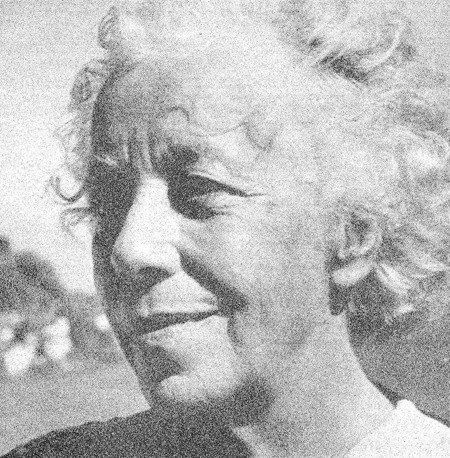
Renée Robbins, later the 1970s


Note that truncated list I gave of the exciting characters, the names of poets that would be in someway connected to Minnesota in that time. No women. I find that odd. No similar list of the most notable contemporary poets in the United States made the middle ‘70s would be so gender singular. Is this an accident, a side-effect of the stubborn impact of Robert Bly locally, a reflection of a lingering patriarchy, or just a reflection of my own framing as I look backwards? It could be all of them I suppose. Established names or not, woman’s voices were coming forward.

Renée and I fell in love. Eventually we married. Eventually she got sick and died shortly after the turn of the century. As I said, these twists in the stories we hold as ours seem meaningful to us. Perhaps it’s a meaning like a deep poem, one with a deep image, one that doesn’t stand for anything other than itself, one that can bend light around it, leaving the densest shadow, as life still glitters around it, with a strange margin where they meet.

Robbins’ “My Feet”  may not be that kind of deep poem, but as I tried to argue here recently, poetry is richer and less constrained when we feel we can use it for more than the deepest things. And Robbins’ choices in “My Feet”  implicitly make that argument I think. Ozymandias may have two vast and trunkless legs of stone and those meaningful sands mocking them, but the rest of us have only our tired dogs, like to those Renée can apprehend with her characteristic artistic focus on close looking. Her time on the farming plains of Southwest Minnesota may have given her a new landscape to appreciate those feet.

To hear my music and performance of Renée Robbins’ “My Feet,”  use the player below.

Solstice Featuring Dave Moore

Yesterday’s post and audio piece had Dave Moore combining the poetry of William Blake and Christina Rossetti, but today we have him singing the work of yet another English mystic as well as his setting of a lyric by Emily Dickinson.

For those readers and listeners in the Northern Hemisphere, tomorrow is Winter Solstice. I write from Minnesota, fairly far upward and north in latitude. Winter Solstice is the darkest day of the year, with the sun not rising until almost 8 AM and the sunset clocking out of work early at 4:20 PM. Despite our colder climate, that’s about the same as London’s solstice daylight and a hour longer than Edinburgh. Minnesota’s famous Scandinavian immigrants, as one comic once put it, traveled across the whole wide ocean just to find the one place as cold, dark and miserable as the place they’d left—well I checked—they picked up 2 to 4 hours more midwinter light.

Of course the new year is less than two weeks off, and solstice is the shortest  day—not the entry into a dark season, but the beginning of a gradual expansion of daylight, cold daylight though it may be. For this reason it’s been a fairly widespread feast day across cultures.

However, for writers and musicians, the cold and the dark is no great hindrance. Sure it may blunt our moods, and stunt some mitigating outdoor activities, but our products are part of the festive in the darkness, and they can be like the shared quilt or blanket on the coldest night. Yes, before indoor lighting technology, scholarly reading was curtailed, but the poets of that dark time could recite from memory, needing no light bulb on their lectern. The sounds of strings, the dunest drum and the golden cymbal, travel without light.

And our partners and families don’t need light either to be known to us. They don’t even need poetry or music, their plainest word in the darkness is song enough, if we can hear that as one note in the slowest song that is our life together.

So, for today and the Midwinter Solstice, here is Dave Moore singing Robyn Hitchcock’s “Winter Love.”

The LYL Band tackles the darkest time of year


And for the short passage of the daylight, here’s Emily Dickinson’s sublime lyric about the transit of a day, “I’ll Tell You How the Sun Rose,”  also sung by Dave.

And don’t forget, we have over 160 audio pieces here, available in the archives on the right. Why not check out some from before the time you first heard of us?

A Song in the Garden of Love

Today we offer a respite from my voice and the return of alternate Parlando Project presenter Dave Moore. And since it’s been a few days since the last new audio piece, today’s piece combines a lyric written by William Blake with one by Christina Rossetti. Two great poets in one piece! Ladies and gentlemen, there is no greater value you can find today in the poetic words mixed with music marketplace!

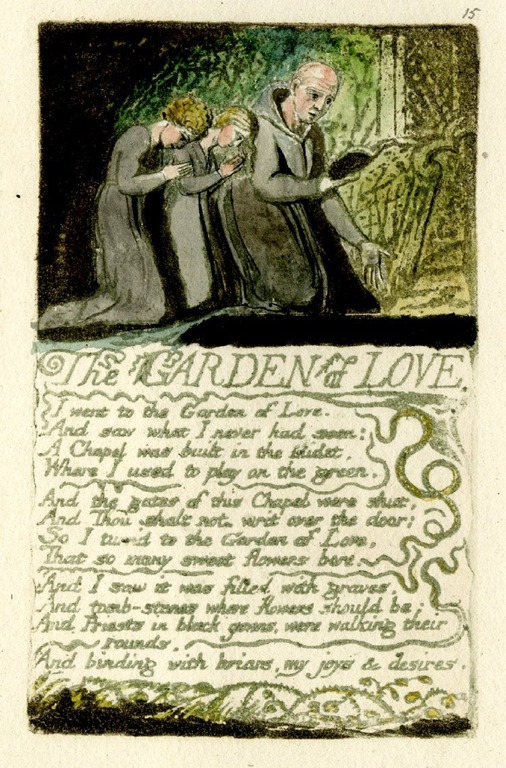
Both pieces are stated by their authors to be songs, either in the name of Blake’s collection where “The Garden of Love”  first appeared, “Songs of Experience,”  or in the title itself for Rossetti’s piece, which she called just “Song.”

So of course, both pieces have been set to music and sung before this, but it was Dave Moore’s idea to combine the two pieces; and one can immediately see once he did this, how tightly they fit, with Blake sorrowfully reporting the graves in the garden, and Rossetti musing on the grave and its landscape.

Rossetti wrote her “Song”  while still a teenager. Unlike Blake who was born in a religious dissenter family and grew increasingly distrustful of the corruptions of organized religion, Rossetti would become one of the most graceful and modest of the poets of the Victorian Christian revival. Strange, isn’t it, that the two poems mesh together.

Christina Rossette on staircase

“If you listen very hard, the tune will come to you at last”
Christina Rossetti listens for inspiration, or puzzles over her holiday gift list


Speaking from my poet/musician duality, the version of “The Garden of Love”  that I most recall is the one recorded by Allen Ginsberg in December of 1969. Ginsberg’s recording is played, followed by a 20-minute discussion of the poem and performance here. The four speakers in this discussion mull on the country music waltz feel Ginsberg performed the Blake too. If I were in that room, I could have replied from the musician side of that duality, that in 1969 there was a bloomlet of counter-cultural figures essaying country-music tropes to the puzzlement from the hippie audience as to what level of irony was intended. Two musical figures close to Allen Ginsberg had taken part in that move earlier that same year: Bob Dylan with “Nashville Skyline”  and Ed Sanders with “Sanders’ Truckstop.”

Wm Blake The Garden of Love

“A dominie in gray…led the flock away.” Blake’s self-illuminated song.


Our performance of this mixes Dave’s somewhat church-hymn organ (Ginsberg often used a hand-pumped harmonium organ in his live performances) with my country-ish Telecaster electric guitar, so perhaps Ginsberg’s country move was stuck in my memory as we performed this. Here’s what Dave Moore said about his performance:

“Wayback Machine time.

This song goes back to the early days of the Reagan years, which he ended up forgetting but we can’t.

Probably this is my first attempt to put music to classic poetry, I just thought they fit together so well & expressed both despair and hope so well. This one is my favorite vocal of all attempts at this piece. My introductory verses for each poet are new & I wish I’d separated them from the two little poems better, but that’s what you get with one-takes. Ah, sweet death, we can still sing.”

Dave points out a contrasting benefit of the pieces here performed as the LYL Band, which are not only “one-takes,” but are often pieces that only the composer-vocalist has any sense of the structure of, leaving the rest of us to follow and create parts on the fly. This leads to a certain roughness, and yes, at times, tentativeness too—but I believe there is a corresponding sense of the undiscovered and its discovery that may come across to the listener.

To listen to the LYL Band perform Dave Moore’s pairing of these two beautiful, yet sad, English lyrics, use the player below.