I have no direct information, but I experienced today’s Claude McKay poem as a companion piece to the poem I performed last time, “To Winter.” “ To Winter’s” voice was somber and alone, and the sparseness of winter is welcomed within the moment of that poem. “After the Winter” in contrast leaves a present cold weather moment quickly and turns instead to a hopeful warm weather reverie. Here’s a link to the text of today’s other winter poem.
As I’ve already mentioned in this series, McKay’s poetry often includes flowers, and so it is with this one. I casually compared McKay to Emily Dickinson in this regard – and they are two poets who studied plants scientifically but also portray their aesthetic beauty in poems – but Dickinson’s flowers can often be philosophical, creatures of a searching, perhaps existential, mind, while McKay’s blossoms are flagrantly sensuous.
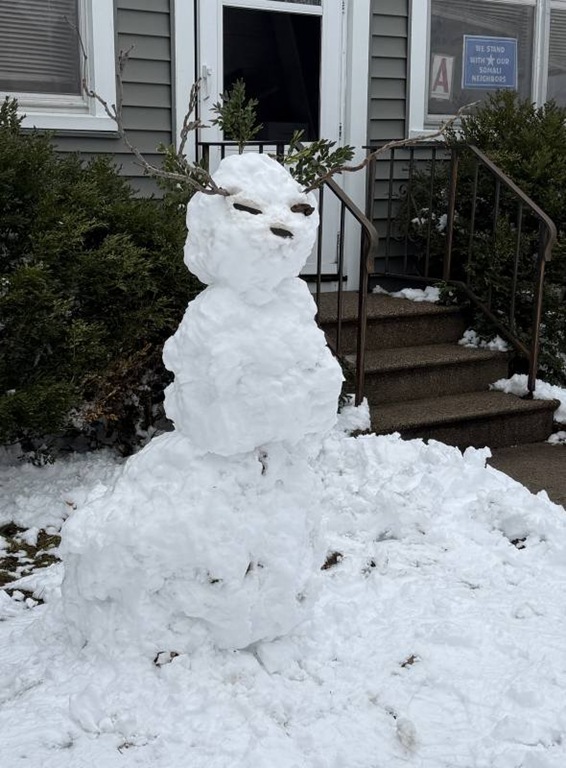
Not by clay and wattles made.
.
In the poem here, like my present February in northern America,* is still in winter, and any early birds are shivering, but in the reverie, there’s a bee among the flowers, just as we might find in Dickinson. Yet, as I read this poem I thought of another poet that McKay’s poem could be in conversation with: William Butler Yeats.
Tribute, coincidence? One more thing I don’t know, but as I read “After the Winter” I strongly felt its resonance with Yeats famous “The Lake Isle of Innisfree.” ** If McKay was thinking of his homeland of Jamaica, and Yeats of Ireland, the catalog of objects in their pair of poems sing harmonies: a built cabin and a cottage; bean rows and blue bells; bee loud and droning bees in a pair of glades; lapping lake water and laughing crystal rills. One difference in McKay’s cabin vs. Yeats’? Yeats dreams of living there alone, while McKay’s poem speaks of a “we” there.
Am I charging McKay with some crime of unoriginality? Nope. If he’d read and enjoyed Yeats poem (something I think likely) there’s in my world of poetry and song no harm in adding his own verses longing for his own homeland. Poets and singers do this. No less than a Robert Frost did his own reply to a lyrical passage from one of Yeats plays. Folk singers, folk musicians make a practice of this. This thing you’re reading, the Parlando Project? I’m borrowing from poets across the ages and places, singing or performing their words in my way, sometimes altering them intentionally or otherwise. If I sing a more than 100-year-old poem written by a Black Jamaican born in the 19th century, I’m adding myself, my inhabitation to it. If a Jamaican recalling in his deep heart’s core his rural childhood home while standing in another, colder country, sings along with an Irishman standing on urban pavement in London? That’s us, that’s our shared humanity, hearing and taking in each other’s songs.
How did I inhabit McKay’s poem musically? A predominate instrument sound in my performance is a Middle-Eastern santur, the ancestor of the hammered dulcimer of Coleridge’s Kubla Kahn. And I finish the performance by indulging in an electric guitar solo played on a Telecaster: the country & western instrument designed by a one-eyed American. You can hear that with the audio player below. No audio player to be seen with either eye? Some ways of viewing this blog suppress showing it, so I offer this highlighted link that will open its own tab with an audio player.
.
*I was able to replace my dead LCD screen today. If you dream about a quiet bucolic place were you can hear bees and gentle breezes rustling some botany, I would suggest not going to a Microcenter on a Sunday. On the other hand, it’s good that there is such a bazaar beside the “pavements grey” where you can find a necessary cable to go from mini display port to full-sized display port.
**Yeats’ poem is famous for its invocation of Ireland, yet I found out in researching it for a Parlando Project performance of it some years back that it was written in London.
 Frank Hudson
The santur sounds very cool.
LikeLiked by 1 person