Langston Hughes Chooses Jazz Poetry: “Jazz Band in a Parisian Cabaret”

I’m going to write about 20th century poet Langston Hughes’ pioneering Jazz poetry. I’m hoping to condense a lot, trying to make this short – but we’ll see. Like someone commencing a Jazz improvisation, I’ve got an idea – and maybe have some sight of where that idea goes – but what happens after that? That spirit, going there with maybe a first idea to see what you can develop from it, is what makes Jazz improvisation possible. Some skilled musicians, able to translate written scores into music straight off the page are terrified of that leap. Perhaps it’s because they know how to play those set-down compositions right that they’re frightened – if I must improvise, they may think, how will I know what’s right?

Langston Hughes published the words I’ll be using today in 1926 – but I must be in a hurry telling today’s story, because I’ll start in 1835, or thereabouts. Wikipedia puts “circa” next to that date, so there aren’t any attested records, but one Mary Sampson Patterson was born a free woman of color at about that date in North Carolina.

At around age 20 her Wikipedia entry says she fled for Ohio due to an attempted enslavement.*  Records again are sketchy, but in Ohio she in some way studied at Oberlin College – as an Afro-American woman, this a double rarity in the first part of the 19th century. Her education trailed off in 1858 when she married Lewis Leary, a fugitive slave also from North Carolina. Leary was not just a fugitive slave, he became part of the Harper’s Ferry Raid, John Brown’s attempt to start a mass slave rebellion by attacking a military armory in Virginia. Brown attempted this with only 22 men, including Leary. Under the element of surprise, Brown’s men took over the lightly guarded armory, but a little over a day later a full military detachment under the command of Robert E. Lee easily defeated the small band. Nearly half of Brown’s raiders died in the subsequent battle – Leary being one of those – and seven more were executed afterward. Lee didn’t need to be any kind of military genius to win this battle, and whatever Brown’s beliefs, he wasn’t a great tactician either. Were they both improvising? I suppose they were.

The widow Mary married another abolitionist, Charles Langston, and they moved to Lawrence Kansas to raise a family. One of their children was Carolina “Carrie” Langston. That Carrie Langston married a James Hughes. The marriage was short-lived, though it produced a son given the first name from the mother’s family and the last name of the father’s: Langston Hughes. That was 1901 or maybe 1902 – accounts differ. Anyway, we’ve reached the 20th century.

Carrie needed to find work, and so the young Langston Hughes was largely raised by his grandmother Mary. So here you go: a Black woman, born around 1835, in the age of slavery, flees slavery’s grasp, gets at least a smattering of higher education, gives that up for a husband, then in turn gives up that husband in the fight against slavery, and in the end gets a chance to nurture a literary innovator. No one composes such a life and scores it out ahead of time.

I believe this is a photograph of the woman born Mary Sampson Patterson. The place I found it credits Yale’s Beinecke Library. Oddly enough I found two other photos claiming to be the Mary Patterson I write of above. Image search says one is another abolitionist woman from the same era. The other, of an older woman, may be Mary Jane Patterson, who was the first Afro-American woman to get a BA, coincidentally in more than the name, from Oberlin.

.

Hughes started writing poetry as a child. His first publication was as a teenage contributor to W.E.B. DuBois’s short-lived kids magazine. In the 1920’s he’s a young member of what gets called “The Harlem Renaissance.” Like his grandmother, he starts to get some higher education, but that effort is thwarted.**  In 1923 he takes a job crewing on an Atlantic ocean merchant steamer.

How far is he planning ahead? Like many an improvisor, Hughes might have an idea in his head, he goes there, and he sees what happens to fit next. In 1924 he jumps ship while it’s in Rotterdam, and makes his way to Paris. One of the things he finds there: other Black folks, some of them playing Jazz, which in Paris has an added layer of exoticism. Here’s a link to a good short account of some of what Langston Hughes found there.

Hughes is an Afro-American. Jazz isn’t exotic to him, but furthermore he’s part of a smaller group (even among Afro-Americans) who are developing a deeper understanding and appreciation of that music.

Given what Jazz is in our current century – a largely select-audience concert art – I feel I have to go on another expository aside now, filled with what I have absorbed from history. In the early 1920s Jazz is viewed as fast-tempo music, suitable for dancing, drinking, and carousing. Intellectually, it’s considered thoughtless, or perhaps comic, a burlesque of real musical structure, timbres, and practice. It’s associated with criminality, intoxication, and sexual promiscuity to the degree that it isn’t just guilty of being an accomplice to vice but the cause of it: just taking in that hopped-up primitive music might drive its listeners to excess and ruin. Believing that I have a wide generational and geographic range within the readers of this Project, rough analogies to the initial cultural assessments of Rock’n’Roll and Hip Hop may be made – but I have no sure metaphor for those of you who grew up in our present century, for whom those later musical movements are history too.

Just like Rock’n’Roll and Hip Hop, Blues and Jazz are Afro-American musical forms, though both soon-enough have non-Black practitioners, and this points out something that the intelligent 1920s Afro-American young man in his 20s, Langston Hughes, is facing when he writes about his experience of Jazz. In a class or vocational level, is he going to be the college-degree middle-class artist or is he going to be a crewman on a steamer or a servant-job worker? Could he be something else beyond that dialectic? Hughes must have thought of all of this even before he took off from that freighter job, and every poem he writes may be notes and directions to himself in these matters.

I don’t know when Hughes first started to write poetry about Blues and Jazz, but some things I’ve read say that his poems about them go back to his high-school poetry – and I also don’t know when he first performed his poetry with Jazz accompaniment, though I think that music is present anyway in the word-music implied in much of his early poetry – but this was unsure ground to stand on in the 1920s.***  The novelty of a genteel high art like literary poetry speaking with appreciation about Jazz had some controversial power, but cultural gatekeepers, including some of the nascent Black critics, considered the music embarrassing and detrimental. Concert music, particularly Afro-American Spirituals, overtly concerned with the Abrahamic Godhead and Biblical stories (even if metaphor for temporal, earthly liberty and respect) were a competing, easily praiseworthy art that elevated the race. Meanwhile, Jazz, including the way it was adopted by some white listeners and practitioners in the 1920s, reeked of black-face minstrel shows, with white folks playing Black folks playing the fool.

So, once more I’ve taken the long way around, but here’s the 22-year-old Langston Hughes, an Afro-American poet and college dropout, so-recently raised by a Black woman who intimately knew the serious costs of seeking freedom and respect, with $9 in capital equity in pocket, who’s jumped ship from his job, and is in Paris, a capital of European Culture – and he finds, of all things, a Jazz band. Here’s a link to the text of his resulting “Jazz Band in a Parisian Cabaret”  if you’d like to read along.

There’d be a temptation in this for a long poem of internal monolog, or some mighty external manifesto. A great poem might be written thusly, stuffed with much of what I’ve taken your time to discuss today. Instead, Hughes wrote this sly, shorter poem, one that assumes you know this history, assumes you know it in the same way that some other poet assumes you know Ovid or the Trojan War – and goddammit, if you are an American you should know it!   Hughes little poem is made up of contrasting voices, a floating democracy of understandings and misunderstandings, breathing together as Jazz plays. The diverse audience calls out, wants this music. Hughes’ voice inside this colloquy, needs it – not just to remind him of home, but to let he see that home and his culture in perspective – and so he joins the chorus of “Play that thing, Jazz band!” European high culture and wealth enjoys it – and it’s a testimony, not a detriment, to its powers that the demi-monde likes it too. Are the American millionaires (perhaps as culturally stunted as modern techbros) slumming for idle amusement, or covert in foreign secrecy allowing a forbidden release? No matter, schoolteachers, the most modest keepers of culture, find it worthwhile. And oh, this statement, summing up something that Hughes can see in this moment: “You know that tune/That laughs and cries at the same time.” Hughes reports a little babel of European languages is going on around this recognition on his part that the Jazz band knows inherently what he knows. Then Hughes’ voice speaks again in his poem, another remarkable realization about Jazz music, “You’ve got seven languages to speak in/and then some.”

This epiphany then: Afro-American art: Jazz, Blues, Hughes’ own poetry, can go over the heads of the domestic gatekeepers or the reactions of racism.

Hughes chooses to close his poem with a three-line final scene, one which a further dramatic program note might illuminate. Someone is picking up someone else for the night. No gender is lined out, and while it could be Hughes, it may also not be, or it may be Hughes constructing a metaphor.****  The person they’re attracted to is said to be from Georgia. I think that’s an important detail, because the poem’s dialog has it “Even  if you do come from Georgia.” Hughes, Northern-raised, recipient of a white-privilege-level high school education and some Ivy League University is portraying this amour as an uneducated rural person. Metaphorically then, Hughes’ concludes that Jazz and Blues folk-music ancestry isn’t important compared to what it does – and by writing Jazz poetry, eventually performing Jazz poetry, that’s the choice the young Langston Hughes makes. When this poem appears in his first poetry collection, that book is going to be titled The Weary Blues – right on the cover he’s making a point of his decision on what’s worthwhile art.
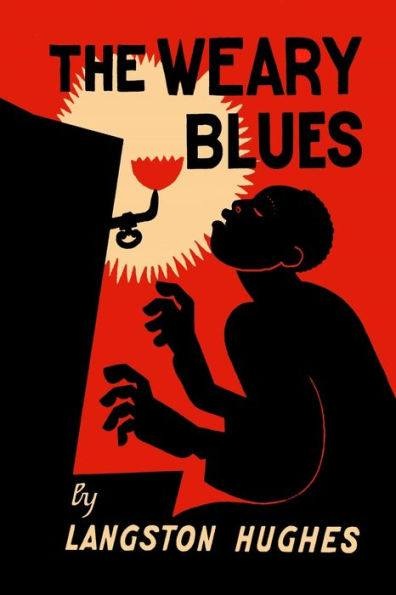
The Weary Blues cover 600

.

Now that I’ve written all that, I’m left with handing off to my musical performance of Langston Hughes’ poem. I felt compelled to “make a Jazz noise here,” as one of my models once titled an album. As a composer I don’t have the theoretical training that most modern Jazz composers do, but I put something together using a characteristic Jazz harmonic cadence. Then the composer called on the inconsistent musician me to realize it and improvise the top line melody. I’ve been practicing my poor chord-comping skills a little bit lately, so I was able to portray the set of written chord changes passably. Spontaneously creating while playing the melodic guitar line was easier for me, as I’ve always been open to improvising that sort of thing. When I start something like that, when I don’t know how to play it exactly – I may have an idea, go there, and see what would fit next. You can hear the result with the audio player gadget below. Is there no visible audio player? No, your ship didn’t leave port without you, it’s just that some ways of reading this blog will suppress showing the gadget, so I offer this highlighted link that will open a new tab with its own audio player.

.

*Putative slaves, property in this debased system, were valuable trade items. One of the most fascinating stories I ran into while researching Emily Dickinson and her family’s relations regarding American slavery was the story of a young, poor, but free-woman of color like Patterson, who was kidnapped to be sold out of state into slavery for a quick profit. Black Amherst residents “stole her back” and were defended in court by Amherst’s most notable lawyer: Emily Dickinson’s father.

**Hughes and his mother were estranged from his father, who had become a company man with the Pullman Company working out of Mexico City. Langston’s father agreed to support his education as long as it was aimed at practical matters such as engineering, not the arts. Langston Hughes agreed to make a go of that, but found he couldn’t leave his literary interests. The train trip to work out this ultimately-to-fail detente produced one of the greatest poems ever written by a teenager.

***Unintendedly, I seem to have stumbled into a theme this fall: literary poetry which has absorbed folk-music forms. Folk revival acoustic-guitar-based music and electric Rock are in my page poetry just as they are more explicitly in my Parlando Project pieces using other people’s words.

****Hughes sexuality is, best as I can determine, hard to determine. Some say he was gay, others assume bi. Some who knew him well paint a somewhat asexual person, or they just say, as I do, that they don’t know.

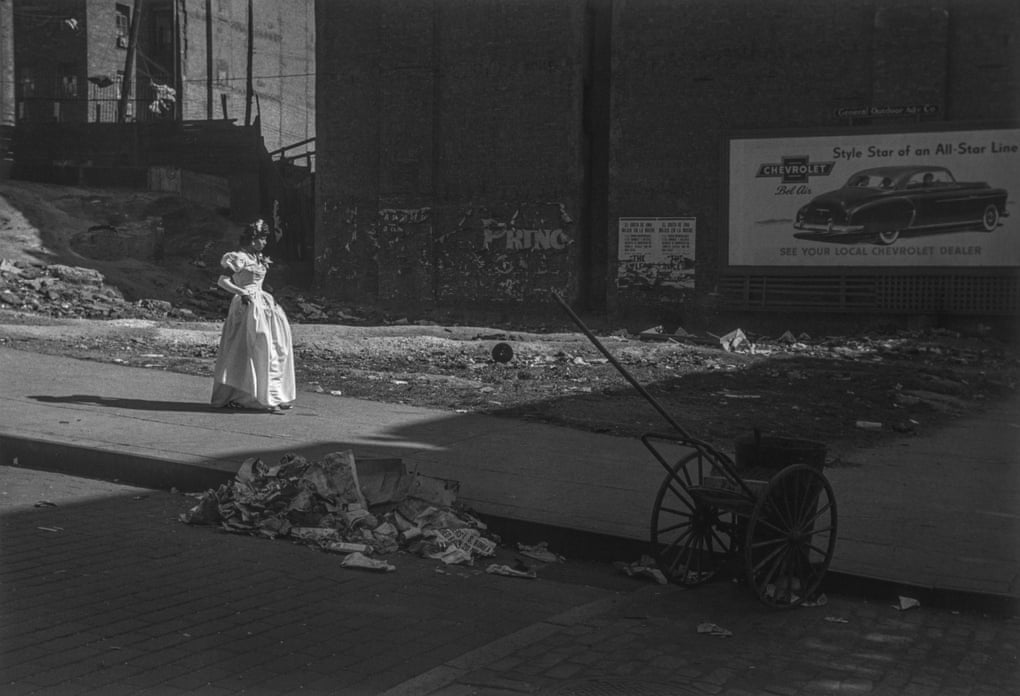
Langston Hughes’ Poem

Today’s piece, “Poem”  from Langston Hughes 1926 poetry collection, The Weary Blues, is one of the shortest poems in that book. Here’s a link to the text, all of it, if you’d like to read along. Those who’ve followed this Project as it has looked at early English language Modernist verse may recall that very short poems, even poems that seem bereft of obvious metaphor, were something that many of those early Modernists liked to present. Such tiny poems are pointed darts at the pomposity and long-windedness of the poetry they were seeking to replace.

The sense I get from today’s example is that by using the generic if exalted name of “Poem”  as the title, when what follows is so spare and simply stated, is meant to draw attention to the provocation that this is worth consideration as a complete lyric.

It may be me and my current situation, but when I read “Poem”  I immediately thought it was a memorial poem, a five-line-with-one-refrained-line statement of the essence of loss intended to put itself up against something like the book-length “In Memoriam A.H.H.”  by Alfred Tennyson. I still find nothing in the text that forbids that reading.

But death isn’t the only loss in life. Some, particularly those looking for obscured clues to Langston Hughes’ erotic orientation see this a coded statement of a romantic or erotic breakup with a “He.” Like Shakespeare’s sonnet sequence and Tennyson’s long poem, the poem has a dedication to a set of initials: “F. S.” in “Poem’s”  case. Some articles one can find in a web search identify this dedicatee as Ferdinand Smith, who was in the merchant marine — as was young Hughes before he published The Weary Blues.  Hughes did know Smith, but I haven’t seen a full explanation of how this putative identification was made. Oddly, if this poem of complete separation was written about Smith, Hughes and Smith kept in touch until Smith’s death in 1961. In Real Life there was no utter break between the two — but that’s biographical information, nothing in the text forbids the abandoned love reading either.

Frederick Smith

Frederick Smith, who’s been identified by some as the  mysterious F.S.

.

And then too the poet Hughes of The Weary Blues  and elsewhere is very broad in his use of the pronoun I. Not only does Hughes not identify F. S. and what exactly was the nature of the love relationship, Hughes is fully capable of using “I” as a collective or representational singular. Think of Hughes most famous early poem The Negro Speaks of Rivers”  — its litany of I’s is not a Quantum Leap  confession that this certain 20th century poet worked on the Pyramids or rafted the Mississippi with Abe Lincoln.

But “Poem”  does feel like a personal expression, even if Hughes may frustrate us if we prefer poems as memoir filled with explicit self-expression. Yet maybe this is of little importance to the essence the poem wants to express. Grief from loss of a lover who leaves and lives, or loss of a friend who has died — does the heart assay any difference?

Musically today I demonstrated fidelity of a different kind, playing a cheap 40-year-old 12-string guitar that I bought shortly after coming to Minnesota, and a bass that once belonged to Dean Seal, who played in the LYL Band in the early 80s. I have newer better* instruments, but it seemed like a good way to reset and get back to making some new Parlando Project musical pieces after February presented other matters that needed to be done.

You can hear my performance of Langston Hughes’ “Poem”  with the player gadget below — or if you don’t see that, with this highlighted link.

.

*My newer guitars are better in that they don’t have parts that won’t exactly work anymore or intonation issues I need to work around, but besides old-times-sake I think there’s some character remaining in these funky instruments sound.

More from Langston Hughes’ “The Weary Blues”

This month I’ve been doing a series of pieces based on poems from Langston Hughes’ first book-length collection The Weary Blues of 1926 — but maybe it’s time to mention that I have already presented two early pieces that were included in that book.

Here’s Hughes “Dream Variation”  which also offered its title to a section of the 1926 book.  “Dream Variation”  is an example of Hughes offering a quickly understandable surface message with a plausible deeper intent beneath that surface. The surface reading will connect easily with anyone stuck in a February northern location winter: “To fling my arms wide / In some place of the sun” is something most of us in Minnesota would be ready for, but are only dreaming of right now. Many here like to talk about our enjoyment of the outdoors even in our cold climate, and yes there was some sun when I rode out at 16 degrees F this morning on my bike. I was happy to get the exercise and to watch the crows big as black chickens and the binary oblivious to flurious* squirrels — but I’m tired by now of pulling on leggings and making sure my hands have enough covering to keep my fingers from the cold stiff numbness.

I talked about my encounter with the poem and it’s sometimes discussed deeper connotations here. You can hear the audio piece with guitar and piano clustering around a three-months-into-winter drone with either a graphic audio player that some of you will see, or this highlighted link.

.

I was quite taken by this photo of Roy DeCarava’s “Graduation 1949” when I saw it this winter.

.

The Weary Blues  has another section that takes its title from one of Hughes’ best known poems “The Negro Speaks of Rivers.”   I was talking about this poem this morning to a fellow I sometimes meet in a café I ride to. I was saying this is a remarkable poem written by a 17 year old, one who literally crossed and looked at America’s Mississippi River on his way to New York City in furtherance of a compromise with his father on college education.**   Maybe this won’t seem remarkable to you, if you’re here already reading this far down about a poet who died in the last century, who wrote it generations back.

Hughes might have written about the exact details of his current life. He could have written about how he felt, what with the bargain he’d been forced to strike with his father. He was 17, and forming his own autonomous self is the task of any young person. His father probably didn’t know what the rest of the 20th century would be like for Langston, much less what we’d think of things now in the 21st. What would young Mr. Hughes have known? More, or less?

I was recently reading some jokes observing what are considered the perennial follies of youth. One of the zingers was “It’s best to hire young graduates while they still know everything.”  Queue the laugh track.

I don’t know if 17-year-old Langston Hughes thought he knew everything. I didn’t think so at that age myself. But as we consider why we might want to read or listen to poetry by long-dead poets, we might want to consider what Hughes’ poem asks us to consider: that we are the accumulations and results of our ancestors and neighbor’s ancestors. That doesn’t mean we are them, we are the sum on one side of the equals sign from a lot of figures to the left of it; and so the possible extensions, solutions, fulfillment and remediations of them.

That’s what’s remarkable about the young Mr. Hughes’ poem, its approachable impersonality and insistence on the distances yet salience of the past. It’s not “A Negro…” even, but “The Negro….”  In it, the current of the past is longer than any history of oppression, injustice, or any stories of conquest. Endurance yes, but beauty too. So, despite age-related-stereotypes, at 17 Mr. Hughes may not, and doesn’t have to, know everything — but it helps to know some things that came before you. Rivers flow. Rivers move. Langston Hughes wrote this moving to New York City — the place where he eventually lived most of his life, but not before changing what he did on the banks of another river.

That’s why we have Black History Month,*** and why I’m talking here to what I suspect is substantially a white audience about Hughes and that observance. Some of you may be nodding off by now, whatever color — “We know all this.” you may be muttering. Facts are not the soul, but poetry and music can speak of that.

I’ve always rather liked my electric guitar performance on my setting of “The Negro Speaks of Rivers”  that you can hear with the player gadget where seen below, or with this highlighted link.

.

*Yes, there wasn’t a word “flurious” until now. You are present at the creation!

**My original post on this poem has a longer summary of Langston Hughes’ family situation at the time he wrote this poem. In short, his father was adamant that instead of literature that Langston study engineering. Langston agreed, but then after trying to go along with his father’s wishes, he dropped out, shipped out to sea on merchant ships, and on return to the U. S. worked various lower-end jobs. I think of John Keats’ decision a hundred years before Langston Hughes’. Engineering and medical field students: I’m not suggesting poetry instead. Really, I’m not. Perhaps rather an and instead of or is best.

***It may not be coincidental, but one of the jobs Langston Hughes eventually had was a stint working with Carter Woodson, who first suggested an annual observance of Black history. So, all the more reason to focus on his work this February.

To Midnight Nan at Leroy’s

It’s Black History Month, and I’m planning on presenting a series focusing on Langston Hughes’ first poetry collection: The Weary Blues — but before we get to today’s new Hughes’ piece, let me briefly set down a few reasons for why Langston Hughes.

This project presents early Modernist poets most often. From the American predecessors of Modernism (Whitman, Dickinson) we often jump to those of the 1905-1926 era who sought in various ways to “make it new.” While I continue to read and have interest in post-1926 work, less of that can be reused freely for this project. This reduces the Afro-American sources free to use, as the beginnings of the Harlem Renaissance have moved into Public Domain slowly, year by year, since this project began in 2016. My earlier Hughes’ pieces, even if they were eventually included in The Weary Blues,  were published earlier and so had already moved into PD. It’s only on January 2022 that the whole book’s contents moved to public domain.

The Weary Blues cover 1024

Our February focus: Langston Hughes’ first book.

.

A second reason: look at the title of Hughes’ first book, it includes “Blues.”  As we celebrate Afro-American contributions and experience this month there’s an important parallel here. Americans, some of whom set up shop in England and France before WWI, are hugely important in establishing the Modernist break with the shopworn 19th century writing styles. At the same time, Afro-Americans were crucial in doing the same job for music. As I tried to briefly explain last Black History Month, a great deal of the American Black intelligentsia was caught flat-footed by this musical revolution happening around and by them.*

Let’s cut them some slack on that: cultural change is hard to understand while it’s happening, and the quick white adaptation of Afro-American musical ideas in The Jazz Age of the previous Twenties reflected back to the Black community some rough or even derogatory approximations of what was really going on.

Hughes was a young man when he wrote today’s poem. He’d crossed paths with Black intellectuals by then, but he wasn’t fully one of them. His father had cut a bargain for him to go to Columbia to become a professional. Langston skipped out, worked as a cook and at other restaurant jobs; and took to sea working on merchant ships. Hughes came quickly to an understanding of this new music, it’s complexities and its reflections.

Lastly, here’s one of the things I’ve come to understand about the beginning of Modernist poetry in English: there were substantial elements there that sought to strip back poetry, to simplify it to its essence, to make it immediate to an open heart and mind without pre-requisites. This mode was eventually superseded by a more academic and allusive poetry to the degree that some of the best of this early poetic Modernism was set aside or down-rated as simplistic and insufficient.

Over the years you’ve heard me sing the praises of Carl Sandburg, who seems to have been eventually excused away as cornball. But Sandburg was still vital to the young Langston Hughes in the 1920s, and Hughes took Sandburg’s Midwestern American Modernism and applied it to his own heritage and experience. The mainstream of Afro-American poetry retained more of the vitality and working-class connection that Sandburg expressed. Thank you, Afro-Americans.

Let’s move onto the poem I used as today’s text for the performance you’ll be able to hear below. “To Midnight Nan at Leroy’s”  is not one of Hughes’ best-known works, though it deserves more attention. Here’s a link to the text. You could skim through it on the page and see the Blues connection, even if it’s not a Blues stanza as printed — though it could be refitted as one — but more importantly, it’s got a Blues sensibility. My reading of the poem says there may be a little playing going on, a little con and double consciousness which the whole of the work will show up. This will let the hip listener say on hearing it “Yeah, you and I know what that’s like.” That’s Blues sensibility.

I think the poem is a dialog. Nan of the title is performing at a club, and she’s expressing some eroticism in her performance. I think the poem’s other voice is hitting on Nan. The opening stanza is that other voice, the un-named man, who’s starts out teasingly acknowledging that he’s getting what she’s putting down.

The second stanza could be either voice. I performed it neutral, even as if it might be a narrator, a third voice. Note the loaded word “jungle” in it, one of the “primitive” adjectives used to describe this new Afro-American art. Primitive isn’t totally a derogatory or diminutive to the Modernists, who remember wanted to remove the cruft of a worn-out culture and get back to an essence; but in the context of a white-supremacist-soaked society it could surely slide over to being that. Black artists with intact self-respect did use labels such as “Jungle” in the 1920s, so it’s not simply an external white appellation, but it sure sounds like they’re partially reflecting with the white culture when they do. Pause at the last line: I hear Hughes’ “And the moon was white” with intent.

The third stanza is the man cheering on the singer/performer Nan, and I think also he’s suggesting that if “lovin’” is her object, he’s ready.

Fourth? Yes, the two get together. I perform this as Nan’s voice. Note Nan’s use of the diminutive “boy” for the man in this part of our dialog. He may have been acting the player in his earlier stanzas, but I think this is an intentional reveal that the male character is less than a fully actualized man. The white moon image returns, and their moments of Black joy contrast against it. One could write a moving essay on this poems white moon image, but I’ve already gone long.**  You write it.

The poem concludes by refraining the entire first stanza. I perform in the man’s voice, now sour-grapes-ing the couples’ night. Who put one over on the other in this one-night? Maybe some of both, and maybe external social forces are part of the fate-mix too. Hughes chose to dedicate the poem to Nan, so I suspect his sympathies lie more with her. Another question: is Langston Hughes the unnamed male voice? Hughes’ sexuality is mysterious, and while that’s possible, my estimate is that he’s observing, not writing a poem as memoir here.

I performed “To Midnight Nan at Leroy’s”  with my own one-man-band providing the trio accompaniment, and I hope your speakers can handle the bass part. Some of you will see a graphical player gadget below, but other ways of reading this blog won’t show it, so here too is a highlighted hyperlink  to play it.

.

*Last years Black History Month book was 1925’s The New Negro , which included an essay worrying about the dilution of Black uplift and culture from the diversion of frivolous Jazz. Read my post on that essay here.

**As with Sandburg’s short poems, with Langston Hughes here it may help to imagine that you are translating this from Tang dynasty Chinese. The plain English words here could mislead us to think this a mere rote moon/June thing and that Hughes had nothing complex to say.