700

I released the 700th Parlando Project audio piece earlier this month. I consider this an extraordinary achievement. I’m unaware that anyone has ever done anything like this* at this scale.

Sometime around 2015 I had an idea: that while poetry and music had long been combined, the ways you could do that hadn’t been fully exploited. I thought of the strains of Modernist poetry that were presumed to be obscure and non-musical, and believed that they had musical elements that would allow those poems to seep into one’s consciousness under the decoration and repetition of music. And I thought too of dusty words safe in their paper alabaster chambers — obsolete poetry, or lesser-known poets — could some of them be asked to come out and sing and dance?

If one would combine these words with music, how could the music illuminate or vivify them? I knew there were answers that’d already been given, so I wanted to try some of the other answers and maybe even find new ones. I knew the traditions of Art Song a bit, admired much of that; but I sometimes felt that Art Song settings and performance styles, while beautiful, didn’t always communicate all a poem’s possible environments and emotions. I knew the old-fashioned mid-century traditions of Jazz and Beatnik poetry pretty well, and despite Rap owing something to those things ancestrally, Rap’s insistent flow of words sometimes seemed more demonstrative than denotative to my ear. Indeed those two traditions, Art Song and Rap, poles apart in cultural associations, often suffered from a similar flaw: they needed to demonstrate talent and skill in the singer or rapper to execute tricky stuff, vocal feats. I’m not against that per se, I just thought there could be more than that.

Musically I was more aligned with two movements, also closer than superficialities might lead one to suspect: “folk music” and what was called variously punk rock, alternative, and indie music. These two musical movements could allow virtuosity, but they didn’t require it. They knew that simple could be as effective as complex, that one could be both simple and distinctive, that expensive equipment and recording perfection wasn’t essential.

I originally thought that the Parlando Project could best be done by other people. I even pitched it as an adlib series of collaborations between various musicians, bands and ensembles with words that might not be overly familiar to them. Sensible radio network people listened and wisely chose not to try this. They were wise because such an effort has opportunity costs, and the results could fail embarrassingly. My idea was not a good bet and would take resources from safer bets.

So, I decided to try another route, one most consistent with my alignments: Do It Yourself. Like hootenannies, sing out, kick out the jams, get in the van, DIY is a way to bypass the might-have-been, the we’re-not-ready, we-haven’t-been-given-permission obstacles. My singing voice didn’t suit Art Song, my less than agile speaking voice didn’t suit Rap.**

Who’d write the music? Mostly, I would. Who’d perform the music? I planned to pitch-in on what I could play as things started out, but later it was often myself playing all the instruments. Who’d select the words and present them? I would. Who’d record the music? Me. Who’d promote this and call proper attention to it? Alas, mostly me.

The result? It got done, however imperfectly. Things that hadn’t even been imagined had realizations that now exist, that others could hear. What was beyond my imagination? How many writers work I’d have meaningful encounters with. Those writers are almost always long dead, yet the work of composing, performing, and recording these combinations with music means I have hours of collaboration with them. The poem I start out with is often not the understood poem I’d write about at the end — and frankly, my understanding sometimes changes after I finish presenting the audio piece to you. We understand poems, if we understand them, with our whole lives.

I’ve learned new things musically out of necessity. I’ve become a somewhat better vocalist. As a recordist, I’ve figured out some things that work well enough. Would the pieces be better if someone more talented in each of these fields did these things? In most cases, yes. But that didn’t seem the choice. The choice seemed to be: nothing, silence, possibilities that remained “how about/what if…” thoughts and nothing else.

Then there’s that last part of the DIY bargain, promoting this Project and bringing it to attention, something that was done badly. I’m a lousy self-promoter. Many artists are. When I get up the courage to do it — which I consistently fail to do — I often do it badly with insufficient skill at figuring out the hook that draws interest. It’s also quite possible that the general idea here: a variety of words (not always “poetry’s greatest hits”) combined with a variety of musical styles has a very narrow appeal. That musical eclecticism, a choice that suits me, I suspect reduces appeal. The listener who might like my simple folk music style examples will not care for the electronic pieces will not like the let’s give it a go live small rock combo stuff, will not care for the “Punk Orchestral” pieces, will not care for the weird drone and minimalist stuff, and so on. I fear it may only take one or two examples someone doesn’t like to end their engagement with the Project. Yet, I can’t help myself, all different kinds of music are always in contrasting discussions in my head.

In summary, as I look over the more than seven years I’ve been doing this, I’m left with pride at what I’ve done. The self-questioning and pitying part of my emotions whispers to me “No one else is astonished. Are you the fool for thinking it astonishing, or are they the fool for not?” The sensible me judges those self-whispers. Replies that a few hundred read or listen on the best days to things that would not exist otherwise. I’ve received kind words from some of you, and if I haven’t replied enough to those messages it’s because I’m so grateful for them I can’t think of adequate words to respond. Some readers and listeners have gone even further and re-blogged or re-posted some of the things from the Parlando Project on your own blogs or on social media, something that’s been important in growing the audience for this.

But still the question sits in my mind on my doubting days: literary poetry and approximately realized indie music are both smallish groups. The combination of the two may not be additive as in my initial hopes, but subtractive. It’s possible I’ve done the most substantial job ever toward a goal inherently of not-much-interest. Or that I’m not good enough at it. Sobeit, it’s what my soul wants to do, and if such doubts try to stay me from doing this, I’ll listen to them and try to continue.

Earlier this month, as this post sat in drafts as I wondered how embarrassing, needy, or self-aggrandizing it was, I saw this quote in a column by someone who I never really knew, though she was technically a co-worker.*** In a final column in a local arts and entertainment paper, The Dispatch,  that was itself folding its tents, long-time local radio host Mary Lucia wrote:

“Ultimately the world owes you nothing, but it’s OK to secretly believe it does.”

How can I tell if that’s true or not? I can’t even tell how I could tell. It’s one of those things that might take more than one lifetime to know. I remember that quote and  I remember the trio of things I wrote above examining myself: “embarrassing, needy, self-aggrandizing.” I may not have enough time in my aging lifetime to find out what is most true in the balance — and any younger person reading this, even you may not have enough time for whatever you bill out to the world. Doubt has value, doubt may keep you from doing something foolish, but as of now, doubt doesn’t tell me what else to do. If I’m a fool, I must do what fools do, or nothing.

The 700th Parlando Project Piece bw

I can’t draw for beans, but I’ve had fun generating illustrations this year using Adobe’s new AI technology that claims it doesn’t use uncompensated work of artists.

.

* New here? What’s this?   Words, usually literary poetry from a range of eras, combined with a variety of original music, with posts here discussing my impressions of the poets and poetry as I encountered them in the making of those pieces.

**More than 50 years ago, in my naïve solitude, I imagined a type of music that would use a chorus of rhythmically spoken words to represent music. I even composed a couple of short pieces that I imagined could be performed that way, and eventually a script for a short play that expanded on these ideas. A year or so later, I heard The Last Poets recording and heard something partway like what I had imagined. I looked with admiration at the beginning of Rap, but I honestly have to say that I haven’t kept up with it. Besides my lack of speedy vocal chops, and generational distance from the modern masters of this form, the word-music I hear in my head sounds more like Carl Sandburg and Langston Hughes. I’m just as generationally removed from that latter pair as from today’s rappers, only in another direction. I guess I’m just weird that way.

***She would come to work about the time I was leaving my shift at a radio network, so I knew her more the way ordinary listeners did, as an on-air host.
The Lie

There are so many ways to introduce the words used in this piece. I could say it’s an OG rap written in prison by a two-time ex-con who was executed for violating his parole. I could say it’s a piece by the poet who did more in his career outside of writing poetry than any other poet besides than the teenager who wrote “Frances.” I could say it’s the testimony of a soldier who had seen enough of war to cause PTSD many times over. There will be occasion to talk more about its author’s life later, so I’m going to ask your indulgence, and tell instead of how I first came upon this poem.

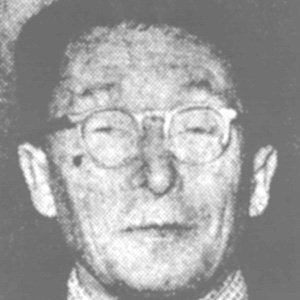
Oscar Williams

Oscar Williams lived until 1964, yet there are exactly as many photos
on the Internet of him as of Emily Dickinson, and hers aren’t grainy half-tones!


At the beginning of the 20th Century a boy was born in the Ukraine, and as a child he emigrated to New York City. Like many immigrants, he changed his name to sound more “American,” becoming Oscar Williams. His career was originally made in marketing/advertising, but he was also a poet. Then shortly after WWII he began to publish poetry anthologies in inexpensive editions, including very cheap paperbacks. Did he know from his marketing work that these would strike a chord in the post-war world of soldiers who became the first in their families to go to college on funds provided by the “GI Bill?” Did he suspect that the experience of the greater than “The Great War” war, and the Korean, Cold, and Vietnam wars that followed would create an audience wanting some human writing more varied than propaganda? Was the spreading middle-class of the post-war years creating a new, broader audience for poetry, like it did for hi-fi symphonies and literary novels? Who knows? Perhaps it was only Williams’ personal passion for poetry that motived him, but his inexpensive anthologies sold in the millions, a much greater number than anyone expected.

Master Poems of the English Language Cover

$1.45. An education one doesn’t need to take out a loan for.


In 1968, in a college bookstore, I purchased a chunky paperback of one of these Oscar Williams’ anthologies: “Master Poems of the English Language.”  About a thousand pages, over a hundred poems, each introduced by an essay on the worth of the poem by another poet or critic, cover price $1.45. I purchased it because I was writing poetry and I wanted to know more about what it could do, and how it did it, and this seemed the best value on offer at the store. And it was. I don’t want to put-down teachers I’ve had, or other reading and face-to-face examples that have instructed me in those things, but that book, taken in at that time, gave me a firm starting point in writing poetry.

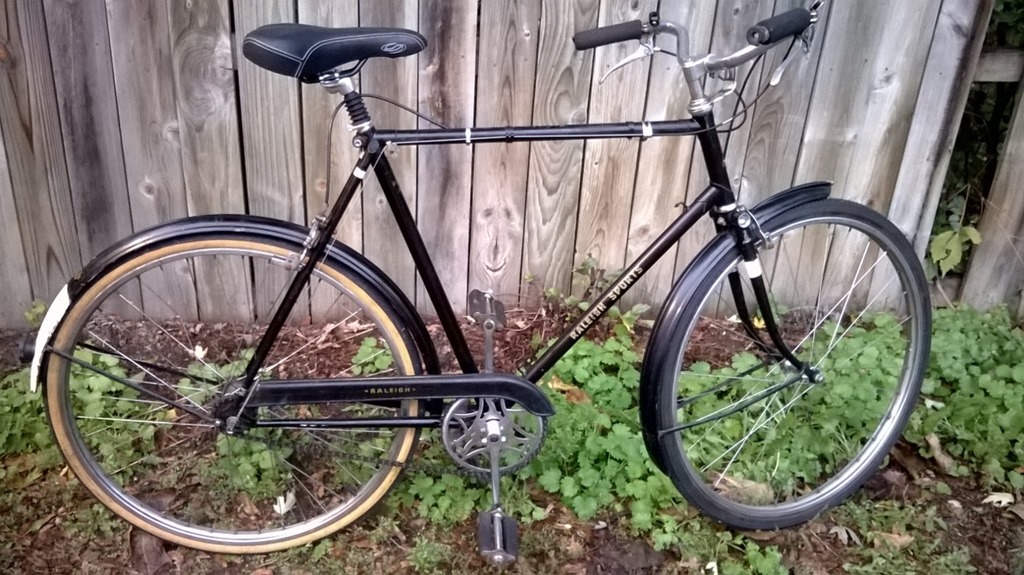
Raleigh Sports 2
In 1951 when this bike of mine was made, Raleigh was more of a house-hold name

Written in 1618, today’s poem, “The Lie”  by Sir Walter Raleigh was one of the poems in that anthology, and one of Williams’ selections that I liked the best. Unlike some other poems I’ve featured here, it’s not widely anthologized, and Raleigh himself seems to have nearly fallen from the common British pantheon over the years. In 2002 the BBC conducted a poll on the 100 greatest Britons ever, and Raleigh snuck in at 93, just behind intricate fantasist J.R.R. Tolkien and 50 places behind that other great anthologist, John Peel.

When I first read “The Lie”  I was struck by how modern it felt. Yes, there are a few antique words and terms in there, but it’s remarkably plainspoken—and the speaking it’s plain about is the bane of hypocrisy, lack of principles, and double-dealing—all things Raleigh’s life taught him a lot about. After all, since Raleigh wrote this while in prison awaiting his execution, he did have the ultimate license to say what he really thinks.

To hear what Raleigh had to say and my performance of it, click on the player below. Warning, there’s a Mini-Moog solo partway through, which is not as bad a fate as a 17th century beheading, but it will not make you forget Keith Emerson’s on “Lucky Man”  either.


L’Amoureuse

I promise you, we will end up today very close to the love song of the last episode, though we will travel a ways before we get there.

I’ve not featured any French writers yet with the Parlando Project, but as this summer has used the words of many 20th Century English poets, we may be overdue for that, as the start of that century found some of them looking to the French for some new ways to write.

French poets started to go “modern” before the British poets, around the same time that Emily Dickinson and Walt Whitman were making their own breaks with past practice in America, so they had a head start, and their avant-garde was way past the supply lines of conventional narrative and sentiment by the time the 20th Century really got rolling.  The absurd casualties of WWI, largely fought in France and its neighboring countries, and so deadly to some of the generation of men doomed to fight in it, only accelerated the modernist direction away from the kind of meaning you might find in a political speech or battle plans.

This summer, 50 years ago, the Polish-French writer Guillaume Apollinaire coined a new word to describe a new way to approach the world in words: “Surrealism.” A few years later, his term was taken up by a group of artists who went about trying to practice a new idea, presented in 1924 as if it was a political manifesto, to write and create from:

“…The actual functioning of thought. Dictated by thought, in the absence of any control exercised by reason, exempt from any aesthetic or moral concern.”

  The Surrealists went on from there, going in various directions, becoming less an idea and more of a brand—but stop and think for a moment, that original idea, isn’t it powerful? The idea that there is a reality that we agree not to apprehend, not to speak of, that we constantly reframe our thoughts to, isn’t that idea political as well as aesthetic?
 
You take the idea of Surrealism, add music to it, and later that century you get Bob Dylan. You take the idea of Surrealism, apply it to the current reality, and you are woke, not from the dream, but to the dream that should not be denied.

Today’s piece uses the words of one of the French Surrealists, Paul Éluard. Éluard, like many of the British poets of this era, was another veteran of WWI. One story of his war service was that, since he was a writer, his military superiors assigned him to the office tasked with writing the official letters to the relatives of the casualties, and such was the efficiency of modern war that he sometimes needed to write 150 of them a day. After a year of this, he asked to be sent to the frontline trenches.

Alphaville Capital of Pain book

Jean-Luc Godard’s film “Alphaville.”  “I love you” could be the ending.

 
I have exposed you several times this month to pieces about the horrors of war and slavery, but I also told you we must travel a ways to get to today’s piece. After the war, as a founding Surrealist, Éluard produced verse with strange images and seemingly arbitrary combinations—Surrealist tactics to break the conventions—but his great subject, against the night, pain, and suffering, was love. Perhaps after those 150-letters-a-day forced march, he too wanted to look to war’s opposite.

Paul Eluard and Gala 2

Paul Éluard and the beloved, Gala. Eyelids not visible in this picture.

“L’Amoureuse”  (The  Beloved) is one of Éluard’s most famous early works, and uses my English translation of his words. The LYL Band performance of it was recorded live several years ago. To hear it, use the player below.

A New Colossus

The end of the poem I feature today (“A New Colossus”)  has become, slowly, over years, a sort of fourth American credo to go with the Declaration of Independence, the Constitution, and Lincoln’s Gettysburg Address, and yet it’s only its last lines that are widely known, thanks in part to a lovely musical setting of that part of the poem by popular songwriter Irving Berlin.

As a person who has edited other works for length to fit them into the focus of the Parlando Project, I can see why Berlin made his choice. The ending is  the payoff of the poem, a charged and memorable statement.  Most poets could only hope for as much as this: that many readers or listeners will remember at least a line or two of of what they wrote, even after hearing it but once.

The Old Colossus

Look, I know it’s a marvel of  classical Greek engineering,
but as an American. I think Jolly Green Giant and peas.

I am going to present the whole poem in my setting however. It’s only a sonnet, a 14 line poem after all, and there’s some good stuff in the setup. First off, it’s an independent American poem to its core, starting by dissing the glories of ancient European culture and one of the “7 Wonders of the Ancient World.” And its author, Emma Lazarus, also stands forthrightly for the power of women to express a controversial political opinion, though this poem was written in the 19th Century when women had no right to vote.  Although this is not a modernist poem, such as those that would be written 40 or 50 years later, the lesser-known part of the poem contains one powerful compressed image, a flame of fiercely desired freedom that is “imprisoned lightning.”

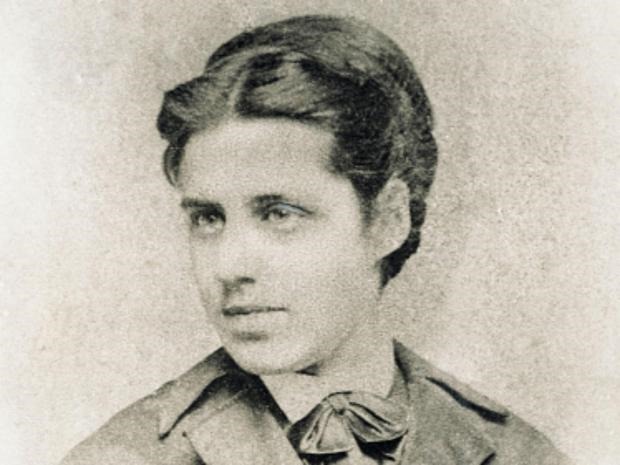
Emma Lazarus

For Emma, Forever Ago. David Bowie was thinking of her in his last work “Lazarus”

Honoring that lightning image, I’ve chosen to not present this piece as a musty patriotic homily, but as the impassioned cry that it was meant to be—and besides, the sentiments of this poem are likely now as controversial as ever. Irving Berlin presented the excerpted ending as a chorus of hope. I take the whole of it and storm it with Telecasters, drums and bass.

To hear the audio piece, use the player that appears below.