Frost Warnings: an appreciation of the poetry of Phillip Dacey

I mentioned earlier this month that my late wife took creative writing classes with poet Phillip Dacey in the mid-1970s. Later, through her, I met Phil and was able to talk to him a bit about poetry. Phil was generous about this, and I’ve never forgotten that.

It’s always hard to accurately, objectively, analyze where one is in in their writing craft. I knew I was only partway in craft, but I self-judged myself as better than average in the imagination aspect. Looking back at that young man I was then, I’d re-set my judgement now to say I was even less far along in craft than I thought, but I still think my imagination was as good or better than many. Those models that I looked to back then: Blake, Keats, Sandburg, Stevens, and the Surrealists were good enough for starters.

Of course, old men can be wrong when looking at themselves too – presently or retrospectively. I’ve come to consider self-judgment as so unreliable that I treat it as a traveler’s tale: something to listen to, but with a duty of skepticism. If I get time, I might extend this informal series engendered by finding old 1970’s manuscripts packed away in boxes with a few of my youthful poems. If I do, I’ll try to make it worthwhile for you rather than self-indulgence.

This Project takes author’s rights into strong consideration, and you may notice that we almost always perform works in the Public Domain.* As the Parlando Project was starting I learned that Phil Dacey had died. I hadn’t seen him in over a decade at that point, but I contacted his website on hearing the news, and got permission from one of his sons to perform a couple of his poems here. This autumn, while in a dusty boxes clean-out, I came upon a letter from Phil to my late wife dated November 1977, and within the handwritten letter was a typed copy of a poem of his about this time of year.**  I felt I had to perform it for you. Phil’s personal site is no more, and I retain no contact info for the family, but this not just a non-profit – non-revenue – Project would propose that the promotional/educational aspect far outweighs any abrogation of the rights holders. If one wants to seek out and read any of Phillip Dacey’s poetry collections, you’d be following my recommendation. I don’t know if today’s poem made it into a collection (I only have some of Dacey’s many books), but you will find poems like this in them.
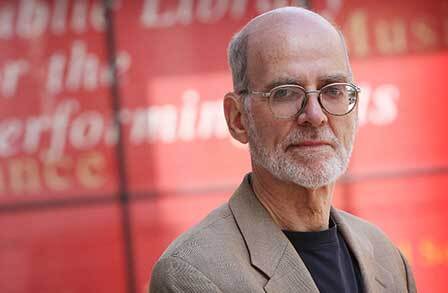
This picture of Dacey is from the poetryfoundation.org site. There are some other poems of his linked to a short bio there.

.

The subject matter of Dacey’s poetry when I met him was spread out between memories of his childhood in St. Louis (a city that punches above its weight in modern American poetry), a Roman Catholic upbringing, erotic desire and its complications, and family and marriage. He came into a long-term teaching gig at a rural Minnesota college, and stayed in the state during his retirement; and as a result, the setting for many of his poems is distinctly Midwestern. In my early posts here where I wrote about Phil’s poetry, I stressed the humor in it and the unusually engaging way he presented his work to audiences. Both of those things might endear him to listeners and readers, but I fear they might blind the completely earnest (or the envious) to other strengths in his poetry.***  I don’t know how he taught the craft professorially, but he models for young writers a subtle kind of poetry, and the piece I perform today is an example of that strength.

“Frost Warnings”  begins – and with only casual attention might remain – an occasional poem about the present point in an Upper Midwest autumn. Afternoons remain warm, yet the hours before dawn drop lower and lower until they eventually sink below 0 degrees Centigrade – frost and freezing time for plants. Food gardeners must make their household harvests, flower gardeners, preserve their late bloomers. The poem’s bed sheets with rips and out-worn baby blankets start as reportorial items in a task to stave off frost-burn, but are, if we think again, stealthy deep images of desire and parenthood, the kisses from which we make mankind as Éluard had it our last post.

Then a third of the way in we meet the bedding again, cast as shabby Halloween ghosts. Dacey’s unshowy poetic compression of the worn-life of young parents “too much revelry and worry” is masterful, but might you overlook it on first reading? The modesty of how Dacey uses his craft pleases me – and then he playfully indulges himself by breaking into Wallace-Stevens-voice for the word-a-day-calendar delight of writing down the ridiculous sounding “tatterdemalion.”

On the page it’s also easy to miss the use of rhyme and near-rhyme in this poem: that “revelry” with “worry,” “find” and “vine,” and the comic “jalopy” and “credulity.” Finally, the poem sticks the ending with a rhyme: “Fall” and “mortal.” For at least a while, I think Dacey was associated with “New Formalism” in poetry. “Frost Warnings”  is Formalism unfettered.

I wish I’d spent more time on the music I made for this one. It’s been a busy week or so for me, getting vaccinations, some banking business, attending a large gathering against cruel and capricious authoritarianism, getting my own “garden” of bicycles and composing/recording equipment ready for the upcoming winter. As a result, the music I performed with Phil Dacey’s poem is quite short, and is just a trio. I wanted to add a melody instrument, and strip back or deemphasize the piano part for a guitar, or even a horn or wind instrument part, but that would delay things, and I have a half-a-dozen other pieces in WIP state that also want completion.

Phil was a great performer of his own work. He’d have done a great job presenting this, so I tried to use my memories of him to guide me. I attempted to memorize the poem for the performance (Phil often did poetry readings without “reading”) and I hope I brought out some of the elements in my recording that a quick reader of the page poem might miss. So, it’s done, and you can hear Phillip Dacey’s “Frost Warnings”  with the audio player below. Worried that someone’s taken the audio player away and spread it over last roses in the garden? Don’t wilt, I’ll provide this alternative: a highlighted link that will open a new tab with its own audio player.

.

*Yes, I have bent the rules a few times – and as the Project was beginning, I thought I’d get permission to use more recent poems by sending simple requests, only to find that would too often require prodigious effort and persistence.

**Here my late wife and Dacey were operating like 19th century Emily Dickinson and Thomas Wentworth Higginson well into the 1970s. By the end of the 20th century it’d be emails, and by now, social media or chat software. My dusty boxes and my late wife’s metal box held things for near 50 years, but who knows at what interval current inter-author correspondence-in-effect goes all Library of Alexandria.

***Often humor has a shorter shelf-life and lower canonical trajectory in literature. Using humor, or other approaches which seem to attract a wider audience, can attract a distrust of “mere entertainment.” The argument here, to be fair to detractors, is that such an audience is shallower even if broader, and that “fan-service” audience-pleasers keep an artist from growing and dealing with difficult subjects. My personal belief? Those most difficult subjects are absurd, incongruous, impossible mysteries and dichotomies to solve, and that humor can portray them as well as any other mode.

Phil read a few times with musical backing, as I present him today. One performance I attended was with his sons’ alt-rock band. His “readings,” even if acapella, could have performance elements. He’d weave well-told stories into the poems in such a way that you didn’t always know when the poem had started and explanatory introductory material had ended. He sometimes sang lines when he quoted a song inside a poem. Again, let me concede this sort of thing can be cloying. I’ve heard poetry readers down-rated for an “AmDram (amateur drama) style of presentation, and the “You are hereby sentenced to attend my one-man-show” jokes are easy to make – and that’s sometimes justified. My summary? This can be done badly. Just about all ways of presenting poetry can be done badly.  I thought Phil did it well. Other than talent and attention to his craft (including presentation) one reason it may have worked for Phil was the modest and subtle nature of his poetry that awaited and welcomed being presented more expressively than on the silent page. Still, and unlike some performance-oriented poets, Dacey’s poetry does stand up on the silent page – I just have had the pleasure of seeing it in that other framing.

Mystery Baseball

OK, you’ve come to the place were music and words meet, and where the blogger never tires of drawing subliminal connections.

While writing yesterday’s post about the start of the baseball season, I began to think of American poet Phillip Dacey. Dacey grew up in T. S. Eliot’s hometown of St. Louis, though a few decades later. St. Louis was a town where if you wanted to watch great exciting baseball played in a brash and winning way you could watch the St. Louis Cardinals. The Cards led their league 23 times and won 11 World Series titles over the years!

But, what if you didn’t care for any of that?

Well, you could watch the St. Louis Browns, a baseball team who never won the World Series, and whose play was so woeful in Dacey’s youth that their owner once sent a midget up to bat, not just to cheer up their meager fans, but in the sure hope that no pitcher could find the short crouching man’s epigram of a strike zone. Dacey once told me that getting into Browns games back then was easy for a kid, and I’ll add it was probably good for a future poet.

Eliot and Dacey

Looks like they’re going to call on a pinch hitter. Yes, here’s the announcer: “Now batting for Thomas Stearns Eliot, Phillip Dacey”

.

That said, there’s no record if Eliot was a baseball fan before decamping to England, at least there are no real Eliot and baseball connections I can find from a quick search,* but due to that research I did read that Ernest Hemmingway, no fan of donnishness he, once slammed Eliot by saying “He never hit a ball out of the infield in his life.” But then watching baseball is not an athletic contest, anymore than watching bullfights and writing about it is. Literature isn’t about being able to get around on the fastball or launch angles off contact. Literature is about observing the material particulars of mysteries and being able to share that experience.

So, as evidence that watching a team lose in any way possible might be good for a poet, I’ll say that Dacey wrote a couple of good poems about baseball, and today’s piece is the one I remember the most. I heard him read it more than once, and since he was an excellent reader of his work one could open the question if it might have been his performance that sold the poem to me, so we’ll see today if it still works in my voice. If you’d like to read the text yourself, here’s a link to the poem.

In an interview later in his life, Dacey described how he came to write poetry:

In my mythologizing of that moment, I imagine the Angel of Poetry tapping me on the shoulder and saying, ‘Hey, Phil, you’re one seriously lost soul. Pick up a pen and write what I tell you. I’ve come here to save you.’  In short, I’m grateful to poetry for giving me the life I’ve had, and if I’ve worked hard at it over the years, it’s out of that gratitude, out of a wish to serve the art. Although my self-deprecating joke (but not entirely a joke) is that if I really cared about poetry, I’d quit writing it and just spend the rest of my life reading the poetry of the dead greats, who never have enough readers.”

Hmm. That last part sounds like a good idea, Phil. I wonder if…**

Ah, all these ideas, and now I’ve dropped the ball of trying to connect baseball and this Dacey poem with T. S. Eliot and “The Waste Land!”  OK, how’s this: when I return to Eliot’s landmark poem it’ll be in the section where Eliot’s narrator believes someone unknowable but sensed is near him in the Waste Land. Dare I say, not unlike the mysteries of the 10th baseball player somewhere on the field in Dacey’s poem?

Speaking of players: to hear my performance of Phil Dacey’s “Mystery Baseball”  some of you will be able to use a player gadget below. Is that player invisible to you? Well, as Eliot will have it, “There is always another one walking beside you” and that’s this highlighted hyperlink that can also play this performance.

.

*Parodic verses and humor articles yes — but nothing documenting anything in Eliot’s actual biography. And I found a few baseball fans whose opening day shares the month of April with #NationalPoetryMonth breaking out the famous “April is the cruelest month…” opening to “The Waste Land.”  Not that I would be so desperate as to stretch for a connection like that! So, you will not find me expanding my reach to suggest that Madame Sosostris’ Cards are not but tarot, yet also Cardinals, and that “The Waste Land’s”  Gashouse gang by the smelly river is a prediction of the rough and ready Cardinals team that would rise in the ‘30s. Students reading this blog for homework help, don’t drop those last two into your papers on “The Waste Land.”

**If you’re a poet, you are going to read that hyperlinked Dacey interview aren’t you? Dacey was a great teacher, you’re missing your chance if you don’t. Near the end he writes about an idea for a “poetry jukebox.” May I suggest this project is one, and it doesn’t even require a coin to be dropped into the slot.

My Feet

Today’s piece uses words from a more modern poem from a Minnesota poet: Renée Robbins. I met Renée after this piece was written, but I recall going with her to a very nice soirée celebrating the publication of this collection of poems by Minnesota poets, including her “My Feet”,  40 years ago.

A Coloring Book of Poetry for Adults

A good attempt at a broad-view of 70s Minnesota poets, including Renée.
Oddly, I can’t find the credit for the cover artist. Anyone know?


This was the 1970s, and from our age or our ages, an optimistic time to be a poet in Minnesota. Running down a list of names, I’ll slight anyone I leave off out of concerns of length and focus, but locally it was still the age of Robert Bly, John Berryman, and James Wright. Minnesota literature, at that time, seemed to have placed poetry at least equal to the novel or memoir.

I had come recently from New York and had reconnected with Dave Moore who had finished college. I was writing furiously, filled with a Twenty-Something desire to set on the page all the patterns I could see in our still forming lives. Renée had taken a shorter trip, going to college first in Duluth and then in Marshall Minnesota where she studied with Phil Dacey.

There is a longer story here, full, like most life stories, with twists that seem meaningful to us—even if not invested with the same importance by fatebut let’s return to poets, and the 1970s, and Minnesota.

Renee Robbins 1970s

Renée Robbins, later the 1970s


Note that truncated list I gave of the exciting characters, the names of poets that would be in someway connected to Minnesota in that time. No women. I find that odd. No similar list of the most notable contemporary poets in the United States made the middle ‘70s would be so gender singular. Is this an accident, a side-effect of the stubborn impact of Robert Bly locally, a reflection of a lingering patriarchy, or just a reflection of my own framing as I look backwards? It could be all of them I suppose. Established names or not, woman’s voices were coming forward.

Renée and I fell in love. Eventually we married. Eventually she got sick and died shortly after the turn of the century. As I said, these twists in the stories we hold as ours seem meaningful to us. Perhaps it’s a meaning like a deep poem, one with a deep image, one that doesn’t stand for anything other than itself, one that can bend light around it, leaving the densest shadow, as life still glitters around it, with a strange margin where they meet.

Robbins’ “My Feet”  may not be that kind of deep poem, but as I tried to argue here recently, poetry is richer and less constrained when we feel we can use it for more than the deepest things. And Robbins’ choices in “My Feet”  implicitly make that argument I think. Ozymandias may have two vast and trunkless legs of stone and those meaningful sands mocking them, but the rest of us have only our tired dogs, like to those Renée can apprehend with her characteristic artistic focus on close looking. Her time on the farming plains of Southwest Minnesota may have given her a new landscape to appreciate those feet.

To hear my music and performance of Renée Robbins’ “My Feet,”  use the player below.

Butterly

We’re approaching the halfway point in the Parlando Project’s first year, and my plans for 2017 are to feature more 21st century words, when and if I can get permission from publishers/authors to use them here. Today’s audio piece features words from the first “external” 21st Century author to be used here: Philip Dacey.

Philip Dacey

Philip Dacey


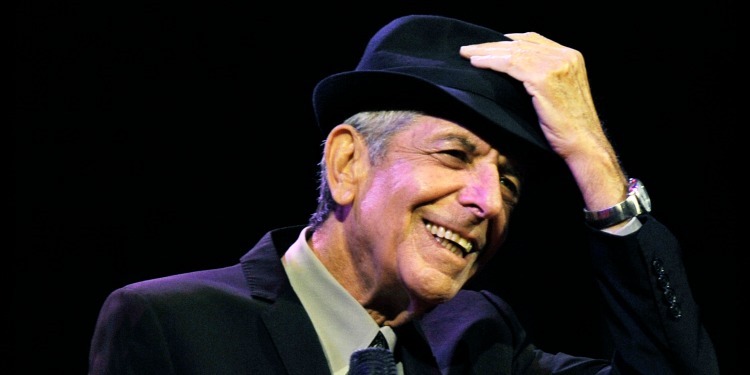
This year has been much commented upon for the death of musician/lyric writers, two great cultural stylists and movers, David Bowie and Prince, foremost among them.  It would be careless to extend the list of 2016’s lost musician/poets for fear of who would drop off the bottom for reasons of length. After all, Merle Haggard or Phife Dog or Greg Lake mean as much or more to some listeners as Prince or Bowie. For me personally, two Fall 2016 musician/poet deaths hit me with specific force: Leonard Cohen and Mose Allison. You might have guessed that, for this is the place “Where Music and Words Meet”—though both are better composers than generally realized, both Cohen and Allison were known for their lyrics.

CORRECTION Obit Leonard CohenMose Allison

A Cohen and a Mose

But that’s not exactly why. You see Mose Allison and Leonard Cohen shared a writing sensibility that I particularly prize: they’re funny as hell. “Funny as hell”—not as merely the common idiom— “Funny as hell,” in that both saw clearly the fallen human limitations and made us laugh at it. Laughter can be a good teacher, and as the profoundly comic blues sensibility tries to teach us, even what we can’t learn or think our way out of can be better endured knowing that it’s not right, that it’s incongruous, illogical, unexpected—in other words, that it’s funny.

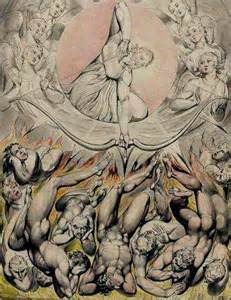
The importance of our musician/poets may be falling in the 21st Century, though the speed of that decent is hard to judge, as we, their human society, are falling too. And if we look below we see the poets of the past: Dickinson, Whitman, Keats, Blake, Frost, Sandburg, Yeats, Eluard and all their heavenly host, and Shakespeare, Sapho, Basho, Homer, Li Bai, and many more that we cannot name and have never heard. We are falling toward all of them.

Blake Fallen Angels

not Phil Dacey


And Philip Dacey falls with us, and he smiles “Look, we are all falling.”

Dacey too is funny as hell. So if you are coming to this podcast from a musician/poet listenership, you could think of Philip Dacey as a Midwestern Leonard Cohen without all the sackcloth and ashes; or that Dacey is Mose Allison without the constantly modulating piano. And there’s another difference: Dacey’s poems find forgiveness more consistently and honestly than Cohen or Allison, or most any other writer.

We are all falling, and Philip Dacey falls with us, and he says “I’ll bet there is an end to this fall, but who knows?”

Butterly: Upon Mistyping Butterfly is a love poem based on simple mistake (as love sometimes is). Phil, like Leonard Cohen—but like Phil—wrote a great many love poems. This one is uncomplicated (as love sometimes is). Mose Allison, wrote far fewer love songs, though I can think of one that is goofy and joyful, like these words of Dacey’s.

It’s not a coincidence that I put my remembrance of Philip Dacey as one of the first Parlando posts, because when I heard that Phil had died I was working on gathering, performing, and producing material for the Parlando Project. I’m grateful for the permission to present the LYL Band performing my reading of this poem of Phil’s. If you like this, you may want to seek out one of Philip Dacey’s books or read more about him online at the philipdacey.com web site. If you’d like a taste of how Phillip Dacey presented his poems, there is a 30-minute video of a late reading by him here.

To hear the LYL Band perform Butterly: Upon Mistyping Butterfly, click on the gadget you’ll see below.

Phil Dacey and Trains

I knew Minnesota poet Philip Dacey through my late wife, who was a writing student of his back in the 70s. I had the good fortune to hear him read his poetry several times, as he was an excellent performer of his work.

One indelible memory I have is Phil reading a poem in which Marlene Dietrich was mentioned, and rather imperceptibly he transformed into Marlene Dietrich, leaving the lectern and slowing reclining on a desk chair in the Blue Angel pose.

Sound hokey to you? Sound like some kind of Am-Dram over-reaching to make poetry more palatable? Nope. I was there, and it was riveting. Phil was so damn generous and genuine, and the actions so integrated into the open and honest poetry he wrote, that there was not a bit of disingenuousness about it. His being illuminated that poem.

Another Phil Dacey reading I’ll remember was a performance of several of his poems backed by a rock band his sons had formed. While that was not the origin of this Parlando project, it was one of the several threads that helped form this thing.

I was saddened to hear that Phil died last month. I suspect that Phil the performer of his poems now will only exist in our memories. Of course we can still read the poems ourselves, and we can be happy for that. Luckily for us, his poetry is full of his irreplaceable personality.

The story in this poem is more or less true. I was visiting his house with my wife, and he was talking with me as if I was some kind of peer as a writer, which was so welcome to me. I should have left the moment be, taken a good long pause to listen, or perhaps I should have just given him a big hug of thanks. Instead I just rattled on about things I sort of knew, an unfortunate personality trait I often inflict on others. Oh well.

You should see a player gadget below which will let you listen to my poem about that afternoon I talked over Phil and my current thoughts on trains.