Sometimes the things we present here come together quickly. For example, some of the LYL Band pieces heard here are first takes where the musicians are reacting to the words spontaneously the best we can. Other pieces ask to spend a little time underground to think, like seeds think.
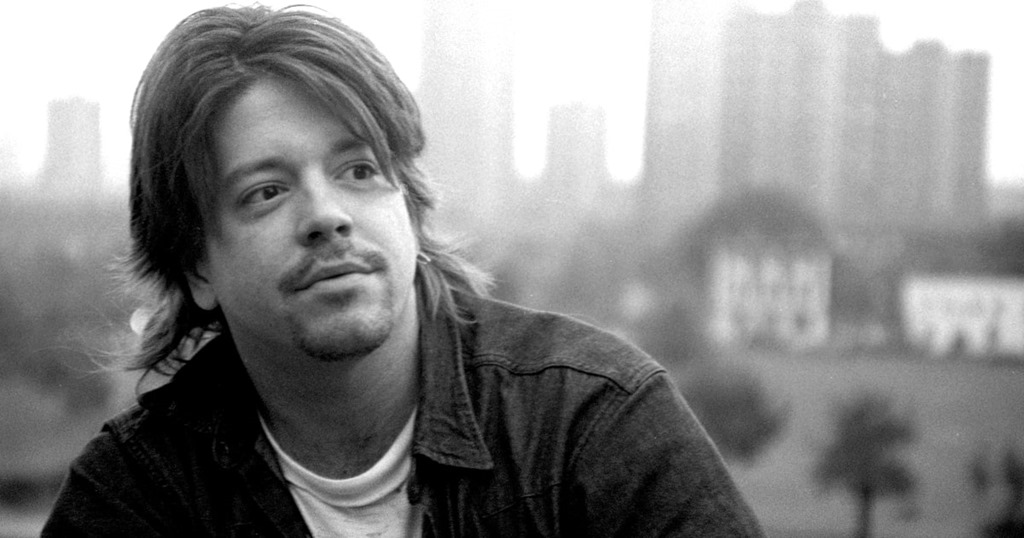
Today’s piece is one of those later ones. Nearly two months ago Grant Hart, a founding member of Hüsker Dü, a Minnesota indie rock group that achieved some fame before breaking up in the late 1980s, died. After Hüsker Dü broke up, Hart had continued working in music and visual art, some of it quite striking, none of it as well-known as it should have been. We are used to stories of a young person whose indie band is on the rise, there is less notice for those artists whose work continues past middle-age. After all, even when there are new levels to the work, there may be no apparent market. While thinking of him, I noticed, strangely, for the first time, that Grant’s name was, in effect, a two-word prayer.
Young musicians, young artists, need will and lot of work to get a chance to succeed.
But at a certain age, they will need even more of that will to continue to make art.
.
Around the same time, I was talking with Dave Moore (who you’ve heard here, vocally, keyboardely, and composerly) about his household’s garden bounty coming to an end.
These two thoughts combined into the words for today’s piece back in September. And early last month I wrote the music—so this piece has existed, on paper, for a month. I performed it on acoustic guitar for a handful of people in a living room in October. It seemed to work. So why haven’t you heard it yet?
I really wanted to get the performance right. And this month I attempted that, getting as close as this recording. I wanted it to be good, but I didn’t want it to be polished either.
Here are the words to “Garden Elegy (for Grant Hart)”
.
The LYL Band began roughly the same time as Hüsker Dü. We even shared a producer of our first recordings back in the day (Colin Mansfield). But we were much different. We were a band of poets and artists, closer to the Fugs or Billy Bragg than the Who or the Jam. And I was then, as now, not a consistent and confident performer and a problematic singer. That was my problem as a band-member back then. As passionate as I could be in my writing, I couldn’t find the heart to focus that passion on stage, to the detriment of the band.
So, it didn’t take just the two months the song was in process, it took some decades to get close to what this song requires. When you listen to “Garden Elegy (for Grant Hart)” you’ll hear me going for it as best I can, trying to focus passion. About halfway through you’ll hear the body of the guitar bang into the amplifier.
And that’s my prayer for artists today, perhaps your prayer too: that we may be granted heart.
We seem to be in a month of sky omens in the Midwest, with the Perseids meteor shower and a solar eclipse following one after the other. Perhaps because solar eclipses are rare, poems about them are rare too. I’m going to cheat then, and present two pieces about lunar eclipses, a slightly more common event that occurs when the Earth comes between the Moon and the Sun, blocking the moon‘s reflected shine.
I’ll lead off with one written sometime in the 19th Century: Thomas Hardy’s sonnet “At the Lunar Eclipse.” I remember the moon-trip photos, taken near the middle of the 20th Century, looking back at Earth, where for the first time, we could see our planet whole. Hardy reminds us, a hundred years before that, that we could see our whole Earth in a shadow play during the lunar eclipse.
For the first time we could see the big blue marble
…also, composting toilets!
Optimists at the end of the 1960s thought these whole Earth pictures would help us understand our solitary yet majestic unity and common cause. Hardy, though he had only the Earth’s shadow during an eclipse to work with, is not so sure.
The LYL Band’s performance of this Hardy poem is a live recording from a few years back and it strains to reach “bootleg tape” recording quality, but still I hope it retains some vitality. And since this Hardy poem is referenced in the next piece, I’m going to give this rougher recording an airing.
Though neither I or the Parlando Project had anything to do with it, if you’d like to hear a restrained and lovely simple solo voice and piano sung setting of the same Hardy poem, you can view it here. To hear the LYL Band performing our louder version of Hardy’s “At the Lunar Eclipse” use the player just below this.
My own lunar eclipse piece is set in our century, and in my Midwestern place. I start off by musing on the same planetary shadow play that Hardy wrote of, but wondering if we were our planet, might we make sport of our standing between the sun and moon, as we did as children when the film strip broke in class, or the slide tray of vacation photos needed to be changed, by making hand shadow puppets in the light. Then, as the blood moon eclipse neared totality, and the dark was dark, save for the streetlight at the end of the block and a houselight here and there left on, every hand up and down the street raised itself to the heavens, holding their lit smartphones, as they took pictures of the moon blocked by ourselves on our planet.
A blood moon eclipse. “Can immense mortality but throw so small a shade?”
Unlike our last pairing, the perennial face off between Marlowe’s Shepherd and Raleigh’s Nymph’s reply, my poem “Lunar Eclipse – The Earth in Transit between the Moon and Sun” isn’t really an “answer song” or a diss on Hardy. In a lot of ways I wanted more to simply update the scenery of Hardy’s poem. Oh, and that title is awkward, but enough listeners didn’t know the mechanics of a lunar eclipse, that we are in the middle on the earth blocking the Moon from the Sun.
What did I mean by the last line? Well, as I sometimes do, I wanted to mean several things. I wanted to say we thought we could capture this cosmic event that had stopped our routine in with the birthday pictures on our smartphone camera roll. I wanted to say, as Hardy did, that we are seeing the whole of our planet, the lives of all our neighborhoods, yet it is only one disk in the wide sky. I wanted to say that our present, particular lives: all our details, our family, our neighborhoods, our homes—though they are the way we experience living—are but one transit of life. Maybe I wanted to say something else that even I wasn’t sure how to say? If so, I wouldn’t know. Sometimes that happens in poems.
Again, we have the LYL Band performing this piece, but it has better recording quality. To hear it, use this player just below.
It’s now a commonplace to note how divided the United States is politically. The way the story is told, there are now two tribes, each sure the other side is largely wrong. We are said to know this, even if we are less than sure about everything “our side” may say, even if we are skeptical, even critical, of some in our faction. You may not believe that this is true about you, but this is what is widely said, and you may say something like this about others, even if you do not believe it about yourself.
I’m about to simplify a story, condensing its humanity so that you will only see moments in several people’s lives. That means you are going to need to pay attention, because the things it may lead you think about are only going to be there for moment.
On a summer day, 177 years ago, a sheriff bearing a writ from a judge knocked on the door of a house on the banks of Lake Harriet, which was then on the outskirts of Minneapolis Minnesota. If you live in Minneapolis, perhaps you know this lake. It just so happens that I’ve spent many mornings this summer reading poetry beside it, as panting joggers and conversing walkers surround it like clockwork.
The judge’s writ commanded the appearance in court of a piece of evidence. As he knocked, that piece of evidence was being told by the people inside to run out the back door and hide. The evidence did not obey. The evidence’s name was Eliza Winston, a 30-year-old woman held as property by the family inside. By her home state of Mississippi’s laws, her mother would have been property too, and her children, if she would have any, would be property as well, the same as livestock on a farm.
How did she happen to be in Minnesota? The man that owned her had traveled up the Mississippi river with his family to escape the heat of the South’s summer, taking a steamboat as far north as the great river was navigable. For his and his family’s comfort, he had taken one of his slaves, Eliza Winston, with him. The laws of the state he traveled to explicitly forbade slavery, but three years earlier the national Supreme Court had ruled that a slave named Dred Scott remained property when he had been brought to Minnesota.
Living in Minnesota then were people allied with a faction that sought to end the practice of slavery. They were looking for people claimed as property to contest those claims. How did they view the slave owners? Of course, as evil you may think. Wouldn’t anybody? Somehow, Eliza Winston had made contact with these slavery opponents. One of them, William Babbitt, would swear out a complaint that her slavery on Minnesota soil violated Minnesota law.
Imagine if you could own something as useful as another human being as property, to have complete control over them. Wouldn’t that be useful; and as a business venture, potentially profitable? The faction that owned other people certainly felt that way. How did they view that other faction, the ones who sought to end that practice? They viewed them as wrong certainly, but they also saw them as annoying self-righteous busybodies that needed to be taught a lesson, a view that was sometimes shared even by those that weren’t sure that slavery was a good and necessary thing.
Since Eliza did not hide, she was taken to directly to a courtroom. Despite the rapidity of the actions, the courtroom was packed with those from both factions. Eliza’s owner was there with his lawyer, who pointed out Dred Scott. The lawyer for Babbitt had testimony from Eliza Winston that she was indeed a slave, that she’d been passed around like property between several owners, and the lawyer stipulated that Minnesota’s constitution clearly forbade slavery in the state.
The judge ruled, that based on Minnesota law, Eliza Winston was now free. As soon as he pronounced, a clergyman in the crowd jumped up and condemned the decision as “unrighteous,” pointing out that, regardless of the state or federal law, Christianity and its scriptures approved of slavery. I don’t know more of what he said, but he could have claimed that Babbitt and his faction were worse than thieves and rustlers, in that they not only stole, they were self-satisfied in their actions. The crowd stirred at this, and then there was moment of calm in the summer courtroom. Eliza Winston’s owner walked over to the woman that he had owned like a horse or a cow, and he calmly asked her if she wanted to come back with him and return to Mississippi. And Eliza, no longer property, answered that she wished to be free and remain in Minnesota. As Eliza Winston left the courtroom, the Minnesota clergyman was still orating on the wrong that had been done to the slave-owner.
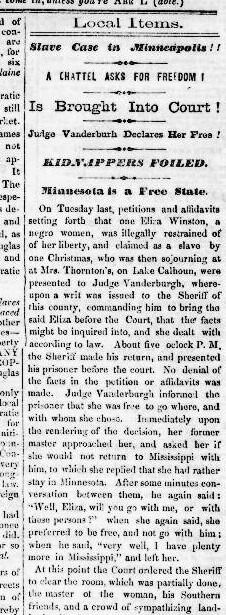
“A chattel asks for freedom”
That night, those angry at the decision went out around the town looking for Eliza Winston. What would they have done if they had found her? One can only guess. They surrounded Babbitt’s house and battered down the door seeking Winston or Babbitt, and crying for blood. They similarly broke into another house seeking Winston. Winston, however had been moved somewhere else, and may have fled as far as Canada. A year later the Civil War broke out, and Winston, no longer property, became as if a ghost. There are no pictures of her, no tales of great or even small things that she may have done. Some even say she went back to the south after the war. In Minneapolis there is an inconspicuous historical marker about her case, placed along the Mississippi river that brought her here, and not much else.
An inconspicuous historical plaque about Winston in Minneapolis
William Green has the most complete telling of the story I’ve seen. For a PDF click here.
Then last year Dave Moore was told a version of Eliza Winston’s story by a friend. The friend, or perhaps Dave, got a couple of the details wrong, and I have left a lot of details out of the story as well—that may not matter. Dave was struck, mixing Eliza’s story and the tale of his friend choosing to tell him this story together, and then forming this lovely, vulnerable song.
Here’s what I ask you, now that you’ve heard my telling of Eliza Winston’s story. If you ever find yourself in a world of factions, and you find yourself in one of those factions, perhaps not sure of what you think, but sure that the other side is clearly more wrong. Ask yourself what Eliza’s story, and the story of slavery tells you.
To hear Dave sing his Eliza Winston song with the LYL Band, use the player below:
When Prince died a year ago, the shock-wave for fans was breath-taking, the air went out of the room, and for each of them there was something that went missing when they got the word: the promise of new music, a memory of concert or a night of dancing, a period of their youth now seemingly past all reliving, and probably a dozen or more other private things.
If it seemed impossible that Prince had died, it was because it was impossible that he had lived. About him it could be said that he could dance like James Brown, sing like Marvin Gaye, play guitar like Jimi Hendrix, write a song like Curtis Mayfield—and arrange it all, and play it all, and record it all for himself or other artists. He was the most astonishingly broad musical artist of our time.
And he did this over and over, for decades, to the point that no one could ever really keep up with all he did. I suspect the longer time we now have will allow us to discover, in his work, things that are still overlooked, ideas that he had that somehow weren’t understood, things we skipped over because we thought Prince should be doing something else.
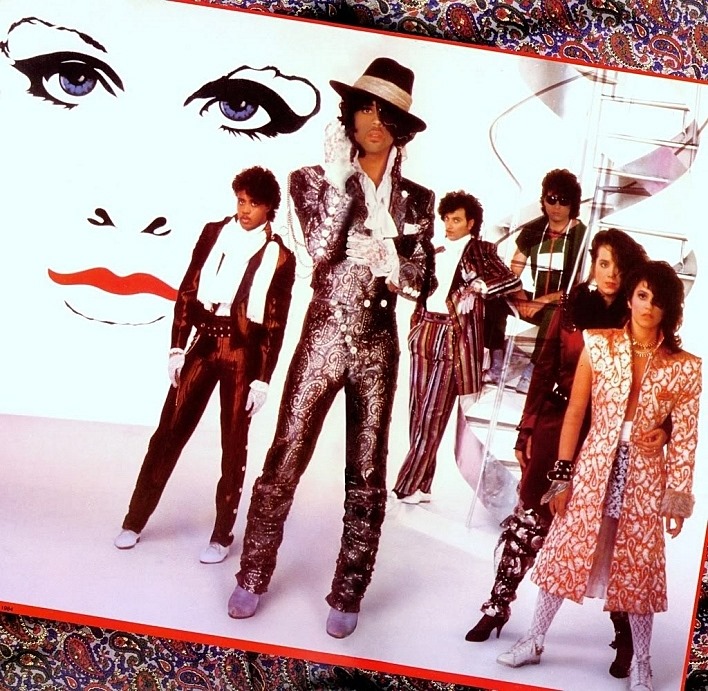
Tonight, as I write this, I’m struck by one other thing: has there been enough recognition that Prince was in the vanguard of bringing women instrumentalists into the context of the rock band? Let’s propose a rock band gender integration variation of the Bechdel Test: name a successful band with two prominent women instrumentalists before The Revolution that wasn’t a “all-girl band.1” Every example that comes to mind (and it’s not like there are hundreds of them) stops the count of women players at one. I can think of only two 2, and neither achieved a modicum of the cultural prominence of Prince’s band.
It’s a little known fact that Prince was about two feet taller than the rest of the Revolution.
And he did it again performing with his late career power trio, 3rdEyeGirl.
That’s just a part of his career of course—but please, this isn’t some kind of rote identity politics thing, or merely a piece of trivia like “Name a band with two left-handed Canadians?”. This is half the human race!
With the Parlando Project I get to audaciously tackle the work of a lot of great writers. I use their words unashamedly and try to find something I can relate to you about their work. For some reason, perhaps because Prince Rogers Nelson embarrasses me as musician, I’ve been hesitant to post this episode, and to share this modest musical piece The LYL Band wrote and performed about his leaving.
But I’m going to do it anyway. The best parts of this piece “Mr. Nelson” are the work of Dave Moore: most of the words and the electronic piano part. Footnotes at the end of this post for the obsessives. The audio player for “Mr. Nelson” is right below this. You can dance if you want to.
Guy in the middle isn’t Prince. Joy of Cooking, pioneers.
1 I exclude the “all-girl band” not to denigrate the talents of those who performed in them, or because a band somehow needs men to be valid, but because however intended, the result in the 20th Century cultural context was seen largely for its novelty value.
2 The two bands I can think of: Joy of Cooking and the Country Joe MacDonald led “Paris Sessions” era All-Star Band.
One way to get experience is to seek it through the directed travel of a pilgrimage. Many religious traditions include the idea of a such journeys, and one side-effect of a shared destination is the mingling of travelers from diverse setting-off points along the trail.
In the Middle Ages, in England, one pilgrimage had the greatest potential to bring a diverse group together, the pilgrimage to the Cathedral of Canterbury where the sainted Thomas Becket had been assassinated. A series of stories ostensibly told by various tellers together for this trip became the great early work of English literature: Geoffrey Chaucer’s “The Canterbury Tales.”
April is National Poetry Month in the US, and though this celebration’s founders give no exact reason for April being chosen, two widely known poems explicitly start in April, and whether it’s cause or effect, I think of these poems when I think of April and National Poetry Month. The oldest of these, is today’s post “The Prologue to the Canterbury Tales” which begins:
“Whan that aprill with his shoures soote The droghte of march hath perced to the roote”
Now I know I’ve let slip too many typos in these notes before today, but that’s not a particularly bad day at the keyboard—instead, it’s Chaucer’s version of English as spoken in the 15th Century. It’s a challenge to read this in the original pronunciation, though I once was delighted when a skilled classical music DJ mic checked at 5:45 AM one morning with a perfect rendition of this Prologue in Middle English. I’m not going to attempt the same; today’s episode uses a modern English version for clarity, and in consideration of my thicker tongue.
Musically I’m not in the Middle Ages or in Canterbury for this piece either. I’m going to use the 12-string guitar once more. There is no shrine here in the Twin Cities of Minnesota, but for some reason three of best players of this troublesome priest of an instrument came to prominence here: “Spider John” Koerner, Leo Kottke, and Steve Tibbetts. For this episode, the 12 String’s musical tale is told in the character of Steve Tibbetts—or rather a modest imitation on my part using Tibbetts’ distinct stringing of the 12 string, which uses octave strings only on the two lowest courses of the 12 string with unison string pairs on the rest.
More thick strings, fewer skinny ones, setting up a 12-string Tibbetts-style
.
To hear the 12 string strung that way, and to hear about the English April in Chaucer’s report, use the player that appears below. Don’t see the player? Well, this highlighted hyperlink will also play it.
Monday night here in Minnesota it snowed. As I took my pre-teen son to school in the morning, he looked at the inch of fresh snow on the spring ground and said “Mother Nature is drunk. Shut her down!”
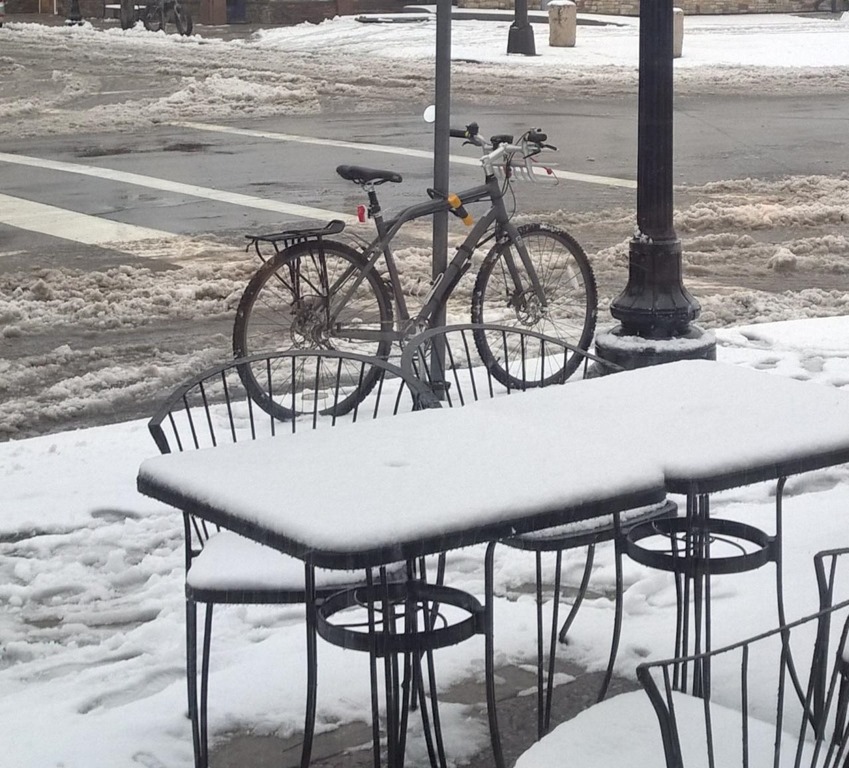
I rode my winter bike to breakfast that morning, and the trees overhanging the street were shedding overnight ice chunks that their budding branches were rejecting in the morning. As this shrugging hail fell on my ski helmet, it bounced off with a “ping!” like marbles or ping pong balls, and popped onto the icy street like broken ornaments. A few hours later, in the late afternoon, I rode again to the grocery store in considerable sunlight. The streets were dry and I was in shorts and a T shirt.
Plenty of patio seating available for Tuesday breakfast
Minnesotans have a well-worn phrase for our edition of the book of nature. It’s not a hand-bound collection of poems like our New Englander Emily Dickinson’s, but a play script. “The Theater of the Seasons” we call it. Famously, we try to hide emotions here, but we sure do enjoy a little drama with our weather forecasts, keeping an eye peeled for news of storms that can kill or injure you. Sitting in the upper Midwest we can receive weather sweeping up from the Gulf of Mexico or dropping down from the Northwest Territories. So, particularly in Spring and Fall, the Theater of the Seasons plays in repertory here in Minnesota.
Today’s audio piece is short, less than 2 minutes long, and it’s called“Theater of the Seasons,” expanding on that phrase a bit. I think you’ll enjoy it. The player gadget appears at the end of the post, as usual.
As part of this blog’s participation in National Poetry Month, we’re trying to provide even more audio pieces like this that you can stream. If you know someone who might enjoy words combined with music like this, why not take this month to let them know about us and our Parlando Project, or share this or another favorite on your own blog or chosen social media site.
Minnesota goes wild in spring when it finally gets warm, and so today, which promises to touch 70 degrees, will surely display this. Like the day described in today’s episode, I’ll probably go for a bike ride with my young son, and we’ll ride on The Greenway, a several-mile-long reclaimed railroad cut that runs, as time does, east and west through the middle of Minneapolis.
Raising a child as a musician, writer, and sometime bohemian brings extra questions. Do you want your child to follow the most conventional and unquestioning path? Certainly not. You encourage them to question things, even allowing that this will encourage them to question you. You look at your own life backwards as you look at theirs coming forward, and wish them adventures, but only so much. You know there will be hardships and wrong choices, but you hope only enough to be instructive. As an artist you may worship art, but you’re not sure you’re comfortable with them adopting all the tenants of that religion.
Today’s piece “Biking on the Greenway with My Son and Bob Stinson” speaks of this from the seat of a bicycle.
Bob Stinson was the animating force in The Replacements, an ‘80s alt-rock band that never tried to split the difference between insouciance and not giving a @#*&. As a guitarist he was an anarchist, and the band accidentally worked like the NY Dolls, the Kinks, or the Rolling Stones, with a great front man who had the lyrical wit and the staggering lead guitarist who embodied the music’s soul.
The Replacements sit and wait for The Greenway bike path to come through. Bob Stinson, middle left.
The guy on the left is an artist. The guy on the right played in Guns and Roses. The guy on the middle right, writes songs.
The Replacements’ front man, Paul Westerberg, was quickly indicted as a fine rock’n’roll songwriter, which damaged the band because songwriting implies loitering with intent to commit James Taylor. The band rebelled by making sure that a regimented presentation of a set of songs was not the aim. On any given night, this could be inspiring or a shambles: Dada or do-do. Being blotto on stage to the point you couldn’t hide it was almost a requirement, and for no member of the Replacements more than for Bob Stinson.
Eventually the dichotomy demanded an ostomy, and Bob Stinson was asked to leave the band he founded. Things did not go well for Bob without his artistic outlet, and chemical dependency played out its run until he died, his body worn out at 35.
Self-destruction aside, you can see that as path of purity. Chasing after success and an ego-driven desire to rise above others can harm too. The addict and the monk believe they have two different gods, but the penitents have the same scourge. Negation and creativity; deny this, so that that can emerge, is part of the religion of art.
Music, Minneapolis, and life are different now 30 years later, and that’s the place my child and I now live in. Somewhere 30 years on from today will be the place they will live in, no longer young, if they survive rebellion and conformity, if they find the balance between the worship of the self and self-destruction.
This is National Poetry Month, so in the spirit of the Replacements, this is a post more about music, and the music in “Biking on the Greenway with My Son and Bob Stinson” is not all that polished, tossed off by the LYL Band in one take. Still, you might enjoy clicking on the player below and listening to it. If you don’t see a player, this highlighted link will open a new tab with its own audio player.
Eric Burdon and the Animals had a considerable run of hit singles in the 1960s. To the degree that we remember that output today, it’s to recall songs that Burdon’s voice made famous, though they were written by outside writers: “House of the Rising Sun,” “We Gotta Get Out of this Place,” “Don’t Let Me Be Misunderstood.” All great songs, all great performances, but what’s forgotten are the songs Burdon himself wrote.
That’s not an accident. Eric Burdon as a writer was often topical, writing about social and cultural events while they were current, before the ink had dried on things; and he was heart-on-his sleeve sincere, without protective layers of irony that made Jagger/Richards or Ray Davies harder to pin down. These things sometimes make his writing seem dated or naïve, but I think folks don’t value his commitment to immediacy enough. And then there’s Burdon’s steady stance against racism, something he never gets enough credit for.
No joke. Eric Burdon and the New Animals
Fifty years ago Burdon and the Animals visited San Francisco and he commented favorably on the warm climate and the altruism; and while charmed by the chemically-enhanced visionary culture they found there, Burdon noted issues with police/public interaction and recommended that the American Dream should include Indians too. That bit of reportage was a top-ten hit record in the US and the UK.
To me, a lot of the charm of that record is its spoken word opening, a deadpan “Dragnet” parodying recital of the worth of experiencing San Francisco. Spoken word—sounds like a Parlando Project idea!
So this is my rough parody* of warm summer “San Francisco Nights” written in and for the cold winter city of Minneapolis. It’s 9 degrees F. as I write this, and the temp is dropping overnight. Snuggle someone if you’ve got the chance.
As Blue Oyster Cult once reminded us: “This Ain’t the Summer of Love”. To hear my Minnesota take on snow emergencies, tow trucks, and chilblains click on the play gadget below.
* Yes, I know Drew Carey did another San Francisco Nights parody, using Cleveland in his version. He got Joe Walsh to play guitar on his, so obviously better than my one-take approximation—but he skipped the opening narration, and that’s the best part!
Here in the upper Midwest we are now in the middle of winter, and so are in a various ambivalence about it. Part of us doesn’t like the burden of winter, part of us wants to taunt it, and show that we can still have the upper hand over it, and some of us, those who don’t want to stop reading the book of nature, can find a cold, white chapter to puzzle over and admire.
I’ve already spoken here about how Minneapolis was settled as something of a colonial outpost of New England. The author of the words for this episode, Emily Dickinson was a lifelong New Englander, steeped in Transcendentalist thought, so we know she’s read that Winter chapter.
Just before dawn this morning, I jumped on my winter bicycle and took a ride to my favorite breakfast café. It was seasonable, 20 degrees Fahrenheit and snowing, the streetlight globes surrounded with particulate halos of pelting snow. My tires were crunching the snow, the big knobs of their tread like typewriter keys imprinting the blank pavement’s page. It really was quite beautiful, if obscure of meaning. Summer rain saturates us, inebriates us. Snow surrounds us, but we are never more than a transient part of it, unable to understand its dance.
Winter is good – his Hoar Delights! Also, there is tea and a frittata involved.
Emily Dickinson’s words are featured here a lot because she’s a great lyric poet and her words fit with music almost without effort. I learned decades ago that Dickinson favored “hymn meter,” that 8,6,8,6 syllable verse that makes much of Dickinson singable to the melodies of “Amazing Grace” or the “Gilligan’s Island” theme song. For “Winter is Good” I decided to throw out that pattern, turning some lines into refrains and marrying it to a melody similar to the Christmas carol “Joy To the World” instead.
Dickinson’s second verse is a doozy. Just 17 words in her text, but it twists so wildly. “Generic as a Quarry”—there’s winter’s white page I suppose. “And hearty – as a Rose-“ not sure where we go there. Dickinson was an avid gardener, and she no doubt missed her summer plants, but my best guess is just rosy cheeks. And finally, the concluding two lines “Invited with asperity/But welcome when he goes.” A jokey finish that seems like it’s singing the old joke about the pleasure of hitting oneself on the head with a hammer because it feels so good when you stop.
Our various ambivalence aside, that’s what the Winter chapter in the book of nature says to us Northerners, our words arise and are recovered over by the white page; our music only the spaces between silence, soon to be drifted in.
To hear the LYL Band play this hymn to winter with words by Emily Dickinson, click on the gadget below.
Tomorrow many US schools begin their school year, so here’s an audio piece about a child going through that first week back in school after what seemed to be an infinite summer.
The schools in Iowa, where I grew up, began a week earlier than the “day after Labor Day” start that is more common elsewhere in the US. I’m not sure why. Maybe farms needed kids more in the spring to summer transition weeks than in the summer to fall interval. Maybe it was an advance allowance for the inevitable “snow days” that would cancel school during the winter, days that if made up in the spring would move the end of the school year into June. Maybe it was, in some way, a gesture to say Iowans cared more about getting down to education than slacking neighbor states.
All I know is that as a kid I thought this terribly unfair. A whole week! My cousins in Minnesota got a whole week more of summer! That next week was always going to be the best week of summer, the one that you got to do whatever you hadn’t done, or done enough of, during the rest of the summer vacation.
Now my son goes to school, and the school yard the kids are walking across to get to the first day of school is like my schoolyard was. Maybe all schoolyards are like this. The grass is still a little beaten down from every independent path the kids have taken too and from, still worn from every recess outside last spring.
To hear the spoken word/music piece “The School Year Begins” as performed by the LYL Band, click on the gadget below this.







 Frank Hudson