Millay’s Thanksgiving

There’s a long tradition in poetry of civic poetry — poems not meant for an audience interested solely in the interior intimate experience of the poet, but speaking to larger, more public themes. I suspect modern poetry doesn’t do this mode directly much, even though some individualist poetry infers that purpose. American poetic Modernism began with an emphasis on the concrete, the thing specific: red wheelbarrow, ripples in a pool, a certain Chicago cat-fog, an exit on the Metro on a rainy day. Yet, a focused subject can still be an example that stands for more.

If the subject is small though, perhaps we poets expect our audience most often to be small too, compared to a variety of other, popular arts. But this was not always so. Longfellow and Whitman expected the nation to listen to their poems of democratic virtues. If the literary set eschew the mode, song-lyricists and non-literary poets will still assay it.

Just under four years ago, a poet Amanda Gorman who has written civic poetry, delivered a poem at the last U.S. Presidential inauguration, speaking of the nation’s fears, hopes, promises. The mode of the next Inauguration has changed. I’m not expecting poetry. Some will think, more-the-better — who wants a poet spouting off what I should think.

Why not, are they not citizens? What are the occupations that are allowed to speak?

Nearly 75 years ago. American poet Edna St. Vincent Millay wrote a long poem for the American holiday of Thanksgiving. She expected a good-sized audience: it was published in the Saturday Evening Post, a weekly general interest magazine, the one that often featured Norman Rockwell paintings on the cover, that claimed Ben Franklin as its founder.
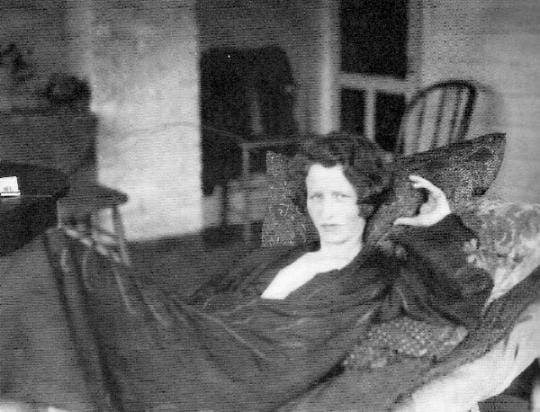
Millay NFTG

The most often used pictures of Millay show the young romantic adventurer. I’m also fond of this one that seems less all that. The poem which I perform excerpts from today was the last one she published before she died at age 58.

.

I’m sure there were specific things on Millay’s mind, geo-political, American issues. She writes five years after a war ended with two A-bombs. How long would be the peace? In 1950 there was another war going on overseas in Korea, there was a “Red Scare,” and to a large degree some deficiencies in American equality of opportunity were so far off to the side that too few even thought of them as political issues to address then. Millay didn’t cite any of that directly.

Instead, she wrote about how she thinks we, the citizenry, were feeling, assuming a general agreement that might be hard to gather today. Thanksgiving is a dual holiday occasion: it’s our harvest festival, a time to give thanks to what our work brought us, and it’s also a holiday to give thanks for what we’ve come through: it originated in a time of Civil War, and it commemorates the hardy survival of some early 17th century boat-people who landed without papers and survived on American shores. Millay’s Thanksgiving thoughts were more toward the latter than the former.

What will ring true in some American hearts this year will be her words of hopes dashed or at least deferred. Can one give thanks for having hopes that were unfulfilled? Can we at least forgive ourselves for hope? Her poem exists in that question. In the excerpts I performed today for this musically accompanied piece you can hear below, I focused on that sense, felt in my bones. “Cunning and guile persist; ferocity empowers” Millay writes. The lines that stand out for me as a Thanksgiving prayer this year are “Let us give thanks for the courage that was always ours; and pray for the wisdom which we never had.”

As civic prayer goes, that’s humble, but it has some bite in it.

You can hear my performance of portions from Millay’s “Thanksgiving…1950”  with the audio player below. The full poem’s text is at this link. No audio player gadget to be seen?  This highlighted link will open a new tab with its own audio player.

.

.

An Independence Day Double-Header: I Hear America Singing and I, Too

Visits to this blog tend to go down on weekends, on holidays, and in the summer — so, congratulations if you’re reading this, you’ve managed to beat the crowds!

America is a young country, but after a bit of a slow start, we’ve been meeting our quota for poets, and by now the record shows a great variety and number of them. Who’s great? Who’s dispensable? Well, some days I wonder if any of that matters when poetry still has challenges getting traction on the slick surface of our nation. Still, one thing’s clear to me if I take stock of American poets, there’s no more American poet than Walt Whitman. That’s no accident: it was his life’s work to become the most American of poets. Few poets before and since have sincerely tried for that. Whitman did.

Whitman didn’t just want that personally. His poetry is full of invocations for other American bards to arise, with claims that the spirit of America would nurture and welcome them.

This Sunday is American Independence Day. Has he been right?

Our first piece today is one of Whitman’s best-known poems. In its litany of lines he shows us two things: that Americans love to sing and that America is the sum total of our varied labors.

Taking the last first. Whitman is going to concentrate on manual labor and trades in this poem. He could have written about other work and workers, even poets or professional musicians after all — but he says the songs he’s going to note are “those of the mechanics,” meaning the mechanical trades,* using the word in the same meaning that Shakespeare uses it when burlesquing the “rude mechanicals” and their ardently inept art in A Midsummer Night’s Dream.  But Whitman is not making fun. He says nothing about the quality of their songs or singing, but the very length of his list indicates he values something in their number and variety. Overall (or overalls?) there’s celebration of masculine traits in the poem, though some work associated with women — and specific, specified work, not just sentimental “remember the ladies” stuff — is included in his list.

It’s fitting that in this summer month, as a holiday weekend approaches, that he ends his poem with a party, a get-together, but throughout “I Hear America Singing”  songs continue in work, in comradeship, in love. I would wish you too just as happy a July 4th.

It’s complicated to judge if American poetry disproportionately influences the world in our time, but one doesn’t have to go hard to make the case that American music has done so in the time since Whitman’s death. Whitman speaks of poetry as a bardic art, and so he uses “song” and “poetry” interchangeably when he speaks of his art, even if later most have come to see these as separate arts and that it’s important to distinguish between them.

Whitman asked that — more than that, promised that — there’d be many significant American poets to come. He got musicians. Close enough Walt.

Whitman-Hughes

Checking on the predictions of two American poet-prophets: Walt Whitman and Langston Hughes

.

Some decades later, one of the poets that Whitman prophesied wrote an “answer record” poem to “I Hear America Singing.”  In “I, Too”  Langston Hughes, an Afro-American poet, decided to add one more labor example to Whitman’s litany. Hughes’ poem is sung from the position of a servant.**  In Whitman’s 19th century time, many/most of the jobs that Whitman cataloged would have been self-employed, and it’s clear that Hughes’ worker isn’t. Furthermore, as an Afro-American his segregation from the “company” is double-more with his class status. Make the food, serve the food, wash the dishes — but you won’t eat in the room with the guests.

Hughes too is going to prophesize a future America then from his 1925 present. Don’t speak too soon, the wheel’s still in spin he says in effect about that stay-in-the-kitchen status. He’s going to spin that wheel.

Nearly a hundred years later*** how have things worked out with Hughes’ prophecy? Poets have written. Songs have been sung. Work from American political mechanicals has gotten us partway there to equality of opportunity, to recognized accomplishments, to appreciation of Black beauty.****

Is this an unpatriotic thing to say on this holiday, that our workmanship on some important civic matters is slipshod? I’m no prophet, but if I was one, I might say that some day we could build the temple in time where we can see beauty presently while being ashamed in the past tense, just as Hughes promises.

What Americans could build this temple? If not us, who else?

For some of you there will be player gadgets to hear the two audio pieces today just below this paragraph. If you don’t see them, this highlighted hyperlink will play “I Hear America Singing”   and this one will play Langston Hughes’ response “I, To.”   Want to read along? Here a link to Whitman’s poem, and here’s one to Hughes’ poem. You may also notice that I used essentially the same music for both texts today. That’s me trying to show the two poems conversation. The first is the more formal presentation, the second a simple acoustic guitar folk song. Feel free to sing along with the “I, Too”  final chorus, including the line I’ve added to the original poem.

“I Hear America Singing”

.

“I, Too”

.

*I note that in his catalog Whitman mentions specifically house carpenters, the job his father held. He also mentions wood-cutters. Ezra Pound’s family had connections to the lumber industry, and in Pound’s poem “A Pact”  about Whitman, Pound calls out Whitman as a wood-cutter while patting himself on the back as the more developed “carver” of wood, a job further down the supply chain and further up the artistic hierarchy. Sick burn Ezra.

**Details of this aren’t completely clear, perhaps intentionally. Hughes poem’s speaker could be enslaved, or he could be a paid domestic servant. He could even be a restaurant worker, a job that Hughes himself held for a short time. Early in his life, his poetry career got a boost when he left some poems at the table of diner Vachel Lindsay when that Illinois poet visited the establishment where Hughes worked. Lindsay read them, thought they had value, and touted Hughes as a result.

***When the country was younger, July 4th was a day for speeches on our history. Now, for me, so strange to be so old, and how disappointing how slow citizenship equity is. In my youth, it was common to speak of racial justice and full rights as being an American goal a hundred years old, using the end of slavery as the starting line. And now we near 100 years from Langston Hughes’ poem. The famous “arc of history” is such a long archway that one should wonder why it hasn’t collapsed in the middle.

****Speaking of I hear America singing: disproportionally the reason that strains of American music are known worldwide is due to Africans taken to these American shores. American singing, American music, has many tributaries, many are important, even the many-ness itself is important — but as I’ve said here before: I am an American musician. Most of the notes are black.