The Unquiet Grave

August brings me this triple obligation: it’s the anniversary of the public launch of the Parlando Project, of my late wife’s death, and of the atomic bombings — three things varying in nearness, scope, and heart-weight. Two of them plainly have to do with grief — and poetry’s connection to matters of death and survival is there to be examined too.

Today’s musical piece isn’t exactly literary poetry, as its survival can largely be laid to singing, not printing and the murmuring eye.*  “The Unquiet Grave”  is one of those works from that prolific author Anonymous. Their publisher? The memories of people who wanted something to sing. The version of “The Unquiet Grave”  that you can hear below was collected by Cecil Sharpe in Great Britain from the singing of a “Mrs. Lucy White at Hambridge, Somerset, 6 August 1904.” This is a portentous coincidence: I just went to the book where I saw that version to gather the note on its collection, and that date of the year is the very day my late wife died; the year of collection, the same that the house my late wife and I bought and I still live in was first occupied; and the place it was sung “Somerset,” says August in its sound.

The Unquiet Grave

With all the words flowing through the Internet, you still might want to pause and listen when the ghost begins to speak.

.

The story in the ballad is compressed, but it opens with a lover’s mourning. The next event, the dead partner becoming present and speaking is not just supernatural, it’s also an empirical report of what many of those in grief experience.

Just last week I was listening to Fresh Air’s Terry Gross interviewing podcaster/comic Marc Maron.  As they talked, ostensibly about Maron’s career, the two bonded over their own recent partner’s deaths — Maron’s a couple of years ago, Gross’ earlier this year. They each shared that their dead spouse’s presence and voice had vividly returned to them, and each averred that this experience was not horror-show scary — rather it was, while remaining strange, comforting. I can remember one of my own experiences around a year after my wife’s death. I was becoming involved with my present wife around this time, and I felt it awkward that here was the presence of my dead wife returning. I don’t know if I spoke to my dead wife’s presence out loud, but then in such a spirit world our conversations likely needed no sound or syntax, only the sense, and that sense was a common realization between us that it was  awkward, but that this new complexity was fine. More than speaking — do ghosts laugh? Do we laugh in their presence? I think we both might have that night.

I’ve always felt that “The Unquiet Grave”  has a practical, darkly humorous, intent. If ghosts have additional knowledge, extra-existential wisdom, what the ghost in the song shares is that one can cherish the dead, even hear them speak, but that they are changed forever — and the living can, should, change too. When the ghost says that you wouldn’t want to kiss the corpse’s lips, the gothic joke on deadly “mourning breath” almost writes itself.

The words in Lucy White’s version, which I remained faithful to, somewhat fumble the lyric’s closing statement. What the final exchange the lovers share means to say is “When the autumn leaves fall from the trees/and (then) spring up green again.” I just sang what was on the page, but that fumble is, I now think, also exemplary of grief, it’s misdirection. Grief’s disruption, like a slight-of-hand magician: something is here (like what you meant to say), and then it’s, poof, gone.

Today’s musical performance of “The Unquiet Grave”  is a tribute to Fairport Convention, the pioneering British folk-rock group — a choice of mine inspired by recently listening to Andrew Hickey’s 500songs.com history on how that group formed its own Cecil Sharpe revival-with-Stratocasters after their own encounter with death and grief. You can hear my performance with the audio player below. Has any such player failed to materialize? If so — mourn but organize — and click this highlighted link which will open a new tab with its own audio player.

.

*It’s hard to date the ur-versions of folk songs, though many were printed in the 18th and 19th centuries, first by commercial broadsheet publishers and then by collectors and song-catchers like Cecil Sharpe and Francis James Child. Child collected “The Unquiet Grave”  in America in the late 19th century and numbered it 78 in his ballad collection. It’s always seemed to me that “The Unquiet Grave”  (also known in versions as “Cold Blows the Wind”)  is an extended variation of one of the oldest fragments of English language poetry “Westron Wynde,” which has been dated to the Middle Ages, plausibly to quite early in that era.

I had a guinea golden

It’s known that Emily Dickinson played piano, but my scattershot scholarship doesn’t inform me if she played any other instrument, or exactly what kind of music she played or appreciated. Many of her poems use hymn or ballad meter, and I was still a young person when I first was told that you can sing many a Dickinson poem to the tune of “Amazing Grace,” “The Yellow Rose of Texas,”  or “The Theme to Gilligan’s Island.”

That factoid tells us that her metrical musical inspiration is hard to pin down, for in her 19th century a great deal of music followed that form. By our time, ballad meter is heard as presenting a certain kind of old-timey folk-music vibe — in Dickinson’s 19th century a wide variety of more or less contemporary music used it.*  Did she ever sing her poems, or perhaps noodle a tune on piano while composing poetry? I know of no accounts. Still, when I ran into this early Dickinson poem, written by her as a twenty-something before the bulk of her poems followed during her highly productive thirties, I couldn’t help but think of it as being made to be sung.

“I had a guinea golden”  is a poem about loss of friends or lovers, and it’s not hard to think it a characteristic work of someone in their twenties. Dickinson grew up in a dynamic time, in a small college town. Her school-and-college-age friends would, as they likely would today, be due to scatter to occupational and romantic opportunities during that decade of life, and the biographic data on Emily Dickinson would give us a goodly number of separations from meaningful people in her life during this time. From memory, I can think of only one who was separated by death in this part of Dickinson’s life (Benjamin Franklin Newton) — and I mention that because it may be impossible to be certain about how seriously Dickinson took this poem’s lament at losses.

My suspicion is that “I had a guinea golden”  is layered. That it catalogs more than one loss (the guinea coin, the singing robin, the bright star) and takes time to note that each of these losses are not generally the loss of wealth, bird song, or a starry firmament seems to say to me that these losses are less serious than they feel. In letters to those Dickinson longed to hear from, she often takes a stance that she feels betrayed or onerously deprived of contact from her separated friends. In the informality of friendly correspondence that reads as playful there, and so it could well be here in this poem too. As we reach the poem’s — now song’s — conclusion, I suspect this lawyer’s daughter (unlike our country’s mad king) well knows that unforgiveable treason is not actually indictable just because someone has traveled away from Amherst. But even if playful, the piece does speak to how these losses feel, and in performance I chose not to wink at the pain of the symbolic losses portrayed.

Guinea_1775

Back in 1775 this mad king was taxing and tariffing Americans out of spite, and sending government troops to “protect” American cities that wanted no part of his chaotic misrule. This was the gold guinea coin that might have paid those troops.

.

Well frankly, I was glad to be able to use the limited instrument of my voice once again to record anything. Since late June I have had some kind of flu or respiratory bug that had me greatly fatigued, coughing, and so brain-fogged I could read only superficially. I’m not sure that intentional irony has yet come back fully online, so I performed “I had a guinea golden”  as a serious lament. I’ll let Dickinson’s words and the listener provide the layered context. You can hear my performance with the audio player gadget you should see below. No player visible? “Treason!” “Exile!” “Avicide!” No, it’s just that some ways of viewing this blog suppress the player, and so I offer this highlighted link that will open a new tab with its own audio player.

.

*Poets too, including ones we know Dickinson read, used the format for literary ballads not necessarily meant to be sung.

They’re All Dead Now

In the last two posts I’ve mentioned how early 20th century Irish poet Joseph Campbell used the concision of Imagist poetry to present eerie folkloric material. However, today’s piece, written some 70 years later by Dave Moore, shows how the reiterative storytelling methods used in many traditional ballads can still work. Because of the way it tells its story, it’s somewhat longer than usual pieces here, but well worth 8 minutes of your time.

I quite vividly remember the first time I heard this song. I’d known Dave for over a decade then, but there was something new: he told me that he had written some songs and I offered to record them. I setup a cassette recorder in his living room where a patinaed old upright piano sat against a wall next to a set of framed pocket doors that he and I had spent some time stripping a few years before. I had a pair of Radio Shack microphones to hook up to record him. I think one of my mic stands was a second-hand-store gooseneck floor lamp that had given up its socket for a mic clip.

I don’t recall most of what Dave played and I recorded that day. Maybe four or five songs, but the last one was the piece I’ll perform for you today. Dave was a powerful, pounding piano player in those days, and the old upright was ringing out pretty good as he gave forth the lyrics of “They’re All Dead Now”  loudly over the top of that. By the end of its 11 verses, his voice was getting ragged — but the story he was singing was powerful enough that it probably should wear one out. He finished, and his voice was too.

The tape I made is now long lost, though “They’re All Dead Now”  remained recorded in my memory. Also to my recollection, that day was the day that the idea of the LYL Band that you’ve sometimes heard here as part of this Project took hold.

I think we may have tried to play or record it once or twice since, but it’s a difficult piece to bring off. Effective singing of long ballads in this kind of traditional form and length is extraordinarily difficult. While trained singers have built up stamina and technique to do that, this untrained singer will testify that it is as wearing as singing a set of hardcore punk — and since traditional ballad singing often uses sparse accompaniment, you have nowhere to hide and nothing else to bring the fury or shock to the audience other than the song’s story and one’s voice. Which is why, even in folk clubs among aficionados, long ballads are an iffy thing. The emotion too often invoked is boredom. Polite audiences will not throw things at the ballad singer, but they will fall into talk among themselves, and some will drop their eyes to half-mast and tune out to thoughts of more exciting music or leaf raking.

But of course, these songs can work. To build up to doing this performance I listened all morning to June Tabor recordings. Tabor (and Anne Briggs) are two of the best I know at performing this kind of material, and Tabor often uses instrumental backing (Briggs more often sang unaccompanied). I wasn’t ready to expose just my bare voice for this piece.

The piano part you hear is actually two piano tracks. Here I was thinking of the simple repeated motifs that John Cale,* with his association with what was called Minimalist composed music, would sometimes play. I added a synth part, which is more faithful to what Tabor would sometimes use, where the easy to transport and amplify electronic instrument serves almost as some droney acoustic folk instruments might at a traditional ballad sing.

I sang my vocal at my most energized part of the day and managed about four takes, and what you’ll hear is the best of that. I wouldn’t say my vocal timbre is pretty, but then maybe this song can survive that.

Yes, Dave’s song. I still think it’s a great song, same as the first time I heard it. The story it tells is historical,** it happened on the West Coast of Scotland just as the lyric says in 1618. Though it’s heavily refrained and has those 11 verses, it still doesn’t waste much time, dropping you in media res and progressing in presenting a horror that should be more frightening than witches.

Illustrating your 17th century Scottish Facebook feed: political instability, patriarchy, and religious fervor (or excuses).

.

I used to dream of hearing a great singer sing this song, but folk music’s principles say that a song needs singerrather than necessarily waiting for that. June Tabor is my age,*** I’m not sure she still performs. Rhiannon Giddens, the ball is in your court. Contact me.

But the rest of you can hear my best at transforming Dave’s song right now. There’s a player gadget some will see below, and otherwise this highlighted hyperlink will also play it.

.

*Yes, I’m still on a Velvet Underground jag this month.

**You might think 1618 is fairly late in the ugly history of witch prosecutions, but if you go to this account from the town of Irvine in Scotland I link here, you’ll read that “In 1650, a total of 17 women were also executed for witchcraft – 12 in March and 5 in June. Other burnings similarly took place in the town in 1662 and 1682.” So, there was enough of this that the story of Margaret Barclay, John Stewart, and Isobel Crawford is sometimes not included in round ups of the atrocities. Walter Scott did his own investigation in the 19th century, and the Irvine hyperlink above includes some of Scott’s account.

***October –  besides being the occasion for this week’s Halloween series – is also Dave’s birthday month. Happy Birthday Dave! Age has taken some ounces off of Dave’s keyboard pounding, but I still hope to present more of his voice here as part of the Parlando Project.

The Wild Roses

When I started thinking and planning this project, I thought I’d be producing audio pieces around five to eight minutes in length. That was the most common length of the preliminary combinations of various words with music I had experimented with before the Parlando Project was launched.

I made a course correction once the project took off. If you’ve been here recently you’ve seen that the typical audio piece is now between two and four minutes, roughly the length of the classic 45 RPM single record of my youth. How’d this happen?

I found that I am really drawn to the condensation and immediacy of lyric poetry, the kind of thing that lands its impact in 30 lines or less. Like those three-minute singles of my youth, those texts can often cram quite a bit of expressiveness into a similar length of time.

Then part of this is also counterprograming. About half of the listeners here consume these audio pieces as podcasts on Stitcher, Spotify, Apple Podcasts, Player.FM etc.  A great deal of podcasting on offer clusters around longer-form, loosely organized talkfests. I have no long commute, take few long trips, and much of my life is reading, writing, composing or recording and none of that opens opportunity for someone remotely talking at length (however engagingly) about something.*  My thought is that even if someone enjoys that, then mixing in a short dose of poetry or other condensed writing with music from this Project will be a pleasant contrast.

And there’s a more intimate reason. I’m a weak singer who cannot execute complex sung melodies or make simpler ones thrilling over a longer duration. Listeners will note that I don’t sing most pieces here, using instead variations of chant, talk-singing, or declaimed spoken word instead. This leads me to want to make my statement in a shorter format.

What’s all this leading up to? I told my wife that I’m hoping I’ve earned the right to potentially bore my audience today, because I’m going to present an eleven-and-a-half minute, 20-verse ballad. What’s more, I’m the author, so I can’t even cut the thing for length as the writer will complain.

“The Wild Roses”  has an odd inspiration: a TV episode that aired almost exactly sixty years ago on Feb. 6th 1960 as part of the western TV series Have Gun-Will Travel  titled “The Night the Town Died.”  Have Gun-Will Travel  strived to differentiate itself from other TV westerns of its era. It liked the odd-ball script a lot more than most, and the series’ star Richard Boone (who also directed that episode) seemed to favor bold acting performances. And though he rode a horse in the 19th century American west, Boone’s gun-for-hire character Paladin acted more like a noir private detective.

I’ve written here that the then common 25-minute stand-alone story format for dramatic TV shows developed poetic effects. Our modern, linked-episode, multiple-hour seasons develop characters over time in a way that emulates novels on the page. The much shorter format of the ‘50s  and early ‘60s had characters life stories sometimes told in a scene or two.

I’ve often wondered if the teenaged Bob Dylan watched these shows. There are elements of his story-telling in song that sometimes remind me of them. Dylan’s narratives are much more abstract, and Modernist language and tactics are deployed more often than the TV writers were allowed to do, but the sense of quickly sketched and absurd situations could be linked.

Gunfighter’s squint or age-related myopia? Richard Boone as Paladin, Robert Zimmerman as Bob Dylan.


The HG-WT episode “The Night the Town Died”  has some strong moments, but overall it leaves more an impression of its oddness and slightly over-done seriousness than coherence. I took very little from its script:** a single character name, a line of dialog—but largely I relied on a funhouse mirror reflection of its overall plot arc: a man comes to a town to revenge the lynching of his brother,*** but he wants to first determine, Hamlet-like, who his just target is.

I chose to tell my story using a young female Ophelia-like character as the narrator, and I gave the revengeful Hamlet-ish protagonist only a few lines. The former appears in “The Night the Town Died”  to speak about wild roses, the later bears the name I instead gave to the murdered brother. There’s no Deus Ex Machina Paladin gunfighter to serve as judge or referee as in the TV show. In my ballad, the narrator and the revenging traveler characters meet four other characters. If you think some of these encountered characters carry modern or out-of-time undercurrents, yes, that was my intent. And coming in right after a Yeats’ poem last time, I chose the town’s name in my ballad with intent too.

These choices were performance challenges. The writer (me) didn’t give the performer (me) much choice but to try to “play” the characters in voice to line out who was speaking in the immediacy of performance. If someone else was to perform this, having a number of vocalists to play the characters would be better I think. I sing the woman/narrator role, but then speak the lines from the men she meets in hope it helps set them apart. Likewise, my song might gain value from having a woman singing it.

The Wild Roses

There are still a few lines that I don’t think are as good as they need to be in this version. Maybe today’s performance is a bootleg/demo?


Performing this kind of narrative song takes special talents, and I have no more than a small amount of what should be deployed in that task. And as a writer my narrative for this ballad is also unusual. It’s intentions are more like Bobby Gentry’s “Ode to Billy Joe”  or Bob Dylan’s “Isis****”  than the straightforward narratives of “Matty Groves,”  “The Dowie Dens of Yarrow,” or Marty Robbins “El Paso.”*****   Does “The Wild Roses”  succeed or fail? The player is below.


*My wife, whose routine and preferences are different than mine, enjoys conventional podcasts, and audio books as well. I grow more and more impatient with age it seems. I can read and absorb more denotative information in the available time with my eyes than with my ears.

**There are two screenwriters credited. One (also credited with the story) had what seems an unremarkable career: Calvin Clements Sr. The other,  Frank Pierson, had a longer. more successful career.

***Yes, another post-WWII western based on a white-on-white lynching, which consciously or unconsciously may have been a way to deal with the horrors of terrorism directed at Afro-Americans and the responsibilities of citizenship and moral choices.

****More obscurely and perversely, some of the most laconic and least well-remembered Dylan songs like “The Ballad of Frankie Lee and Judas Priest”  and “Clothes Line Saga”  were also an influence here.

*****This Western gunfighter ballad was topping the charts at the same time “The Night the Town Died”  episode aired 60 years ago. Around the same time, Bobby Zimmerman started using the name Bob Dillon (Marshall Matt Dillon was another leading TV western character of the era, though there is a Dillon road in Dylan’s hometown of Hibbing, and there was a successful ‘50s football player that had the name of Bob Dillon)

The Changeling

Have you heard the name Charlotte Mew? I hadn’t until I came upon it in Herbert Monro’s 1920 Some Contemporary Poets  this month. Last post I presented Walter J. Turner, another now-forgotten early 20th century poet found in Monro’s book-length survey of his era’s British poetry. While I doubt we will ever see a full-fledged W. J. Turner revival, with Mew I think there’s room for growth in interest. She’s that unusual and that good.

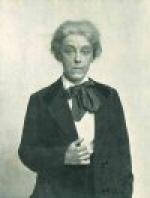
I’ll probably spend more time on what I’ve found out about Mew when I present another piece, but to hit some highlights: she cut a notable figure even among the unconventional artists of Bloomsbury, wearing tailored men’s suits and displaying a wide-ranging intellect. Mew was both parodied for her eccentricities and praised. Among her literary admirers: Thomas Hardy, Virginia Woolf, Sara Teasdale, Ezra Pound, Siegfried Sassoon, Walter de la Mare, and Harold Monro himself, who published her first collection of poetry.

Charlotte Mew

Maybe she looks like Gene Wilder as Willy Wonka, but read/listen anyway…


Why haven’t I (and likely you) heard of her? Fame forensics is a fraught subject. She’s one of those authors that straddles the centuries, though she didn’t start publishing poetry until the 20th. Some of her subject matter looks backwards, and individual lines will sound like they could be from a Victorian-era poet. Even so, her poetic style is her own. She uses uneven line lengths and unstable rhyme schemes, yet they don’t fall into doggerel. Mew died in 1928 and was not active in publishing in the last years of her life, so as Modernism was taking over she may have been just a bit “yesterday’s papers.” She may be one of those cases where her career didn’t rise high enough and maintain sufficient altitude to carry her glide-path into the second half of the 20th century. But like her admirer and champion Hardy, Mew is another one of those poets who at first, in some superficial respects, can seem old-fashioned, yet her core outlook is modern and unconventional. If one comes upon her work today and doesn’t expect her to sound like T. S. Eliot or Wallace Stevens, her uniqueness can still deserve your attention.

“The Changeling”  is a fairy story of the chilling variety, more “Belle Dame sans Merci”  than Disney. It’s Peter Pan meets Tam Lin! Like some other Mew poems I’ve already read as I start to look at her work, it’s extraordinarily easy to see modern psychological and sociological analysis in it’s situation. The narrator’s outsider sensibility is right there from the start, and the lure of the old wild natural world makes the order of the urban home and nursery regimen seem like a riot against that.

It’s Peter Pan meets Tam Lin!

Despite there being no regular line lengths or stanzas, I found it reasonably easy to set Charlotte Mew’s “The Changeling”  as if it was a folk song of the “Tam Lin”  variety. Alas, as is the case with many of my favorite old ballads, the result is lengthy by song standards. To compensate and decorate the time while you hear Mew’s tale unfold, I’ve added things that a handful of adventuresome British Isles folk-revivalists might have added 50 years ago: there’s tambura, sitar, and my first effort at playing tabla drums.*

So brew up some tea or elfin grot and listen to “The Changeling”  with the player gadget below.


*I tried an inexpensive electric sitar a few years ago, but never got the hang of it. I now play sitar and tambura using a MIDI guitar, retuning when desirable. For my attempt at tabla today, I didn’t use a drum controller or pads, but instead triggered the drum hits and pitches with my MIDI guitar as well. As I should always do, I offer my apologies to the real masters of those instruments who have given me much listening pleasure over the years.  On the other hand, my 9 minutes or so today is a short piece compared to many traditional South Asian numbers.