We’ve come to the end of our Black History Month series on early 20th Century Black Chicago poet Fenton Johnson. Let me try to wrap things up with a few summary points — which as I’ll warn again, are preliminary and include speculation on my part. Long post, so the headings may help you if parts of this are of more or less interest.
Was Fenton Johnson able to achieve his goals during his lifetime?
No. He seems to have had very high goals however. He wanted a general readership for his poetry across racial lines, he wanted to be part of the solution to “the racial problem” in America. For an Afro-American poet of his time being able to publish several book length collections, or to receive any notice for his poetry should mark him as achieving something. But those books were all self-published and likely had a small audience. It’s unlikely that he had anything like Paul Laurence Dunbar’s audience in the Black community, and his white cross-over audience was small. These are estimates: but it’s clear he didn’t “break-through” with either audience — and his political platform seems unremarkable and no more successful than early 20th Century America was in general when addressing racial discrimination and oft-times violent white supremacy.
Why did he fail in that?
Remember one of this Project’s mottos: “All Artists Fail?” Even the most successful will be misunderstood and will be downrated for cause by some, will have a limit to their reach even if popular or well-ranked. But even if we don’t rate him against a perfect score, he didn’t succeed to the level of Dunbar, and he was superseded by his successors in the Harlem Renaissance such as Langston Hughes in Black or white readership. My guess: he overrated the audience value of his verse and likely highly overrated the value of his prose/journalism. It’s easy to suppose that he was a bright young man seeing himself in the eyes of youth protected at least at first by the loving support his family was able to give him, but not necessarily with the eyes of a skilled careerist or marketer. His early poems have more value than his contemporaries judged, but some of that value was too deeply coded for some to appreciate in the pre-WWI era. Judging from the small portion of his journalist-writing I’ve read, his efforts there may have displaced his stronger talents. His later poems? James Weldon Johnson’s evaluation of Fenton Johnson in the 1931 version of The Book of American Negro Poetry points out that FJ was uniquely despairing for an Afro-American poet, and contrasts him with Claude McKay’s famous poem “If We Must Die” from the same era as “Tired,” discerning that McKay at least says we can, we should, fight back. One thing that is odd about Fenton Johnson, he’s unsparing about deprivations of rights and dignity for Black Americans in his poetry while maintaining this public face in his presentation of “we just need to listen to each other and work together.” Even onward into the era of Jim Crow and the Great Depression he might have been both too down-beat and too optimistic.
Further supposing on my part: Johnson seems to have been discouraged around 1920 by the evident failure of his audacious goals, and there’s a report that the self-funding from family sources had dried up. I don’t know how dire his life was after 1920, but his pre-WWI Black middle-class status might have changed in ways that refocused his life and added new obstacles. A lot of modern poets reach their heights in writing quality and audience in middle age, which was about the time Johnson’s poetry stops being published.
The Harlem Renaissance has been informally extended to include writers who weren’t NYC located in retrospect, but Frank Marshall Davis and Margaret Walker from between-the-wars Chicago indicated that patronage support and publishing contracts were not at New York levels in Chicago then. Yes, there was a Chicago Renaissance in Black writing, but that came after Johnson stopped publishing.
If Johnson’s early attitudes continued, he may have had a disconnect with some Black literary cultural outlooks that followed WWI. I’ve yet to find anything linking him directly to Temperance/Prohibition, but he writes often enough about alcohol as the marker of a fallen state. He seems to have retained a religious component until he stopped writing — and even the religious have been known to disdain those whose religion differs only slightly from their own, as much or more than non-believers. And lastly, Johnson is explicitly adamant that he’s against “the Bolsheviks,” and commented to friends that this was hurting him in literary circles.
If he’s just some poet who didn’t rise to an undeniable level of success, why read him?
I think there’s unqualified value in the best of Johnson’s poetry. Historically, reading even his lesser-known poems can tell us something about what a smart Black man in this “bridge era” was thinking and writing.
Johnson is precedent-setting in the use of Afro-American musical forms in poetry. This particularly endears him to me. This element alone is highly important culturally and should cause him to be more widely considered. He was active in an era when our resources for Afro-American speaking and musical expression are scarce, so there’s some musicological interest on top of literary value.
You were so down on his political essays. Would you rather he was some kind of radical who might have been tied to between wars dictators? Or hassled by the Red Squads?
No. They were just disappointing in their slack writing and surface allegiance to common political stances without any vivid insights. The man I see in his poems is much sharper than the essayist I’ve read so far. It’s possible that that writing was insincere, that he’s trying to market himself, probably to white audiences who might help fund him. Was he conscious of this split in himself? I can’t say. One may think of one of Dunbar’s best-known poems “We Wear the Mask.”
After he stopped publishing poetry, his friendships in Chicago included those who would be aligned with more leftist politics. As with his non-extant post-1920 poetry, his political analysis might have continued to evolve.
Even some relatively unsuccessful writers influence those who come later. Is Johnson one of those?
Incomplete, but there may be something there. Although his post-WWI poems are few, they were anthologized, and anthologies are still a place younger writers find ideas of the possibilities of their own poetic voice. This Project is an anthology of a kind, and I’ve tried to add that his “spirituals” are worthy of re-evaluation.
This month, I was able to read two accounts of the next generation of Black midwestern poets (Margaret Walker and Frank Marshall Davis) who lived in pre-WWII Chicago, knew Johnson, and mention Johnson’s connection with other writers in this period when Johnson was no longer publishing. Davis (who is himself a bridge between the pre-WWII Black poets and the post WWII Black Arts Movement) admired Johnson and found his work validating his own. Little that I know beyond that, but at least by association there’s a possibility that a later-in-life Fenton Johnson may have influenced these other writers first or second-hand, even after he ceased publishing himself.

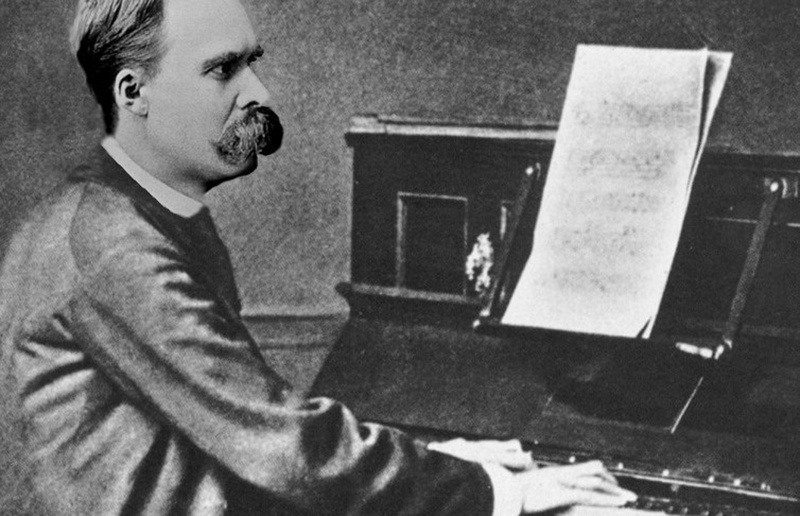
AFAIK, this is the only known photo of Fenton Johnson, from when he was in his 20s. We have more photos of Emily Dickinson or Robert Johnson.
.
Summing Up, and A Musical Piece for Today
In closing, there’s still more for me to find out about Fenton Johnson, even if it’s likely that I (or any “we’s” reading this and sharing my curiosity) will never find out other details that would illuminate him. We have those final poems before he “went dark” as far as literature is concerned, and I’ll maintain that his earlier work has qualities worth re-assessing. Yes, he’s a case of someone who dreamed big, maybe spread himself too thin, maybe his self-regard was blind, maybe he underestimated the resources and skills needed — all that “reach exceeds his grasp” stuff. And he certainly had to deal with generalized and persisting cultural undervaluing of Afro-Americans — so this isn’t a simple case of hubris. His most famous poem, that despairing “Tired” remains on various printed pages silently waiting to be found — but there’s an unwritten poem that sums Fenton Johnson up for me: “Tried.”
His most famous poem, that despairing “Tired” remains on various printed pages silently waiting to be found — but there’s an unwritten poem that sums Fenton Johnson up for me: “Tried.”
For today’s musical piece I’ll give you something sung by Dave Moore. It’s called “When the Dream Outruns the Real.” Dave didn’t write it about Fenton Johnson, but it is about anyone who tries, dreams, and doesn’t make it. Here’s what I think is cool about what Dave wrote and sang: it’s not a rote put-down. Easy to laugh at the over-reachers, easy to mark it all down to vanity. The Qoheleth in Ecclesiastes preaches that “All is vanity.” Could that mean we laughers are vain too? You can hear The LYL Band perform this with the audio player below, or with this backup highlighted link.
.
Here’s my sketchy and incomplete timeline of what I know of Fenton Johnson’s career.
1888
Born in Chicago on May 7. An only child and his parents are middle-class. There seems to have been at least some modest wealth in other branches of his family. According to his later friend Arna Bontemps, he starts writing at age 9.
Circa 1905
At least one play was produced in Chicago while he’s a high school student. There are scattered other mentions of Johnson writing plays, but I’ve found nothing about what they were about or if there was much notice of them.
1906
His early model, Afro-American writer Paul Laurence Dunbar dies. Around the same time he graduates from Wendell Phillips High School in Chicago. Attends Northwestern University and the University of Chicago, does post-graduate work at Columbia University in NYC circa 1914.
1910
Briefly teaches at a HBCU, Simmons College in Kentucky, founded by the Baptist church.
1909
He submits a manuscript (handwritten on lined paper from the scanned copy I’ve seen) to Doubleday as a non-fiction diary, though it’s fiction. It survived, though unpublished. Titled a “A Wild Plaint,” the main character in the story commits suicide due to the stresses of his Afro-American life. I have not read this yet.
1913
Self-publishes his first book, a poetry collection A Little Dreaming which has a wide variety of poems in subject matter and styles reflecting mainstream 19th century poetry modes as well as dialect poetry. Dedicated to a relative who may have helped finance its printing.
1915
Returns to Chicago, presumably ending his education. Self-publishes his second book Visions of the Dusk. Dedicates it to Albert Shaw, a well-known white reviewer who had given a favorable review to his first book.
1916
Founds The Champion magazine in Chicago and is listed as its editor. It’s uncertain how many issues are published. One issue does exist as a scanned complete copy. I just found it online, though I haven’t read it yet. Also in 1916 comes a third volume of self-published poetry, Songs of the Soil, which concentrates on his dialect verse.
1918
Founds The Favorite Magazine. Again, it’s unsure how many issues there were, but it may have been as few as two. Published Three Negro Spirituals: “How Long, O Lord,” “Who is That A-Walking in the Corn,” and “The Lost Love” in the June issue of Chicago’s influential Poetry magazine.
1919
Publishes his best-known poem,“Tired,” in the January issue of The Others. The Others circulation is small, but it’s an influential landmark little magazine focusing on the new American avant-garde poetry
Publishes five poems in the February issue of The Others: “Aunt Hannah Jackson” “Aunt Jane Allen,” “The Gambler,” “The Barber,” “The Drunkard”
Publishes “The Artist” and “Dreams” in The Others April-May issue.
1920
Self-publishes two short books: For the Highest Good and Tales of Darkest America. The former is a reprint-collection of pieces from The Favorite Magazine and they are largely anodyne Republican party material. The latter is a short stories collection which sustains some interest while not demonstrating that Johnson is a great undiscovered short-fiction writer.
Around this year Johnson seems to have another ready manuscript of new poems, but is apparently unable to find a commercial publisher and family funds to self-publish another book are denied.
1921
Published Two Negro Spirituals: “A Dream” and “The Wonderful Morning” in the December issue of Poetry magazine.
1922
James Weldon Johnson publishes the first anthology of Afro-American poetry at the dawn of the Harlem Renaissance. He includes five of Fenton Johnson’s poems including “Tired,” marking down Fenton Johnson as someone to be remembered in future surveys of Black verse. JWJ says little about FJ in his preface, saying he “gives promise of greater work than he has yet done.” Fate laughs: FJ is no longer publishing poetry. Nearly a decade later JWL publishes a new edition of A Book of American Negro Poetry and has more to say about FJ then, notes his work is uniquely despairing.
1925
The Cabaret Girl, a play he wrote was staged at Chicago’s Shadow Theatre. I know nothing about the work, nor of any other public work by Fenton Johnson after this.
Circa late 1920s
Midwestern Black free-verse poet Frank Marshall Davis moves to Chicago, and besides white Modernist Carl Sandburg, he is surprised to find a fellow Black poet who wrote free verse there: Fenton Johnson. Davis admires Johnson’s free verse poetry and later published a poem riffing on Johnson’s poem “Tired.”
Circa 1935
Works for the Federal Writers’ Project part of the WPA. Others recall he was also in the “South Side Writer’s Group” of Afro-American writers including Richard Wright, Arna Bontemps, Margaret Walker, Theodore Ward, and others. The young Gwendolyn Brooks may have been connected to this group’s later incarnations.
Margaret Walker says she worked with WPA/FWP in Chicago while a senior at Northwestern. She reports Nelson Algren, Jacob Scher, James Phelan, Sam Ross, Katherine Dunham, Willard Motley, Frank Yerby, Richard Wright, Arna Bontemps, Sterling A Brown, and Fenton Johnson were also in the Chicago WPA.
Personal note: my relative Susan Glaspell was also associated with the Chicago FWP during the Great Depression. I don’t know how officially or unofficially the FWP was racially segregated, so there’s no guarantee my relative and Johnson even knew of each other. I know of no work of interest ascribed to Fenton Johnson from the FWP, at least as yet.
1958
Fenton Johnson dies in Chicago on September 17. Some of his papers etc. reported destroyed in a basement flooding event. Arna Bontemps was his literary executor.
 Frank Hudson