Elinor Wylie once was a reasonably successful poet, back in the last decade that was called The Twenties. I informally group her with some other American women poets of that time: Sara Teasdale, Edna St. Vincent Millay, Dorothy Parker, each of whom wrote often about the complexities of love and relationships. Though none of this group had careers of extended success,* Wylie’s poetry career arc was exceptionally short, contained entirely within the 1920s — though it was preceded by a few years of being a gossip item for a series of romantic elopements and divorces. I wrote a bit about that element of her life a few years back, but it seems that Wylie was playing at the Kardashian-family level of tempestuous celebritydom in her time. Read my link if you want a summary of the tea.
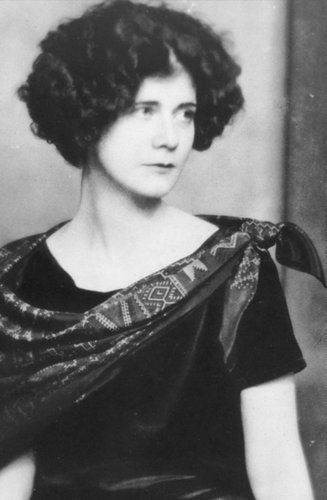
Elinor Wylie. Runaway socialite and 1920s poet.
.
So how good was her poetry? Clearly better than the usual celebrity with a book of poetry. She’s highly musical and concise, an irresistible draw to my Project, and while ranking art is a foolish game, her best work stands up well against the trio I associated her with. Today’s piece uses a poem that was called one of her best works when I first read it as poets.org’s Poem-a-Day a year ago. Here’s a link to the poem’s text if you’d like to read along. I myself wouldn’t rank it that high if I somehow needed to rank her poems, though the musicality alone compelled me to set it with music this week. Why do I prefer, for example, her “Velvet Shoes?” “Let No Charitable Hope” is a bit abstract, despite the eagle and antelope that are cited in passing and the woman trying to get substance from a stone,** while “Velvet Shoes” is as sensuous an experience in imagery as in sound. But as a complaint, “Let No Charitable Hope” probably still connects. Many of us, maybe more for those women reading, are familiar with being misapprehended, of having a hard enough time maintaining one’s own hopes, and to then be asked to try to match the hopes of others. What does Wylie mean by her ending smile in the poem? Is she smiling at how mistaken the apprehension was, or is she allowing herself to smile at her own small lofting of her own hopes?
You can hear my musical performance of Wylie’s poem with the audio player below. I went all-out on the weird chords for this one, so it may not be to all tastes. Is your screen so woozy from fear of odd voicings that it’s obscured any such audio player? No, some ways of reading this blog suppress that player gadget, so I provide this highlighted link that will open a new tab with its own audio player.
.
*Like Wylie, Teasdale died young. Parker and Millay’s political commitment damaged their later careers. The New Morning of the The New Woman of the 1920s had its backlash as well — but this isn’t simple. It’s hard to maintain an artistic career in general, Parker suffered from writerly alcoholism, and some who shared Milay’s politics didn’t think her later work was as good as literature.
**One more concrete image occurs in the poem: masks. The line “Masks outrageous and austere” was sonorous enough for Tennessee Williams to cop it later on. As if sometimes does for me, I thought of masking as in autism, though the syntax of the poem’s last stanza seems to have masking being applied to the years, not the poem’s speaker’s smiling face. Still, I’d expect some ASD readers would see the disconnect of the “charitable hopes” of others viewing them verses their own internal reservoirs of hope and intent.

 Frank Hudson