Nine days ago I started this Halloween Series with my sung adaptation of a graveyard poem by Robert Frost. Now we’re nearing the end of the series, and today I’m going to present another graveyard poem that sits with my sense of Halloween, Ethna McKiernan’s “Stones.”
I also promised in the beginning of the series that I would say why I’ve decided to make an extra effort to note Halloween. Decades ago, I met a young man (we were both young then) who had many interests, John Brower. The immediate bond: we both loved unusual music, not just strange or adventurous Rock that one could find in many a large record store back then, but harder to find Modernist orchestral music, and the even harder to find musics from other cultures around the globe. John also had a strong interest, much stronger than mine, in fantasy and horror genre fiction and film. What links those two groupings? For one thing, they were outsider-ish things then. If you want direct evidence of this mysterious connection you only need to investigate the trope of using the musics of the first of John’s interests with the movies and TV shows within his second one. The first signals the second: dread, tension, and the unknown. Scary movie, unknown planet, unsettled minds, eldritch times and places, it was a good chance that the less tonal string sections, the theremins and early electronica, the gongs or tuned percussion, the swooping vibratos and strange timbres of otherwise unheard avant-garde or exotic musics would emerge in the soundtrack. In the obverse, can anyone think of a well-known happy or loving scene similarly soundtracked with odd music? I can’t.*
But that doesn’t explain John. He gathered about him an eclectic mix of folks interested in these things, many of whom would be loners by inclination or classification. And every Halloween he would take them into the dark autumn north woods to his family’s cabin for a celebration of the holiday of the things less -heard than feared, we all in this group lit by the light of frightening movies until deep into the night.**
John grew up, continued to be engaged in many things, keeping those core interests and working to foster them. Then he died suddenly, while still young by the way I’d measure lifetimes from my current age.
There so much more to his story, and I’m sure parts I don’t really know, but within the briefness I prefer for these posts I want to say that I learned things from John and his enthusiasms, and in the scattered pre-Internet age he was a rare ear interested in some of the things that I spent my time thinking about and seeking out. Two decades after his death, I still will hear a piece of music, see a movie referred to, or encounter a piece of dark fantasy, and I’ll think of John, remembering some of what he thought of it, or I’ll be occasioned to consider what he might say about it today,
John had this spirit of Halloween, the old spirit of the things we repress and shush-up the rest of the year. Now, long after his death, and the death of others who so graciously tolerated and helped inform my interests in music and poetry, I have this personal graveyard in my head that I’m tending. As the Blues Poet Bo Diddley sang, I find “I’ve got a tombstone hand and a graveyard mind…”
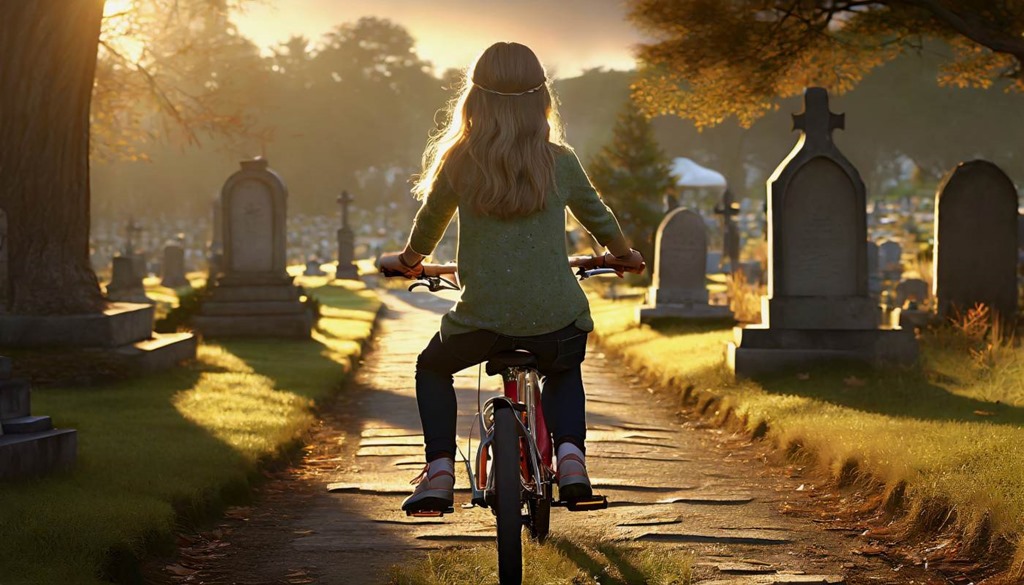
One of the most striking and effecting poems in my Halloween Series, Ethna McKiernan’s Stones. If you want more, and I’m thinking some of you will, buy her book, linked below.
..
Which brings me to today’s poem I set to music. Regular readers may recall Ethna McKiernan from earlier posts. She was part of a small poet’s group alternate Parlando voice Dave Moore and I were part of — and unlike Dave or I, she published her poetry regularly both locally and via her connection with Ireland.*** She died nearly two years ago now, but in my head she has a mind’s gravestone like my late wife, like John Brower, like Ethna’s friend and poet compatriot Kevin FitzPatrick.
Poets, musicians — we play in our heads all the time. We look back at inscribed dates inside there, and compose in that dark using beats and sounds strung over time. Those beats come to rests, those sounds fade to silence. When I set Ethna’s poem “Stones” to music I chose to refrain a line from her beautiful poem so that it won’t end before you pay attention to it: “I am watching over all of you.” In Ethna’s poem that line is hauntingly unclear by design. We the living are charged with watching over our personal graveyards. We hope, transparently and by wisps of sight, that their residents are also watching over us.
Happy, yes, Happy Halloween that we knew them. The audio player to hear me trying to do justice to Ethna McKiernan’s poem “Stones” with my own music and performance is below. No player on your screen? This highlighted link will open a new tab which will supply you with an audio player.
.
*While the avant-garde or the exotic was only used for terror and unrest, for some reason the foundational composer of western classical music, Johan Sebastian Bach was the other go-to music for frightening undercurrents. Why? As young children, did filmmakers sit under towering pipe organ tubes fearing that wolves would appear out of that forest, or that teetering from low notes, that they would fall over and crush them?
**John was one of the first folks I knew with a home VCR, and even as video rental stores started to emerge he proudly purchased movies he admired, just has he collected esoteric avant-garde records, and small-press books. Neither of these things were inexpensive to his income level then, but he considered this his form of patronage of artists and their art.
***As she was dying, Ethna finished her final new and collected book, and it’s very very good. You can order Light Rolling Slowly Backwards from your local bookstore or from the publisher at this link.

 Frank Hudson