Observations and Questions Concerning Carl Sandburg

I’m in Asheville North Carolina this weekend, and I visited the Carl Sandburg home national site not far from here. Longtime readers will know that Sandburg is a touchstone for me and this project, and so I thought it’d be worthwhile to put down a few observations and questions that have arisen from my visit in consideration of Sandburg.

I think Sandburg has suffered from succeeding in doing something we no longer expect poets to do. He achieved a certain level of fame during his lifetime — and that alone is problematic. If poetry has lost sufficient cultural interest, as some critics and some poets believe, then a poet too famous has presented a case that they aren’t really writing true poetry. It doesn’t help that Sandburg wasn’t known as a critic himself, and didn’t present an explicit theory of how poetry works. This led to an assumption that there’s no depth, originality, or vision in his work. From this perceived lack, his fame — and one might assume his influence — died off quickly with the celebrity poet character he became in his long lifetime.

Yet there’s one line of influence that I say is underappreciated, one that flows from his writings and public persona, a path of influence that mixed with others who had complementary urges. That line of influence runs through Sandburg’s work with American folk music. He seems to have been working roughly contemporaneously with John Lomax and Charles Seeger* in popularizing folk music at a time early enough that one couldn’t yet term their actions a revival. And he was mixing these folk tunes collected from various subcultures in America’s regions and mixing them within a project that included outreach of high culture poetry and a lefty political slant from the presenter, as if it was all one thing. There was no natural reason these things were required to be combined, and so a successful poet and author combining them, as Sandburg did, helped set the format for the progress of the folk music revival from the WWI era through to the eventual “folk scare” of the Fifties which launched Bob Dylan and many others who would be called song poets.

Sandburg-grandkids-guitar today

Sandburg singing with his grandkids. Note the classical guitar position, a way of holding acoustic guitars I adopted too. Guitar and piano currently in the Sandburg home. I couldn’t get an angle to read the headstock. Anyone got knowledge or a guess what make and model is is?

.

Critical intermediaries in this half-century progression were Pete Seeger and Woody Guthrie, and I’m often struck by how similar their presentations were to Sandburg’s. If you mix Sandburg and Will Rogers** into a cloning machine you wouldn’t get an exact Woody Guthrie, but you’d likely get something like him. Guthrie familiarly called Sandburg’s pioneering 1927 folk song collection The American Songbag  “Carl Songbird’s American Sandbag.” And like this project, Guthrie played and composed music to accompany Sandburg poems for public performance. Pete Seeger’s Chautauqua-ish concerts presented to and aligned with a Sandburgian “The People, Yes”  outlook. Seeger’s breakout group The Weavers made much of this blurb given them by Sandburg “When I hear America Singing, I hear the Weavers.” Before that, when he was beginning, Pete claimed he got ahold of American Songbag   when it came out. Again, like Woody, Pete was Pete. They added themselves.

I admire Langston Hughes, and while not single-handedly, he’s seminal in the development of Afro-American poetry. In reading his early work, some of which remains in the forefront of his legacy, I hear strong echoes of Sandburg’s word-music. Are they both hearing Walt Whitman in their ears? Likely, but the concision of many of Sandburg’s early poems is not Whitmanesque, and Hughes’ poetry likewise could be concise. Langston Hughes was too, himself, but a poet like Sandburg at least ran interference for his work.

Hughes was an early proponent of Jazz Poetry, yet Sandburg’s “Jazz Fantasia”  was there to serve as an example when Hughes’ first poems were published. Later on, I was often hearing elements of Langston Hughes in Gil Scott Heron, and if we continue that line, perhaps there are reflected elements of Sandburg is some down-tempo, socially conscious rap.

One of the things a tour of Sandburg’s home offers is the ability to peak at his many bookshelves and scattered magazines. They show a man with wide interests in politics and human rights alongside poetry. Here’s one little something I didn’t expect to find, wedged in between The Roots of American Communism  on its left and McCarthy: The Man, The Senator, The Ism  on the right: a copy of a science fiction magazine. Did Sandburg read or at least casually follow mid-century SF? Has anyone even asked this question? Is there any way to answer it? Was this one issue or are there many in the house?

Fantasy and Science Fiction

The magazine is right next to the McCarthy study. Hard to read the spine, but it may be this issue.

.

Here’s an oddity that I thought of while sitting in Asheville thinking also of the Black Mountain College that existed nearby. From 1945 when Sandburg moved to North Carolina until the college closed in 1957, it existed in the same part of the Blue Ridge mountains with Sandburg. In the 1950s it became the locus of a group of poets*** who eventually were called The Black Mountain Poets after the school. You might wonder (well, I did)  did any of them seek out Sandburg, or did Sandburg make any note of them? So far, I can find not a trace of an answer to that question. Was Sandburg either too busy or too retired to mix with them? Was he considered too mainstream and successful to be of interest to insurgent “post modernists?” Many Black Mountain Poets admired and communicated with William Carlos Williams, Sandburg’s contemporary — but Sandburg too had championed a more American and less European-culture-centric style of free verse continued by the Black Mountain Poets. There’s a dog not barking there.

In the end, I suspect Sandburg might be comfortable with his diminished reputation in the 21st century — even if I’m not. Sandburg often spoke of the work of the people as being continuous, of that factor being part of the peoples’ power. In that way he might be satisfied. Things he helped build, put in motion, continue to move forward, change, and develop.

For an audio piece today, here’s a short poem by one of the foundational Black Mountain Poets Charles Olson titled “These Days.”   I performed it acapella this morning, recording this very short piece on my phone in a less than quiet room I’m staying at. It speaks of something Olson and Sandburg might have agreed on. You can hear it with the audio player below, or if you don’t see that, with this backup link.

.

.

*Father of Pete, Mike, and Peggy Seeger. Husband of Ruth Crawford Seeger.

**Will Rogers arose in a very similar time-frame to Sandburg. The amateur guitar player/author/speaker Mark Twain had died just a few years previous. The clever yet folksy artist observing the entire range human behavior from a loving/skeptical non-East-coast/high-culture place was a needed character in American life, and while Sandburg isn’t a Twain clone, the role he played was somewhat successive.

***The list of other famous students and teachers of Black Mountain College included Buckminster Fuller, John Cage, Charles Olson, Walter Gropius, Joseph Albers, Robert Motherwell, Robert Rauschenberg, Merce Cunningham, John Cage, Paul Goodman, Franz Kline, Willem de Kooning, Robert Creeley and Robert Duncan.
Are Song Lyrics Poetry? Part Two

Last post I rapidly traced poetry from the era of Homer and Sappho and the Confucian Odes,  jumped to English language poetry and finally ended with early 20th century Americans. I traveled fast, and simplified much, but it wouldn’t be out of line to say this is a progression from poetry that was expected to be performed with music to a poetry that wasn’t. Widespread literacy and the printing press, and by the Modernist era, a desire to include complex allusions and layers of ambiguity all helped this progression along.

Today let’s start in the 20th Century in America and follow the songwriter’s side of things. Popular songwriting had become industrialized. Composers and lyricists churned out uncountable numbers—and first by sheet music and then by recordings, film, and broadcasts, these productions could be distributed widely. Barriers to entry were low in this business, but rewards for popular success were high. Lyricists came from a wide range of backgrounds—some were middle class, even college educated, but many were immigrants or descendants of recent immigrants for whom English was a fresh language.

As with any mass art or market, much of what they produced was forgettable, a job of work, their ears may have sometimes bent to the muse, but their hands were looking for a paycheck.

Poets and literary critics occasionally paid a little bit of attention to that work in their time. Lively arts and all, some notice was taken.* With the music inspired by Jazz, the cultural force of the music could not be denied, even if the words that came along with it might be condescended to.

Then, in the mid-1930s, a decision was made, outside of music and poetry—a political decision—that eventually changed the course of popular music lyrics. For political reasons both international and U. S. national, the Soviet Union-dominated international Comintern and the U. S. Communist Party decided to switch tactics from a more purist “only the Communist Party is the solution” stance to a popular front position, where anyone to the left of the then rising Fascist forces were considered valid allies.**

In the U. S. this led to such slogans as “Communism is the Americanism of the 20th Century.” On a political level this meant that the Roosevelt New Deal wouldn’t be portrayed as capitalists pushing insufficient reforms to stave off the inevitable revolution, and that actual “card-carrying Communists” would be mixing more generally with socialists, liberals and centrists. But for our purposes, we need to look at how this played out in the cultural sector.

Popular arts, which could have been perceived as hopelessly compromised tools of the capitalist system, became more acceptable; but a more pure, folk expression that was seen as coming directly from and for the workers and the exploited, a music existing outside of the commercial infrastructure of entertainment, was even more ideal.

So here, twenty years before the “Great Folk Scare” of the 1950s were the roots of the folk revival.*** It’s in this pre-WWII period that Pete Seeger and Woody Guthrie came of age and shaped their songwriting. Seeger was a Harvard drop-out and son of two musicologists.**** Guthrie was none of those things. The Popular Front meant that the likes of those two, and many others with high to low culture backgrounds, would mix it up.


My apologies to my Christian readers for posting this example of extraordinary Popular Front songwriting on Easter when it’s more a Good Friday kind of thing. Billie Holiday sings the harrowing “Strange Fruit.”


As songwriters this could have meant dour issue-of-the-month songs cleared by some central committee. And to be honest, each of them sang and wrote some of those, but both of them had Emersonian Individualist streaks.*****

And they listened too, had big ears. Afro-American music and musicians, isolated southern U. S. musicians who songs and styles were time-capsules of old British Isles tunes. Blues and “Hillbilly” music benefited somewhat from being a source and occasional fellow-traveler with this movement.

The Afro-American Harlem Renaissance is shaped by the gravitational pull of this political decision too. Civil Rights before the ‘30s was often aspirational, and though the folk traditions were honored before, this new emphasis on embracing popular and folk arts increased the interest and respect for them among an emerging new Afro-American cultural consensus.

Now we jump ahead again, it’s that un-named but important straddle decade of the late ‘50s to early 60s. Communist connections are poison. Illness had made Guthrie bedridden. Seeger is persevering outside of any first-tier commercial structure as a road-dog performer. “Folk Music” is now a commercial genre with a still bohemian/left-wing underground. Into this we inject the man who will expand the idea of what song lyrics will be allowed to do: Bob Dylan.

You don’t have to like Bob Dylan as a person, performer or songwriter to accept this truth: there are song lyrics before Dylan’s 1963-66 period and there are song lyrics afterward, but song lyrics are a completely different field after the change he proved was possible. This is why an artist as strong in his own right as Leonard Cohen can say in one of his last public statements: “Giving a Nobel Prize to Bob Dylan is like pinning a medal on Mt. Everest for being the highest mountain.”

But a Bob Dylan has causes, has a context in which he can happen. That choice Communist bureaucrats made for pragmatic political reasons in the mid-1930s led to a folk music scene 20 years later in which Afro-American blues and weird old folk music mixes with poetic Modernism inside the mind of one songwriter, and what comes out is strange and compelling.

Song lyrics don’t have to be a piece of work aiming for an established commercial target. Song lyrics don’t have to make clear front-to-back sense the first or the fifteenth time you hear them, they can mystify you and still have listeners. Songs with narrative elements don’t have to progress in a linear manner. Song lyrics can be about anything, can use any kind of imagery. Love songs can be ambiguous. Political points can be made metaphorically. You can combine different kinds of diction, even sample and reference various existing sources, and it doesn’t have to seem out of place or from the lack of original things to say.

One can point to song lyrics that did one or two of these things before Dylan, but after Dylan used many of them together and repeated that demonstration often, many songwriters wanted to try using any and all of these things, and their attempts caused other songwriters to do the same. A chain-reaction occurred.

Modernist poetry had done all these things already, and often—but Modernist poets didn’t write songs, and for the most part they didn’t read and perform their poetry charismatically. Some Beat poets, that faction of the Modernist movement that had vowed to remain resolutely bohemian, who had read their poems in front of jazz combos, recognized this was a different level of music combined with words. Allen Ginsberg heard a copy of Bob Dylan’s second LP in 1963. As the first side of that record moved inward toward the ouroboros groove in its middle, as “A Hard Rain’s a-Gonna Fall”  played, he says he wept. Did he weep, feeling he was now displaced? Did he weep because this not yet 40-year-old poet might be replaced by this just over 20 singer-songwriter? No.

He wept, with an outlook of gratitude, because “There’s a saying among the Buddhists. If the student is not greater than the teacher, then the teacher is a failure.”


A long excerpt from “A Hard Rain Is a-Gonna Fall” with Ginsberg’s statement cut in.


Good story. But this was far from the end of the matter. A great many important poets and critics didn’t feel Ginsberg, or any of his Beat cohort, were very good poets. Therefore, Ginsberg’s say-so didn’t make Dylan a “real poet.”

You can’t say songwriting accepted or didn’t accept Bob Dylan, because acceptance is too meager a word for what happened—he changed how songwriting worked. The question of poetry “accepting” Bob Dylan, or songwriters in general, is still open.

Will I ever answer the question in the title? I beg your patience. This is by far the longest piece ever published here, even though I’m skimming over a lot of things. In Part Three I’ll finally get down to the answer that makes the most sense to me.

For an audio piece today I’ll suggest this one, one of the rare times here that I perform my own writing, a live version of “On First Hearing Blonde on Blonde”  by the LYL Band. The audio player is below. Thank you for reading and listening! Part Three, that should be the conclusion, comes soon.


*Decades after this era in 1990 literature professor Phillip Furia published his book The Poets of Tin Pan Alley  which helped convince this fan of more “authentic” songwriters that these commercial lyricists were not without considerable art.

**As in the case I’ll make later regarding Dylan, please don’t let any personal feelings or judgements you may have regarding Communism or the Comintern blind you to the historical connections here.

***I can’t not mention one poet and musician who jumped the gun on this, Carl Sandburg, who published his important folk song collection American Songbag  in 1927. And for length reasons, I’ve largely left out the 20th century development of Afro-American blues and jazz. Charlie Patton didn’t wait for the Comintern to get in touch with him to forge his new alloy of styles.

****One of his father’s prize students was Modernist composer Henry Cowell. His step-mother, Ruth Crawford Seeger was in some opinions the most significant female American Modernist composer of the first half of the 20th century.

*****We can think of songs like “Where Have All the Flowers Gone,” “Bells of Rhymey,” “Plane Wreck at Los Gatos,”  or “This Land is Your Land”  as exceeding requirements for that kind of song. Abel Meerpool’s “Strange Fruit”  is an excellent example of a lyric, written as a song, that would stand alongside poetry intended for the page.

I Was Reading About Jesse James

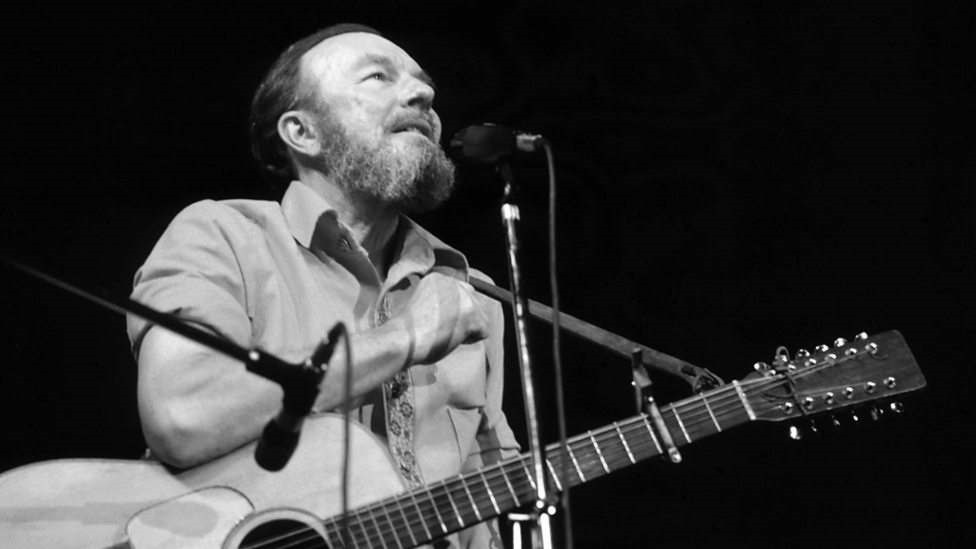
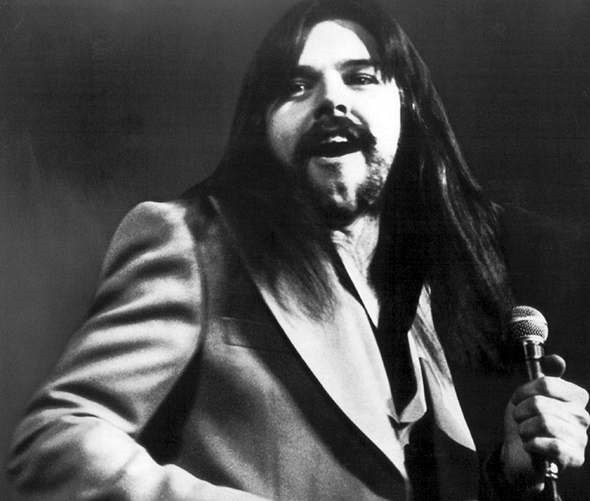
When I was growing up and learning songs from Jerry Silverman’s folk songbooks, there was song called “Jesse James”  included in many collections and sung by a wide variety of singers—and any song that has been sung by the Kingston Trio and Nick Cave, by Van Morrison and the Pogues, by yes, by both Peter Seeger and Bob Seger, has to be the very definition of a “folk song.”

Pete SeegerBob Seger

Both these guys have sung thoughtful songs, but sometimes you need to think beyond the song yourself


Though “Jesse James”  takes some of its spirit from older English ballads celebrating legendary medieval populist outlaw Robin Hood, this American song is more about betrayal (James was killed by a gang associate in his own living room) and about telling us what an all-around bad-ass James was. We’re told he “killed many a man” (never why or how, though bravery is claimed) and that he robbed banks and railroads (but he “gave to the poor” and would “never rob a mother or a child”).

You can see how this sort of thing has a wide appeal. A tale of revenge on the rich and the powerful appeals to many, and banks and railroads were particular targets of late 19th and early 20th century rural populism, but the emotional core of the folk song “Jesse James”  is the betrayal and assassination.  No matter what the variation in the lyrics, there’s lots of mention of James’ cowardly assassin Robert Ford betraying the man who trusted him, shooting him in the back.

Woody Guthrie took “Jesse James’”  structure and melody and produced an incisive, though less popular, version of his own called “Jesus Christ”  which cast Jesus as a rebellious populist betrayed by a disciple—though it had to do without the “killed many a man” factor. So popular is the original “Jesse James”  ballad, that Guthrie likely knew that Jesse James’ action-hero rep would rub-off on his populist Jesus.

So, it was with interest that I followed up on the reality of Jesse James. One can assume that most heroes have feet of clay, portions of their behavior that show faults or inconsistency, but it turns out Jesse James doesn’t have feet of clay—the whole man is made of half-baked clay mixed with ample fresh dung as filler.
 
He’s a nasty piece of work. True, his character shows audacity, but that’s not the same thing as bravery. There’s no evidence I’m aware of that he ever killed an armed man who was opposing him, but lots of connections to killings of prisoners and bystanders. It was somewhat true that seeking cash through his robberies was a side-point to him, but his main motivation was to extend, defend, or to restore human slavery, or to take broad revenge on those who sought to end his career seeking those aims.

If there’s a defense for his actions, it would be some listing of the bad things done by his opponents, but then monsters often breed monstrous actions against them. It’s an argument against monsters, not a defense of the actions themselves.

Today’s piece “I Was Reading About Jesse James”  starts by asking you to think about this. I thought about trimming the piece’s instrumental coda shorter, but I have left it in. Consider the last half to be time for you to begin to ask those questions yourself. To hear the LYL Band ask those questions to music, use the player below.