This Saturday in Minnesota was marvelous. We already go a little crazy when the temps reach 50 degrees Fahrenheit – there are always folks out in shorts and short sleaves as soon at the bulb’s red rise tips over 49 degrees, but Saturday my thermometer read 79 degrees by the afternoon, and everyone that could was outside. Walkers were everywhere, and if they had dogs, they had a shared happiness. The smaller crew of hardy bicyclists I see within Winter were joined by a fresh multitude of carefree riders in summer attire coursing through the city. I myself rode to a place a block or so away from my wife’s apartment when we were courting, and there I had a double scoop of ice cream which I ate sitting on a bench outside soaking up the sun.
I’m feeling my age as more than just an additional year in 2026, but to be old or young or anywhere in-between in such a Minnesota day induces a feeling of specialness. Perhaps for the young the coming spring and summer can have an interval long enough to induce boredom, a sense of regular expectable warmth, and a dispensable ease of adventure – but to be old is to know the shortness of things.
Sunday returned to gray skies and an ordinary chilliness. Saturday seemed like a dream. Spring and Summer are still promises, more sure than many human promises in this corrupted world, but promises still.
All that dilly-dallying with ice cream delayed me completing making a song from this Edna St. Vincent Millay sonnet. Earlier this month I was saying Millay wrote complex love poems. Well, she wrote complex Spring poems too. The sonnet I was working with is one of the Spring ones, but like her apostrophe poem from earlier this month speaking to mankind, this time it’s an apostrophe to the season. It’s an intimate dialog with elements of greetings to Spring, but as that season arrives, the poem tells us it also knows it will depart.
I’ve found that Millay’s poems often improve with performance. While not exactly a slam poet with planned-in applause lines, Millay’s language (even with its touch of archaic poetic diction) has a pleasing sound, and near rhyme and rhyme add a sensuous chime to the lines. It really is one of those poems that ask to be sung. That said, I found myself modifying Millay’s line breaks as I set it to music. The chord sheet version I provide today can be compared to this link of the printed text to see how I adapted it. I also added a refrain again.
Some less common chords in this one, but I offer these chord sheets in hopes that other singers will try these songs out.
.
One last thing developed from the poem as I did this work: the poem, ostensibly addressing Spring, may be speaking also to the passing youth of the poet, and the line I chose to refrain is repeated to bring forward that which I felt on that extraordinary warm Saturday when I performed Millay’s poem, that we can cherish (and be considered) being more than young and sweet and fair. We all live as promises.
To hear that performance of Millay’s sonnet you can use the audio player gadget below. No audio player seen? That throat isn’t gone on departed wing, it’s just some ways of reading this blog suppress showing it, and so I also offerthis highlighted link that will open a new tab with its own audio player.
I live in a city where 12-string guitars are over-represented. Since I’ve only lived in Minneapolis for 50 years, I can’t say for sure why that’s so. Folk-revival pioneers Leadbelly and Pete Seeger, likely the ur-source for the instruments post WWII use, have no direct connection, but by The Sixties™ this powerful but awkward branch of the guitar family had a nexus of players here. The guitar playing other two sides of the Pythagorean Koerner, Ray, and Glover trio played 12-string. Leo Kottke made the beast a virtuoso instrument while working the small clubs and coffeehouses of the Twin Cities. John Denver had fallen in love with a Minnesota girl and played a lot of 12-string (and who can say what is the cause and effect there). By the time I arrived in the Seventies, Ann Reed, Peter Lang, and Papa John Kolstad also played 12-string in small venues. The year my ten-year-old Pontiac rolled into town, a local college student, Steve Tibbetts, was self-recording his first LP featuring 12-string landscapes pebbled with percussion over which roamed howling electric guitar wolves.
At that point I owned my J C Penny’s nylon string guitar and a weird amorphously shaped Japanese electric guitar I’d bought at a flea market and for which I couldn’t yet afford an amp. Accommodating my new hometown, I soon felt I should get a 12-string guitar. A year or so after arriving I managed to afford a Cortez 12-string acoustic which was sold as a sideline item at the local Musicland record store. My memory was it cost $79. Designed to outwardly look like a “professional” instrument at the lowest cost, it could have been the music equivalent of costume jewelry or a stage prop. As these sorts of things go it wasn’t as bad sounding as modern forum-dwelling guitar aficionados would suspect, and mine had pretty good “action,” reasonable string height to allow easier fretting.
Later in the Seventies I added a DeArmond sound-hole pickup and I played this guitar with the LYL Band, and for the rest of the 20th century. With their double sets of strings, 12-strings sometimes warp and self-destruct under the increased string tension – but cheap and cheerful as the Cortez was, it’s held up, though the top has bellied-up over the years.
I eventually got a better 12-string, but I kept the Cortez around. A few years back I set it up to use Steve Tibbetts stringing variation where most of the octave strings are replaced with unison strings.*
Now let’s jump the month just ending, January 2026. As a writer I can’t paper over the immense mood shift this entails: from oddities about the types of guitars, to lives being mangled by intended government action.
I still feel unable to write fully about my reactions to the many injustices and atrocities that are incurring at the hands of thousands of federal agents that are roaming my city and the rest of Minnesota this winter. The first of the murders this month, the shooting of Renee Good in front of her wife happened on the street just across the alley of my home office and “Studio B.” If I hadn’t been wearing headphones and working on music for this Project I would have heard the gunshots – instead, it was my wife who rushed in to tell me. As of the end of the month, we’ve had a non-fatal shooting and one more murder by the federal agents, and a daily grind of sufferings. I won’t be the one to try to catalog all the careless to cruel things that are happening day after day. It sorrows me, and perhaps you, and at least for now, this information is available elsewhere. Nor will I offer enough praise for the ordinary people in this city who are trying to mitigate that suffering and plead for its ending. I will call out one thing many of them are doing: they’re seeking to be “Observers,” the term that has come to be used for folks who feel called to witness and record with their phones what our own government agents are doing to the people living around us. Think about this for a moment as you read this: these Observers are intending to go to where cruel things are being done by armed bullies who will use their weapons – issued along with pledges from their leadership that they will face no consequences – to rough up, to detain with and without charges, to attack with chemical and “less-lethal” munitions, to in two infamous cases, to kill them. Folks were doing this before Renee Good was killed – and after she was shot, more signed up. After the next murder of Alex Pretti pushed to the ground holding his cell phone camera: more again signed up.
I think of the incredible bravery of the American Civil Rights movement of the mid-20th century, and this is like unto that. But here’s something else I think concerning that role, something I don’t recall being written much about yet. There’s a chance that these observers are going to see armed agents of our government kill someone in front of them, and they’ll be tasked with recording that. The infamous murders of the Sixties’ Civil Rights movement happened in darkness and rural separation, though the corporal brutality of clubs, dogs, and firehoses was done in public and was sometimes filmed.
Along with bravery, that’s an additional heavy burden to take on. And some are now carrying that specific burden. We have memorials to Alex Pretti and Renee Good, but I want to stop and think of those that witnessed their killings, and what they must be carrying in their minds. My mind is once removed, however close to me these things happened, and yet it’s filled with conflicting and intense reactions – but they were there, in that instant as this happened. Dozens of people in my city, some intentional observers, some protesters, some just bystanders, are carrying that as I write this.
So, the name that most often arises in my heart this month after the many insults to justice and mercy isn’t one of the detained or murdered, but is instead, Rebecca Good, Renee Good’s spouse, who was apparently observing ICE action on the broad avenue near her house and mine. When the federal agents came up to their car and began to hassle Renee, Rebecca tries to draw their attention away from her partner. In that moment, I read her actions as saying: detain me, let Renee get away, throw me down onto the ice and snow and get a few punches or sprays of mace into the eyes while you strap cuffs on me. Rebecca can’t get in as Renee puts the car in drive, the doors are locked. On one of the videos you can hear her say “Drive babe,” allowing herself to be left behind with the agents. And then the shots.
You hear her voice in another video, moments later, sitting on the side of that broad road just behind my house, saying that they’ve killed her spouse, and moaning that she was the one that suggested they move to Minneapolis. I should transcribe her exact words, but I can’t bear to watch that video again just for journalist precision tonight.
Another jarring transition I can’t engineer now. In between Renee Good’s murder and Alex Pretti’s, and thinking of Rebecca and other survivors, and of the witnesses, observers, I somehow fell to thinking of a song written by another 12-string guitar player of The Sixties,™ Fred Neil, “The Dolphins.” Neil’s songwriting was a mixture of earnest and off-hand, an unusual combination. “The Dolphins” is a somber wail about the cruelty of the world compared to the swimming pods of the famously playful aquatic mammals, and it’s just a handful of words.** Neil’s career was one of those “better known to other musicians” ones, and his song was covered by others back then, particularly those who played the 12-string guitar. Now if we move onto the Seventies – that off-brand extension of The Sixties™ – I’ve always thought that when another songwriter who played a lot of 12-string guitar in The Sixties, David Bowie, had to have been thinking of Neil’s song when, in the midst of his Cold-War-Berlin masterpiece “Heroes,” he has one of the lovers kissing next to the armed guards around that inland city’s border wall think of dolphins again.
Fred Neil had a rich baritone voice, and David Bowie was a talented singer. I, alas, am mostly singing things here myself, yet I wanted to make a realization of those two songs while thinking of Rebecca Good, and others I didn’t (and still don’t) know how to number and name in this time. That would mean no first-rate vocalist, and I also decided to go primitive on the 12-string guitar, using that old Cortez 12-string. As the song progresses I strummed that 50-year-old box loudly, and I didn’t necessarily want a pretty 12-string with a rich sound.
.
*One of the features of the Cortez is a “zero-fret,” a still unusual feature that brings two benefits: it insures optimum string height in the “cowboy chord” first position area for easy playing and allows greater freedom in using different gauge strings at the player’s whim. Conventional 12-strings use a thinner string tuned an octave above the regular string for the low E, A, D, and G strings. Steve Tibbetts (like Leadbelly) instead uses two regular gauge, unison not octave tuned, strings for some of the courses. My Cortez 12-string has unison D and G strings.
**Neil’s choice of the dolphins, however casual it seems in his song, was a serious one. He drifted out of the music business in the Seventies and spent the rest of his life working on a dolphin support/conservation project.
The recording of this musical version of a short Robert Frost poem somehow was able to slip itself in-between standing watch, comforting, and grieving this month in Minnesota. Increasingly people outside our area are expressing admiration for our fortitude, but inside our local theater of atrocities, I’d say our thoughts and feelings are still a jumble. My aged body has its limits, but I’m trying to support others during this time. Things you might see here? I still find it difficult to integrate these events into the long-ongoing Project.* There’s a great deal of news coverage and analysis being done elsewhere, but during this time you have been spared hundreds of words I’ve written and then not posted, longish things where I sought to add to that. My audience isn’t that large; my remaining skills in prose I’d self-assay as not unique enough to be required. My Parlando Project creative time is constrained both internally by aging and my acute reactions to the present crisis, and externally by limited times when I can use some musical and recording tools.
Yet, somehow, this piece is here today. Does it address the events here this January?** I think it does, at least partially, but first here’s a short account of how it was made.
I’ll skip the details, but the present recording logistics here limits the ways I can record guitars, though guitar is the instrument which I have the most facility with. Electric bass, my “second instrument” is easier. Recording an electric bass by directly plugging into a jack in an audio mixer or interface has long been a best practice for everyone from home recordists to pro studios, and since there are no amp speakers in the chain and a generally inert plank of wood holding the plucked strings, this is near silent in the room and it eliminates microphones capturing unwanted noise. Electric guitar can be recorded the same way, but for some stylistic choices you want the guitar to react to sound coming out of a speaker – and furthermore (for me, anyway) I express things differently when I’m moving air loudly in a room when playing electric guitar. This doesn’t factor into playing bass. So “A Minor Bird” started out with me working out a computer drum pattern and playing a bass line. I created a chord cycle based on the bass line (the reverse of how I often do it) and used a computer piano to create a MIDI piano roll expressing those chords.*** I then edited that MIDI score to get a part that pleased me. I next hacked playing a Hammond B3 organ part myself with my little plastic keyboard, though mercifully, all you will hear are the best bits. The next track was my singing Robert Frost’s words. Each of these steps could be done in the odd hours I could grab, so the song took form in dribs and drabs over a few days. I had intended to overdub an electric guitar solo in the middle, but that time wasn’t there, which leaves the drums/bass/piano trio grooving alone, which might even be addition by subtraction.
This Frost poem is not one of his better-known ones, though published in his 1923 collection New Hampshire, the book that won his initial Pulitzer Prize. The first thing that struck me about it is how modest and unassuming it is: four couplets long, no exotic words, a vignette with two characters: a bird and the poet/speaker. I would almost say that there is no prerequisite reading or coursework needed to understand the poem, but my next thought was that the situation here, poet and a single bird, might be in conversation with other poetry. One could think of other romantic poems of a poet and birdsong – Keats’ “Ode to a Nightingale” for example – but if I was to think of a single poem that Frost is writing his in conversation with, it would be Poe’s “The Raven.” Both poems are set in the context of the faceted emotions of grief/melancholy/depression. Both have the poet wanting the bird to leave, but despite the shortness and plain language of Frost’s poem, there’s room in his short poem for a volta, a turn of thought. Frost never names the species of bird, but by calling it “a minor bird” in his small poem, he’s also explicitly casting the bird’s song as being in a (sad) minor key. The poem’s conclusion is that the calling of grief and sadness should be included in our consciousness.
Saturday, after the latest killing of one of the observers who was filming the actions of the Federal troops elsewhere in Minneapolis, other observers in our neighborhood and their families gathered in the below-zero dark on our streetcorner, each of us carrying a candle from our houses.
.
The doorknob where I write this has a lanyard with a whistle. It’s to grab, to take outside in the winter cold and to make our minor sound at anything from the incursion into our city that calls us to flock witnesses too. This state in this country, and this composer and plain singer of Frost’s words, have had their griefs this month. We have chosen not to shoo them away – despite the raptor dread encircling our minor birds, we have not silenced the song.
To hear the performance of Robert Frost’s “A Minor Bird” use the audio player below. No player? Nothing has caused it to withdraw, it’s just that some ways of reading this blog won’t display the player. This highlighted link will open a new tab with its own audio player.
.
*Perhaps I’m an odd duck, but to release art about these events worries part of me that some portion of the artist is seeking to use these largely selfless and unsigned acts of resistance as a platform to promote their work.
I’m not saying you should feel that way! And yes, I am quite aware that conversely some artists and their work have been down-rated, suppressed, and punished due to their art for causes.
My feeling is more akin to the idea that in either case, the thoughts of pros and cons of careerism must be humbled by the everyday bravery and service Minnesotans have shown this month.
**Under what name will this month’s resistance be recorded under? “The Battle of Minneapolis” has already been used for a 20th century labor action. I’m fond of wordplay, but “The Mother Whistlers” is too humorous. “The Minnesota Witnessers?” “The ICE Breakers?” “The iPhone Militia Movement?”
It’s been tough to plan and work around poetry or music this month in Minneapolis.
Every time I write a sentence like that one, I start to compose what I think will be a concise account of why that is – and I find I can’t do that well enough, partly because there so much to say. To try to put down all the things I’m feeling and thinking in this time of daily governmental offenses and stalwart self-less resistance? Impossible – I go the whole gamut, and these instances and reactions don’t wait their turn, queue up to go one at a time: all the emotional and thought-mode flavor combinations rush to be present.
I’m going to assume some of you already have some sense of the constant lying, the retributive violence, the self-congratulatory joy in inflicting pain, and even the sloppy indifference to a lack of competence or good administration.* This operation is like someone took one of our mad and mentally diminished king’s speeches and sought to make them a battle plan: and so the incursion goes on and on, jumping from half-truth to 100, no 200, no 500 percent less truth, never really making a point or achieving an objective, becoming instead an example of how one can, without any checks or accountability, say or do anything (however stupid, cruel, or shameful).
“I must be powerful,” thinks our mad despot and his dukes and vassals – “for I can do something so badly, with so little care, crowing with pride about hurting my own countrymen!”
Those who don’t know this? You’ll need to find out more elsewhere. I urge you to do so. Those that are sure I’m the deluded one? Why are you still reading today? I will be getting back to literary poetry soon if you come here for that.
Yes, I’m tentatively trying to get back into finishing new musical pieces, though events may continue to make that difficult. I do have this for today: another version of the definitely not a topical song“I’m on Fire (and I’ve got mountains of ice to melt)” composed by Parlando alternative voice Dave Moore using some words borrowed from speeches by 19th century American abolitionist Wendell Phillips – but this time instead of Dave’s own voice and piano it’s a solo performance recorded on a cell phone back in 2014, accompanying myself on acoustic guitar. Between these two versions, I gave preference to Dave’s, not just for the justice of having him sing it, but because back when both versions were new, most listeners thought that my performance repeated the chorus too often. Thinking of that now, I’ll adapt William Blake: maybe the only way to know when we’ve said that line about melting mountains of ice enough is to say it too much.
.
*What a lousy sentence that is! People being shot, even killed, families separated, reverse Raptured cars with vacated driver’s seats. Doors busted down with battering rams without a warrant. Supreme Court nod-and-a-wink approved detainments where folks are grabbed, thrown down in the snow, handcuffed, taken to a makeshift jail for a day or so, only to be released with no charges or immigration regulations violations. Tear gas, pepper spray, and “less-lethal” weapons used more likely for sport and revenge than necessity – and I still have the officiousness to end my sentence by objecting to these agents poor organization and the incapacity of their leadership to make a detailed, defensible, consistent case for the necessity of their actions.
When you listen to the song you can hear below you might doubt me – but it is not a topical song written about recent events. It was written by Parlando alternative voice Dave Moore in 2014. Dave’s the keyboard player and the better singer in the LYL Band, and that same year I recorded us playing it with him singing and pounding the piano, and me squawking in with some backing vocals and skidding guitar. Dave tells me today he was writing the song while caring for his father in the times surrounding his dad’s final illness, and he was thinking of the work of someone that goes even farther back than 2014: the 19th century American Abolitionist and speaker Wendell Phillips. Dave’s father was a preacher and a man of strong principles, but Phillips would take a backseat to no one on standing and speaking for his convictions.
As to Phillips’ convictions (as I’ll do once more before this post is done) I’ll try to be brief – but in considering the refrain in “I’m On Fire” it’s important to note that people, even ones who somewhat agreed with Phillips, noted he was a little off the scale in his fervency whenever talking about injustice. And Phillips’ stand on slavery was not the popular, acceptable opinion when he began to express it. Phillips started his Abolitionist calling knowing full well that another prominent Abolitionist speaker had just escaped being lynched by a mob. Dave’s energy with the piano in today’s piece rightfully reflects how Phillips expressed himself.
The Boston Public Garden memorial to Wendell Phillips. Ice or ICE not visible in this picture.
.
And so it was that Phillips was once asked, “Why are you so fiery all the time Wendell?” Phillips replied “Yes, I’m on fire – because I have mountains of ice before me to melt!” More than a hundred years later, a man who became a U S Senator from Minnesota, Paul Wellstone, liked to remember that Wendell Phillips quote. And Dave Moore, our singer and songwriter remembers Phillips too – he has a long-running cartoon in a neighborhood paper where he often brings out Wendell Phillips quotes to assay our analysis and actions regarding current injustice.
Phillips’ ice metaphor, that cry against intransigent injustice will make it seem like Dave was freshly writing about Immigration and Customs Enforcement (ICE) in Minneapolis today. Once more I’ll be brief, but I have foreign readers here, and they might not know what’s been keeping me from working on this Project much in this new year. The following section has been written and rewritten a half-a-dozen times in the past week, and I’m largely going to surrender to highlights, because those that know and see what I’ve seen this past week are already saturated with the things I might try to describe, and those that have certain other judgements that benefit, comfort, or blind them, likely require more vision correction than I can prescribe.
Our home state of Minnesota is currently suffering an intentionally vindictive armed incursion by secretive forces sent by our mad and ill-tempered ruler, who says, right out, this is his retribution. Yes, this is also ostensibly about immigration regulation enforcement, but this is largely a pretext, as the rules for immigrants are being changed week to week, and the enforcement seems capricious and sloppy. If this was some laudable reform targeting people they tag with rote-repeated epithets of being murders, rapists, and gangsters, you’d expect constant published detail of accomplishment, with hundreds of chapter and verse rap sheets to show their work – yet to a significant degree, no one knows completely who is being taken out of their homes, cars, schools, or workplaces. The point, or the result, is to make a great many feel they could be next, particularly if they object to this, since that’s being a “violent agitator.” These so-called agitators are often standing on sidewalks and street corners in their own neighborhoods, on their own blocks, even on their own doorsteps – or they are at their own shopping sites, schools, or workplaces, armed with but cell phone cameras and whistles to call others similarly “armed” to protect them (somewhat) from the masked squads. Some step forward to try to get the names of those who are being detained (since the secretive authorities do not reliably release those names) and getting near enough to hear that risks their own detention. Their cameras minimize, but do not eliminate the street beat-downs and such that would otherwise occur. “Less lethal” bullets, chemical sprays and grenades also get used. They call some of these actions “targeted,” but the targets seem out of focus. US citizens with accents or too much skin color get grabbed, and if you squint a First Nations citizen can look like one of those foreigners. Gotta be hard to deport a Lakota – where’s the plane to fly too? Maybe they put them on a plane, draw all the window shades, make zoom-zoom engine noises, and then let them off?
Given the poorly trained, ineptly led, error-prone outside troops, and all their quick with the ordinance reflexes, these encounters with cruelty-is-the-point apprehensions aren’t prayer circles. Many locals observing this in their neighborhoods are angry and disgusted and they are shouting out shames and curses.
If you’ve seen reports this past week you’re horribly aware that one of these neighborhood observers was shot at close range in the face and killed in front of their spouse, or you might have seen another raid during which a woman driving on one of the busiest avenues in Minneapolis comes upon a half dozen ICE vehicles blocking the street. Some of the agents wave her to turn off to a side street, then others decide she must be a protestor and break a couple of her car windows and drag her out the vehicle still caught in her seat belt as she wails “I was just trying to get to my doctor’s appointment.”
Well, I live between those two avenues. When urbanists talk of walkable neighborhoods they’re likely not thinking of walk-up atrocities, but this is where I, and my little family, live. I’ may have written too much or too little of these things, and just as with other attempts to write about this experience this week I’m not sure I did an adequate job of it – but no gentle poetry sung today though I have this old song that sounds right. Click the audio player below and let poet/cartoonist/pianist Dave sing his song. No player? It hasn’t been detained, it’s just that some ways of viewing this blog don’t show the player, and this highlighted link will open a new tab so you can hear it.
I mentioned earlier this month that my late wife took creative writing classes with poet Phillip Dacey in the mid-1970s. Later, through her, I met Phil and was able to talk to him a bit about poetry. Phil was generous about this, and I’ve never forgotten that.
It’s always hard to accurately, objectively, analyze where one is in in their writing craft. I knew I was only partway in craft, but I self-judged myself as better than average in the imagination aspect. Looking back at that young man I was then, I’d re-set my judgement now to say I was even less far along in craft than I thought, but I still think my imagination was as good or better than many. Those models that I looked to back then: Blake, Keats, Sandburg, Stevens, and the Surrealists were good enough for starters.
Of course, old men can be wrong when looking at themselves too – presently or retrospectively. I’ve come to consider self-judgment as so unreliable that I treat it as a traveler’s tale: something to listen to, but with a duty of skepticism. If I get time, I might extend this informal series engendered by finding old 1970’s manuscripts packed away in boxes with a few of my youthful poems. If I do, I’ll try to make it worthwhile for you rather than self-indulgence.
This Project takes author’s rights into strong consideration, and you may notice that we almost always perform works in the Public Domain.* As the Parlando Project was starting I learned that Phil Dacey had died. I hadn’t seen him in over a decade at that point, but I contacted his website on hearing the news, and got permission from one of his sons to perform a couple of his poems here. This autumn, while in a dusty boxes clean-out, I came upon a letter from Phil to my late wife dated November 1977, and within the handwritten letter was a typed copy of a poem of his about this time of year.** I felt I had to perform it for you. Phil’s personal site is no more, and I retain no contact info for the family, but this not just a non-profit – non-revenue – Project would propose that the promotional/educational aspect far outweighs any abrogation of the rights holders. If one wants to seek out and read any of Phillip Dacey’s poetry collections, you’d be following my recommendation. I don’t know if today’s poem made it into a collection (I only have some of Dacey’s many books), but you will find poems like this in them.
The subject matter of Dacey’s poetry when I met him was spread out between memories of his childhood in St. Louis (a city that punches above its weight in modern American poetry), a Roman Catholic upbringing, erotic desire and its complications, and family and marriage. He came into a long-term teaching gig at a rural Minnesota college, and stayed in the state during his retirement; and as a result, the setting for many of his poems is distinctly Midwestern. In my early posts here where I wrote about Phil’s poetry, I stressed the humor in it and the unusually engaging way he presented his work to audiences. Both of those things might endear him to listeners and readers, but I fear they might blind the completely earnest (or the envious) to other strengths in his poetry.*** I don’t know how he taught the craft professorially, but he models for young writers a subtle kind of poetry, and the piece I perform today is an example of that strength.
“Frost Warnings” begins – and with only casual attention might remain – an occasional poem about the present point in an Upper Midwest autumn. Afternoons remain warm, yet the hours before dawn drop lower and lower until they eventually sink below 0 degrees Centigrade – frost and freezing time for plants. Food gardeners must make their household harvests, flower gardeners, preserve their late bloomers. The poem’s bed sheets with rips and out-worn baby blankets start as reportorial items in a task to stave off frost-burn, but are, if we think again, stealthy deep images of desire and parenthood, the kisses from which we make mankind as Éluard had it our last post.
Then a third of the way in we meet the bedding again, cast as shabby Halloween ghosts. Dacey’s unshowy poetic compression of the worn-life of young parents “too much revelry and worry” is masterful, but might you overlook it on first reading? The modesty of how Dacey uses his craft pleases me – and then he playfully indulges himself by breaking into Wallace-Stevens-voice for the word-a-day-calendar delight of writing down the ridiculous sounding “tatterdemalion.”
On the page it’s also easy to miss the use of rhyme and near-rhyme in this poem: that “revelry” with “worry,” “find” and “vine,” and the comic “jalopy” and “credulity.” Finally, the poem sticks the ending with a rhyme: “Fall” and “mortal.” For at least a while, I think Dacey was associated with “New Formalism” in poetry. “Frost Warnings” is Formalism unfettered.
I wish I’d spent more time on the music I made for this one. It’s been a busy week or so for me, getting vaccinations, some banking business, attending a large gathering against cruel and capricious authoritarianism, getting my own “garden” of bicycles and composing/recording equipment ready for the upcoming winter. As a result, the music I performed with Phil Dacey’s poem is quite short, and is just a trio. I wanted to add a melody instrument, and strip back or deemphasize the piano part for a guitar, or even a horn or wind instrument part, but that would delay things, and I have a half-a-dozen other pieces in WIP state that also want completion.
Phil was a great performer of his own work. He’d have done a great job presenting this, so I tried to use my memories of him to guide me. I attempted to memorize the poem for the performance (Phil often did poetry readings without “reading”) and I hope I brought out some of the elements in my recording that a quick reader of the page poem might miss. So, it’s done, and you can hear Phillip Dacey’s “Frost Warnings” with the audio player below. Worried that someone’s taken the audio player away and spread it over last roses in the garden? Don’t wilt, I’ll provide this alternative: a highlighted link that will open a new tab with its own audio player.
.
*Yes, I have bent the rules a few times – and as the Project was beginning, I thought I’d get permission to use more recent poems by sending simple requests, only to find that would too often require prodigious effort and persistence.
**Here my late wife and Dacey were operating like 19th century Emily Dickinson and Thomas Wentworth Higginson well into the 1970s. By the end of the 20th century it’d be emails, and by now, social media or chat software. My dusty boxes and my late wife’s metal box held things for near 50 years, but who knows at what interval current inter-author correspondence-in-effect goes all Library of Alexandria.
***Often humor has a shorter shelf-life and lower canonical trajectory in literature. Using humor, or other approaches which seem to attract a wider audience, can attract a distrust of “mere entertainment.” The argument here, to be fair to detractors, is that such an audience is shallower even if broader, and that “fan-service” audience-pleasers keep an artist from growing and dealing with difficult subjects. My personal belief? Those most difficult subjects are absurd, incongruous, impossible mysteries and dichotomies to solve, and that humor can portray them as well as any other mode.
Phil read a few times with musical backing, as I present him today. One performance I attended was with his sons’ alt-rock band. His “readings,” even if acapella, could have performance elements. He’d weave well-told stories into the poems in such a way that you didn’t always know when the poem had started and explanatory introductory material had ended. He sometimes sang lines when he quoted a song inside a poem. Again, let me concede this sort of thing can be cloying. I’ve heard poetry readers down-rated for an “AmDram (amateur drama) style of presentation, and the “You are hereby sentenced to attend my one-man-show” jokes are easy to make – and that’s sometimes justified. My summary? This can be done badly. Just about all ways of presenting poetry can be done badly. I thought Phil did it well. Other than talent and attention to his craft (including presentation) one reason it may have worked for Phil was the modest and subtle nature of his poetry that awaited and welcomed being presented more expressively than on the silent page. Still, and unlike some performance-oriented poets, Dacey’s poetry does stand up on the silent page – I just have had the pleasure of seeing it in that other framing.
It occurred to me: should I try to sing a version of Bob Dylan’s “I Pity the Poor Immigrant?” Afterall, I, without a plan, seem to be performing songs from Dylan’s 1967 LP John Wesley Harding recently, and that song is one of the more noted ones from the album. And immigrants, and immigration, are currently a preoccupation of my country’s inept and callous administration.
Dylan might have been writing of his own family’s immigrant history in this song — being second-generation from his grandparents emigration from the Russian Empire and Turkey. Furthermore, he grew up in the iron-ore mining area of Minnesota, a place full of folks with wide-ranging immigrant backgrounds. Given Dylan’s, and folk-song’s in general concern for the underdog, one might expect this to be a song of empathy for these close-in immigrants.
Yet when Dylan sang his song in 1967, still a young man,* there’s a duality in its presentation. The immigrants within it are portrayed then as poor not only in wealth, but also in spirit. For all of Dylan’s genius, the voice that sings this song largely speaks about how the immigrants, who’d be the elders of his town and family, are stunted in their outlook. Dylan may be a genius, but this could be the disappointed vision of a young person who sees the faults and failures there. That’s what many young people, even those who aren’t geniuses, do, and it’s an important task.
His singing on this 1967 version is calm, not accusatory — at moments even sounding concerned as he decries the immigrants fallen state. If the harmonicas play the skeleton keys to the song’s interior, the passionate timbre of his playing on that instrument in the song may well be saying he feels sorrowful about the situation. The performance doesn’t lay any blame on poverty, exploitation, or the hard road of feeling the need to leave one’s homeland to find succor with strangers. Dylan, whatever he’s expressing here, likely knows these factors. Perhaps he assumes we do too.
I think Dylan’s aim was to confound the expected here — to write a great song instead of a good one, some mere piece of civic songcraft.
I’m not a young man, and I would have to go back to relatives I never knew, and who therefore can’t be blamed for imperfect mentorship or spiritual poverty. And I know from my life, and in my time, what immigrants contribute to my country. Some of course are noticeable success stories, but I think too of the many who do the hardest and least-rewarded work of the nation. I’m hesitant to pick a bone with the quality of their spiritual insight while they are trudging through unglamourous work — but even more so in 2025 when they also get slammed by disreputable politicians as criminals, scofflaws, swindlers, and parasites. I’m sure there are some immigrants who are those things, but I’m also quite sure that those slathering on those broad charges include in themselves a good measure of those failings — and are so eagerly pointing at immigrants to divert focus on that.
So, this is how I came to create this new performance of Dylan’s song, one for our time and situation. I changed only a few words, but by phrasing and refocusing my aim from Dylan’s original performance, I tried to illuminate those opposing scapegoating forces to the immigrant’s lot.** I may not even have made a (downgraded) good song of it, but I got some things off my chest I felt I had to say.
I can’t identify all the sources for the pictures used here. Alas, my stock photo library was bereft of any suitable pictures.
.
.
*When he wrote this, Dylan had only young children, ones not yet able to judge him and his generation’s failings. Has an older Dylan, now a grandfather, revisited this song? AFAIK, no. Expert Dylanologists may have more info, but Wikipedia says it was last performed during the latter legs of the Rolling Thunder tour many decades ago, and then as a bizarre rollicking up-tempo jaunt.
As I said recently when a reader/listener pointed out that I may have completely misread Blake’s “Holy Thursday,” my theories about what was behind Dylan’s creation of this song are in no way meant to be definitive. They are just what I hear in it, and feel free to think my new recasting of the song is a sacrilege. I’ll plead that one part of Dylan’s genius is that he sees fit to approach his own work in highly different ways, and I’m just doing what I learned from the master. You should feel something to sing a song, and this is what I felt. Feel different? Sing the song yourself.
**Even fewer words in my plan than you’ll hear in the video, as some other different words slipped in by accident while singing. Here’s a link to the original lyric. Changing the song’s concluding couplet is the only indictable premeditated felony, and the video underlines my approach to make the sins that Dylan’s 1967 performance directed at only the immigrants as more of a dialectic. An accidental, unintended, change that I regret in this version: “Shatter like a glass” is inferior to the original “Shatter like the glass,” and looses the possible intra-album connection with the glass that has fingers pressed up against it in “I Dreamed I Saw St. Augustine.”
I went to one of the marker events of my year, the May Day Parade in South Minneapolis last Sunday. It’s a wonderful thing to return to, kids and neighbors dressing up and marching from Lake Street to an urban park, some putting on elaborate homemade puppet exoskeletons, others holding signs of local resistance, beating drums, playing instruments, and riding on contraptions ranging from customized bicycles to the mighty fire belching Southside Battletrain hauled upstreet by local Anarchists, a tribe of pierced and tattooed Sisyphus.
But more precious than all this exuberance was that I got to meet up with my old friend, poet, cartoonist, and musician Dave Moore and his partner. We did as we have for many years: we sat on the low concrete curb near the start of the street parade. The little curb, inches high, is a perfect seat for the lower children, the ones that would leap up near us on either side of the march as any promise of tossed candy delighted them. Dave and I are not children, far from it. Oh, very far. Our old bodies creak up and down when we stand to clap, call out, and cheer “Happy May Day!” as the parade passes by. The tumult covers the sound of our joints, our happy shouts outstay our grunts and groans.
And then there is the silent thing Dave does as our neighborhood starts to disperse back to their homes or other activities after the parade passes. Dave carries a bag of milkweed seeds to the parade each year. The bridge whose street side we’ve been sitting on spans the Greenway, a reclaimed railroad right of way that’s now a walking and biking trail. In its older, more overgrown times milkweed lined the tracks, and the hulking trains then whipped up their fluff from the dried pods — little vegetive boxcars unloading the slightest, near weightless freight of their commerce. And so after the parade, Dave takes handfuls of those seeds he’s brought, and tosses them to the present air. They rise like tiny albino angels, swirling into May skies with a job in their seeds: milkweed is the manna of the immigrant monarch butterflies who migrate from Mexico, whose children depend on it when they are infants bundled as caterpillars.
That, kind readers, is a holy moment. The noise, the quiet, the Spring, the joy of workers celebrating their day.
But there’s another chapter in this story. Someone Dave knows sees him and stops to chat. He’s happy enough with the parade of course, but his conversation is troubled. He’s a schoolteacher. Looking nearly as old as Dave and I, he’s still working as such, and he despairs. The children have no attention span, no lessons can adhere, he reports. No one realizes how tough it is now, he says, and I guess I’m an example of that, but I hope he’s partly wrong. I’m one of those dried seed pods now, I don’t know where the escaped fluff I release here lands, and that lofted randomness releases me.
I made a choice to not take pictures this year at the May Day Parade — but here are some older pictures: part of the Southside Battletrain, a bike-powered puppet-float, Dave with his bag of milkweed, and a milkweed pod
.
I thought of this teacher and his tale alongside this poem I perform today written by the young Langston Hughes. Hughes was in his 20s when he published it, so it seems to be another of those poems about old age written surprisingly in youth. Did Hughes have a particular teacher in mind, or was he (even unknowingly) writing about an element of himself as he created this epitaph? In “Teacher” Hughes is engaging the poetic trope of the grave as a place of unending reconsideration, but as a person in their 20s he was a chrysalis where the pulpy worm may turn to wings — not a pulpy corpse under a dissolving summary. Hughes has his teacher in the poem speak as if the unvarnished holding on to virtue pinches the soul – and yet virtues are something that young people are always being told they need to develop. I don’t think such lessons are entirely wrong, but they are not the entire either. I think the star-dust that cannot penetrate the poem’s speaker is the diffuse, the random, the broad-spreading possibility. It’s a signifier of entirely unsure hope, a precious kind. Here’s a link to the text of Hughes’ poem.
You can hear my performance of Langston Hughes’ “Teacher” with the audio player below. Because I wanted a slow, long-hanging-in-the-air, timbre for the guitar here I chose to play electric guitar on this performance— appropriately my Guild Starfire guitar for this representation of star dust or milkweed fluff. No audio player to be seen? Some ways of reading this blog won’t show it, this highlighted link will germinate a new tab with its own audio player so you can hear it.
Last time an Afro-American 35-year-old singer and skilled guitarist named Hank Hazlett had left The Cats and the Fiddle, a swing Jazz quartet made up of Chicagoans, when that group’s founding and featured singer returned after serving in the armed forces during WWII. Hazlett had been standing in for that man, and though he never recorded with the Cats* he got experience touring the best Black-oriented entertainment venues of the 1940s and interacting with other acts that the Cats shared bills with.
Hazlett must have decided he was comfortable fronting a band. In the scrapbook that is the centerpiece of this series, we can find two posed large-format glossy promo photos taken at a professional studio in Chicago of his next act: The Hank Hazlett Trio.
Interesting pairing visually. One with all black suits against a white background, the other all white against a black background. Could be simple use of contrast, but the poet in me sees metaphor.
.
That photo studio location indicates they were formed in Chicago. The trio was touring in 1947, as the scrapbook contains a letter from a San Antonio radio station thanking the group for an appearance there. I’ve also found this ad for a 1949 Trio appearance in Denver.
The Cats and the Fiddle had played Denver more than 10 years earlier in an early gig before Hazlett joined up. By now this venue says it’s in “The Heart of Denver’s Harlem.”
.
Unlike the scrapbook material from Hazlett’s Cats in the Fiddle stint, there are no clipped-out ads for appearances by the Hank Hazlett Trio pasted into the scrapbook. We don’t know who sang in the Trio, and I can’t be certain what kind of music they played either. The rapid, chopped chord-change swing Jazz of the Cats was morphing into what was renamed as Rhythm and Blues, a term invented by music journalist soon to be Atlantic records principal Jerry Wexler to replace the previous music business term “race records.” R&B could include former Jazz band vocalists who now fronted small combos, vocal harmony groups like the Cats or their more successful and smoother contemporaries the Mills Brothers and the Ink Spots, and the newly plugged-in Black rural and southern singers who had moved north to play a gruffer, harder-edged electric Blues. Basically R&B was rock’n’roll, just not named that yet, and with a much smaller white musician contribution when the term was coined.
The first reports I can find of the Trio performing has them backing a Missouri-born by way of Chicago female R&B singer Donna Hightower which are collected on Marv Goldberg’s website.**
The Cats had played as a band for female singers, including backing Lena Horne with Hazlett on guitar.
August 1952 Minneapolis Spokesman (another Black newspaper) wrote this:
The musicians who are playing at the Key Club are Hank Hazlett, leader and Spanish guitar; Maurice Turner, bass fiddle; Buddy Davis, piano and vibraphone; Donna Hightower, Decca recording artist and vocalist. The musicians are all from Chicago and staying at the home of Mr. and Mrs. William E. Gray, 420 E. 37th St.”
That “staying-with” address is in the heart of Black South Minneapolis and would be two short blocks from a Portland Ave address we’ll meet just down the page. Goldberg has them playing at the Key Club in a long-term engagement until New Years Eve. Here’s what the St. Paul Recorder (the other Twin Cities Black newspaper) has to say (with Goldberg’s interjected corrections):
The Hank Hazlett Trio, composed of Buddy Davis, pianist and Maurice Turner, base [sic] drummer, along with the capable leader of the combo Hank Hazlett is now playing at the Key Club, 1229 Washington Ave So., every night and Sunday afternoon matinees.
The popular trio featuring Dinah [sorry Donna] Hightower, vocalist, got its start in Chicago in 1947 and has played successful engagements in many outstanding nightclubs.
Miss Hightower with her ultra modern version of popular music, seems to have a way with the patrons. The entertainers will be here through the holiday season.”
Don’t look for it now, this location was demolished for the I35 freeway.
.
If you want more details about The Key Club aka South of the Border, the Twin Cities Music Highlights website has much to read. Many national Jazz and R&B luminaries played at this establishment in the Seven Corners portion of Minneapolis’ West Bank neighborhood. Lots of seedy goings-on too, as this era of the Minneapolis Jazz and music scene often finds stripper acts, guns, and likely mob connections intermingling with the musicians.
This YouTube video dub of an acetate (demo or proof record) is the only audio artifact of the Hank Hazlett Trio I’ve found. Donna Hightower sings backing vocals. The guitar and likely the lead vocal is Hank.
.
Around the time of this extended engagement, it seems that Hazlett moved to the Twin Cities, setting up residency at 3648 Portland Ave in South Minneapolis, six blocks from where the scrapbook was found. Why there?
From what I can gather, Minneapolis has a strange and complex racial history, so please excuse these meager paragraphs that try to summarize the highlights of my incomplete understanding that follows. Minneapolis has long had some Black residents, and when it gathered more in the first waves of the Great Migration after WWI, there was white backlash. One instrument of that backlash were special clauses put into property deeds excluding transfer of those deeds to non-white or Jewish buyers. In theory government courts would need to be called in to enforce these racial covenants, but in practice these were often a silent exclusionary agreements, though they were sometimes enforced in breach by mobs of sullen whites who would surround an incursive Black occupied home with threats and vandalism against this blatant integration. This private customary segregation was later reinforced around mid-century by “red-lining,” a practice by home-loan issuers (including federal government loans) to exclude writing mortgages in Black areas. All of this, pretty rotten stuff — but perfectly “normal” and widespread in the United States, not just Minneapolis.***
In Minneapolis there were two sections of the city that became “Black:” one, on the north side of town (shared with a Jewish population that were often excluded by the same covenants and a higher than usual American level of local antisemitism), and the other, a vertical north-south strip in South Minneapolis. 3132 Park Ave was just on the borderline of these redline established sections. Even when I came to South Minneapolis in the ‘70s, you could see by the skin tones of the residents where those invisible lines sort of remained, to a fine resolution that could be almost block by block.****
Our 1953 musician Hank Hazlett lived in a house in the Black South Minneapolis area for several years, his only Minneapolis residence I can establish. I don’t know if he owned it, but the scrapbook maker was proud of it. There are a couple of photos clearly identifiable as his house, one with a new-looking or late-model 1953 Cadillac parked in front. I don’t know what his income was. The city directories continue to list him as musician, and at least in the mid-50s his local gigs were common. Even this late in the 20th century, when radio, television and recordings allowed music to be captured and transmitted on devices, live music was still a vital part of the experience of music. Perhaps for Hank the choice of Minneapolis went like this: I could tour from any city as my home base. The music scene in Minneapolis may be smaller than Chicago or LA, but on the other hand there are fewer Black bands competing for the club slots — and since it’s not a town to launch one’s new act to musical stardom, my middle-aged self may be able to settle down without having to directly compete with the most ambitious young acts.
One of the pictures of 3648 Portland Ave in the scrapbook. I’m assuming the car is Hazlett’s. The scrapbook has 1955 telegrams directing Hazlett and his trio to go from a gig at Williston ND to Sheboygan WI and that Scotts Bluff in Nebraska is cancelled. If they drove, that’d be a good car for this.
.
The city directory records tell us that he had a wife, Edith. It could be that the marriage predates 1953, and there’s certainly lots of 1940s material in the scrapbook if she collected any of it then. There’s a possibility they have a child. The scrapbook is oh so scant on this. There are three photos of young children on its pages. The oldest by background clues may be as early as the 1940s, and it shows a young toddler standing in a quiet road that is not Portland Ave, and in pen on the bottom it says “Earl P. Jr. 2 years old.” Lawrence/Hank Hazlett isn’t Earl, and “Jr.” traditionally means a father’s name given to an offspring. And then there’s a pair of what looks to me like two snapshots of one child. One shot of this kid shows a smiling sub-1-year-old in their onesie. To the right of that photo is pasted another one of a young Black couple sitting in front of moon and stars backdrop. That man doesn’t look like Hank Hazlett to me, but not only are the two photos near each other, I can sort of see the baby looking like the child of that couple. It’s possible that the man in the moon and stars photo is a much younger version of the performer Hazzlett, who I have only older-age pictures of. And finally there’s a somewhat serious looking, slightly older child in a push stroller-scooter. The back of that last photo has a date: 1952.
This is the second set of baby pictures that I think may be the same child. The one in the middle is dated 1952. Do you think the moon & stars picture that’s pasted on the same page as the left-hand baby is a younger Hank? There’s another picture below of a woman that may be an older Edith Hazlett.
.
There’s also a handwritten, child-like letter which I transcribe as:
Dear Daddy,
How are you? Fine I hope.
And all the others. We had a vary nice Christmas. Well today is the last day in the year and a new year is coming. Yvonne Dickie Gwen and myself are getting along fine in music. I love my fountain pen. We all like our fountains very much, our pens write fine.
Thanks for the money, Daddy. We were very glad to hear your voice. I have been over to whites ever since last Friday. White has a lot of Christmas cards. They are very pretty. Yvonne and Dickie White has a beautiful Christmas tree. I am glad you liked my present, and I know that picture is a good picture. White Chick and Marshall like there souvenirs very much. Well goodbye and good luck. With a lot of love
Felicia”
This could be an “on tour” letter to a traveling father from home — New Year’s Eve is always a prime gig opportunity. Or it could mean that the child doesn’t live with her father. Someone chose to put this letter in the scrapbook, and I believe the scrapbook was made by Hank, his wife Edith, or the two of them in collaboration. Knowing more would change the meaning of the letter.
Let me be clear: a musician’s life, particularly a touring musician, detracts from marital stability. Incomes change rapidly. Travel and late-night hours bring separation. Alcoholism and drug problems are endemic. Egos swell and are crushed and those changes can abrade a relationship.
The Minneapolis city directory tells us one more thing about Hank Hazlett’s home life. In 1958 the city directory records that Marian M. is now the wife at 3648 Portland. Marian is also listed as working for the Minneapolis Public Library. Hank is now 47, and the city directory doesn’t say “musician” next to his name — instead it says “banquet formn Dyckmann Hotel.” Same in ’59. In 1960 and ’61 Hank is shown at the 3648 Portland address, but he’s a musician and working at the Flame in Duluth, 150 miles north. In 1962 and ‘63 the musicians place of work is listed as the Manor House in St. Paul and the Downtowner Motel in ’63. Marian remains until the most recent city directory available listed as his wife.
The last Hank Hazlett Trio gig I have found a record of was at a strip club/lounge on Hennepin Ave called “The Copper Squirrel” in September of 1963.
Site of the last known Hank Hazlett Trio gig.
.
I’ll admit, like someone looking at amorphous clouds in the sky I can picture these scenes: Marian isn’t necessarily up with the musician’s lifestyle. If Edith is the maker of the scrapbook or a collaborator in making of this document largely about her ex-husband’s life and music career she may have taken it with her. Out of spite or from fond memories of their days together? Maybe Marian didn’t want that scrapbook mostly about Hank’s earlier life around anyway? Who can say? Maybe it’s something else. There are no pictures in the scrapbook I can say for sure are post-1958. If Hank was the one making the scrapbook, maybe he had tired of documenting things.
Here are two picture which look like they could be the same woman found in different parts of the scrapbook. The man is Hank Hazlett, and I suspect that the woman would be Edith Hazlett prior to 1958. Edith may have been the person who made the scrapbook of her husband’s career, and may have been the one who put it in a crawlspace to be found in the mid-1970s.
Here’s a quartet of scrapbook photos of the Hank Hazlett Trio performing.
Hank with an Epiphone archtop in most of these photos, but a “blackguard” early ‘50s Telecaster in one. In the upper right there’s a woman holding down the pianist’s spot in the trio, and the white bass player there is crossing time and space with that tie he’s wearing to protest Donald Trump’s haberdashery sense and opinions about Black History Month.
In our next post we’ll track back a bit and talk about how the scrapbook includes the home-front World War II experience and what else it shows about American mid-century race relations and Afro-American cultural pride.
.
*The WWII years caused considerable interruption in recording activity. Shellac, the hardened resin that 78 RPM records were made from came from a residue produced by overseas insects located across a warfront Pacific Ocean, and there were strikes by musicians labor organizations as they tried to extract concessions from entertainment companies during this time too.
**I’ve mentioned Marv Golberg’s site multiple times in this series. It’s full of marvelous details about Jazz and R&B artists of this era. Thanks, thanks, thanks, Marv.
***Just after the end of WWII the practice of racial covenants was taken to court, and in an early post-war civil rights victory, they were struck down nationally, but redlining was not addressed, and “it goes without saying” agreements to hew to segregation continued. Yet at the same time in the late 1940s, a young Minneapolis mayor Hubert Humphrey saw to enactment of an early law against racial discrimination in hiring, giving promise that more job opportunities would open up for Black residents.
****By these 1970s properties in these parts of South Minneapolis were affordable, assuming you could swing the finances, because it was still considered a “bad part of town.” This led to some kinds of mostly young white people to move in: gay folks, and Boomer “hippies” and political radicals. Some of that generation are still alive, and still live there, and there’s a new influx: immigrants from Africa and Latin America.
One of the things about writing this series surrounding a scrapbook connected with a 1930-‘50s Afro-American Jazz combo is to observe the risk of writing here as an old white guy in the 21st century about a bunch of young Black Chicago musicians and what I might suppose about their lives. The Cats and the Fiddle in the scrapbook took their shot in the world of art and entertainment, but they’re not famous guys. They lived their lives, as I’ve lived mine, as you likely will live yours, with few persisting details or indelible marks. Perhaps I’m overly fixated with looking for those marks.
In today’s piece I’m going to look at the house where that scrapbook was found. It still exists: 3132 Park Ave South in Minneapolis. I’ve looked to see what I could find out about that inanimate place and the people who passed through it. I hoped any details might help me figure out who collated and left that scrapbook. I found what preceded the scrapbook’s discovery sustained my interest.
Back in the first part of the series I recounted that I lived there briefly in 1976 while helping a friend whose words, voice, and keyboard playing has appeared here over the years, Dave Moore. Dave and his then wife had purchased the somewhat rundown house at an attractive price for their planned little family and their small business. I helped a bit with their work in fixing it up and getting the business going.
The house had character, and this young couple, my friends, hoped to honor part of it by making it look a little more like it did in the house’s youthful years at the beginning of the century, looking for clues in old style books and in the “bones” of the house. Similarly, today’s post is going to start as far back as I can find information.
As Minneapolis started to grow as an upper-Midwest business hub, Park Avenue was a broad, tree-lined boulevard that ran north-south through the middle of the city from the southern neighborhoods to the rail depot and centers of government, business, and milling which were fast being established in Minneapolis’ downtown. Park Avenue became a prime site for the commerce titans to build their mansions. In the mid-70s you could still sort of squint and image that era: the trees were still there, elder elm branches arched much of the way over the wide street, and a handful of the mansions still remained.*
3132 was not one of the mansions. In 1902 it was built by an A. E. Rydlum (or Rydlun) who was a builder, and it was complete and offered for sale in the Spring of 1903 by Thorpe Brothers, who were an active real estate sales firm in this era of rapid growth and building of new housing in Minneapolis. Here’s how Thorpe listed it:
For Sale-Modern house, ten rooms, hardwood finish throughout; full basement, nickel open plumbing, hot water heating plant, sideboard, china closet, mantels, bookcase. Location 3132 Park Av; easy terms; will be sold soon.”
The next notice of the house I found was a birth announcement later that year. A Mr. and Mrs A. J. MacDougall were listed as living there in that announcement. Next year, 1903, they place an ad seeking “a nurse girl, 12 to 15 years old” for service at 3132. In 1904 they place another, similar, ad: “A nurse girl from 14 to 16 years old for 3-year-old boy.”
When I was working on the house, an attic servant’s quarters and separate stairway were part of the house. There was still a bell in the pantry off the kitchen that had a ringer button on the floor of the dining room. How many servants eventually lived there? How long did a 12 or 14 year old childcare worker likely stay an employee? The McDougall child had a theater birthday party at the downtown Orpheum Theater in 1908. The original Minneapolis Orpheum was a 1500 seat, ornate vaudeville house that had been built in 1904.
A recent Streetview picture of 3132 Park Ave S, servants quarters behind the three dormered windows at top.
.
I pictured a somewhat prosperous young family, that kind that the house seemed to be built for in this location. So, I thought Mr. MacDougall, the first owner of a fine large house with its attic servant’s quarters, was perhaps a middle-manager, a businessman, or the like. Then earlier this year I began to look at the city directories that are available from the Minnesota Historical Society. It might be helpful to my generation to say that these Directories were like the phone books of their time, a combination Yellow and White Pages of a city’s residents, businesses, and organizations — but younger readers will find that obsolete image useless. So let me reset: they were large books issued yearly, or near so, listing alphabetically by name the head of each household in a city, followed sometimes by the name of their spouse, sometimes by the name of their company or employer, and almost always by a general classification of their job.
No one is just their job, but as a shortcut to figuring out, however roughly, where someone and their family was in the class structure, city directories are a data source for everyday people in the past. Here’s what a series of annual Minneapolis city directories say about our MacDougall (whose first name was Allan or Allen — the first spelling used in earlier entries, and then the other):
1903 not in the directory. Likely the directory’s data predates his moving into 3132 Park
1904 he’s listed as “miller” living at our 3132 Park Ave. house
1905 his occupation is “lab,” short for laborer, living at 3132
1906 the “lab” adds that he works at “Washburn C” — Washburn Crosby was a large milling firm in Minneapolis that is now the corporation General Mills
1907 laborer again, no mention of what company, still living at 3132 Park
1908 job now changed to “foreman,” continues living at 3132 Park
1909 looks like he, still a foreman, (and likely his family, though none of these listings mentions his wife) now live at 3436 Columbus Ave, about three blocks away
This scant info tells me little and makes me wonder. Does a miller or an ordinary laborer afford this large new house — much less, live-in help, and theater birthday parties for his kid? Does the later classification as foreman tell us he wasn’t just a line worker? Was there a blip in the market that caused Thorpe to sell under normal market prices, or would they possibly rent an unsold house? Mortgage terms were shorter then, but moving a young family from a fine house in a great location after only 5 years could mean it turned out to be only aspirationally affordable to MacDougall.
The next residents appear in 1910 from the records I’ve found. A Mr. and Mrs. Peter W. Campbell — leaving a gap, 1909 is unaccounted for. The 1910 city directory lists him living at 3132 Park, and his daughter Elizabeth is married at the home that year. The newspaper account lists 25 guests at the wedding. The house I later knew had a big dining room and parlor joinable by opening a large set of pocket doors. I imagined that many guests, the bride and groom, the officiant. It’d be a cozy affair, but they’d probably all fit.
Peter Campbell is confirmed to be living at 3132 Park in the 1910 directory, but there’s no Peter Campbell in the 1911 Minneapolis directory at all, and he’s a boarder elsewhere in the city in 1912. These listings don’t list his job. This short-term occupancy for someone that doesn’t seem clearly homeowner class testifies against his ownership.
In 1910, during the same summer as the Campbell wedding, 3132 Park is listed for sale again: “”Elegant 8 room all modern home, fine lot, reduced price $6,250.” The house isn’t yet a decade old. It’s a fine upper middle class home in a desirable location in a growing city, and in this time servants-wanted ads were placed, and then placed again, curious residents arrive and leave. If this was a Stephen King novel, I could see the haunted story potential, but I don’t really know the story, just these little points.
I can’t say when the house sold but by 1913 we have yet another servants wanted ad, “girl for general housework.” This ad is likely announcing the family that would be the home’s longest occupants, The McLeods: husband John, wife Elizabeth. I note there have been three Scottish names in the house’s history: MacDougall, Campbell, McLeod. John McLeod was certainly Scottish, born on the Island of Lewis, a very northwestern part of the Outer Hebrides. McLeod was said to have built several grain elevators in North Dakota, but his job now in Minneapolis’ downtown was as an “independent grain trader.”** The McLeod’s were a middle-aged couple when they lived there, and Mrs. McLeod was an active clubwoman, holding regular meetings for the Columbian Club and her Presbyterian church at 3132. In 1921 the Columbian Club agenda was a talk on “Greece, the Reign of Pericles, the Glory of Phidias.” Rather than thinking of cursed winds crying “Heathcliff” around 3132 Park, the next 21 years record the kind of stable middle-class life the house’s builders might have expected.
In 1934 Mrs. McLeod dies. Then five years later, in April 1939. this headline appears in the local paper “Trader Collapses at Grain Exchange.” John McLeod was 77, still apparently working as a grain trader. He died the next day in an oxygen tent at the Swedish Hospital in South Minneapolis.
This more-or-less ends the upper middle-class phase of the fine house on 3132 Park. In May 1941 it’s listed for sale as a “very livable home” and “interior in excellent condition….must be sold to close an estate.” I think of all the hardwood trim, doors, built-ins — much of which Dave and I were chemically stripping of layers of paint in 1976. It was likely still pristine then, and still echoing with talk of Phidias and perhaps John McLeod’s mumbles about the Non-Partisan League’s pressures on his trading margins.
Two years past McLeod’s death to settle an estate? You got me on that, but there are indications that the Great Depression isn’t the best time to be selling a big house. The house is listed again in August and September of ’41, this time in the for rental ads. Rent? $50.
Yet in 1942 someone else is having social club meetings at 3132 Park: a Mrs. Jewell Bliss is holding a meeting there for the Juline Burr Tent, DUV to be followed by a social hour and cards. DUV is probably Daughters of Union Veterans and Mrs. Juline Gales Burr (who died in 1906) was a Minneapolis resident and the first state president of the Minnesota Grand Army of the Republic (another Union Civil War veterans organization). Also that year a luncheon for “past president of D. of H.” hosted by Jewell again. D of H is likely “Degree of Honor” a Catholic female fraternal benefit society.
Yet the house on 3132 remains in a murky state in 1942 as I look for mentions. I’ve found records for Jewell Bliss, who was married to a Norland (who went by Noel) Eldred Bliss. Since city directories are alphabetical by head of household (often husband) I looked for Noel Bliss. Throughout the entire US WWII years he lived on Penn Ave North, not Park Ave, and Jewell is listed as his wife, same address in 1942, ’44, and ’45 in the city directory. Noel’s occupation is listed as “beverages” and his business address seems to be 2501 Marshall in Minneapolis.*** Bliss was in the news in 1936 for being a liquor dealer indicted for perjury in Minneapolis. He pled not guilty — but alas, I have no more information on this case.
Noel Bliss: liquor dealer three years after the end of Prohibition, but facing charges.
.
But the situation at 3132 Park remains unclear. Jewell is holding meetings there, though she apparently doesn’t live there. In post-WWII years larger houses on Park Ave were used for offices of various organizations. Was 3132 Park being used at least temporarily in this way, or was Jewell an organizer using someone else’s home or apartment? Again, I think of the home’s two large main rooms, a good place to hold your social gathering.
1943, a short newspaper story about one of our house’s residents links to some fascinating details. A 14-year-old boy named Bruce Dybvig who lives at 3132 Park Ave stumbles on the shores of one of Minneapolis’ urban chain of lakes. He breaks his foot falling into Lake Nakomis where his injury inhibits his ability to swim. OK. I’m not trying to stress a 3132 Park Ave curse theme — and look, the newspaper story I found says a boy lifeguard, only 16 himself in these wartime years of military mobilization, pulls Dybvig out of the lake. Bruce is treated and released from a hospital, and surviving he soon goes on to become another teenage Jazz musician with a story comparable to our Cats and the Fiddle main thread this February.
A year after his accident, Dybvig takes up alto sax, and by 1946 he’s organizing Minneapolis high school students into a 16-piece Jazz orchestra to play the “books” of the hippest white Jazz big bands of that year: Stan Kenton and Woody Herman. What happens to Bruce and those kids? If I haven’t exhausted you with this thread about a house, you may be the kind to enjoy the Jazz-in-Minnesota side-trip to be found at this link.
Boy saved from drowning, the teenager then starts playing modern Big Band Jazz. Bruce Dybvig at the left of each picture. What’s with the Carnegie Hall sign behind him? I’ll tell you again, you might want to read that above link.
.
By 1953 the Park Avenue house is on the market listed again as “Lge. Inc. home, full basmt, gas heat, partly furnished, in excel repair, Ideal for rest home.” Two elderly men with different last names died in 1950 with 3132 Park as their address. This indicated to me that sometime in the early Fifties it may have become a “rest home,” a midcentury type nursing home/elder care facility.
In 1956 another for sale listing: “3132 Park Av S. See this lg, well kept home, 8 BRs, 2 1/2 baths, completely furnished for income, has gas HW heat, nice yard & gar.” It appears that sometime in the mid-50s the house’s rooms were subdivided or areas in attic and possibly the basement became living areas. In the mid ‘70s Dave was told the place had been a Black-owned rooming house.
In 1963 a teenager, Roosevelt Gains, likely a son living with his mother, a hotel maid, at 3132 Park, gets convicted of robbery.
In 1973 I found one more appearance of a 3132 Park resident in the newspapers, Bill Wilson, a house painter doing a little frozen lake winter fishing. In Minnesota this sometimes involves big trucks and semi-elaborate shacks pulled out on sledge runners, but Wilson is equipped with just regional hardiness and a hand-auger. Dave Moore, and then I, will be arriving soon to the Park Avenue house. The scrapbook that’s the idée fixe of this series will be uncovered there. Did 3132 Park Ave have a curse, or is the nature of the place simply the nature of the struggles and reprieves of life? I will be returning to the Black History focus of this series next, but leaving today’s stories of inconclusive fates and historical lacunae of largely white residents who lived at 3132 Park Ave, I’ll summarize. I don’t know even the names of everyone who lived in that house: those teenage servants advertised for (likely newly arrived European immigrants), other old people who may have lived in a midcentury rest home, the transient renters. I’ll leave you tonight as I go to sleep, saying these clippings of life collected here, outside the scrapbook that started things off, are exhibits of working class people in my South Minneapolis — Black, white, Asian, Latin and Native American — saying that our histories have commonalities of dreams (and yes, blunted dreams) passing under all our shades of eyelids, closed in our place across time.
Bill Wilson, one of the last tenants at 3132 Park Ave S. in its rooming house days.
.
If you want a short poem performed with original music after these decades, here’s the young Langston Hughes preparing to close his dark lids amidst his neighborhood in the last decade called the Twenties. Backup link in case you can’t see the audio player the rest of you will see below.
.
*Rather shortly after I arrived, nearly all of the remaining mansions were torn down, as they had no clear commercial or residential usage by then. We’ll discuss South Minneapolis in the later 20th century later in this series, but in 1976 as it is now, this Park Ave area is a series of varied working class to under and unemployed ethnic mix neighborhoods. Over in the other twin city in the 1960s and ‘70s, St. Paul’s similar Summit Ave, was preserving their grand pre-WWI houses which became once again homes to upper middle-class owners.
A surviving Park Avenue mansion is now the Swedish Institute. It was built by a Swedish immigrant businessman in 1908. It’s five blocks from where 3132 went up a few years earlier.
As to the tree canopy, most of the old trees were elms, and Dutch Elm disease wiped most of them out after I arrived. The city’s urban foresters have tried to replant, but it’s trees, and old trees take time.
**Noting McLeod’s North Dakota and Minneapolis connections, I think of the history of the successful organization of the Non-Partisan League in the Dakotas. Farmers there rankled at the low prices they got for their crops, and high markup profits by traders and middlemen who owned the grain elevators, the railroads, and the grain processing mills. Those latter folks often worked out of Minneapolis, but the eventual NPL elected governing majorities in state government, built their own elevators, and pressed with more leverage and bargaining power to improve the farmer’s lot.
***As late as 2022 Bliss’ old business address was the location of Betty Danger’s Country Club, a hip and eccentric restaurant. The owner listed it for sale that year, citing the reason for the sale in this report: her mental health. However many levels this is removed from 3132 Park, it’s another reason for Stephen King to contact me about that gothic novel.
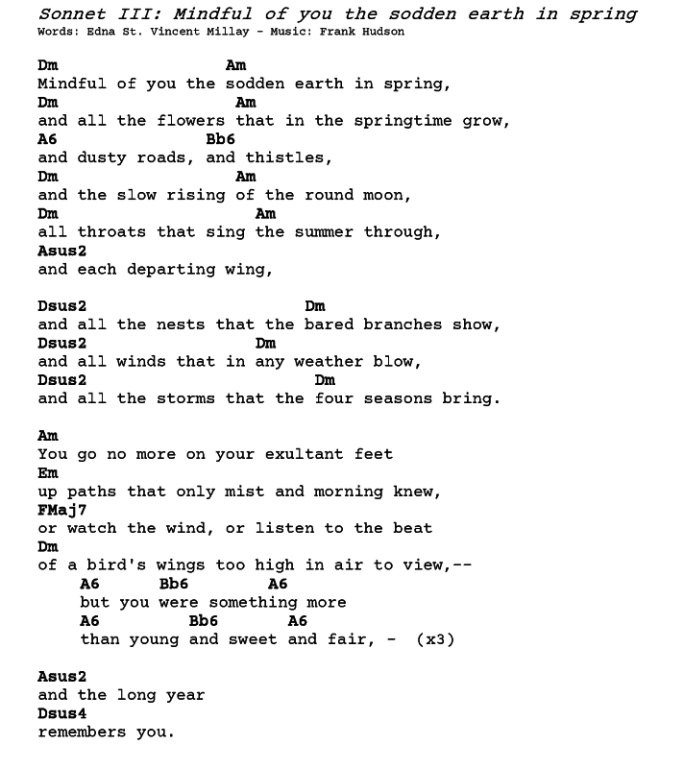
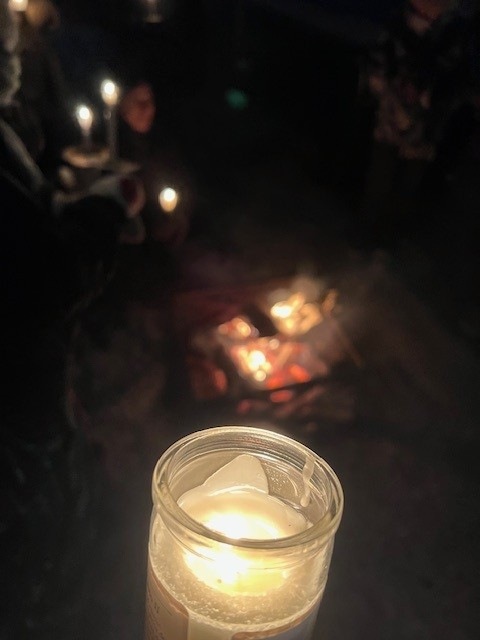


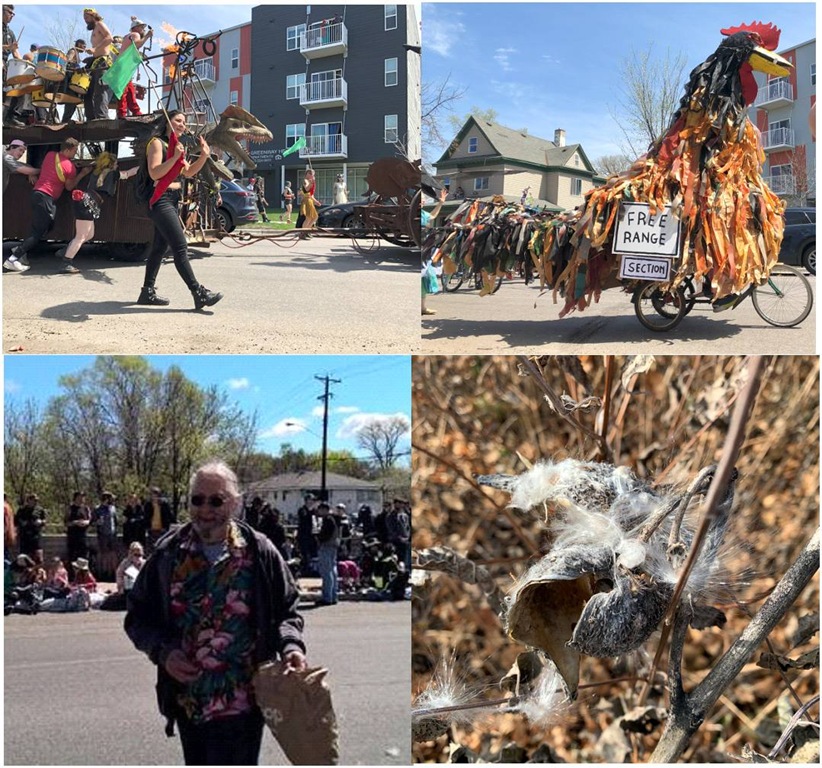


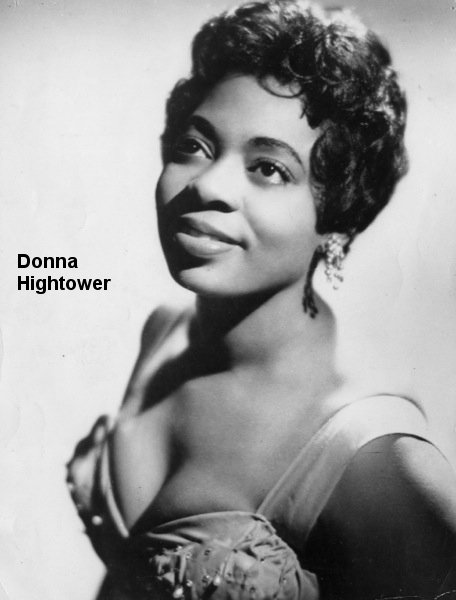
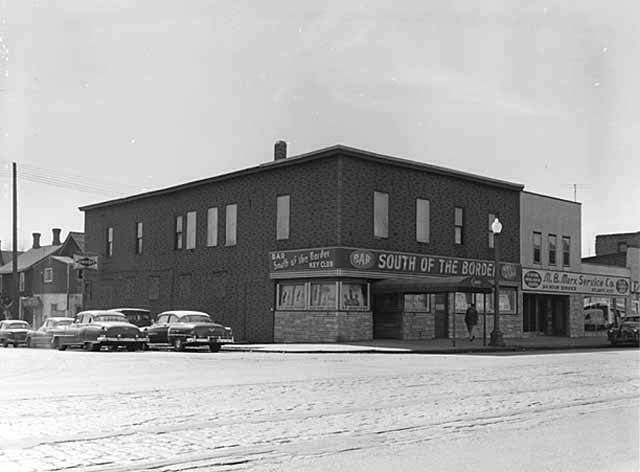


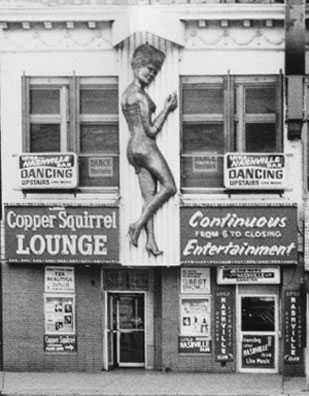


 Frank Hudson