So here it is, our 800th officially released audio piece from the Parlando Project. Perhaps it’s not representative: it’s not by a dead poet, and unlike almost everything else we do it may not have been written for the page without thought of it being sung. “The Fade” was written and sung by the leading alternate voice of the Project and all-around inspiration Dave Moore. Dave and I go back to when we were leaving our teenage years. I met him then when he read two pieces in a church: one was his own poem, a cheeky number that mixed eros and agape, and the other was a reading (as if it was page poetry) of Bob Dylan’s “With God on Our Side.” A decade later we started doing music together as the LYL Band, and some of what we were doing has become melded into what became the Parlando Project.
So, as I think again — is there any way to have a representative Parlando Project piece? Maybe not, and if so, by design. Variety and seeking something unexpected are founding goals.
Dave’s writing here, and our common efforts in making it the song you can hear below, strikes me as something too little done. Rock, whether it’s Rock’n’Roll, punk-rock, Alt-Rock, Indie-Rock, has tended to speak from a youthful perspective. Even the Classic-Rock acts that are still treading the boards at Dave’s or my age hew to topics that would interest those younger than they are. “The Fade” is far from those common tropes: it’s about the diminishment of aging and particularly about the fogging and loss of memory.
Early this morning I watched an old documentary, a British South Bank Show done in the mid-1980s about the Velvet Underground, a band that was more than a decade defunct at that point, but all the principals (several dead now) were alive then, only entering into middle-age in the 80s, and of a mind to answer questions about the band’s influential work. The topic most covered as they spoke about their former joint project was what made the songs the original lineup put out of lasting importance when the idea of 20-year-old Rock songs having currency seemed novel.
Chief songwriter Lou Reed had it that he wrote about the things he saw around him rather than using the regular subjects of pop songs. True enough, but he chose subjects decidedly less ordinary in song in the times when he wrote them. He specifically wrote about things that frightened people enough that they left them out of the songs they wished to listen to: drug dependency, gay and gender issues, less-vanilla sexuality, and mental variations. And then several others, including the band’s PhD, Sterling Morrison, took pains to note that Reed presented those stories without editorial comment or stance, without sentimentality.
I’ll note now, that later in his career, past the times of that now 40-year-old documentary, Reed wrote one of the few Rock albums about aging and its disabilities: Magic and Loss. It still stands pretty much alone. It’s also unlikely that even the adventurous readers and listeners that this Project has have heard it.
Dave and I recorded “The Fade” this past spring. When I talked to Dave this morning we exchanged info on folks we know, folks our age or even a bit younger, who are moving into assisted living or who are suffering from dementia. I don’t know, there are probably a few songs about how sad Alzheimer’s and the like are, probably some songs that try to mitigate it with a chorus that mixes in the memories the sufferer no longer maintains. Dave’s song isn’t like those songs — if they exist — and I’m glad I helped make his song exist, and that I get to share it with you today.
This is the sheet Dave handed me with brief scribbled chord notes on the day we recorded this. As you listen to the performance you may see that he did a masterful job of revising his typed words. I think the song gained power from the verses he left out.
.
You can hear that recording of “The Fade” with the audio player below. I think Dave gets a bit of the VU-ara John Cale sound with the keyboards in it. I’m using feedback in it too, but not quite as the Velvet’s did. What? No player visible? No, you didn’t forget it along with where your keys are or what you came into the room for, it’s just not shown in some ways of reading this blog. You can use this highlighted link as an alternative.
I could, maybe should, write about a number of things this weekend. The end of May brings Memorial Day, one of the United States’ two holidays celebrating those who served in the armed forces, the spring version being more focused on those who died in wartime duty. It also brings to mind the anniversary of the drawn-out, agonizing death of George Floyd a few blocks from where I’m writing this. I think of that little group of South Minneapolis people, ordinary citizens of my neighborhood, who witnessed it, who pleaded with the police officers to cease their officiousness. I think of the new policemen in that squad, earnestly following the lead of their trainer who’d arrived, the man with his knee on Floyd’s neck. Duty.
Duty is a small word, but one that we have two holidays to honor. We generally respect it, and in small and large ways we carry duties through our days. My wife does in her workdays what I did for a couple of decades, taking on the duty of helping the sick. In between workdays she takes on the obligations to her mother suffering from increasing Alzheimer’s in a care home.
I’ve written about all those things here. I could write at length about them here tonight. In doing so I could say I am following my obligations to humanity, to those who suffer, to those who’ve lost. We use poetry often to decorate those tasks, more often perhaps than we use the more capricious song to do so. Thus I could write, and you might view it as your duty to read that.
Instead, I’ve been filled this month with the realization that this is my teenager’s last summer as a teenager. They’ve concluded an indifferent year of post-secondary education, and now have taken their first job. As to next Fall plans: they are thinking of stopping with school, saving money from the job, and moving out. Studying seems like a duty — their work-a-day job does too, but maybe it’s a more novel duty, or at least one that has a biweekly award of a paycheck.
Music is a key to memory, particularly emotional memory to me. During these feelings this May, I came upon a performance of a song by Jonathan Richman. Richman has an utterly strange career. He’s one of those you might see called a cult artist, which means those who “get” him sometimes puzzle those who don’t, but also it means that many who read this won’t know his work at all. As a teenager Richman became something of a Velvet Underground* superfan, and his early work shows direct influence of Lou Reed’s songwriting. In the early 70s he and his band The Modern Lovers recorded more than a dozen tunes that prefigured a lot of what was to come in Punk and Indie rock a few years later, but the recordings were not issued when they were made. Then in 1976, when the first stirrings of Punk were drawing attention, they came out along with newer recordings.
Here’s complexity to that odd: the old, early 70s songs and recordings were unvarnished, and they followed Reed’s model of being emotionally honest, but their timbres and approach would be in tune with some of the vanguard of what was called Punk at that time. The newer songs were even more childlike, though no longer being written by a teenager or recent teenage time-emigrant, and the sonics were quieter, even more stripped back. As his career continued, Richman generally proceeded down that path, writing ever more childlike songs focused on everyday wonderment. If his early singing called on some of Lou Reed’s snarl and assertion, the later work took on elements of 50s Do-Wop teenage innocent sweetness.** Richman in a sense started out before his time, had a recording career launch when his early work seemed of the moment, and then continued until the present day as a singer-songwriter presenting the impression of coming from a place that was younger and younger.
The song I heard while thinking of my teenager at the borderline, “That Summer Feeling,” was sung by a 40 something Richman a couple of decades into that career. On Richman’s record the Do-Wop influence is apparent, backing harmonies and call and response from additional voices. Compared to the version you can hear below, there are more verses, more detail of youthful specifics. Blind to the career history I’ve summed up above, you might easily think someone about 19 or 20 recorded it, fresh with passing through that borderland.
Here’s the intuitive choice I made when I decided to quickly work up a cover of “That Summer Feeling:” to record it more in the style of the early 70s The Modern Lovers recordings than the “mature” Jonathan Richman. If I had more time, I would have overdubbed a garage rock guitar solo at the end or maybe some combo rock’n’roll organ as those records sometimes had. Following my taste, I preferred the songs less specific but most summer-set verses.*** This musical change and the way I sang the lyrics also brings out more of the undercurrent in this song, a complexity that a casual listen to a more smoothly produced recording might let one overlook. The singer isn’t just doing a let’s remember our youth story here. He warns in slightly mutating refrains that that youth will haunt you, and then he pleads with the (presumably teenage) listener to not wait until they’re older to, what — it’s not entirely clear — somehow integrate that duty-free time’s outlook fully into oneself or it won’t just haunt you, it’ll taunt you, and finally it will hurt you “the rest of your life.”
Would any kid ever listen to that message? Doubtful. My fatherhood duty knows limits, even counterproductive effects, of advice. Still, I wanted to sing it anyway.
After the jumps of this Memorial Day post, I won’t make the proforma Memorial Day holiday wishes. Some will be decorating graves. Some will be thinking of how life was disregarded. Some are caring for the sick and infirm. Some will be having cookouts or taking a little vacation trip away from work. Black joy, worker’s rest, flopping down in the grass without any duty, playing or listening to music. We honor duty. Let us also honor some respite from it.
Here’s my performance of Richman’s song.
.
*As many writers do, I must reiterate the Eno quote about how only a few thousand bought the first Velvet Underground record — but that everyone who did went out and started a band. Historians have determined that the record actually had decent sales, but Richman is one of the early examples of direct VU influence. The early Modern Lovers band included folks who would go on to being in The Talking Heads and The Cars.
**The small vocal ensemble 1950 style of urban teenage music that got called Do-Wop was often written by teenagers or near teenagers — and like the Punk, Rap or Indie music that followed later, it was inexpensive and approachable to create for the kids who made it. Arch cultural critics and satirists-in-song Lou Reed and Frank Zappa both appreciated it, thought it honest in its innocence. Punk founders Patti Smith and Lenny Kaye met because Smith loved an appreciation of Do-Wop that Kaye had published. I on the other hand have vocal limitations that keep me from indulging in the style.
***I am struck by the specific the song takes in one verse where it goes from singing swimming ponds and cool lawns to a traffic stop. I don’t think Richman meant to make that an existential moment, even if our modern gun-soaked life might make it seem so now.
The Velvet Underground is important to me for two reasons. First, I have a high degree of respect for musical outsiders, those who choose to vary from the expectations for sound. That doesn’t mean I enjoy listening repeatedly to every outsider and experimental musician. I ignore and sample listlessly more of it than most mainstream listeners ever do. And some of it, and the Velvet Underground is one of those “some,” does something for me that other more generally likeable music doesn’t.
The second reason? Despite or because of their musical oddities, they attracted social outsiders. Haynes film reminds us that Cher* was once famously quoted as saying the VU would “replace nothing except suicide.” That was clearly understood as a slam on their dark outlook. It’s also commendably true in another way — that for some people this band of strangeness comforted some who felt unacceptably strange.
It’s OK, really, if you don’t like the Velvet Underground’s music. But I hold that you should still be grateful they existed. So how about Haynes film revisiting their formation and career? Grateful there too, though I want to second-guess Haynes more than most reviewers of this documentary. Before I do that, let me say that I respect the effort to put this together. Just looking at the long, long scroll of rights holders that needed to be placated and credited tells you that this was no easy thing to bring off.
Throughout the film I was thinking “they aren’t putting enough context here for those not already knowledgeable about this scene to understand who and what is happening.” However, reviewers have been almost universally kind, and this section of mid-20th-century NYC history can’t be all that widely known in detail to reviewers in 2021. This indicates that enough must come through for some. Perhaps I underestimate the value of samples of things to satisfy or attract interest, and overestimate the missing details that I personally find interesting or telling.
Am I being fair? The film does supply enough detail to see how the Mekas school of art film and the Fluxus associated music scene became the soil in which the band took root. And while it might not be surprising given that this is a film made by a filmmaker, I had not seen any other account that made an effort to tie those film and music threads together. So, props to that effort, but watching the documentary I wondered how many fresh eyes would be able to understand the variety of things the Jonas Mekas DIY film circle was experimenting with. Early in the film I watched a Stan Brakhage clip appearing on the left split screen, an experiment in drawing with light by scratching directly on the film stock. Annoying pedant that I am, I pointed at the screen and enthusiastically shouted out that that was Brakhage’s work. I stifled myself quickly, but the film didn’t credit it on screen at the time. I could surmise that not identifying it was part of the effect that Haynes wished to convey, that a sense of “what can you do that is novel and different” was ubiquitous then and there.
One hole I noted was any contextualization of how other bands and musicians beyond La Monte Young and John Cage influenced the VU sound and the courage of its exploration. R&B influences appear visually in the film, and early on some doo wop stunningly segues** into what I think was a La Monte Young piece, and I thought this side of VU’s influences would be demonstrated, but that brilliant moment was not repeated or expanded on. As a composer, half-baked musician, and writer I would have gone there, but I’m not Haynes, and he’s the filmmaker who made the film.
In general, other possible musical connections were lightly inferred. Perhaps this area is rock fan trivia? There was a passing mention of how Bob Dylan had opened up songwriting. In one film clip Allen Ginsburg is announcing an event which will include VU, other parts of the Warhol scene, and the Fugs, and Ginsburg nods to Fugs’ principal Ed Sanders in the room. The VU and the Fugs*** seem to have formed close to the same time, 1964, and despite The Fugs not having a John Cale figure, both were groups of Greenwich Village poets forming a band whose material will be unafraid to shock general society. I’ve never found any mention of either band knowing of each other, yet in the small world of NYC in the mid 60 they had to. We do know the Mothers of Invention and VU knew of each other — and in summary seemed to hate each other, perhaps because these two groups clearly competed in format to the degree that any so unique conceptions could compete. Given that the Mothers were West Coast until a summer-long stint in the Village in 1967, it’s less likely they knew of each other at their formation in 64-65 however. Here’s a link to a short run-down of those frictions.
Moving to my poetry side, there was also no mention made of the beatnik jazz-accompanied poetry which must have also fed into this band’s conception, even though Lou Reed’s college teacher Delmore Schwartz’s dark but unaccompanied poetry is covered
The included footage of the ‘66-‘67 Exploding Plastic Inevitable shows looks fascinating. In the interviews regarding the oft-told tales of the VU’s 1966 west coast tour EPI performer Mary Woronov mentions that west coast light shows were not in the same class. Yet another report from eye-witnesses says that the EPI shows were haphazard with inexperienced hangers-on and even audience members running the lights. This might have been a night-by-night difference over the run of the EPI. Or it could just be home team cheerleading by the VU/Warhol entourage. The transience of the multimedia lightshow/music events of this era makes this so hard to evaluate, and that era of improvisational multimedia collage surrounding live music has largely left our culture. In its place we have giant video screens so that we can assay the length of the lead singer’s nose hairs at concerts. It’s likely no one cares anymore who was first or better in this field, alas.****
One fleeting remark made when discussing how the West Coast Scene and the Velvets contrasted was an observation that there was an overlap in fans of VU and the Grateful Dead. I’m reminded of what I wrote here in 2016 about how it was too easy to paint all the West Coast bands as dilettante flower power Pollyannas and the VU as dark, hardened, and street-tough:
“Each band is fronted by a guitarist who has a problem with heroin. The bass player (and sometimes the keyboard player) is really an avant-garde classical composer. They both start out playing to dancers swimming in colored lights at events heavily associated with and promoted by a non-musician guru. Both bands had trouble selling records, at least at first, but those who did buy the records started forming bands beloved by cliques of college students. Both bands are known for an un-compromising poet maudit stance. Of course, one band hangs out with gangsters leading to a well-publicized incident of an audience member getting killed at a show. One wanted to call an album “Skull F**k.” One band put a drug kingpin in charge of its sound system. The other band hung out a lot with artists in lofts and had girl-germs for letting a woman be their drummer.”
Reviewers made much of the film breaking the talking heads format for music documentaries. Now having seen it, this point was oversold in reviews and publicity. Haynes had an authenticity policy of only using “eyewitnesses” who actually saw the band and its circle for his contemporary interviews. This only reduces the candidates, and those used, are used rather conventionally but effectively. I do hope that some of the interview material only excerpted in the movie is made available as a scholarly resource.
The subject of Lou Reed’s mercurial personality gets some play — an inescapable choice. Haynes shows us the VU was a combination of ingredients, but the idea that Reed’s is the largest contribution is hard to argue with. It was good to see Cale given his due here. Percussionist Tucker and guitarist Morrison’s contributions are mentioned but these mentions are comparatively brief. For example, the sole example of Tucker’s contribution to the band’s sound concerns one short (if endearing) featured vocal. If percussion is important to you, this hour-long video is an extraordinarily good dissection and demonstration of Moe Tucker’s musical contribution to the VU sound. On the other hand, I think Morrison’s musical contributions get less than a minute in the film. Was Sterling Morrison just that unimportant to the band? Has anyone who saw the band or witnessed the recordings ever outlined his contributions to the VU unconventional two-guitar attack? Is there just no one to speak for him on musical matters, and so Haynes had nothing to leave out?
Nico was always peripheral to the band, though interesting in her own right. In her case, I think Haynes does justice to the connection.
Back to Reed. The film hints at a more out and homosexual Sixties Reed than some other accounts I’ve read. The Rashomon aspect of who’s talking shouldn’t be surprising. Nods to transgressive gayness and gayness’ connection with the demi-monde (which was common linkage then, in gay and homophobic worlds both) was part of the band’s appeal without a doubt. Haynes presents this visually in a matter of fact way. This became culturally important, as important as the music — and in an odd way helped us into a world where gayness is no longer inevitably connected with a thoroughgoing outsiderdom.
The film once briefly nods to elements of misogyny in the scene. Some documentaries would never have made even that brief mention. My wife noticed this too and added that both the women and the musicians appeared to be treated as merely decorative by the Warhol Factory. In this matter, the scene too often, too easily followed mainstream culture and even the ironic elements of camp are subject to the mask becoming the face. In its defense, we could enter the question if it was less patriarchal, or no worse, than the general Sixties popular music scene.
The loud, aggro VU is fine, but then there’s this side. Here, you can hear the entirety of “Candy Says” referenced below. Doug Yule’s disarming vocal and Reed’s songwriting are superb here.
.
All the film’s en passant moves may still capture. Something informative and entertaining did accumulate over the course of the film’s two hours, but the emotional impact was less than I expected. We are not compelled to care about the human beings on the screen even as we consider them for their exceptional choices. Haynes respects and expects the audience to bring that element themselves. A personal emotional exception within the body of the film: 15 seconds of “Candy Says” plays to help introduce us to John Cale’s controversial successor in the group, Doug Yule, who sang this Lou Reed song on record. Musically, there’s nothing avant garde about the song, but it’s emotionally gripping to me, more so now. The documentary’s final sequences help summarize things a little. If an audience sticks it out, and brings their own empathy and intelligence to it, my summary is that the film could encourage some people today who wish to do something off-the-beaten path artistically; and Haynes’ film has rewards for those who are established fans of VU, whatever size that grouping is today.***** Should I be concerned about the size of the audience? After all, there are still Velvet Underground performances that can all but clear a room in minutes. The principal members of the Velvet Underground consciously chose that path, deciding to choose an audience who would stay for contrasts and experiments, an audience that in turn found a community of understanding when some of those and their experiments weren’t welcomed.
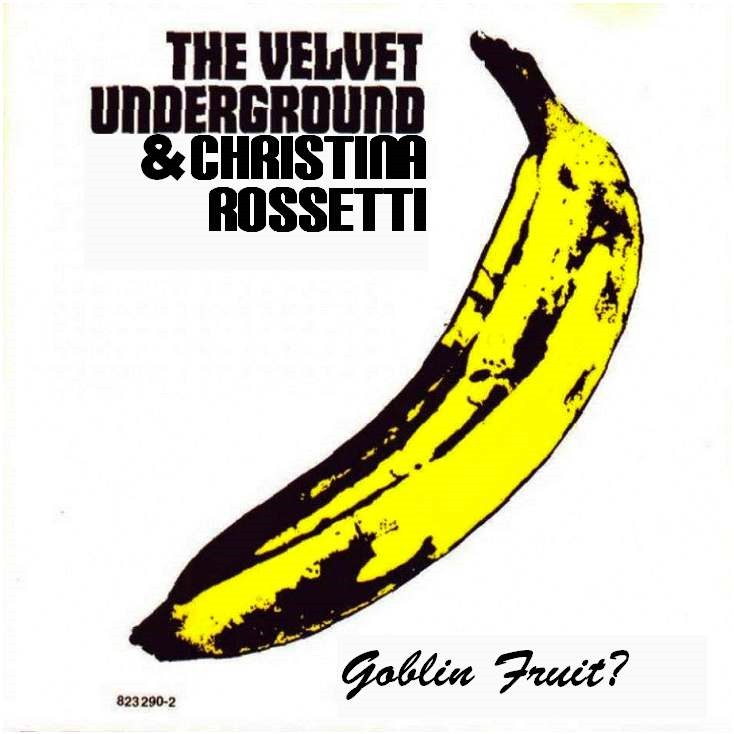
After 2,000 words in this review I’m hesitant to ask any more of your attention today, but here’s a short piece, “Up-Hill” I did several years ago where I combined Christina Rossetti’s Christian allegory with some VU inspired music. Player below for some, highlighted hyperlink for those that won’t see the player.
.
*It’s such a slick quote that I wondered if it was actually written by a publicist to be attributed to her. This was once a common tactic, for ghost-written quotes to be given to nightlife and gossip columnists as the clever things that celebrities were to have said in order to keep the pot of notoriety boiling for their charges.
**This was also something integral to Frank Zappa’s music. Late 60s listeners thought Zappa was just taking the piss out of an outdated pop music format when he’d do R&B vocal harmony, but he would tell anyone who asked that he loved that music and saw it as a valid sound and compositional color. The additional truth that satire was involved was incidental. There was satire involved when Zappa referenced Stravinsky, Berg, and Webern too.
***The definitive third-party consideration of The Fugs remains unwritten and unfilmed. It’s often occurred to me that The Fugs formation was as much or more than the Velvets, or The Stooges, or the Ramones, or the Sex Pistols the genesis moment of Indie Rock, and for punk outrage they easily outranked that list of founders even if the quality of their musical achievement was more inconsistent.
*****I suspect that within later generations now, there may be another grouping unfamiliar with the Velvet Underground, for whom the old joke can be repurposed “You mean, Lou Reed was in a band?”
I’m working on some new pieces this week, and after all the loud and sometimes abrasive sounds I’ve been exploring this fall, I think some of then verge on pretty — well, pretty as anything can be with my voice. But before we leave abrasive….
I’m looking forward to Todd Haynes film about the beginnings of the Velvet Underground band that is released tomorrow, so I thought I’d put a couple of links to things I’ve done directly referencing that pioneering experimental rock band. Not everyone will be as looking forward to that as I am. I fully understand that. But in case anyone else out there is, here’s my “awaiting” post tonight.
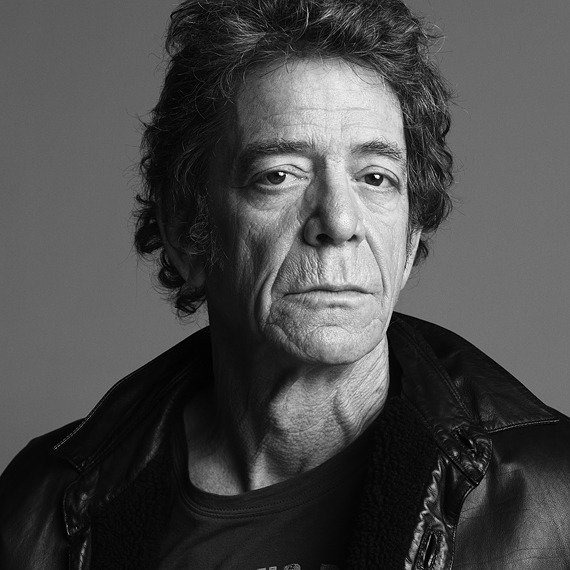
The first piece is one of the earliest pieces I presented here, first posted almost exactly five years ago, called “The Day Lou Reed Died.” It’s my own elegy to one of the Velvet Underground principals and it’s principles too. I wrote it after attending a wedding reception filled with kids and Halloween costumes, celebrating the marriage of two brides, held just as the title says, on the day of Reed’s death.
And while it’s still autumn, let’s prepare for winter with a cover I did of a Nico song written by another member of the Velvet Underground, John Cale. To paraphrase Tina Turner (who was not a member of the VU), “we’re going to take the beginning of this song and do it nice’n’easy, but then we are going to finish it nice’n’rough.”
The LYL Band’s cover of “Winter Song” from Nico’s Chelsea Girl LP
.
Perhaps I should have included a note that no guitars were harmed in the creation of this piece at the end of the video.
Back with new stuff here soon. Acoustic guitars. Quieter.
Here’s a tribute to a couple of other American originals who are inspirational to this Project.
“Side-Walks” is the second piece here using words taken from a Laurie Anderson interview. In the earlier piece, Anderson was talking about how the sky of her Midwestern childhood taught her to realize that she was “nothing and everything.” Today’s words are quoted from a 2015 interview where she’s talking again about childhood, but particularly her childhood as she can revisit it in memory.
The phenomenon she talks about is extraordinarily common, while still extraordinary: the intense memory of childhood, rich enough that one feels they are experiencing it in fully dimensional, traversable, 3D space, with access to senses other than vision (such as smell and touch).
If you don’t feel you have this ability, Anderson suggests a method to engender it in her story. Although, I took this account of hers from a written interview, anyone familiar with Anderson’s speaking style from her work, may hear it in her performance voice, that slow, measured coo that never rises in intensity or volume, and varies only in a slight, auditory smile that can indicate any number of stances without determining one.
As I mentioned last time I used Laurie Anderson words, her performance voice is hypnotic, and influenced as I am, I can sort-of imitate it, but choose not to. But as I listened to this piece over and over as part of the mixing process, I began to realize that I was somewhat imitating the performance style of another influence of mine, Ken Nordine.
At some point, in another post, I’ll probably need to discuss Ken Nordine at some length, but hearing that echo, I said to myself “I bet no one has ever connected Laurie Anderson and Ken Nordine. Wait until I tell everyone about how these two unique American artists have these striking similarities!”
Nordine and Anderson. What if I’m not a spoken-word artist, but a listening-word artist?
Because I write, my mind immediately starts writing, all in my head, all the ways their work connects. Both are native Midwesterners, who can carry that mindset to any cosmopolitan location. Both use that very even speaking style in performance, with Nordine allowing just slightly broader bemusement to sneak into his affect for contrast to Anderson’s often present, but more muted, smile. Both use music in combination with their hypnotic words, but both will choose music that is not calm, conventional “music beds.” Both love the sideways movement from one topic to another that seems alternately random and deeply meaningful, and both enjoy the shaggy-dog story conclusion that doesn’t overdetermine which.
I pop Laurie Anderson and Ken Nordine into a search engine, and find…
Here’s a single dip into the 50 years or so of Ken Nordine’s audio pieces
Well then, let’s go back to Anderson’s story of how she can revisit a vivid childhood time, as many of us can. Her story is vivid too, even if she’s telling it off-the-cuff in an interview, not in performance, but what I found most striking were her conclusions. A couple of centuries ago, William Wordsworth wrote “Intimations of Immortality from Memories of Early Childhood,” the poem that ends with the line “Thoughts…too deep for tears.” Do we think that means, too sad for tears—and, if so, what does that mean? Or is it, as Wordsworth had it in his ode, the “meanest flower”—or as Ken Nordine and Laurie Anderson speak it, is it that smile, however broad, that is deeper?
The player for my performance of this brief story Laurie Anderson told is just below.
Last post I compared late 19th Century cultural hipsters with early 21st Century urban cultural revivalists. Did modern natural-fiber clad, skin-inked and perforated young people study up on William Morris’ Arts & Crafts movement and visit museums to absorb the Pre-Raphaelites? Some perhaps, not all. And the same can be said for what is carried onward from punks, hip-hop kids, hippies, beatniks, and so on. I’m too old, and too little a sociologist to answer this definitively.
I can say that when I tried to discover what kind of music I wanted to make in the 1970s I copied imperfectly many musicians from the previous decades as well as my contemporaries working down the river in New York City. And those NYC contemporaries? They too were looking backward to move forward. What had been overlooked? What had gone out of fashion for no good reason? What had been uncompleted? So, in listening to them, I was listening to their understanding and misunderstandings of the past too.
One of our principles with the Parlando Project is “Other People’s Stories.” Part of the above is “my story”—but my musical story is really made up of other people’s stories.
Tracing the path of influence is often hard to do. Today’s piece “Up-Hill” is an example. The words were written by Christina Rossetti, that sister of the Pre-Raphaelite Brotherhood. Obviously, she’s familiar with the Pre-Raphaelites and their circle—but she’s also deeply interested in a Christian religious revival, and that too gets reflected in “Up-Hill.” Would she have known Anna Coghill’s poem that was set as the hymn “Work for the Night is Coming?” That’s unknown to me, but “Up-Hill” and “Work for the Night is Coming” are both poems understood in context as being Christian devotional, while containing not a single specific utterance about a deity, salvation, or an afterlife. With revivals, context changes things.
Christina Rossetti thinking about an up-hill journey?
And here’s another way that influence is hard to trace: it becomes unconscious. As I was writing the music for “Up-Hill” I was mostly interested in varying my customary harmonic cadences while keeping it to just two or three chords, a short number that often works best for performance with the LYL Band. And “Up-Hill” is, after all, a work of beautiful simplicity, saying something profound without pretentious elaboration. I settled on a simple I V IV I progression, and tried it with the band last month, but my vocal wasn’t working. Trying again this month, the unconscious struck.
“Shall I meet other Wayfarers at night?” The Velvet Underground certainly think so.
I didn’t realize until I was working out the rhythm track that I was falling into a Velvet Underground groove, like the one they used in “I’m Waiting for my Man,” a tune that is also understood as devotional in context—though to drugs, not a deity. Both songs feature a journey to a destination (up-hill or up-town), both engage in conversation along the way. Was this subconscious choice a sly comment on Christina’s brother Dante Rossetti’s addictions? A comparison of recovery to salvation, or of addiction to salvation? No, the groove was just working, and it helped me get a better vocal down. If I understood anything about what I was choosing while doing, it was that I was linking sub-cultures and following the near invisible web connecting Other People’s Stories.
So what would that sound like? Use the player below to find out.
Same as always, the player should appear below.to hear the performance of “Up-Hill.” And keep sharing the links, subscribing, and telling folks about the Parlando Project.
Alas, it’s been a busy week or so with family reasons, and I’ve had to leave Walt Whitman from the last post with his hymn to revolutionary violence hanging out there in one channel.
If you’ve heard the last post’s audio piece, The Blood Of Strangers, recall in that other channel was the tender and exact testimony of someone caught up in gunfire that believes it’s all for a cause. Whitman didn’t write that account, but he could and would speak like that as well. This is Whitman’s great value: he really wanted to write the all of the world. That means foolishness, evil, selfishness, loss as well as tenderness, steadfastness, love—and to write too of all those middle things that are neither: lust, mystery, liberty.
Whitman’s use of language is also all over the place. Every reader will find some of Whitman unbearable (as I find his France section I used in The Blood of Strangers) and some sublime.
“only a man with the most extraordinary feel for language, or none” (could write as Whitman does.)
The stance that Whitman takes of someone observing the world in its totality, not coldly, but with frank, almost corny at times, emotion, is one that continues to bear poetic fruits. I don’t know that Lou Reed ever pointed to Whitman, but there are times he echoes that outlook powerfully.
Earlier this month, as I recorded some new material, I found myself performing Mark Kozelek’s “The Greatest Conversation in the History of the Universe” in its rambling entirety. I like doing things like this. “The Greatest Conversation” is a very particular individual experience, and that work’s catalog of events and opinions I only halfway share—and that’s what I like. Mark Kozelek can embody Mark Kozelek, and it’s not exactly effortless, for being ourselves is not effortless; but none-the-less, Mark probably feels a familiarity as he finds those thoughts in himself. I, on the other hand, must figure those particulars out, find some common ground with them, translate them into performance. Kozelek’s work in “The Greatest Conversation,” consciously or not, is also Whitmanesque. Essentially his tale of New York City is as close to Whitman’s experience of New York City in the 19th Century as it is to my experience of New York City in the 20th century. Which is to say: different and the same. As I recorded and spoke as Kozelek, I felt Whitmanesque.
Three blades. Of grass?
Because I do not know yet how to go about getting clearance for sharing work still in copyright to use with the Parlando project, you will not hear the LYL Band’s version of “The Greatest Conversation” today. However, you can hear the original Sun Kil Moon and Jesu version here. NSFW warning: “The Greatest Conversation” contains F bombs and a short account of a sexual encounter.
Walt Whitman could have easily embodied Kozelek, he could have embodied Lou Reed or Laurie Anderson too. He would have tried to embody Muhammad Ali as well. This piece uses one of the best-known sections of Leaves of Grass. In it, Whitman stakes his claim to a universality, a universality so broad it transcends death. The music is from the LYL Band again. To hear, click on the gadget you will see just below.
Unlike jokes, you can explain a poem without killing it. Explanations may wound or amputate the poem a bit, but sometimes the dissection reveals things you couldn’t see before. My rule here on the Parlando project is to generally not explain the poem or the music, to let you experience it as it unfolds. But I like to break rules, so today I break this one. If you’d like to hear the The Day Lou Reed Died before the explanation, go ahead and click the gadget you’ll see at the end of this and then come back to this.
I started writing The Day Lou Reed Died on that day, exactly three years ago, but it took me about a month to come up with version you hear here. I did the music shortly after finishing the words, playing all the parts myself.
The poem takes a rhetorical stance of negation. It tells you what it thinks using the dark illumination of telling you what it doesn’t think. The first part parodies Frank O’Hara wonderful poem on Billie Holiday’s death, which is full of details of life in New York City in the high 1950’s. In that same section I remind the listener that Lou Reed was part and not part of that time, a man (like myself) a generation younger than O’Hara. Like O’Hara apparently, it was a surprise and not a surprise for me to hear of Reed’s death while planning for a social occasion. Holiday, like Reed, was known to be sick, but there was no public death watch.
The next section is a list, continuing the rhetorical negation. I start right off with saying I’m not thinking of Andy Warhol, whose connection to Lou Reed’s first band, the Velvet Underground, was something of a platinum-blond albatross around its neck. The assumption was that Warhol was the mastermind behind the Velvet Underground, which slighted the real innovators inside the band (Lou Reed and John Cale), and it allowed folks to contextualize the band, as many of Warhol’s pieces were then, as a put-on, a commercial parody of real art. As the list goes on I use the Warholian tactic of linking to a variety of commercial Andies, humorous in their inapplicableness to Lou Reed. I end the list with two unlike entries: the title of a famous avant-garde film and then “androgyny” to turn the incongruity one more time, as we might well associate Lou Reed with either.
The next section “I put on the indie rock station” starts, like the unexpected death announcement, with an actuality of the day I experienced. I expected them to be playing a lot of Lou Reed songs if not a full-fledged format change to all Lou Reed. Instead there was nothing—but so influential was the Velvet Underground to indie-rock, that as each song began I wondered if this was going to be a Lou Reed song or a cover version of one. No one put it better than Brian Eno did when he said:
The first Velvet Underground record sold only a few thousand copies, but everyone who bought a copy started a band.
This section was my way of saying the same thing, while noting that Lou Reed’s death did not get the public attention that David Bowie or Prince’s deaths a few years later did.
And the social event I was preparing for in the first section? The wedding reception for two women who had married that year after same-sex marriage became legal in my state. I try to recount the great sweep of change in my lifetime in this section. The young Lou Reed helped pioneer portrayal of gay, bi and trans people in his songs. The emergence of that portrayal in Reed’s art is a complex subject I’ll largely skip here, as it would take too long. In short, at least at first, Reed associated his gay characters with the demi-monde he sought to portray in other aspects. Like the term demi-monde I just used, this was something of a 19th century, or early 20th century way of looking at things—but I use it because those of Reed’s age (or mine) grew up in a world in which the culture and still living authority figures were from before WWI or its aftermath.
And at this reception, there were many children, grade school age and younger, and to keep them occupied there was a gymnasium dance floor and, a boombox and some rented lights. Their parents were dancing with these children, and as the swirling lights drifted over these single-digit-age dancers my mind recalled the young adult faces attending the Sixties “Exploding Plastic Inevitable” happening that was the public debut of the Velvet Underground, documented on the back cover of their first record. As much as an old man can while dancing, I figured the actuary tables on these children. Some of them may well live into the 22nd century. From a world where homosexuality was unspoken, to a world in which it was roundly denounced, “treated” and imprisoned, to a world where there is a homey, pot-luck Midwestern wedding reception, to a world I will never see or be able to predict almost 90 years from now. This is the arc of our culture and our experience of and as living artists.
1966
2013
The last section has gotten a rise out of a few people. What I wrote is somewhere between subtle and a mistake I fear. Staying with the negative rhetorical tactics I’ve used throughout the poem. I say:
As artists are inessential to art,
Art is inessential to change.
As beauty and justice pass through us,
Let us stop, and feel this
Beating through our veins.
More than one has heard those lines and missed that it’s a two-part equation. Are artists inessential to art? No, in that obviously living artists are necessary to make art. But also, yes, in that we know that art continues to have impact past the lifespan of the artist. Perhaps in that 22nd century someone will still listen to the work of Lou Reed. The second part says this artist/art comparison is equal (“as”) to art is to change. So, to the same degree that living artists are necessary to art, art also creates change; but in the passage of time in which immortality may allow art to outlive artists, that change will become something that is no longer “change” as it becomes part of everyday life.





 Frank Hudson