Langston Hughes Chooses Jazz Poetry: “Jazz Band in a Parisian Cabaret”

I’m going to write about 20th century poet Langston Hughes’ pioneering Jazz poetry. I’m hoping to condense a lot, trying to make this short – but we’ll see. Like someone commencing a Jazz improvisation, I’ve got an idea – and maybe have some sight of where that idea goes – but what happens after that? That spirit, going there with maybe a first idea to see what you can develop from it, is what makes Jazz improvisation possible. Some skilled musicians, able to translate written scores into music straight off the page are terrified of that leap. Perhaps it’s because they know how to play those set-down compositions right that they’re frightened – if I must improvise, they may think, how will I know what’s right?

Langston Hughes published the words I’ll be using today in 1926 – but I must be in a hurry telling today’s story, because I’ll start in 1835, or thereabouts. Wikipedia puts “circa” next to that date, so there aren’t any attested records, but one Mary Sampson Patterson was born a free woman of color at about that date in North Carolina.

At around age 20 her Wikipedia entry says she fled for Ohio due to an attempted enslavement.*  Records again are sketchy, but in Ohio she in some way studied at Oberlin College – as an Afro-American woman, this a double rarity in the first part of the 19th century. Her education trailed off in 1858 when she married Lewis Leary, a fugitive slave also from North Carolina. Leary was not just a fugitive slave, he became part of the Harper’s Ferry Raid, John Brown’s attempt to start a mass slave rebellion by attacking a military armory in Virginia. Brown attempted this with only 22 men, including Leary. Under the element of surprise, Brown’s men took over the lightly guarded armory, but a little over a day later a full military detachment under the command of Robert E. Lee easily defeated the small band. Nearly half of Brown’s raiders died in the subsequent battle – Leary being one of those – and seven more were executed afterward. Lee didn’t need to be any kind of military genius to win this battle, and whatever Brown’s beliefs, he wasn’t a great tactician either. Were they both improvising? I suppose they were.

The widow Mary married another abolitionist, Charles Langston, and they moved to Lawrence Kansas to raise a family. One of their children was Carolina “Carrie” Langston. That Carrie Langston married a James Hughes. The marriage was short-lived, though it produced a son given the first name from the mother’s family and the last name of the father’s: Langston Hughes. That was 1901 or maybe 1902 – accounts differ. Anyway, we’ve reached the 20th century.

Carrie needed to find work, and so the young Langston Hughes was largely raised by his grandmother Mary. So here you go: a Black woman, born around 1835, in the age of slavery, flees slavery’s grasp, gets at least a smattering of higher education, gives that up for a husband, then in turn gives up that husband in the fight against slavery, and in the end gets a chance to nurture a literary innovator. No one composes such a life and scores it out ahead of time.

I believe this is a photograph of the woman born Mary Sampson Patterson. The place I found it credits Yale’s Beinecke Library. Oddly enough I found two other photos claiming to be the Mary Patterson I write of above. Image search says one is another abolitionist woman from the same era. The other, of an older woman, may be Mary Jane Patterson, who was the first Afro-American woman to get a BA, coincidentally in more than the name, from Oberlin.

.

Hughes started writing poetry as a child. His first publication was as a teenage contributor to W.E.B. DuBois’s short-lived kids magazine. In the 1920’s he’s a young member of what gets called “The Harlem Renaissance.” Like his grandmother, he starts to get some higher education, but that effort is thwarted.**  In 1923 he takes a job crewing on an Atlantic ocean merchant steamer.

How far is he planning ahead? Like many an improvisor, Hughes might have an idea in his head, he goes there, and he sees what happens to fit next. In 1924 he jumps ship while it’s in Rotterdam, and makes his way to Paris. One of the things he finds there: other Black folks, some of them playing Jazz, which in Paris has an added layer of exoticism. Here’s a link to a good short account of some of what Langston Hughes found there.

Hughes is an Afro-American. Jazz isn’t exotic to him, but furthermore he’s part of a smaller group (even among Afro-Americans) who are developing a deeper understanding and appreciation of that music.

Given what Jazz is in our current century – a largely select-audience concert art – I feel I have to go on another expository aside now, filled with what I have absorbed from history. In the early 1920s Jazz is viewed as fast-tempo music, suitable for dancing, drinking, and carousing. Intellectually, it’s considered thoughtless, or perhaps comic, a burlesque of real musical structure, timbres, and practice. It’s associated with criminality, intoxication, and sexual promiscuity to the degree that it isn’t just guilty of being an accomplice to vice but the cause of it: just taking in that hopped-up primitive music might drive its listeners to excess and ruin. Believing that I have a wide generational and geographic range within the readers of this Project, rough analogies to the initial cultural assessments of Rock’n’Roll and Hip Hop may be made – but I have no sure metaphor for those of you who grew up in our present century, for whom those later musical movements are history too.

Just like Rock’n’Roll and Hip Hop, Blues and Jazz are Afro-American musical forms, though both soon-enough have non-Black practitioners, and this points out something that the intelligent 1920s Afro-American young man in his 20s, Langston Hughes, is facing when he writes about his experience of Jazz. In a class or vocational level, is he going to be the college-degree middle-class artist or is he going to be a crewman on a steamer or a servant-job worker? Could he be something else beyond that dialectic? Hughes must have thought of all of this even before he took off from that freighter job, and every poem he writes may be notes and directions to himself in these matters.

I don’t know when Hughes first started to write poetry about Blues and Jazz, but some things I’ve read say that his poems about them go back to his high-school poetry – and I also don’t know when he first performed his poetry with Jazz accompaniment, though I think that music is present anyway in the word-music implied in much of his early poetry – but this was unsure ground to stand on in the 1920s.***  The novelty of a genteel high art like literary poetry speaking with appreciation about Jazz had some controversial power, but cultural gatekeepers, including some of the nascent Black critics, considered the music embarrassing and detrimental. Concert music, particularly Afro-American Spirituals, overtly concerned with the Abrahamic Godhead and Biblical stories (even if metaphor for temporal, earthly liberty and respect) were a competing, easily praiseworthy art that elevated the race. Meanwhile, Jazz, including the way it was adopted by some white listeners and practitioners in the 1920s, reeked of black-face minstrel shows, with white folks playing Black folks playing the fool.

So, once more I’ve taken the long way around, but here’s the 22-year-old Langston Hughes, an Afro-American poet and college dropout, so-recently raised by a Black woman who intimately knew the serious costs of seeking freedom and respect, with $9 in capital equity in pocket, who’s jumped ship from his job, and is in Paris, a capital of European Culture – and he finds, of all things, a Jazz band. Here’s a link to the text of his resulting “Jazz Band in a Parisian Cabaret”  if you’d like to read along.

There’d be a temptation in this for a long poem of internal monolog, or some mighty external manifesto. A great poem might be written thusly, stuffed with much of what I’ve taken your time to discuss today. Instead, Hughes wrote this sly, shorter poem, one that assumes you know this history, assumes you know it in the same way that some other poet assumes you know Ovid or the Trojan War – and goddammit, if you are an American you should know it!   Hughes little poem is made up of contrasting voices, a floating democracy of understandings and misunderstandings, breathing together as Jazz plays. The diverse audience calls out, wants this music. Hughes’ voice inside this colloquy, needs it – not just to remind him of home, but to let he see that home and his culture in perspective – and so he joins the chorus of “Play that thing, Jazz band!” European high culture and wealth enjoys it – and it’s a testimony, not a detriment, to its powers that the demi-monde likes it too. Are the American millionaires (perhaps as culturally stunted as modern techbros) slumming for idle amusement, or covert in foreign secrecy allowing a forbidden release? No matter, schoolteachers, the most modest keepers of culture, find it worthwhile. And oh, this statement, summing up something that Hughes can see in this moment: “You know that tune/That laughs and cries at the same time.” Hughes reports a little babel of European languages is going on around this recognition on his part that the Jazz band knows inherently what he knows. Then Hughes’ voice speaks again in his poem, another remarkable realization about Jazz music, “You’ve got seven languages to speak in/and then some.”

This epiphany then: Afro-American art: Jazz, Blues, Hughes’ own poetry, can go over the heads of the domestic gatekeepers or the reactions of racism.

Hughes chooses to close his poem with a three-line final scene, one which a further dramatic program note might illuminate. Someone is picking up someone else for the night. No gender is lined out, and while it could be Hughes, it may also not be, or it may be Hughes constructing a metaphor.****  The person they’re attracted to is said to be from Georgia. I think that’s an important detail, because the poem’s dialog has it “Even  if you do come from Georgia.” Hughes, Northern-raised, recipient of a white-privilege-level high school education and some Ivy League University is portraying this amour as an uneducated rural person. Metaphorically then, Hughes’ concludes that Jazz and Blues folk-music ancestry isn’t important compared to what it does – and by writing Jazz poetry, eventually performing Jazz poetry, that’s the choice the young Langston Hughes makes. When this poem appears in his first poetry collection, that book is going to be titled The Weary Blues – right on the cover he’s making a point of his decision on what’s worthwhile art.
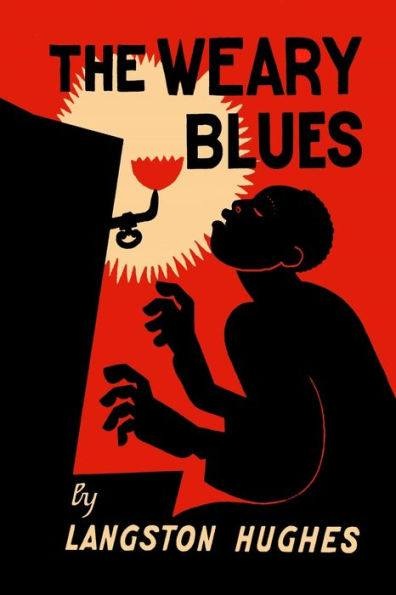
The Weary Blues cover 600

.

Now that I’ve written all that, I’m left with handing off to my musical performance of Langston Hughes’ poem. I felt compelled to “make a Jazz noise here,” as one of my models once titled an album. As a composer I don’t have the theoretical training that most modern Jazz composers do, but I put something together using a characteristic Jazz harmonic cadence. Then the composer called on the inconsistent musician me to realize it and improvise the top line melody. I’ve been practicing my poor chord-comping skills a little bit lately, so I was able to portray the set of written chord changes passably. Spontaneously creating while playing the melodic guitar line was easier for me, as I’ve always been open to improvising that sort of thing. When I start something like that, when I don’t know how to play it exactly – I may have an idea, go there, and see what would fit next. You can hear the result with the audio player gadget below. Is there no visible audio player? No, your ship didn’t leave port without you, it’s just that some ways of reading this blog will suppress showing the gadget, so I offer this highlighted link that will open a new tab with its own audio player.

.

*Putative slaves, property in this debased system, were valuable trade items. One of the most fascinating stories I ran into while researching Emily Dickinson and her family’s relations regarding American slavery was the story of a young, poor, but free-woman of color like Patterson, who was kidnapped to be sold out of state into slavery for a quick profit. Black Amherst residents “stole her back” and were defended in court by Amherst’s most notable lawyer: Emily Dickinson’s father.

**Hughes and his mother were estranged from his father, who had become a company man with the Pullman Company working out of Mexico City. Langston’s father agreed to support his education as long as it was aimed at practical matters such as engineering, not the arts. Langston Hughes agreed to make a go of that, but found he couldn’t leave his literary interests. The train trip to work out this ultimately-to-fail detente produced one of the greatest poems ever written by a teenager.

***Unintendedly, I seem to have stumbled into a theme this fall: literary poetry which has absorbed folk-music forms. Folk revival acoustic-guitar-based music and electric Rock are in my page poetry just as they are more explicitly in my Parlando Project pieces using other people’s words.

****Hughes sexuality is, best as I can determine, hard to determine. Some say he was gay, others assume bi. Some who knew him well paint a somewhat asexual person, or they just say, as I do, that they don’t know.

The Sound of Sense

Today’s piece is kicking off a Summer where I’m going to be doing some different things here than what the Parlando Project usually does. Though the Project’s “usual” varies, the capsule description typically applies: “Combines various words (mostly other people’s literary poetry) with original music in differing styles.” What’s coming this Summer?

I’m not entirely sure yet. There may be more behind-the-scenes stuff, even some “inside baseball” topics about recording, composition, and musical instruments. I think, some personal memoir, a few more peculiar “cover versions” of other folk’s music — we’ll see. I’ve never emphasized those things, so I don’t know how this will work yet. Come September, I intend to return to our regular stuff: writing about my experience of other poets and their poems as the Project moves toward its 10th anniversary. I hope there will still be some things of interest to those who come here for that. For regular readers, particularly those that have followed this Project for a while, I’m hoping you’ll enjoy this Summer’s personal digressions.

I recorded music with Dave Moore last week. Dave and I have known each other since we were teenagers, and we’ve made music as the LYL Band for 45 years. For much of that time Dave was a driving two-handed keyboard player, pounding first an upright piano, then a Farfisa combo organ and electric piano. The Farfisa had grey keys for the bass register, and Dave was often effectively the bass player in the various LYL lineups. Two-handed keyboard players are a tough thing to integrate into the typical Rock band. That kind of playing can fill a lot of the harmonic space — but in some of Rock’s history, guitar voicings are expected to outline the chords. As it turns out, this was OK for me, as I was never a competent conventional rhythm guitar player. Though LYL had an additional guitar player sometimes, I worked out an unconventional role, most often playing single notes and double stops that decorated the chords that Dave laid down, or adding timbral color with guitar effects.

By the turn of the century, we fell into a regular pattern: around once a month we’d set a date. Just before the appointed time, I’d be ready in my studio space and would start to play a little melodic line or spare pattern. Dave would come by a few minutes later, let himself in, and he’d walk up to the keyboard position in the studio space as I continued to play. I’d lean over and reveal the key I was playing in, and off we’d go. I’d have some words ready, a literary poem for Parlando perhaps. Our familiarity bred musical content: I was accustomed to Dave’s keyboard moves, he likely knew mine after all this time too. We’d extemporize a weaved top line. In 2-6 minutes I’d wind it up. We’d say hi to each other. Dave would next hand me a sheet of lyrics. Sometimes with chords, sometimes just some jottings as to predominant ones or key, sometimes just the words. He’d start to play and sing and I’d find my way to play something that I hoped would fit in. That piece would end, and then I’d hand Dave a chord sheet with lyrics to something I had put together. Though sparse, my sheets would be more organized, allotting info for Dave to drive the basic harmonic content for what I would sing and play along with him.

The alteration proceeded as such from there.* After about an hour we’d take a break, talk a bit, and then we’d pick up the rotation for another hour. There would sometimes be partial takes, even (rarely) a “let’s play through it again” request. There’d be short delays as we shuffled through papers, or switched instruments or keyboard sounds, but there wasn’t much deliberation.

What did the recordings reveal afterward? Some trainwrecks certainly. Some searches for inspiration that snoozed off. Particularly in my case, a lot of poor attempts at singing. None-the-less, there’d also be some stuff I’d think worth working with. You’ve heard some of those spontaneous live-in-the-studio takes here.

As it happens, other than their being two alternating songwriters, this is close to how Bob Dylan worked in the studio throughout much of his career — though he worked with trained studio musicians for the most part — skilled folks who could bring a lot more facility that Dave or I can supply.**

Why’d Dylan do that? Well, I’ll have to ask him, though somehow, I haven’t had the chance. My guess is that when it did work, a real sense of something happening in the room among a group of people was transmitted. An exploration. An edge of the seat, this hasn’t yet been formed, a how will it turn out feeling the listener can share.***

Let me repeat myself for necessary clarity: my skillset as a musical instrument operator is such that I think that it doesn’t fulfill the job description of a musician. I won’t impose a summary on Dave, but I think he’d be unlikely to claim high-level musical skills. I do call myself a composer, and Dave has started to call me a producer. I wish I had more skills, but I work artistically with the ideas and actualities I have.

New Studio Space MIDI keyboard

One thing was different last week. For nearly 20 years Dave usually played an older non-MIDI keyboard at my studio space. I may write more about the context later, but I’m thinking it’s time to move to MIDI. Dave has no experience with MIDI and computer instruments, so this will be a journey. I was able to find a good open-box example of this affordable, semi-weighted MIDI keyboards with aftertouch.

.

So, last week, after decades of this, when Dave and I met, I was in progress, playing a guitar riff, and he, on arrival, began playing electric piano. I had set out a drum loop and had a bass track running that hung around the key center. The piece I read as I played my electric guitar was a sonnet, a recent one in my sonnet-series about Alzheimer’s disease and a care-home for those suffering from it — and how we, outside the disease, interact with those within it. “The Sound of Sense”  doesn’t lie: Robert Frost actually did think there was a basic undercurrent in how poetry works — that it’s like how we hear others speaking just out of earshot.

Dave’s not Bill Evans or McCoy Tyner. I’m not John Coltrane or Mike Bloomfield. Some people say I sing like Bob Dylan, but I think on a good day I might sound something like Bob on a bad day. Here’s something I’ve been thinking lately, as successful music gets more produced and marketed from the moment of conception on: it’s still good to have some notes made that don’t know what the note to follow will be. If that next note is unexpected, even “off,” — well that’s better than always knowing what the next note is. And that latest artistic worry: Artificial Intelligence and LLMs? They’re programmed to work-to-rule, creating statistically what you’d expect next.

Two old guys playing live in the studio together. I perform a sonnet I recently wrote that Dave hasn’t heard. He and I weave together in a loose, homespun warp and woof, and unlike a lot of poets reading to music, I spend a minute playing electric guitar at the end, trying to not play the next note that you’d expect. You can hear that performance with the audio player below. No player? You aren’t out of AI credits or something — this highlighted link will open a new tab with its own audio player.

I hope we’re going to have an interesting summer.

..

*When other musicians played with Dave and I, I tried to continue that strict arbitrary rotation — everyone got to start a piece in turn.

**A few years back a huge box-set including alternate partial and unsuitable takes from Dylan’s classic Sixties period was issued. Fascinating, listening to and hearing the outright failures or “just not it” attempts. Given what I know those musicians involved could  do, knowing those failures keep me from utter despair when I listen to a busted LYL take uttered from my limited skill-set.

***Some classic Jazz recordings of the LP era were done this way, though often with a substantial shared mental “book” of structures and cadences for the skilled musicians to rely on. It may be one of those shared illusions, as there’s no strictly technical reason that Kind of Blue  or A Love Supreme  couldn’t have been recorded as most modern pop music is recorded: many instrumental tracks played separately and laid behind featured top-line tracks constructed of many passes collaged together. Those old Jazz records feel like the musicians are breathing together in the room to me, in my mind’s eye I can see them glance at each other — but we can be fooled.

Sonny Rollins, The Bridge, 1959

I’ve got reasons for kicking off Black History Month a few days early: my February is going to be appointment-filled, something that’s likely to reduce new work for this project, and I want to participate in this observance of American history.

Why was I so determined to do this? Well, note this project’s subtitle: “Where Music and Words Meet.” I’m an American composer, and American music is disproportionally Afro-American music. Yeah, it’s a big country, and many musicians with heritages from every continent*  have contributed, but if you compose or play American music, a lot of the notes are Black. So let’s get to today’s piece through three short, linked, tales.

The First Story:

Who’s this Sonny Rollins, and what bridge is he selling us back in the Fifties of all decades? It’s easy writing about poetry as I do here most often, to get used to a constrained fame; but I suspect more of the general Internet audience will know Emily Dickinson, William Butler Yeats, or T. S. Eliot than know this man’s name and work. Mid 20th Century Americans, most often Black Americans, made a consolidated point of becoming masters of improvisation on the saxophone. Afterwards artistic accountants rank art and artists — and even if you think that’s wrong-headed, I’ll cite those who expend sincere effort in doing that and say that lists of great improvising saxophone players likely include Sonny Rollins.

But, just saying Rollins was good at it, a skilled musician, reduces him. For one thing, he had a dedication to the art of his craft, a need to expand the expression. So much so he famously spent a couple of years or so just dropping out of what was then still a viable commercial niche of jazz gigs and recording when he was considered to be one of the best and brightest on his instrument. To do what? To get better.

Insiders later learned some particulars of what he did. He went to a near deserted deck of a busy urban bridge and just played. And played. For months. For hours a day. In all kinds of weather. No, he wasn’t busking for spare change. Few noticed him. One of his records before this time was called Saxophone Colossus.  This wasn’t ironic as a title, or laughable, or a piece of hopeless self-promotion. Once likened to a metal giant who could stride rivers, Rollins on the bridge was small and alone and unnoticed, one man in a wind-gap of a city’s gusts. Practicing there he was no more than a flea on the back of a colossus.

After around two years of this, he figured he found some of his new/better. If you’re writing a screenplay you know how the final scene plays out. Our hero walks off the bridge and into a recording studio. A selection of ominous natterers remind us of the stakes in quick cuts: “Was he kicking drugs, or failing to kick? Is he washed up?” “You know folks like it sweet and tropical, he should try to play bossa nova.” The next voice says, “Funky jazz is the thing.” And another says, “How can you be even more free than ‘free jazz?”

And you know the next beat in your screenplay: he emerges with a record or a concert or both — and all of a sudden everyone realizes that he’s found it, something great, unique, ground-breaking, resplendent and recognized.

Wait, you don’t know who Sonny Rollins is — or maybe you do, but you know the person next to you on the Internet doesn’t. The record that Rollins did make was called The Bridge  in honor of the solitary workshopping he did over the East River. It was not a cultural event. Throw out your screenplay, the elevator doesn’t want your pitch. Even the experts then, the artistic accountants and grim critic-coroners were underwhelmed. Paging the Joseph Campbell who isn’t  an under-recognized Irish poet, this is The Hero’s Journey that ends with a shrug.**

The Second Story.

Back in my youth you paid for music ala carte. Every bit you could access at will was on a material disk you had to pay for. A person like myself with more time and adventure than money might scrounge. One thing I liked to do was to go into charity and second-hand shops and look for used records that attracted me. I can’t recall the exact cost of a new LP then, but I think it was around $3 to $4 or so. Records in these dingy shops might be a dime or 25 cents. Those within cardboard covers gave you extra material to judge if it was worth your widow’s mite — but at those places and time, the most forlorn records were just bare black disks scuffing against each other in a bin, and sometimes those got an additional price break. Whenever I recall those naked disks, I think of those who cleaned up after someone died or skipped rent and town, who just shoveled it all off to Goodwill or the Salvation Army in whatever, Warholian, cardboard boxes.

That’s where I found Sonny Rollins’ The Bridge.  I may have heard a bit about Rollins, how he was a particularly good improvisor because his improvisations had the logic of more considered compositions while retaining the flow of fresh idea after fresh idea.

Three things struck me about the record upon listening to it over and over and under its scratches and surface noise: that it mixed moods more than most jazz records. It wasn’t just a fast blowing session with a change of pace ballad or two, but that it was both angular and spare and hauntingly beautiful in both sorrow and joy.**  That the guitar player, Jim Hall, on the record didn’t sound like “jazz guitar” as I had heard it then.***  Instead, Hall added unusual harmonic colors that Rollins would then carve from. Eventually I realized something else unusual about the record as I compared it to more jazz records: there was no piano or other keyboard instrument. I eventually learned that this was something Rollins’ made a practice of. Yes, Hall was giving pieces some harmonic framework, and bass players in non free Jazz contexts are often asked to, and then, play “the changes” indicating the chords; but keyboard players, even if it’s not their session, often dominate the harmonic and rhythmic structure of a track. Here there was none of that.

Poetry in Gray. I know this is a long post, and I value your time, but here’s 30 minutes of the same group that recorded The Bridge playing live with a short interview with the 32 year old Rollins.

.

The Third Story

I read this week an article by John Fordham in the Guardian  that reminded me that Sonny Rollins went into the studio to start recording The Bridge on January 30th in 1962 — so, 60 years ago. Fordham remarked on the legend of Rollins’ time on the Williamsburg Bridge along with a new interview he did with Rollins.

Unlike almost every one of his mid-century saxophone contemporaries, Rollins is still alive. He’s 91 years old now, and I last saw him play when he was around 80. Rollins was performing in a trio on that night with just bass and drums, and for about an hour he tore it up covering so much sonic space with his monophonic but powerful instrument. I marveled then, and now that I’m approaching his age at that gig, my amazement increases. Rollins developed lung disease and can no longer play, but he seems to have retained his composer as improvisor ability to see the patterns and connections.

This month I’ve been trying to build up a little strength and chops on guitar again. Nothing like Rollins’ multiple hours each day on a bridge level of woodshedding, but enough so that I can play that instrument that requires some physicality to realize its sounds.

In the midst of this, in the middle of the night, I awoke with some thoughts I had been growing about Rollins and the task of being an American and Afro-American artist. I wrote a complete first draft of today’s text in that middle night awaking. Not quite a Kubla Khan  dream, but still complete and formed enough to count today’s text as an improvisation. Wednesday, I came up with the song’s harmonic structure equally quickly. Yesterday I recorded it. Given that I’ve no access to other musicians — and I hardly make count-one-musician unless I beg the composer (who’s me, so I listen) to make things I can play — I had to play a track at a time. Today’s recording is a trio: drums and two guitar parts. I first recorded the chordal guitar part on a big archtop guitar (DeArmond X-155) along with the vocal. I’m no Jim Hall, but like Rollins’ The Bridge  I let that instrument set the harmonic framework. I confess (though listeners have already convicted me) I’m not good at Jazz comping, a key guitarist’s skill in that genre. I pardoned myself and proceeded. I then did the drums, trying very hard to get them to play off the guitar’s rhythm feel. And then finally as my studio-space time was coming to a close, I got to “blow” with guitar for the lead part.****  I did four passes, and the third was the best, and there you are. No, it doesn’t sound like The Bridge  LP, but then the point of The Bridge  wasn’t to sound like what went before either. The player gadget to hear it is below. No gadget? This highlighted hyperlink will also play it.

.

*I must pedantically interrupt in footnote form to note that the continent of Antarctica has done little for American musical culture! It may be because our human species only visits there? One man, one guitarist at that, stands (sinks?) as the submariner of Antarctic-American guitar: Henry Kaiser. Here’s a 90 minute example.  Yes, that’s him playing guitar, and doing the under-ice diving too.

**Joy? “Without a Song. ” Sorrow? “God Bless the Child.”  Angular? The title cut’s cascade of heterodox melodic ideas. Or the stubborn “John S.”   I used to share a workspace with a 20-something guy who liked his progressive metal. He was perfectly tolerant of my King Crimson live tour ‘70s tapes. But the opening riff of “Jon S.”  would drive him right around the bend to a burlesqued old-person-like rant about “take off that noise.”

***Jazz guitar at that time was represented to me by John McLaughlin in his Mahavishnu Orchestra years and others exploring that bag. Those guitarists were loud and very in your melted-face with their expression. Even quieter, older generation jazz guitarists often played more notes in one song than Jim Hall played on the entire The Bridge  LP. Magazines would have “best of” polls back then for musicians, and I’d always vote for Jim Hall, who’d end up in the fine print of “those also receiving votes.” Then strangely enough as the 20th century started to end, Jim Hall became the model for a number of other guitarists who came up later, for example: Pat Metheny and Bill Frisell.

The Bridge itself has come to be recognized as more vital in retrospect. Oh, not necessarily to the raters who will need to get numbers down for Kind of Blue, A Love Supreme, The Shape of Jazz to Come  first, but to those who seek to learn new pleasures listening to music whose time has passed but whose timelessness remains. You may not like all of it if you just taste test it. Looking today, about eight times more Spotify listeners pleasantly listen to “God Bless the Child”  than dig “John S.”   By the way, the version on Spotify seems to be remastered, and to my memory Jim Hall’s parts are mixed up higher than they were in my vinyl memories.

****Should it have been saxophone? Yes, but I have a hard time wrangling any of my saxophone MIDI virtual instruments to get good expression, and Rollins is a master of saxophone expression. I stuck with my primary instrument for the lead instead. By the way, it’s the same jumbo DeArmond archtop that chopped the chords, but my little combo amp is turned up.

Hortensia

This has not been a month conducive to producing new content for this project, and I’m not sure about July and August either. At some point I’ll probably talk about some of the reasons for that, but I thought it’d be good to leave you with one more June piece, and it’s a fine summer song by a voice this project hasn’t heard from enough lately: Dave Moore.

Dave and I first performed as The LYL Band about 40 years ago, and we’ve kept at it over the years. Our typical encounters this century have been a sort of two-person song circle with each of us alternating in presenting a song, a piece most often completely new and unknown to the other. These first takes* get recorded, and one of them is today’s audio piece.

First takes with unknown material is not the way most bands work, and certainly not how they record. Bob Dylan worked with unknown, fresh material and new-to-it musicians in his classic years (and may still now, there’s just less documentation), often providing at best chord charts for assembled musicians or brief run-throughs. But Dylan would do multiple takes even trying different studios or musicians over time, trying get the right take.

It’s not uncommon for jazz musicians to do the same thing we do in their recording studio dates, though some feel that even with Jazz’s reverence for spontaneity that this is a practice brought forward for logistical and lowered recording-budget overhead reasons, not as a considered artistic choice. Miles Davis seemed to find this practice a considered choice though, and when one listens to a record such as Kind of Blue  we are likely to give some credit to that choice, which Bill Evans likened to spontaneous Japanese painting in the original LP liner notes. Later on, Davis took to the pentimento-practice of having everyone improvising on themes and then letting later audio editing assemble from the mass of recorded playing a post-recording compositional structure. A record like Davis’ A Tribute to Jack Johnson  assembled that way has a different vibe and timbre from Kind of Blue,  but it works for me in its different way.

Are Dave and I musicians like Davis and his band members? No. Nor are we musicians likely to be called to a Bob Dylan session (note to Bob: call us anyway). Most of what we record on any one day isn’t worth more than a self-critical listen on our own parts. And of the rest? There are usually rough spots that even a bit of focused audio editing can’t excise. And then, sometimes something like “Hortensia”  arrives.

If you accept (as I say often here) that all artists fail, then it can sometimes behoove one to make peace with failure. Do that, and then allow, then make possible, for the limited successes to arrive.

I often tend to overstate my guitar parts. I didn’t here. Dave’s keyboard skills at the time of the recording get some space, and while he’s not going to kick Bill Evans or Herbie Hancock to the curb, what he plays works. Dave’s vocals are usually more consistent than mine by a long shot, and his performance serves the song. I think Dave may have even improvised some of these lyrics during the performance — and this is the only performance of this song ever.  And that serves the song too.

You see, I hear this as a summer song, a song of long days, rich days, that are still days,  and must end in earth’s and fortune’s rota. “Now, sweet now” Dave sings. Yes.

Hortensia

I think I asked Dave what the song was about shortly after we recorded it. “The summer flower or the Roman woman?” I think he replied that it was more at something intuitive.

.

You can hear it with the player gadget below. Don’t see a player? This highlighted hyperlink will also play it. “Hortensia” is longer than most of our pieces here, but sit back with a cool drink and listen. Thank you hearty listeners and readers for sticking with this project!

.

*First, and in most cases, the only take. Since we haven’t focused on live performance much in our old age, we aren’t working up material for performance or developing a repertoire for that. Dave has been as prolific with words and with songs with his own music as I have been with musical pieces over the past few years. This means that there was always new material to be tried out, to be brought into existence, even if briefly and for one take.

Musicians Wrestle Everywhere — Emily Dickinson hears songs as they are created

I’ve just spent much of a day with Emily Dickinson. I’ll tell you it was enjoyable, not the least because there is a factor in many of her poems: they grow when you spend time with them.

It started late last night. I noted that I had been looking at early examples of “jazz poetry,” poetry from the previous Twenties that celebrated jazz music and jazz musicians. A thought occurred to me: I’ve gone too far into #NationalPoetryMonth without a Dickinson poem. Which of her poems might deal with music?

“Musicians Wrestle Everywhere”  came up in searches, though it was not a Dickinson poem I’d seen before.*  Here’s a link to the full text, and here’s another to a manuscript of it in Dickinson’s own hand. After my first reading of it, my reaction was, “I don’t know if I can fit this with the jazz poetry. While ‘Musicians’ is the first word, the musicians largely go away and we’re off into Dickinson’s headspace.” Well, my second thought was, “This could work some other way and time, disconnected from the Jazz poetry stuff. Let me see what I can do about making it a song for later use.”

Dickinson attracts composers. She often uses a folk-music meter adopted also by many Protestant hymns,** and the compression of her poetry leads to short texts ideal for art-song. “Musicians Wrestle Everywhere”  has already been set by eminent American Modernist composer Elliott Carter.

I didn’t want to go toe to toe with Carter. My mood today was to make this somewhat foggy poem more immediately understandable on first listen, while Carter emphasized the poem’s more abstract thought-music. Wrestling with Dickinson’s words and my desire today as I tried singing it and working out my music, I decided to make some minor changes to the words*** and to add a refraining line. The former tactic is generally frowned upon, and many a living author will forbid it. The later, repeating a line or section, is generally allowed. One of the reasons that page poetry often seems less effective as song is that we have a strong desire for repetition in song. I think if even when silently listening we are “singing along,” and we desire to know when some part is recognized as coming around again. Refrains bring us into the song, even on first listen.

So, what is the poem’s point that I hope to make clearer in my song and performance? I believe that Dickinson is saying that musicians, and herself, extract from the time and vibrations of crowded reality our new tunes, rhythms, timbres, and harmonies. Those composing ears aren’t merely transcribing. They might refine melodies within the strife of conflicting environmental sounds, but to some larger degree they are hearing the unheard music that does not exist, though founded or surrounded, in observable reality or philosophy. In the final verse she mentions some think what inspires composers is the pagan “music of the spheres” or some choir of angels, or the departed in heaven — the later a place the skeptical Dickinson is not sure of.

So where does new music come from, if not just imitation, transcription, a cosmic mechanism or ancestral angels? This is the reason for my refrain, to make more adamant what I think Dickinson may be saying. Why are our April trees budding? Why is there new life in our spring without our trying or thought — and in notion of our stewardship of the Earth, despite our neglect? “I think it’s that new life” the now refraining line repeats. Life, creation, poetry, music, it wants to happen.

Elmo Hope is a thing with feathers

I would be ahistorical to suspect that Emily Dickinson’s piano improvisations were anything like Elmo Hope. On the other hand, if my lame joke tempts you to listen to some of Hope’s recordings…

.

By the time I’d worked out a meaning to Dickinson’s poem I’ve come to think that it is a compliment to the Jazz poetry I was looking at before after all. The Jazz poems of the previous Twenties I’d seen mostly observed the musicians and provided a listener’s appreciation of what they were putting down. In Dickinson’s poem, she’s the musician, the composer themselves.

By late this afternoon I’d completed the music and recorded the acoustic guitar, bass guitar, cello and violin parts for my song setting of “Musicians Wrestle Everywhere.”  The player gadget to hear my performance is below for many of you, but if you don’t see it, this highlighted hyperlink will open a new tab to play it too.

.

*She wrote over 1800 poems, so another fine thing about exploring Dickinson is that there can easily be a new poem to experience. Which reminds me to point out that this project has over 500 pieces to experience here too.

**Yes, I know the bit about how you can sing many Dickinson poems to the “Gilligan’s Island Theme,”  or “The Yellow Rose of Texas,” or as this post reminds us, many hymn tunes. The post also has a short summary of what’s known about Dickinson’s musical involvement. The author notes that Dickinson was familiar with mid-19th century string-based dance music as well as having some ability to improvise on piano. I wonder at the Celtic and African strains that might have crept into Amherst by the 1860s. The only instrument Dickinson mentions in her poem is the tamborin, which appears to be an African derived hand-held drum instrument.

***I wanted to modernize the syntax and usage a bit to add to the clarity for the contemporary listener. A line in the third verse uses one of the few archaic terms in this poem “Dames” which has largely fallen out of American usage even as a faux-genteel slang term for women. By expanding the following term from “Men” to gentlemen I echo a somewhat outdated formality and may have helped make clearer that the “bright Majority” of “vanished Dames and Gentlemen” are the dead of the past.

Poetry

Today’s audio piece marks the 200th published by the Parlando Project! Since presenting our first piece, Carl Sandburg’s “Stars Songs Faces”  back in 2016, we’ve combined words (mostly poetry) with original music as varied as we can make it. Those who’ve followed along know that the words we use are generally written by others, because that lets me encounter them, as I hope you do too, freshly, to discover anew what charms they have.

Not only does the music vary, but how we present the words varies too. Sometimes we sing the words, sometimes we just speak them, sometimes we chant or intone them.

Marianne Moore with pony

“Like a horse that feels a flea” Marianne Moore around the time she wrote “Poetry”


Through this past couple of years, Dave Moore has been the alternate reader here, and I expect that you enjoy the break from my voice once in awhile (as I do). For today’s 200th piece, and for April’s National Poetry Month, I’m pleased to present Marianne Moore’s “Poetry”  read, not by me, but by the “Lake Street Writer’s Group,” a small group of usually poets who’ve met since the 1970s, which took it’s name from the inner-city commercial street near where they lived. The first voice you’ll hear is poet, musician, and comics artist Dave Moore again, the second is poet and writer Ethna McKiernan and the third is poet Kevin FitzPatrick, who has the honor of having the latest book published by a member of the group, Still Living in Town”.

Minneapols Moline Tractor

MM of another color. Minneapolis-Moline once built tractors in a Lake Street factory. Marianne Moore was once asked by a car company to suggest the name for a new model. One of her suggestions: Utopian Turtletop


It was my idea to ask them to read Marianne Moore’s poem, since Moore herself breaks her poem up into various voices, not only from abrupt changes in diction but with the use of quotes. My thought was the changing voices would emphasize the poem’s stance of speaking for poetry’s audience.

I broke this on the group of poets cold, and they are reading the poem off a page I gave them, which divided “Poetry”  up in small beats and phrases of the poem. Remarkably—well, maybe not all that remarkably, Dave, Ethna, and Kevin are all excellent readers of their own poetry—what you hear is one take, just as they read it, just as they handed it off verbally from one to the other around a room. They had no musical backing to hold their cadence, only Marianne Moore’s words. I wrote, played, and recorded the music later: drums, bass, guitar, and piano.

What I hear coming out of this is the same thing I aim for often here. Just as you are encountering the poem’s words freshly, as they hit your ears, the performers are doing the same. Sure, we may have heard or read the poem before, but it’s another’s voice, happening now, that is conveying it to you. We use music with the words here, and with the other Parlando Project pieces, for several reasons: it reminds us that poetry is musical speech, that poetry works in its sounds, its rhetorical flow, and the harmony of imagery like music; and because it offers the option to relax the cause of the words meaning.

There’s not one missed word in the trio’s cold reading, which is more unusual than an accident.  When I’m improvising melodic lines freely, I accept that I’ll need to deal with “wrong” notes, musically creating (to vary from Moore’s famous line) “imaginary gardens with real clams in them.”  To hear the group read “Poetry,”  use the player gadget below.


The Death of Col Bruce Hampton

It’s probably one of the best quotes in the history of music criticism: “I’ve heard that Wagner’s music is better than it sounds.” The man who said it was a 19th Century American humorist Bill Nye. No, not the Science Guy, the other Bill Nye.

Bill Nye SG greyscaleEdgarwbillnye

The Nye on the right summed up challenging music in a sentence.


Nye’s great one-liner points out that unfamiliar music may gather approval of those who appreciate its novel approach while leaving a puzzlement as to what pleasure may be derived from it. In the late 19th Century, Richard Wagner’s music was radical. It was heard by many as having stretched the harmonic bonds of symphonic music past enjoyable boundaries. Nowadays Wagner is more in danger of seeming preposterously old-fashioned. He’s just the thing to let you know that Elmer Fudd is a fuddy-duddy when he breaks out into re-purposed Wagner and sings “I Shooot a Waaabittt!” in cartoons. Wagner’s music hasn’t changed, but fashions, expectations and experience have changed.
 
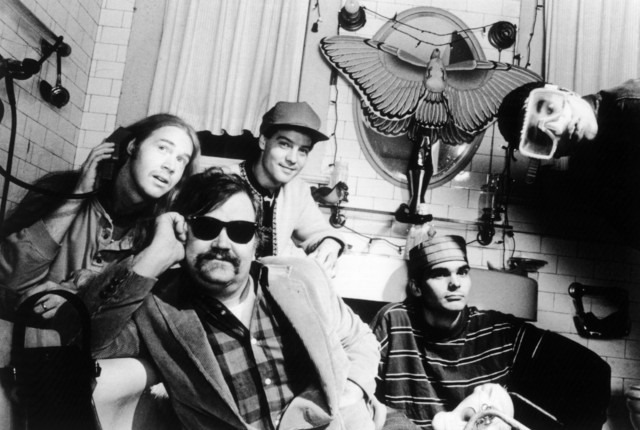
Back around 1970 a band from Atlanta Georgia called “Hampton’s Grease Band” released their only album. The story is told that it sold the second fewest copies ever in the history of their record label, who dropped them right after its release. There are reasons for that. Most cuts were over 10 minutes long. The music was eclectic and the beats eccentric—but what really unsold the record to many audiences were the vocals and lyrics by Bruce Hampton, who rasped like a southern Captain Beefheart with an outlook that mixed Dixie and Dada in quantities you didn’t want to get near enough to the caldron to measure.

This stuff still sounds avant-garde, but Hampton kept evolving after this band’s failure. He self-applied the conventional southern honorific “Col.” to his name, but he always kept a big streak of weird in his music, and by the 90’s another musical movement he helped form made odd music with obscure lyrics and long improvised instrumental passages commercially viable. The usual label for the groups who played this music was “jam bands.”

I could write more about jam bands, but since I need to move on, I’ll say that they were an attempt to invent jazz as if jazz had never existed before. By this I don’t mean to say they were wholly ignorant of jazz or prejudiced against it; what I mean to say is that they created as if they were starting the idea of jazz all over, more or less from scratch. Just as the Pre-Raphaelite Brotherhood thought they could start medieval religious paining all over again or William Morris’ Art and Crafts movement sought to start an artisan practical crafts industry out of nothing, they didn’t seek to learn from and extend the existing practices so much as to do a complete reboot.

Bruce Hampton and band

Everything but the kitchen sink—ah, maybe we need to include that too.


Now we’re back in the hipster territory that I’ve been discussing in the last few posts. Depending on which generation and which sub-cultural alignment you have, jam bands can be an example of an ignorable genre of music that can only be endured for extra-musical reasons, or an organic expression of music that refuses to be contained and regimented by the formulas of other commercial music. It’s that double-edged nature of the hipster label people throw around as if a label was an analysis. Are they “hip” to something novel that has unconventional value, or are they bogus “-sters” consumed by useless difference for its own sake? And if you’ve read the other posts this month, you’ll realize I’m not just talking about one generation or one sub-culture here.

My guess is that’s it’s always some of both, and the exact proportions cannot be discovered while it’s happening.  Perhaps, like improvised music itself, it has to happen for sober judgements to be made later.

And how can one tell who’s the poser and who’s the sculptor of something new? Persistence is one test. Remember William Blake’s great proverb on persistence: “If a fool would persist in their folly, they would become wise?” Here’s Bruce Hampton on patience and persistence:

I’ve gotten everything I’ve ever wanted – 20 years after I wanted it. And that’s been perfect for me to not get things when I want them because I’m not ready for them when I want them.

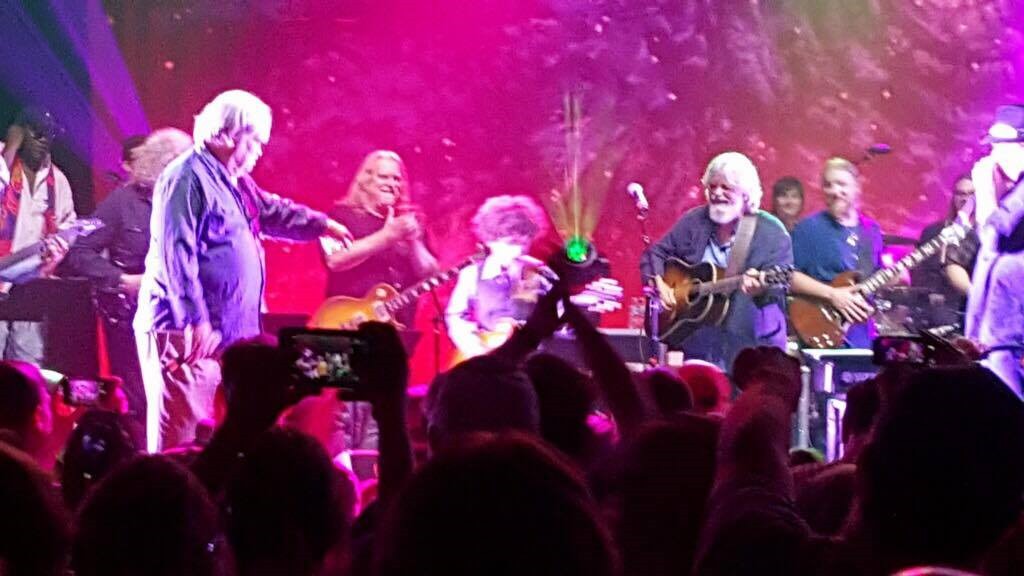
Today’s audio post, “The Death of Col. Bruce Hampton”  presents an sincere account of the unusual death of Bruce Hampton earlier this month: on stage, performing at a tribute to his 50 years of making adventurous music, surrounded by scores of other musicians who learned from him. You may still find his music better than it sounds. He played and sang a lot notes over a lot of time. Some of them were right, and some of them were wrong for the right reasons.

bruce-hampton last jam

Col. Bruce Hampton at his last concert says keep playing


To hear my audio piece “The Death of Col. Bruce Hampton”  use the player below.