I woke up to economic tumult around the world this morning after finishing a mix of this song I made from a poem by Carl Sandburg last night. I’d gone back and forth on mixing this simple piece of music. At one point I thought it needed piano. I tried an arpeggiated part. Hmmm….no. I tried a coda with underlying low-register sustained intervals. Nope too. So, no piano. I was going to post the remainder yesterday when I began to wonder if the bass line was mixed too high. I told myself I’d reconsider in the morning and went to sleep.
Awaking, I found the news of international economic fears overlaying the world of our current sustained carelessness and cruelties. Well, I thought, maybe it’s not all that important how perfectly the song is recorded or mixed. It’s time to get this little bit of Carl Sandburg out to our modern world for National Poetry Month.
This Project spends a lot of time in the previous decade to be called The Twenties, a time when all the arts and poetry had to deal with a changing culture that ended with a great falling of commerce. For much of the decade it was written up as a time of fashionable Modernism, easily pilloried as a faddish, brainless rush. The label “The Jazz Age” wasn’t meant as cultured praise. Even Afro-American intellectuals were worried that Jazz was just some fast-tempo frivolity, a soundtrack for licentiousness. Luckily for us, some Black composers and songwriters kept on making their form of Modernism.
From our time, we know the plot arc of that last Twenties. A great worldwide depression began in 1929. Fascism rose in multiple countries. Poets may have started the decade engaged with new, freer verse modes, but by The Thirties they’d be charged with dealing with the IRL world of racial-nationalist authoritarians, widespread economic hardship, and war.
I believe it’s easy to forget what an early and fervent Modernist Carl Sandburg was. He was close to his brother-in-law Edward Steichen, who was thoroughly engaged in the international visual arts Modernist revolution. His poetry helped popularize English language free-verse. His collections were peppered with clean, concise poems as Imagist as any written within that vanguard. It appears to me that he may have written Jazz/Blues literary poetry even before Langston Hughes.* Like some others in his American Modernist cohort, Sandburg had early ties to political economics of a leftist kind. How would he traverse this change in the artistic climate?
He was going to go folksy.
Much of his energy would turn from poetry to a giant biography of Lincoln, who he’d portray as a canny folklore-sage. He would publish a popular landmark book of collected folk songs. He brought his guitar to poetry readings. A Robert Frost may have made much of his farmer neighbors, but his blank-verse eclogues were orchestrated with a more academic formality.**
Sandburg’s long-form poem “Good Morning America” is a case in point. It’s a civic poem, a stock-taking set of observations of the United States, peppered with folk-wisdom admonishments uttered in Sandburg’s version of contemporary vernacular. I picked out this section of it to use here because I noticed it riffs on a phrase also used in a remarkably durable American folk song: “Sitting on top of the world.”
As a lyric refrain that phrase appears in a song by The Mississippi Sheiks, an Afro-American jug band. As members of the continuum of the folk-process (i.e., appropriating and reusing any good stuff they could grab) these non-Arabian Sheiks stole a harmonic cadence from Tampa Red, who had used it in another oft-covered Blues song: “It Hurts Me Too.” “Sitting on Top of the World” quickly integrated itself into American folk music. It became a country and Bluegrass standard, but it could also be done with the force of a Howlin’ Wolf or by a classic British rock power trio like Cream.
It would be a neat package for me to say that Sandburg heard the Mississippi Sheiks and shaped this poem from their music, but the timeline doesn’t work out, though it gives me more connections to mention. Sandburg published “Good Morning America” in 1928. The Sheiks record of their song was released in 1930. Sheik Walter Vinson says he came up with it while playing a white dance. He and that audience might’ve been familiar with a 1926 hit song sung by Al Jolson which used the same phrase. The Jolson “I’m Sitting on Top of the World” is a friendly ragtime ditty about a man who cites his tenuous status in the economic prosperity around him as beside the point because he’s about to marry his sweetheart. Vinson on that dancefloor stage is going to fuse Tampa Red’s riff from a song about a singer who confesses empathically that his sweetheart’s troubles trouble him, because “when things go wrong…it hurts me too” with some new lyrics.
We don’t know what lyrics Vinson sang on that first performance. As the song proceeded over the years, new verses were plugged in by various singers, but the Sheiks’ recording we can hear starts off with both economic and romantic losses. Objectively, the singer isn’t presenting a happy life, but still he refrains he has “no worries…because I’m sitting on top of the world.” This is an ambivalent statement. Is it a mantra of positive thinking in the face of misfortune? A call to party on the dance-floor even if the rest of life is hard times? An easily seen-through statement of questionable bravado? Is it even possibly sarcasm, an answer-record dis of the happy sap in Jolson’s song?
In between Jolson’s Roaring Twenties white song using that title and Vinson’s post-Black-Friday Black version, Sandburg wrote his poem, closer to Vinson’s version that would follow. Sandburg’s poem is about national wealth and hegemony, but it wants to say that that’s temporary. All it takes is one mad king blind to any contradiction. So, I sang this part of Sandburg’s poem this month, with music leaning more toward the Mississippi Sheiks. You can hear that version with the audio player below. What, has a circuit-breaker stopped trading in graphical audio players? No, some way of viewing this just won’t show it, so I offer this highlighted link that will open a new tab with its own audio player.
In adapting the 14th section of Sandburg’s long poem, I doubled the number of times “I’m sitting on top of the world” is refrained and re-lineated it from the page to fit the music.
.
The audio player for my version:
.
*As I read the two of them, Hughes and Sandburg, I often feel an American kinship in their voices.
**The Southern Fugitives took another, if Copperhead, path on Modernist poetry tied to an agrarian tradition in the era between the World Wars. Sandburg would leave the urban center of Chicago, first to Michigan and then to rural North Carolina and a working goat farm in the between Wars era — but he never fell into the reductionism that the “real Americans” are Anglo-Saxon-stock farmers.
If Frost didn’t haul a guitar around like Sandburg, Edwin Ford Piper recounts that between-Wars Frost was willing to offer his own renditions of folk songs at informal poet’s after-party hootenannies.
Last time an Afro-American 35-year-old singer and skilled guitarist named Hank Hazlett had left The Cats and the Fiddle, a swing Jazz quartet made up of Chicagoans, when that group’s founding and featured singer returned after serving in the armed forces during WWII. Hazlett had been standing in for that man, and though he never recorded with the Cats* he got experience touring the best Black-oriented entertainment venues of the 1940s and interacting with other acts that the Cats shared bills with.
Hazlett must have decided he was comfortable fronting a band. In the scrapbook that is the centerpiece of this series, we can find two posed large-format glossy promo photos taken at a professional studio in Chicago of his next act: The Hank Hazlett Trio.
Interesting pairing visually. One with all black suits against a white background, the other all white against a black background. Could be simple use of contrast, but the poet in me sees metaphor.
.
That photo studio location indicates they were formed in Chicago. The trio was touring in 1947, as the scrapbook contains a letter from a San Antonio radio station thanking the group for an appearance there. I’ve also found this ad for a 1949 Trio appearance in Denver.
The Cats and the Fiddle had played Denver more than 10 years earlier in an early gig before Hazlett joined up. By now this venue says it’s in “The Heart of Denver’s Harlem.”
.
Unlike the scrapbook material from Hazlett’s Cats in the Fiddle stint, there are no clipped-out ads for appearances by the Hank Hazlett Trio pasted into the scrapbook. We don’t know who sang in the Trio, and I can’t be certain what kind of music they played either. The rapid, chopped chord-change swing Jazz of the Cats was morphing into what was renamed as Rhythm and Blues, a term invented by music journalist soon to be Atlantic records principal Jerry Wexler to replace the previous music business term “race records.” R&B could include former Jazz band vocalists who now fronted small combos, vocal harmony groups like the Cats or their more successful and smoother contemporaries the Mills Brothers and the Ink Spots, and the newly plugged-in Black rural and southern singers who had moved north to play a gruffer, harder-edged electric Blues. Basically R&B was rock’n’roll, just not named that yet, and with a much smaller white musician contribution when the term was coined.
The first reports I can find of the Trio performing has them backing a Missouri-born by way of Chicago female R&B singer Donna Hightower which are collected on Marv Goldberg’s website.**
The Cats had played as a band for female singers, including backing Lena Horne with Hazlett on guitar.
August 1952 Minneapolis Spokesman (another Black newspaper) wrote this:
The musicians who are playing at the Key Club are Hank Hazlett, leader and Spanish guitar; Maurice Turner, bass fiddle; Buddy Davis, piano and vibraphone; Donna Hightower, Decca recording artist and vocalist. The musicians are all from Chicago and staying at the home of Mr. and Mrs. William E. Gray, 420 E. 37th St.”
That “staying-with” address is in the heart of Black South Minneapolis and would be two short blocks from a Portland Ave address we’ll meet just down the page. Goldberg has them playing at the Key Club in a long-term engagement until New Years Eve. Here’s what the St. Paul Recorder (the other Twin Cities Black newspaper) has to say (with Goldberg’s interjected corrections):
The Hank Hazlett Trio, composed of Buddy Davis, pianist and Maurice Turner, base [sic] drummer, along with the capable leader of the combo Hank Hazlett is now playing at the Key Club, 1229 Washington Ave So., every night and Sunday afternoon matinees.
The popular trio featuring Dinah [sorry Donna] Hightower, vocalist, got its start in Chicago in 1947 and has played successful engagements in many outstanding nightclubs.
Miss Hightower with her ultra modern version of popular music, seems to have a way with the patrons. The entertainers will be here through the holiday season.”
Don’t look for it now, this location was demolished for the I35 freeway.
.
If you want more details about The Key Club aka South of the Border, the Twin Cities Music Highlights website has much to read. Many national Jazz and R&B luminaries played at this establishment in the Seven Corners portion of Minneapolis’ West Bank neighborhood. Lots of seedy goings-on too, as this era of the Minneapolis Jazz and music scene often finds stripper acts, guns, and likely mob connections intermingling with the musicians.
This YouTube video dub of an acetate (demo or proof record) is the only audio artifact of the Hank Hazlett Trio I’ve found. Donna Hightower sings backing vocals. The guitar and likely the lead vocal is Hank.
.
Around the time of this extended engagement, it seems that Hazlett moved to the Twin Cities, setting up residency at 3648 Portland Ave in South Minneapolis, six blocks from where the scrapbook was found. Why there?
From what I can gather, Minneapolis has a strange and complex racial history, so please excuse these meager paragraphs that try to summarize the highlights of my incomplete understanding that follows. Minneapolis has long had some Black residents, and when it gathered more in the first waves of the Great Migration after WWI, there was white backlash. One instrument of that backlash were special clauses put into property deeds excluding transfer of those deeds to non-white or Jewish buyers. In theory government courts would need to be called in to enforce these racial covenants, but in practice these were often a silent exclusionary agreements, though they were sometimes enforced in breach by mobs of sullen whites who would surround an incursive Black occupied home with threats and vandalism against this blatant integration. This private customary segregation was later reinforced around mid-century by “red-lining,” a practice by home-loan issuers (including federal government loans) to exclude writing mortgages in Black areas. All of this, pretty rotten stuff — but perfectly “normal” and widespread in the United States, not just Minneapolis.***
In Minneapolis there were two sections of the city that became “Black:” one, on the north side of town (shared with a Jewish population that were often excluded by the same covenants and a higher than usual American level of local antisemitism), and the other, a vertical north-south strip in South Minneapolis. 3132 Park Ave was just on the borderline of these redline established sections. Even when I came to South Minneapolis in the ‘70s, you could see by the skin tones of the residents where those invisible lines sort of remained, to a fine resolution that could be almost block by block.****
Our 1953 musician Hank Hazlett lived in a house in the Black South Minneapolis area for several years, his only Minneapolis residence I can establish. I don’t know if he owned it, but the scrapbook maker was proud of it. There are a couple of photos clearly identifiable as his house, one with a new-looking or late-model 1953 Cadillac parked in front. I don’t know what his income was. The city directories continue to list him as musician, and at least in the mid-50s his local gigs were common. Even this late in the 20th century, when radio, television and recordings allowed music to be captured and transmitted on devices, live music was still a vital part of the experience of music. Perhaps for Hank the choice of Minneapolis went like this: I could tour from any city as my home base. The music scene in Minneapolis may be smaller than Chicago or LA, but on the other hand there are fewer Black bands competing for the club slots — and since it’s not a town to launch one’s new act to musical stardom, my middle-aged self may be able to settle down without having to directly compete with the most ambitious young acts.
One of the pictures of 3648 Portland Ave in the scrapbook. I’m assuming the car is Hazlett’s. The scrapbook has 1955 telegrams directing Hazlett and his trio to go from a gig at Williston ND to Sheboygan WI and that Scotts Bluff in Nebraska is cancelled. If they drove, that’d be a good car for this.
.
The city directory records tell us that he had a wife, Edith. It could be that the marriage predates 1953, and there’s certainly lots of 1940s material in the scrapbook if she collected any of it then. There’s a possibility they have a child. The scrapbook is oh so scant on this. There are three photos of young children on its pages. The oldest by background clues may be as early as the 1940s, and it shows a young toddler standing in a quiet road that is not Portland Ave, and in pen on the bottom it says “Earl P. Jr. 2 years old.” Lawrence/Hank Hazlett isn’t Earl, and “Jr.” traditionally means a father’s name given to an offspring. And then there’s a pair of what looks to me like two snapshots of one child. One shot of this kid shows a smiling sub-1-year-old in their onesie. To the right of that photo is pasted another one of a young Black couple sitting in front of moon and stars backdrop. That man doesn’t look like Hank Hazlett to me, but not only are the two photos near each other, I can sort of see the baby looking like the child of that couple. It’s possible that the man in the moon and stars photo is a much younger version of the performer Hazzlett, who I have only older-age pictures of. And finally there’s a somewhat serious looking, slightly older child in a push stroller-scooter. The back of that last photo has a date: 1952.
This is the second set of baby pictures that I think may be the same child. The one in the middle is dated 1952. Do you think the moon & stars picture that’s pasted on the same page as the left-hand baby is a younger Hank? There’s another picture below of a woman that may be an older Edith Hazlett.
.
There’s also a handwritten, child-like letter which I transcribe as:
Dear Daddy,
How are you? Fine I hope.
And all the others. We had a vary nice Christmas. Well today is the last day in the year and a new year is coming. Yvonne Dickie Gwen and myself are getting along fine in music. I love my fountain pen. We all like our fountains very much, our pens write fine.
Thanks for the money, Daddy. We were very glad to hear your voice. I have been over to whites ever since last Friday. White has a lot of Christmas cards. They are very pretty. Yvonne and Dickie White has a beautiful Christmas tree. I am glad you liked my present, and I know that picture is a good picture. White Chick and Marshall like there souvenirs very much. Well goodbye and good luck. With a lot of love
Felicia”
This could be an “on tour” letter to a traveling father from home — New Year’s Eve is always a prime gig opportunity. Or it could mean that the child doesn’t live with her father. Someone chose to put this letter in the scrapbook, and I believe the scrapbook was made by Hank, his wife Edith, or the two of them in collaboration. Knowing more would change the meaning of the letter.
Let me be clear: a musician’s life, particularly a touring musician, detracts from marital stability. Incomes change rapidly. Travel and late-night hours bring separation. Alcoholism and drug problems are endemic. Egos swell and are crushed and those changes can abrade a relationship.
The Minneapolis city directory tells us one more thing about Hank Hazlett’s home life. In 1958 the city directory records that Marian M. is now the wife at 3648 Portland. Marian is also listed as working for the Minneapolis Public Library. Hank is now 47, and the city directory doesn’t say “musician” next to his name — instead it says “banquet formn Dyckmann Hotel.” Same in ’59. In 1960 and ’61 Hank is shown at the 3648 Portland address, but he’s a musician and working at the Flame in Duluth, 150 miles north. In 1962 and ‘63 the musicians place of work is listed as the Manor House in St. Paul and the Downtowner Motel in ’63. Marian remains until the most recent city directory available listed as his wife.
The last Hank Hazlett Trio gig I have found a record of was at a strip club/lounge on Hennepin Ave called “The Copper Squirrel” in September of 1963.
Site of the last known Hank Hazlett Trio gig.
.
I’ll admit, like someone looking at amorphous clouds in the sky I can picture these scenes: Marian isn’t necessarily up with the musician’s lifestyle. If Edith is the maker of the scrapbook or a collaborator in making of this document largely about her ex-husband’s life and music career she may have taken it with her. Out of spite or from fond memories of their days together? Maybe Marian didn’t want that scrapbook mostly about Hank’s earlier life around anyway? Who can say? Maybe it’s something else. There are no pictures in the scrapbook I can say for sure are post-1958. If Hank was the one making the scrapbook, maybe he had tired of documenting things.
Here are two picture which look like they could be the same woman found in different parts of the scrapbook. The man is Hank Hazlett, and I suspect that the woman would be Edith Hazlett prior to 1958. Edith may have been the person who made the scrapbook of her husband’s career, and may have been the one who put it in a crawlspace to be found in the mid-1970s.
Here’s a quartet of scrapbook photos of the Hank Hazlett Trio performing.
Hank with an Epiphone archtop in most of these photos, but a “blackguard” early ‘50s Telecaster in one. In the upper right there’s a woman holding down the pianist’s spot in the trio, and the white bass player there is crossing time and space with that tie he’s wearing to protest Donald Trump’s haberdashery sense and opinions about Black History Month.
In our next post we’ll track back a bit and talk about how the scrapbook includes the home-front World War II experience and what else it shows about American mid-century race relations and Afro-American cultural pride.
.
*The WWII years caused considerable interruption in recording activity. Shellac, the hardened resin that 78 RPM records were made from came from a residue produced by overseas insects located across a warfront Pacific Ocean, and there were strikes by musicians labor organizations as they tried to extract concessions from entertainment companies during this time too.
**I’ve mentioned Marv Golberg’s site multiple times in this series. It’s full of marvelous details about Jazz and R&B artists of this era. Thanks, thanks, thanks, Marv.
***Just after the end of WWII the practice of racial covenants was taken to court, and in an early post-war civil rights victory, they were struck down nationally, but redlining was not addressed, and “it goes without saying” agreements to hew to segregation continued. Yet at the same time in the late 1940s, a young Minneapolis mayor Hubert Humphrey saw to enactment of an early law against racial discrimination in hiring, giving promise that more job opportunities would open up for Black residents.
****By these 1970s properties in these parts of South Minneapolis were affordable, assuming you could swing the finances, because it was still considered a “bad part of town.” This led to some kinds of mostly young white people to move in: gay folks, and Boomer “hippies” and political radicals. Some of that generation are still alive, and still live there, and there’s a new influx: immigrants from Africa and Latin America.
Let’s open the scrapbook we’ve been talking about this month and look to see what it shows us about the beginnings of its central subject: the guitarist and singer Lawrence “Hank” Hazlett who’ve we know was a sometime member of a Jazz guitars-with-standup-bass quartet The Cats and the Fiddle. From previous posts in this series we know the Cats started in Chicago with a group of musicians that knew each other from high school. In 1937, while group members were not yet out of their teens, they left Chicago for Los Angeles and Hollywood where they managed to perform in a couple of small movies as themselves while also snagging a few appearances as extras in larger budget motion pictures. In 1939, back in Chicago, they get a contract with Bluebird records and start recording their material, most of which are short, self-written and self-accompanied songs, featuring Swing-Era hep-cat outlook, humor, and slang. Signed to the William Morris talent agency, they begin touring nationally.
I have not seen this picture elsewhere outside of the scrapbook. It shows the act as still represented by William Morris. The shadowy photography here of a dark skinned face in the lower left doesn’t make it certain, but this could be a rare promo shot of Hank Hazlett with the WWII-era Cats without their leader Austin Powell.
.
As far as the scrapbook’s scope goes, Hazlett barely appears before joining the Cats midway in the combo’s career. The earliest thing the scrapbook has on him is a well-worn U.S. Employee Service Applicants Identification Card for Lawrence Hazlett. The card gives his address as 5159 Prairie Ave, but there’s no visible city. That address exists in the L.A. area near Lennox and W. Century Blvd., but also in Chicago’s Bronzeville — so we could place Hazlett in either city the Cats were active in during the late 1930s. The card has him 5’ 10” in height, 147 pounds, and there’s a filled-in blank that has the number 24 — I’m guessing that’s his age. Given that Marv Goldberg has Hazlett as being born in 1911 in St. Louis, that would make the card’s issuance as around 1935, and from that approximate date the card could be a government form related to unemployment insurance or the New Deal WPA.* There are two blanks to enter in “ssification” which I read as classification, a P. and S., with that second filled in as a “Jr. Artist.”
Anyone know more about this kind of ID card?
So, here we have the earliest thing I know for sure about the scrapbook’s leading man: a slip of paper from before the Cats and the Fiddle existed that says Hazlett may have pursued a career in art circa 1935.
Histories of the Cats and the Fiddle tell us that in 1943, Austin Powell, the most often featured lead vocalist of the all-singing and all-playing quartet was drafted. This would be a serious blow to the group. Recordings were scant during the war years, but the act was touring and likely had gigs to meet. Hank Hazlett is selected as Powell’s replacement. Like Powell he played guitar, and evidence suggests he may have been at least Powell’s equal on that instrument.** I also assume he was a good singer with some on-stage showmanship. We don’t know where Hazlett joined up with the Cats, but it’s likely in Chicago or L.A. We have one other document in the scrapbook with a firm date around this time, a W2 for the year 1944 which shows Hazlett earned $125 from Loews Inc, M.G.M Pictures of California giving Hazlett’s address then as 912 E. 27th St. in L.A. This might have been for work as a movie extra or musician.
Extra in a movie? Soundtrack work? Movie theater appearance?
.
There are clippings and a few photos documenting the 2-3 years Hazlett was a member and touring with the Cats and the Fiddle in the scrapbook. Here are a few of them.
Some of the places and bills as Hazlett toured with the Cats and the Fiddle 1943-46. In the upper-center photo that’s Hazlett on the left playing a guitar that may be the one in the promo shot above.
.
The hypnotist Capt. De Zita’s work? Typo on the headline and dubious hype that the Cats and the Fiddle are appearing in person in L.A. for the first time in 1944
.
In 1946, Austin Powell is mustered out and returns to the group that is still working though not breaking through to upper levels of fame. Having the original lead singer back doesn’t seem to revive their career fortunes, though the act will continue until 1950. As far as anyone knows, Hazlett’s tenure with the Cats and the Fiddle ends when founding and featured member Powell comes back.
Hazlett seems to remain a professional musician though. There are new promo pictures made, taken by a Chicago-based photo studio for a new act: upright bass, piano, and Hazlett on guitar: the Hank Hazlett Trio. What we can see of them in the scrapbook is our topic for next time.
.
*I’m thinking more likely the WPA. The Works Progress Administration was a unique New Deal program to counter the Great Depression. In sites around the country it gave jobs to workers, writers, actors, musicians, and artists to produce or teach various projects and works of art. I know little about Hazlett’s family or situation growing up, even how long he was in St. Louis, his stated birthplace. His place of death was Los Angeles in one report I’ve seen, so he may have some connections there. It’s only a feeling, but I’m guessing he may have had a middle-class Black family with exposure to arts and culture before we find him in the scrapbook as a nationally touring musician.
If I hold to my current plan, there are going to be several more posts this February as I tie up this series dealing with an Afro-American scrapbook found at the house I stayed at when I came to Minneapolis in the 1970s. Those missing the Parlando Project focus on literary poetry combined with original music here should eventually get a return to usual service before the start of U.S. National Poetry Month.
So, that scrapbook, the thing in the middle of this series — I talked to Dave Moore who bought an old South Minneapolis house in 1975, about its discovery this week. As we learned last post, 3132 Park Avenue was originally built as the sort of house for an early 20th century businessman or upper-middle-class family: four large bedrooms on the second floor, spacious rooms on the first floor (two of which could be joined by opening a pair of large pocket doors) and a separate interior set of stairs to an attic third floor which may have been designed as quarters for live-in help. I summarized the house’s history last time, including that from the 1940s on, the house had a succession of tenants after its long-time grain-trader owner died in 1939, eventually becoming a rooming house catering to Black residents. Shortly after moving in, Dave was on that third floor, and he noted a small, about 3×3 foot, access door on one wall where the slope of the roof descended to less than full height. Opening the door, he crawled inside. It’s been decades, but Dave is pretty sure that the scrapbook was found there. “Anything else in there?” I asked him. “I remember an old carpet sweeper.”
The house still had furniture when Dave decided to buy it. By the time he took ownership the real-estate firm had taken all of that out, emptied the house — so for the scrapbook to have survived, it was lucky to have been secreted in a crawl space. Did its owner or creator hide it there? Who could that person have been? Today I’ll give you my best guess, and in following days you’ll get to look inside the scrapbook to see the clues that led me to that guess. In looking at what the scrapbook includes, you’ll get to look inside a particular document of what had the attention of a 1940s American Black person.
My initial guess, back when Dave gave me the scrapbook in the ‘70s: I figured it was made by a fan of Jazz music, then the popular music of the 1940s. Noting the movie and performing stars pictures clipped from entertainment magazines and newspapers — and that it was after all a scrapbook — I thought the greater probability was that it was a woman. Scrapbooking is not something that many grown men engage in, and so I imagined a young woman entranced by performers.
Later as I found out more about the Jazz-vocal-quartet The Cats and the Fiddle who figure prominently in what was chosen for inclusion in the scrapbook, I changed my theory. I learned that a man named Lawrence Hazlett (who professionally went by the name Hank Hazlett, and whose last name has been misspelled as Haslett and Hazelett) had been, during the 1940s, a member of the Cats and the Fiddle. I’d overlooked personal items pasted in the scrapbook connected to Lawrence Hazlett that a mere music fan wouldn’t have: his 1944 pay stub from MGM, a Department of Labor ID card. Hazlett was born in 1911 in St. Louis according to Marv Goldberg’s info. He may have lived at times in Indianapolis, Chicago, Minneapolis, and Los Angeles.* I changed my mind. This was a musician who was scrapbooking his career, and Hank Hazlett was that musician. At the start of the month, that’s what I thought I’d attribute the “authorship” of the compiled material in the scrapbook to.
I’ve now changed my mind again, due to this month’s research and closer re-examination of particular items included in the scrapbook, and my plan is that you’ll be looking over my shoulder at items in the scrapbook as I examine them in the next posts. These items engendered feelings, hunches — my attempts, however imperfectly but empathically, to think of why certain things were chosen to be saved and pasted on pages.
My current theory is that the scrapbook was made by a wife of Hank Hazlett, likely a woman named Edith I. Hazlett, with his collaboration.** If, instead, it’s my previous working theory that it was Hank himself documenting his life, the choices made in collating the material in the scrapbook would make him even more fascinating to me. The author (or collaborating authors) are more deeply and widely concerned with Black artistic expression than I would think most musicians were in the 1940s. There’s an undercurrent of feminist thought that can be extracted from some items in the scrapbook,*** though that may be a reflection of the decade of the 1940s when so many men were mobilized and out of the country. And dare I say it, at times there’s the slightest hint of gender non-conformity there too.****
It looks like the maker of the scrapbook altered the brand name of the now tattered scrapbook to Hazlett. The TV Troubleshooter booklet won’t tell you how to block annoying YouTube ads, nor offer fool-proof password sharing schemes. The torn photo may be a South Minneapolis snapshot of Hank Hazlett. Someone has to take snapshots (no selfies then) so it could be a clue that Hank isn’t the sole creator of the scrapbook.
.
Guitarist and singer Lawrence “Hank” Hazlett lived in the South Minneapolis neighborhood that the scrapbook was found in from 1953 to at least 1963. He worked steadily there as a musician, leading his own Hank Hazlett Trio for most of that time, and at least occasionally playing with other groups. Minneapolis city directories and some online histories of the Minnesota music scene document this information. But there’s a strikingly absent bit of data there: he’s never shown as living at 3132 Park Ave where the scrapbook was found. Instead, he was consistently recorded in city directories as living six blocks away at 3648 Portland Ave. Starting in 1953 and 1955 Lawrence Hazlett is listed as a musician at that address, and his wife is named as Edith. In the 1957 directory Lawrence Hazlett is missing from the directory listing, but a Mrs, Marian M. Hazlett is listed as living at that address. This continues in 1958 with Lawrence listed as the head of household and Marian as his wife onward to the last Minneapolis city directory in the Minnesota Historical Society collection, Marian is also identified in one directory of this era as working at the Minneapolis Public Library. So somewhere in the mid-‘50s, it appears that Lawrence has a different wife. There are no firmly dateable items in the scrapbook that can be fixed after the middle-50s. There are a couple photographs that could be estimated (from woman’s clothing styles) as early 1960s, so I can’t eliminate Marian the Librarian as the collaborating collator, but the masses of things from Los Angeles including current events clippings from the ‘40s indicate the book may have started before Hazlett or his wife were known to be in Minneapolis. In my ranking, Marian would be third on the list after Edith and then Lawrence/Hank himself. In this theory, Edith may have stopped using Hazlett as her last name and ended up at the 3132 Park address in its Black rooming house phase, carrying with her the scrapbook of her days in Hollywood and the following years in the musical scene in Minneapolis with Lawrence/Hank.
In the next few posts we’re going to take a ride through the crumbling pages of this scrapbook in detail. The details will go a lot of places. If you haven’t figured this out about me yet, I love that about details.
.
*The scrapbook has material listing addresses in LA and the Portland Ave. address in Minneapolis, and no other cities are explicitly listed as residences for Hazlett there.
**One surmise: Lawrence/Hank had off-handily collected stuff during his career, and his wife, seeing the value of what her husband did, decided to use a scrapbook to organize and present it, melding him in with other national entertainers. This might explain why things like publicity photos for line-ups of the Cats and the Fiddle dating from before Hank Hazlett was a member of the group are in there. That could be read as expressing symbolically “Here’s my husband, he’s good enough that they asked him to join this nationally-touring Jazz vocal group.
***There are also elements of laddish/Benny Hill-type sexual stereotypes in some cartoons — items that led my switch of maker-attribution to Lawrence/Hank — but the history of the cartoons broadened my understanding of them.
****Better scholars than this amateur, Afro-Americans who know by living things I’m ignorant of, or anyone who may have known the now dead people in the scrapbook may know better. I’m just an open-hearted person looking at this stuff and writing of my experience of it. I’m going to share an opportunity for you to do the same as the series next continues.
Some of you made it through my summarization of the musical career of the Cats and the Fiddle Jazz combo this week, but even though I was writing about music, we didn’t add much poetry there. One little thing I found out since I wrote that summary: that eBay matchbook collector item should have tipped me off about the site of one of those young Chicago kids’ gigs — a way stop on a trip to Hollywood to try breaking into the movies. It wasn’t at the “Airplane Café Club” as Marv Goldberg had it from his research, but the “Aeroplane Café. I’ve found a postcard. Looks pretty swanky. I wonder how the Cats act went down there in 1936 — did the Denver white swing kids dig their act? Four or five years later I’d give our band of audacious teenagers better odds on that.
Well, however they were received, they were young, they had dreams of a career ahead of them.
Looking at what musical acts were playing Denver at this club and elsewhere during the ‘30s, it was mostly white bands for dancing. Black bands started appearing on the bills in the ‘40s. My research said the Aeroplane Cafe lasted until the ‘80s, hosting in its last years rockabilly bands.
.
So, let’s combine some literary poetry with music, Parlando style today. The words are by Langston Hughes, one of the first poets to recognize that Blues and Jazz were poetic, suitable for praise in poems, suitable to combine with Jazz words he’d contribute. When the young Hughes wrote today’s words for publication, he called the short poem “Dreams.” I heard it as a kind of Blues, a Blues with a sorrowful side, but with an admonishment to endure. If some reading this are having a February of backlash and disappointment tempting despair, this is after all Black History Month. Afro-American poet Hughes knew that dreams may well be knocked down, ignored, belittled. Yes, I know the word “woke” is a word in present contention. I find it odd it is used by those who smirk and dismiss the word as they speak it, aiming it toward those who know very well the reasons that dreams are extinguished.
Hold fast to dreams
For if dreams die
Life is a broken-winged bird
That cannot fly.
Hold fast to dreams
For when dreams go
Life is a barren field
Frozen with snow.
I’m looking at a bare and snowy landscape out my window this evening. I rode to breakfast in 10 degrees with a cold wind this morning. I read the newspaper when I got to the cafe, because I’m a man who still spills eggs and hot sauce on the news in the morning. None of the news was good.
I spent my last couple of days making the musical piece work as well as I could make it, tickling an old guitar that I played when I was young, playing piano the way I can: a finger or two on the keys, tracking the left and right hand parts separately to disguise my ham-handedness — because music may find a way. I sang Langston Hughes’ words quietly, mouth up near the microphone. I had to, it was near midnight when I sang them, and my family was asleep and I want them to keep their dreams.
I want you too to keep the sweeter of your dreams. Waking right now can script all the nightmares and anxiety dreams that need no help. When the best mysteries come under the eyelids, ones almost too good to remember, I want you to keep them, even just the sense of them.
The audio player to hear my adaptation of Hughes’ poem I call “Langston’s Blues” can be heard with the audio player gadget below. No gadget? It’s off dreaming, but you can also use this highlighted link which will open a new tab with its own audio player.
I’m planning to return in a few days with more on why I wanted to work at figuring out all I could about that young Jazz combo of the 1930s and ‘40s.
Time for me to lay out all I know of the story of a 1930s and ‘40s Black American Jazz vocal quartet: The Cats and the Fiddle. Last time in this February series, I reminded moderns that so much in my parent’s and grandparent’s time revolved around neighborhoods. That’s going to continue today as I tell about some kids who shared a location. Previously we’ve seen the Cats and the Fiddle appearing in small-time Hollywood pictures in the Thirties, which might give you the idea that they were a well-established band with hit records and thriving career. That’s not the case. They were young, from out of town — and though they did have a few years of performing under their belts, they were likely around 20 years old. How’d they get there? Where did they go?
The Cats and the Fiddle didn’t start in Southern California. The original quartet were classmates at Wendell Phillips High School, an important school in Chicago’s Black South Side. Last February here we featured Fenton Johnson, an ambitious Black poet who graduated from Phillips decades before the Cats’ founders attended, but some other folks could have passed the band members in the hallways in their day: Nat King Cole and just possibly singer Dinah Washington. Cole was likely the same age — Washington 5-6 years younger but there was a Junior High section at the school.* Oh, let’s not totally leave off poetry — poet Gwendolyn Brooks was the same age as Cats members, and Phillips High School was one of three Chicago area high schools she attended. The thought that these teenagers, poets, singers, musicians, and songwriters, might have taken inspiration from each other, or some other, lesser known commonalties is intriguing.
While in High School the future Cats were in two different bands, the Harlem Harmony Hounds and another group which was — at least at times — performing as Four Dark Flashes. No, the first band had nothing to do with Harlem, these were Chicago kids. There’s a round-up of Cats and the Fiddle history available online put together by Marv Goldberg. He’s found a reference to the Harlem Harmony Hounds as early as summer of 1932, which says they were appearing on radio station WCFL in Chicago.**
The Four Dark Flashes appeared to have traveled some. In October 1936 they were listed as playing the Casino Theater in Toronto Canada, a 1,200-seater which would have just opened earlier that year. If they were all Barksdale’s age, they’d be 16 or so, and traveling out of the country during the school year. This would indicate that some of the Cats-to-be had dropped out of school early to pursue music. ‘36 was likely the year the Four Dark Flashes group lost a fourth, their lead singer. Harmony Hound Austin Powell singer and guitarist was the handy neighborhood replacement to join Ernie Price (tenor guitar), James Henderson (tipple), and Chuck Barksdale (bass). The whole group sang, and beside Barksdale holding down the upright bass, the fretted stringed instrument combinations of 6-string guitar, tipple, and 4-string tenor guitar might shift from song to song.
In October 1937 we get the first mention of Cats and the Fiddle as an act that Goldberg has found. The famous Chicago Black newspaper The Defender wrote that “Four Cats and a Fiddle” were booked to play the Dome Club in Bismarck, North Dakota along with a Bessie Mitchell.
OK, who’s asking “What are a bunch of teenage hep-cat Black musicians doing in Bismarck ND in 1937?” I don’t know. I can find nothing about the Dome Club there, but chances are slim that there were enough Afro-Americans in Bismarck in 1937 to support a Black entertainment establishment. Another Afro-American vocal act with guitar accompaniment, the four Mills Brothers from Ohio, had gotten on nationwide radio, and though their hit records are a smoother sweeter sound and have none of the jive talk found in the early Cats’ lyrics, it’s possible that our group of teenagers had a set-list of tunes tailored for white audiences. The Chicago Defender, when announcing the act’s road gig on its pages says the Cats had “one of the greatest floorshow acts in the game.” Promotional hype supplied by the Cats themselves? Or had they already done some show-stopping appearances in Chicago? Were upper Midwesterners plausibly ready for something like that “Killin’ Jive” hard-swinging Jazz aimed for Black audiences?
Then on November 20th the Pittsburg Courier (another Black newspaper) says The Cats and the Fiddle, consisting of the quartet of guys and a Bessie Sutton are playing at the Airplane Club Café in Denver this week. Not sure why anyone is concerned about this in Pittsburg, unless that Bessie is from there. What kind of venue was the Airplane Club Café? The only thing I can find is this picture of a matchbook once offered for sale on eBay.
The young Jazz guitar & vocal combo was going places. Lenny Kravitz’ grandma not pictured. (just checking to see if you get to the footnotes)
.
That pair of odd Fall ’37 notices bill a Bessie Mitchell and a Bessie Sutton as being with the Cats. It’s unclear if they are one or two different people, and if they are full-fledged members of the band or a separate act that might use the Cats as road show accompanists.*** If neither Bismarck or Denver seem like a common tour stop for a locally-known Chicago Afro-American combo in 1936, swing Jazz had a generalized popularity that was testing racial barriers. It’s also possible that clubs expected the Mills Brothers and got something a bit wilder, or that Bessie or Bessies were the headliners.
Where can we put our Cats on the map next? On January 13th, as 1938 has begun, Goldberg finds them in another Black newspaper, the Los Angeles California Eagle. The paper names the original four schoolmates and a Willis Rogers as members and they go on to say the group will “go far in pictures.” Once more I provisionally assign PR from the group to that prediction. I wondered if the late ‘36 Bismarck and then Denver gigs were just part of a “play your way to pay your way” tour to get to the American west coast. I’m just enough of a trainspotter type to wonder about passenger train service from Chicago to Bismarck to Denver to LA.
Want to figure their transit route with me? Chicago to Bismarck to the Pacific Northwest coast. Sure, the North Coast Limited. A lower Midwest route from Chicago to Denver with connections to LA? Yes, those are options on the Union Pacific Overland Route. But Bismark to Denver? Your faithful researcher looked. You’d likely have to go back to Minneapolis from Bismarck, and then from Minneapolis to Denver before going on to Southern California from Denver. But what’s the alternative? They could have driven, though I know nothing about their family’s financial resources to buy a car, and there’s the season of that traveling: modern indie band road dogs would dread a late Fall tour itinerary from Chicago to North Dakota then off to Denver before a jaunt to LA, when if LA is your goal from Chicago, a southernly “Route 66” highway beckoned. So, if the three dates Goldberg lists are accurate, I think of these four or five ambitious young Midwestern musicians zig-zagging like water bugs on train routes aiming for Hollywood. Yes, I’m grasping here at details, hoping that like a detective they lead to solutions to greater mysteries. The mysteries remain.
You’ve seen the high points of that movie career in the earlier installments of this series. For Afro-Americans in the mid-1930s that would be low-budget all-Black cast and audience pictures, novelty appearances in B movies, and possible work as extras or as a musician for soundtracks. Seems pretty meager when I list those opportunities, but to look at it another way it wasn’t that far from what bigger Black musicians were getting in the movie industry then. Racism and segregation were still unavoidable, overt issues, but Jazz as a rising popular music was softening some barriers in that decade. And it was the Great Depression. Black unemployment was even higher than the general unemployment rate. Appearing as “native” extras on a studio backlot might be demeaning, but even that level of employment meant a paycheck.
Still, they were all about 20-years-old, and they didn’t even have a record contract— yet. And our intrepid group still seems to be traveling back to Chicago from Hollywood.
Lawrence Cohn, who wrote liner notes for a 1976 reissue of the Cats and the Fiddle recordings, tells that Cats were visiting outstanding guitarist Tampa Red’s apartment in Chicago in the spring of 1939 after their spate of 1938 movie appearances, when Red introduced them to Lester Melrose. Melrose was A&R for Bluebird, RCA Victor’s “race records” label for artists of color. In the 1930’s and ‘40s, Bluebird was making good money on a variety of Blues related vocal records, often featuring small combo accompaniment, catchy rhythms, and double-entendre lyrics. Melrose worked out of Chicago where he collected a lot of Black talent for the label.****
How well did the Cats records do? Middling at best. Their closest approach to a hit was a ballad recorded on their first studio session in the summer of ’39, “I Miss You So” — but as WWII was about to break out in Europe, no one knew yet how big the young Cats could be. Cohn compares them to the Ink Spots, a vocal combo who started having big hits on Columbia Records around this time. He tells us the Cats and the Fiddle were repped by William Morris (the same talent agency as the Ink Spots) who started booking them all around the country to see what kind of career they could have. The subsequent gigs Goldberg tracks are mostly at Black audience theaters, but they include the big ones, the ones the most successful Black stars would play.
In America, WWII was still two years away. Victor records recorded more than two-dozen songs as they toured. That maybe-kinda hit “I Miss You So” wasn’t issued until 1940, and it wasn’t representative of their typical fast-tempo jive-slang songs.
Then the war came, and the previously stable, self-contained quartet group of high-school-pals started to churn. Henderson (who wrote “I Miss You So”) died shortly after the record came out. The bass-fiddle guy Barksdale died in ‘47, but was in and out of the lineup from ’41 on. Henderson and Barksdale were replaced by ex-Harmony Hound members Herbie Miles and George Steinback. In the midst of this ’40s churn Tiny Grimes was in the group for a couple of years, even wrote a tune or two for them. Grimes would leave the Cats to play with Art Tatum and Charlie Parker, and along with Charlie Christian, he would help popularize instrumental bebop styles for the guitar. Grimes left our vocal act because by then it wasn’t paying much, and he didn’t think it was going anywhere. A musician’s recording strike and a shellac shortage greatly reduced the issuance of records during the ’40s, and the audience mix for live shows must have changed some due to the overseas war. Amidst all this, Austin Powell, the most prominent singer and songwriter in the Cats was drafted. Hank Hazlett, a guitarist originally from St. Louis, was brought in when Powell went into the armed forces. Hazlett would play with the Cats from ’43 until late 1945. Powell was de-mobbed in Spring ’46, and the somewhat tattered group was still recording and playing, but to smaller and smaller returns. In 1950 the Cats and the Fiddle disintegrated, though surviving individual ex-members continued to be involved in music.
Lawrence Cohn was a highly knowledgeable man about this era, and he worked on a number of important late 20th century reissues of classic Blues and Jazz recordings. When in 1976 RCA collected most of the Cats and the Fiddle’s recordings in a double LP, Cohn wrote the liner notes, yet he only rises to faint praise there. He thinks the songs sound too samey. He says their musicianship was mediocre at best. In the end he’s left with the idea that their humor might be viewed as a corrective to the (in his opinion) too serious and artsy Jazz around when he wrote the notes. This sour summation ends Cohn’s notes:
In general this kind of happy jazz and pop combination disappeared, along with most of the melodic kind of jazz, during the Fifties and Sixties when rock and roll replaced the earlier style of music, and when jazz became politicized. A lot of people stopped going out when this kind of music was not being presented. Perhaps this release may in some small way facilitate its return.”
So besides knocking the Cats, Cohn seems to want to take some shots at the Spiritual and Black Arts Jazz musicians contemporary with his notes. I apparently like those musicians more than he did, and I like the Cats and a Fiddle more too. As to the Cats’ musicianship, I’m of the school that says the essential is that the players did a good job putting their own songs over, and that’s what counts more than an academic skills comparison. Barksdale was good enough for Coleman Hawkins when playing outside of the Cats. Tiny Grimes could trade riffs with Charlie Parker. Austin Powell was still gigging and recording with Louis Jordan and his Tympani 5 until the end of the 1950s, apparently playing not only guitar, but sax and piano.
Decades after Cohn, Australian critic Bruce Elder got the job to write up the Cats and the Fiddle for the current music streaming service Apple Music. Writing there Elder says
If anything, the Cats & the Fiddle were ahead of their time, producing a bolder form of R&B than critics were prepared to accept at the time, such as ‘That’s All I Mean to You,’ which likely would have slotted in perfectly a decade later, but in 1940 just seemed like style-less noise with a swing beat.”
Being slammed as “Style-less noise, with a…beat.” Does that sound like a description of something else that would come around after the Cats broke up post-WWII? Self-contained combos who play their own instruments with guitars mixed to the foreground, brisk tempos, uninhibited stage performances, energetic, youthful, close-harmony singing, witty lyrics that might wink with some “the squares won’t know what we’re talking about” slang?
I’m leading you to say “Rock’n’Roll.” I suspect older readers will be the first to follow that lead with that response, as I find many listeners in middle-age (and younger) think of the later evolution of what gets called Rock — or now, Classic Rock — as a more overdriven electric guitar thing, backbeat drums with less swing laying down the beat, with lead singers often singing alone only with occasional backing vocals. I used to shake my head (and type someone’s-wrong-on-the-Internet posts) in my 20th century Usenet days when the admittedly problematic Rock’n’Roll Hall of Fame would select some (usually Black) harmony vocal group for enshrinement and posters would object that’s Do Wop, or Soul, or something, but not real Rock. I’d try to remind them that Rock’n’Roll originated as a diverse mongrel genre, and that groups who approached music with an outlook, energy, and vocal blend like the Cats, were all over the first decade or so of Rock’n’Roll. These Black high-school students from the South Side of Chicago had an idea and put some audacious energy into propagating it.
About thirty years after the Cats and the Fiddle took their warning-track fly ball swing for the fences, this group of plaid suited white rubes — who looked exactly like you’d expect to find them at the Dome club in Bismarck North Dakota — got to have their moment in a low budget Hollywood movie. This is how they looked and sounded:
On discovering this band in a rural roadhouse, the film’s hero enthusiastically shouts “It isn’t boogie. It isn’t jive. And it isn’t swing. It’s kind of all of them.”
.
*I’m basing age estimates for the original Cats members on a military draft registration record Marv Goldberg indicates he’s seen for original member bassist Charles Barksdale, documenting that he was born January 11th, 1918. Nat King Cole and the Cats were seen again in Hollywood, as Black extras playing South American natives in the Myrna Loy/Clark Gable romcom Too Hot to Handle. Dinah Washington was playing in Chicago with the Cats and the Fiddle as her backing band for the gig when the club owner dragged Lionel Hampton to hear her and nationwide fame for that great singer ensued.
**This radio show was said to be weekly, and other references led Goldberg to think the show lasted until January 1935. WCFL’s history is interesting. Nathan Goldfried’s book WCFL, Chicago’s Voice of Labor has it that it’s “the first and longest surviving labor radio station in the nation, beginning in 1926 as a listener-supported station owned and operated by the Chicago Federation of Labor…” and that ““The station emphasized popular entertainment and labor and public affairs programing, seeking during its earlier decades to help organize workers, increase public awareness and support for the union movement, and enhance public awareness and culture.”
***Entering into wild/just plausible territory: Bessie Mitchell was the birth name of actor Roxie Roker’s mother, musician Lenny Kravitz’ grandmother, and actor Zoe Kravitz’ great-grandmother. She would have been in her mid-20s in 1937, but I have no info that she was ever in entertainment at all, or connected with the Chicago scene.
****Bluebird recording artists included Memphis Minnie, Big Bill Broonzy, Jazz Gillum, Memphis Slim, Victoria Spivey, Arthur Crudup, and LeRoy Carr. Melrose reportedly passed on Muddy Waters — Waters said Melrose was looking for a sweeter style of music than he and his post WWII generation played. One thing I wonder regarding Melrose likely having some responsibility for how big a promotional “push” might be given the Cats. Members of the Cats and the Fiddle from the start wrote most of their own material. Melrose often engaged in the pernicious practice of taking co-writer’s credit on records by acts he shepherded, cutting himself in on that element of royalty monies. At least on the Victor reissue LP I have, Melrose is never listed as having a songwriting contribution.
In the past few years I’ve enjoyed focusing here on Afro-American poets during the month of February. Last year, I dug in and did a bit more research on an understudied but fascinating Chicago poet Fenton Johnson, whose published work sits between the emergence and premature death of Paul Lawrence Dunbar and the Harlem Renaissance. Johnson became easily identifiable as a Modernist before his access to extant publications dried up in the 1920s, and I suggested last year that his poetry allows us to see —albeit silently on a page until I did some musical settings — into the formative years of Afro-American Gospel and Blues music before it made it onto recordings.
Here’s something I formulated for myself early in this Project as I found myself often looking at the rise of Modernism in the 20th century: a part of why Americans became highly significant innovators in Modernism has to do with Afro-Americans. Literary-only scholars might not focus on this inside their silo, but at the same time Pound, Eliot, Frost, Moore, Stevens, Millay, Williams, H.D., Sandburg, et al were reforming poetry, Afro-Americans were spearheading a revamped approach to music. Black poets like Johnson and Langston Hughes were hip to how those two things should be viewed together from the start, and after all, Modernism took root during the last decade called The Twenties under the banner of “The Jazz Age.”
That 2024 series on Fenton Johnson let me further express the musical part of the Parlando Project: “Where Music and Words Meet” — and it should also be obvious by now to regular readers that history is one of my interests. So, this February, like the Fenton Johnson series of last year, I’m going to get into the deep weeds a bit this on some lesser-known stuff.
I’m unable to schedule the Parlando Project work in a fully professional manner, so it’s likely you, if you follow along this month, will be going on a journey with me as I look into elements in real time. I may be revising myself before the finish, and if that gets awkward, let me say at the start that this isn’t some plotted-out documentary, I don’t know what all I’ll find. It’s likely going to be very first-drafty, so put on your reading sweater.
If this was an audio presentation, at this point there’d be one of those audio fades with reverb to suggest a passage of time now. From out of the echo my voice will be saying: “It all started in 1976 when I moved to Minnesota from New York…”
I was looking for a new start. It wasn’t entirely clear if I was going to continue intermittent attendance at college, which was both logistically and financially limited to me at the time. One advantage I had: doing nursing work in an Emergency Department was an easily transferable skill, I could go most anywhere that had a hospital, and maybe it would be good if where I moved also had a college. I settled on Minneapolis because I knew a couple living there from my Iowa college experience in The Sixties. One of that couple, Dave Moore has remained a friend (and contributor to the Parlando Project). Dave and his then wife had plotted out a plan for themselves. They were going to run a small mail-order used book business and needed a place to collect stock, store it, and run that business. They purchased (for an attractive low price) a large old house on Park Avenue in Minneapolis. Park Avenue was, in the last Gilded Age, a place where newly rich Minneapolitans built their mansions along a wide tree-lined street leading into the business center downtown. Now in 1976, this couple I knew were going in big on the sweat equity thing, rehabbing that house. The place, 3132 Park Avenue South, was built as a sort of a Junior-Grade Mansion. The 3rd floor, where the original owners had servant’s quarters would hold their stock of books which Dave was obtaining from aging bookstores that were beginning to close down or dump old stock. The other two floors would be their living space and nursery for the child they were planning to have. I could help a bit with the enterprise and rehab, and stay with them for a while.
It was a grand adventure. I had no builders skills, but mainly helped with the stripping of paint off the old woodwork and general lifting and toting. Work was already more than half done when I arrived. Dave told me that around mid-century the house had been turned into a set of small rentable spaces part-way between a rooming house and a set of apartments. Most of those changes had been removed already, and the book business part of things was more at my interests. For that, I’d go with Dave on trips to the basements of sole-proprietor bookstores, some closed, closing, or soon to close, to clean out old stock in their basements or back rooms. There was so much stuff from the 50s and the early 60s — before, you know, The Sixties. From ruined books I collected a small batch of lurid pulpy covers on these expeditions. The packrat in me wished I’d grabbed more.
This house on Park Avenue is just a location for the drama, a set for one of the acts I want to present haphazardly this month. The whole play is not extant. It exists only in fragments, a bad quattro. How do we raise the curtain?
Dave knew I had an interest in old Blues music, and somewhere in an interval after I was staying at 3132 Park Avenue and maybe as late as when I moved into the rented part of a duplex next door a few years later, he gave me a tattered scrapbook found when they were cleaning out those rooming house remnants. I’ve learned a lot since that scrapbook came into my possession. Let’s take a look inside as this series continues.
I thought I was done with my Emily Dickinson series. I had started to think of what poets would be next, and….
Emily came back. Not the mystical psychedelic Dickinson. Not the weird indie-folk Dickinson. Oh, still mysterious, still a trickster — but she asked not for unusual harmonies or strange timbres this time. She wanted to Rock!
Well, if you’ve been in a mode lately of working with acoustic guitar, and you want to transition to Rock, then there’s no better way to start than Blues. I grabbed my bottleneck slide and my resonator guitar* and it was time to get down with some rough ‘n’ ready Delta Blues — at least the way I play them.
I didn’t learn how to play slide from some Papa Legba at the crossroads, nor by grizzled tutelage from an in-the-tradition player. I was an Iowa teenager when a white college kid from Minnesota pulled out a severed wine bottle top from his jean-jacket pocket and proceeded to show the results of the guitar lessons he’d had in Minneapolis.** I recall his technique was not pristine, but the sound including the incidental noises of the slide grinding into the strings and occasionally slapping onto the fretboard entranced me.*** Five years later I finally decided to try to figure out how to play guitar, by myself, living in a little rented travel trailer, and unable to afford any lessons.
We know Emily Dickinson played piano. Did she have lessons her family could have afforded her? Did a family member teach her? I don’t know if we know what kind of music she played, but it may have been hymns and popular parlor pieces that were sold as sheet music. Did the Celtic immigrants in Amherst leak any of their music to her? Was Black American music in her ken, and if so what variety? All mysteries, but it’s unlikely she had any idea of Blues music, because as best as can be determined, it didn’t exist yet. Sometime around the time her poetic writing was tailing off, it seems that Black Americans began mixing the musics they heard around them in North America with the music that survived the slave ships, and lullabies, and work-a-day chants of work-gangs or field laborers. Most were newly freed from enslavement. Commercial entertainment was a newly opened field for them as musicians and as audiences. In this new situation they had a new story to tell.
Extracted as musicological theory, Blues can be expressed in a lot of ways, but my appreciation says it’s an attitude as much or more than a scale, timbre, or harmonic framework. What attitude? The Blues isn’t “the Blues” as Western European derived Americans knew it. It’s not melancholia or simply depression. It’s not elevated Romantic despair. Sad, bad, and difficult things happen in a Blues song, but that’s not the main point: the main points are that the singer is still here, can tell you about it, and has maybe figured out something about what has led to this situation that they’ll share with you.
So, here’s what Emily Dickinson did that was Blues-like. Like the Blues, Dickinson is going to use humor and incongruity to describe her experience. If death is a fact of human existence, she’s going to write its Yelp review telling you about it. She’s going to tell her tales using coded language at times, so as to not rile up those who think she shouldn’t have the thoughts she has — and besides, coded language gives one the paradoxical freedom to choose the strongest, sharpest words.
Now the poem I took today is from late in Dickinson’s life, and it’s more puzzling than many of her often puzzling poems. “Nature can do no more” strikes me as an Autumn poem. Here’s all it is, as she wrote it down:
Nature can do no more
She has fulfilled her Dyes
Whatever Flower fail to come
Of other Summer days
Her crescent reimburse
If other Summers be
Nature’s imposing negative
Nulls opportunity —
Dickinson’s “Nature can do no more” in manuscript. Above the poem she wrote: No dreaming can compare with reality, for reality itself is a dream from which but a portion of mankind have yet worked and part of us in a not familiar Peninsula.“
This poem expresses itself strangely. “Fulfilled her Dyes?” Floral blooming colors? Autumn leaves? Punning “dies?” The transcribers think she scribed “crescent” but it might be “descent” — but what’s accounts receivable here? “Negative Nulls opportunity?” As the Pythagorean math-lyricist Billy Preston put it “Nothing from nothing leaves nothing.” Or it just clearing the field for new growth? I saw a short presentation on Dickinson poetry this week where the presenter compared Dickinson to Joyce’s tangled Modernist word-play mode. This poem would be an exhibit for that.
But this struck me as Blues-like too. You see, following up on my mid-century, Upper Mississippi white-blues-kid introduction to this old acoustic Blues style, I wanted to hear more of this music performed by its originators, and you did that listening to LPs re-recorded off of worn, made-cheap, second-hand-store shellac 78s, cut fast in any handy room with a single approximated microphone. It’s a powerful sound, but it’s not a pristine and clear sound. And the singers, even if I was in the room — maybe because I was in the room, a white guy like almost all the recordists — aren’t always going to speak out. They’re asking to be heard by other Afro-American listeners perhaps, so their patois and accents aren’t lightened or toned down.
To this day, after years of listening, after much more study of Afro-American history and language, after generations of audio restoration advancements, there aren’t 100% agreed upon transcriptions of lyrics sung and said on all those early 20th century records (and their meaningful context) — “crescent” or “descent” isn’t the half of it.
I might have performed Dickinson’s exact words for this piece, but I wanted them to fit into a common Blues music form, and so I was already prepared to modify them. I decided to make words that were more my extrapolation of what I feel she might be saying as she views the null of winter coming on with the knowledge of the cyclical phase of the seasons meaning another summer follows. I tried to mumble the words a bit as I sang them to give it the air of those old slide-guitar Blues records. Here’s what I sang:
Nature can do no more, she has fulfilled her Dyes
Nature can do no more, she has fulfilled her Dyes
Flowers that failed to bloom left for other summer days
The crescent moon decrees, other Summers yet to be
The crescent moon decrees, other Summers yet to be
Colors’ slow cremation — nulls for opportunity
Yes, there’s a spoken aside in the middle of the song. I’m not printing that, because the spirit of the old 78s says you have to try to figure it out. You can hear my performance of this “after a poem by Emily Dickinson” song with the audio player you should see below. No player seen? You don’t have to jump the Katy looking for it, you can use this highlighted link that will open a new tab with its own audio player.
.
*The, neck and the body’s outline shape is like a regular acoustic guitar, but the top and interior are replaced with a 10-inch metal speaker cone. This cone is driven to vibrate by the bridge holding the guitar’s strings producing a louder piercing tone that has a directness and can’t-ignore-it volume that Blues players liked.
**The kid’s name was Don Williams, an all-to-common name. If he’s still alive he’d be in his 70s. I’d love to meet him again if only to tell him that for all his pretentions and mine he imprinted my approach to the guitar.
***This is not how everyone plays slide guitar, even Blues slide. Precise touch and technique can produce music with tight intonation that avoids all these artifacts. I just like hearing those artifacts. I love recording piano with key or pedal noise or even a bit of a squeaking bench too.
****I often fear I’m too long-winded when a feeling starts me up. But I’m nothing like what recordings like Geeshie Wiley’s can do to folks whom the muse has touched. Here’s two of them (warning: long form writing) Daphne A. Brooks. John Jeremiah Sullivan.
Here’s another one of these posts that is going to jump around a bit, though I’ll keep it brief, and there’s a heartbreak poem set to music that I’ll end with.
I don’t post every time some figure influential to me dies. It should be apparent to long-time readers of this that that group of influences is wide, and therefore large. Still sometimes the spirit moves me. This week a midlist musical figure, John Mayall, died. He was 90 — so not a surprise to any actuaries in my audience — but his extraordinarily long musical career (he was still regularly touring up until the last few years) might have masked the imminence of that death.
I can’t quite figure how many of you will recognize his name, and of those that do, how many will see why I’d count him as an influence. I often worry, what with the variety of the musical settings I publish here for strangers to listen to, that someone listening to one, two, or three of the Parlando musical pieces will think that I’m fixed in some musical genre. “Oh, he does folk-song-like stuff with solo acoustic guitar.” “Some kind of rough garage rock thing, isn’t it?” “Do you know you sound like Bob Dylan?” “What’s with all those orchestral instruments — and was that a sitar?” “You know, that beatnik to poetry slam kind of spoken word over spare Jazz backing stuff.”
To my mind, my aim is to vary the music, just as it’s my intent to present different sources for the words. But what’s that got to do with John Mayall who was not generally filed in any of those genre bins. If you look for Mayall’s work, he’ll be filed under “Blues.”
Blues, that great Afro-American musical approach, is (while often imperceptibly) as close as a center as I can find in my music. The other day one of the household teenager’s friends arrived when I was in another part of the house practicing guitar over an entirely not-Blues chord progression I had ginned up. I stopped, wanting not to intrude sonically on their get-together. When I met up with the young visitor (who plays guitar themselves) I apologized for the racket, and they replied, “Blues is always cool.”
Odd, I thought. I certainly didn’t think of the idea I was working with was Blues, but then the things I was playing over it used embellishments that I learned from musicians who played within a recognizably Blues song and harmonic structure.
“[Blues] is about – and it’s always been about – that raw honesty with which the blues express our experiences in life, something which all comes together in this music, in the words as well. Something that is connected to us, common to our experiences. To be honest, though, I don’t think anyone really knows exactly what it is. I just can’t stop playing it.”
Read the whole interview in that link above if you want an overview of the man’s career and its variations on what you might think defines the Blues— but I admire Mayall regardless of genre borders, because his career exemplified something I call the Indie Spirit. He was a “get in the van” sustainable-costs touring musician when D. Boon was a fresh kindergarten graduate. Like Grant Hart, he did the graphic design for his band’s records from the very start. He played for small audiences in small venues through most of his career, and ballroom and converted movie theater venues were about as big a draw as he could muster at the height of his popularity. If that bothered him (it didn’t seem to) it didn’t stop him. He played his music without a thought to maximizing its commercial potential, a genial stubbornness that I admire. Furthermore, every band he put together over around 60 years of music-making had musicians that were better than he was, and he based his bandleading on letting them shine. Every obit tries to list those once bandmembers, but the list extends over the horizon because that group of boosted musicians, like the bandleader, included many individual talents that never became big stars while making fine music.*
A song not by John Mayall: “You look to me like misty roses…” The roses from a morning walk my wife took. The picture of Mayall is on a pillar overlooking where Dave Moore plays in my studio space.
.
That went on longer than I expected, but here’s a piece I just finished, with words from the American poet Sara Teasdale. Teasdale is another writer from the first third of the 20th century whose poetry I can’t resist setting with music. Much of Teasdale’s poetry is short and compressed like today’s selection “Dooryard Roses.” And much of it expresses heartbreak, as this poem does. But like the Blues, it tries to be honest and straightforward about it, and to sing it so we can say back to the singer “Yeah, I’ve been there too. Is that what you figured about it? Well, we’re both still here, so sing it some more!”
The music I composed for this piece, is it Blues? Maybe I don’t know, but I don’t think it is. I just can’t stop playing it. You can hear it with the audio player gadget below. No gadget? This highlighted link is your alternative then.
.
*A personal factor in my connection to John Mayall’s music: alternative voice and frequent keyboard player in this Project, Dave Moore, is the person who introduced me to Mayall’s records. In those 20th century days when one might fruitfully evaluate a person by their record collection contents, Dave didn’t need any help there — I’d already heard his poetry — but he’s why I came to hear and follow Mayall’s music.
John Sinclair lived an eventful life. He’s likely still most well-known for his “10 years for two joints” marijuana sentence, and secondarily for his connection with Midwestern 1960s high-energy rock music as a manager and promoter. Maybe you know too of his founding of a White Panther Party, the quixotic attempt to translate the charismatic radicalism of the Black Panthers to young white hippies.
He was a provocative guy, and he seems to have had a promotional streak to go with that. As I often say about folks like Sinclair: no sane person can likely agree with everything he said and did. Feel free to feel about him however you did before you read this, but there’s a particular reason for a piece using his words today.
This is the last day of (U.S.) National Poetry Month, but it’s also International Jazz Day. The connection of poetry with Jazz seems to have gone back to the very beginnings of Jazz. While Jazz is a predominantly instrumental music, it grew out of a sung Afro-American music that got called Blues. Besides accompanying Blues singers, Jazz musicians often used instruments to evoke the vocal parts of Blues even when the singers weren’t present. And just as Jazz music can use abstract sounds to stand for speech, a lot of Jazz musicians infuse music into the way they talk about their life or their art. The formula of music + words is the formula of poetry.
Long time readers here may recall that I’ve made a point that lyrics in the Blues tradition are Afro-American Modernist verse, and that we can choose to frame them as such — but it’s not so novel for cultural historians to note Afro-American Jazz as an important part of Modernism in music.
Given these connections, it should be no surprise that Jazz Poetry is a long-standing flavor of American verse. Carl Sandburg and Langston Hughes wrote it early in their careers. Sandburg even sang Blues-adjacent songs. Beats adored Jazz, often thought it a literary model, and the mid-century commonplace of bohemians intoning poetry beside a Jazz combo is a influence on this Project that shouldn’t be hard to see. The Black Arts movement welded itself to Jazz too, its poetry often spoke of that music’s artists while Jazz music played.
It turns out that alongside the other things John Sinclair was, he was also a Jazz fan particularly intrigued by Jazz’s rebels. He wrote Jazz criticism, and Jazz poetry before doing anything else he was remembered for, and he kept writing that Jazz poetry throughout his life. When I read that Sinclair had died during the first week of this April’s National Poetry Month, I sought out some of that poetry of his.
The examples you can hear today may surprise you. They did me. For all Sinclair’s association with high-energy music and radical politics I expected some rantings of a passionate sort, strong declamations. He may have written some of that, but these two you can hear me perform were the ones that intrigued me the most. They might seem too casual to be poetry or even public speech, save for his intent to frame them so. They don’t even contain his own words for the most part. Instead, they are statements attributed to Jazz pianist/composer/bandleader Thelonious Monk.
Monk’s a unique creature, even in the highly individualized world of creative Jazz musicians. He was present at the creation of Bebop in NYC in the 1940s, but unlike many of that style’s pioneers there was puzzlement at his skills. To not put too fine a point on it, many connoisseurs weren’t sure he was a good musician. His piano technique was unorthodox, his note choices seemed odd-to-wrong even within the extension of harmonic language that Bebop was proposing. Was that a misunderstanding by (largely white) outside authorities? There’s more: Monk confounded other skilled Jazz musicians who thought he was erratic, not always a steadfast partner in their musical combos that could give the other soloists a predictable foundation to solo over. And on stage he would sometimes extend his eccentricities by leaving the keyboard to sort of dance and wander about the stage.
A remarkable thing happened over a decade or so of this limbo. His compositions became more and more accepted by other musicians, and with wider repetition what once seemed peculiar now seemed irresistibly catchy. Eventually they were deemed masterpieces. Other players started to understand Monk’s unique off-kilter phrasing and rhythm sense. And those odd stage antics became lovable, even if they also could have been worrying. As they would say today, Monk wasn’t neurotypical — and there’s been posthumous talk of schizophrenia-like psychosis. For a Black man working on the fringes of an increasingly marginalized art form in a mid-century America, that Monk eventually achieved so much is a monumental achievement.
Sinclair knew all this. I suspect he trusted you might know this too, and that’s why I’m taking your time to give you this capsule history of Monk. What Sinclair does collect and write down of what Monk says about his art and being an artist seems so modest — both for the poet and the musician. In the first poem, “recollections for allen ginsberg” Monk claims in effect that he’s discovered the pluperfect American music as just being in this America, ready to be gathered and heard. And the lack of esteem and appreciation he’d received by fans, esteemed critics, and other musicians? The second poem Sinclair gathers (gathers like the Jazz that’s everywhere) and titles “worry later – san francisco holiday – for my mother” says he intends to persevere trusting himself, eschewing worry about the lack of understanding. Why does he think that, how does he go on making art? The making itself: “my playing seems to work!” he says. Is he saying that he himself understands the achievement of his own work based on his goals, and so is glad he made it — or is he saying that the concreteness of making something that integrates into a something that didn’t exist before is the best therapy for a life that could otherwise be consumed with worry and doubt? My understanding is that he’s saying both.
My performance of Sinclair’s two poems features my best attempt at realizing a Monk-ish composition to accompany it. There are two unfinished drafts of this post where I tried to come to confessional terms with my feelings about that process of realizing the piece and my audacity to present myself in the context of real musicians with lives devoted to their craft. I decided to spare you all the breast-beating since I came to see that as boring. As a composer, I guess I could conclude with a variation of that Monk quote “I’ll tell you one thing: my composition seems to work.” You likely saw the video link above, but if you prefer just the audio, there’s a graphical audio player below, and this backup highlighted link for those who don’t see the player.


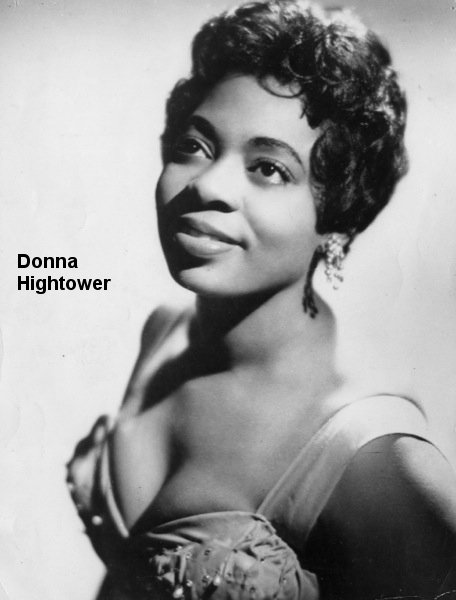
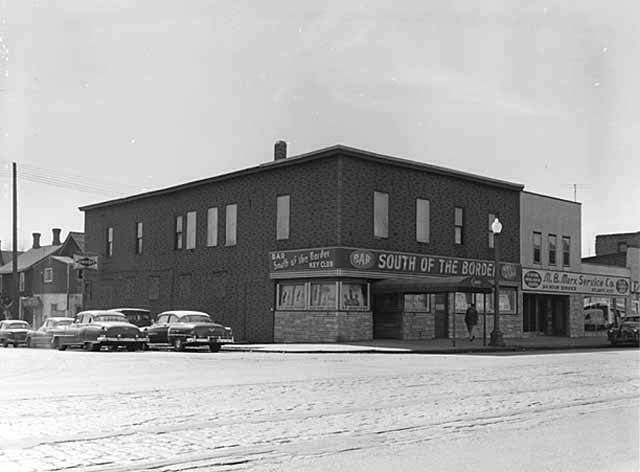


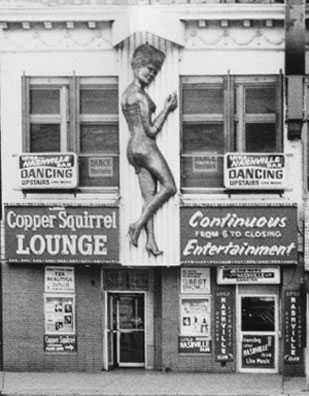


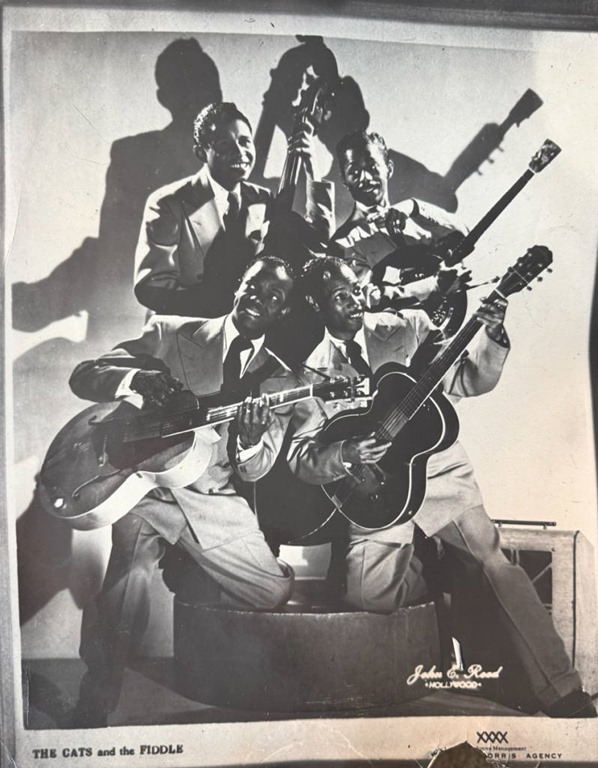

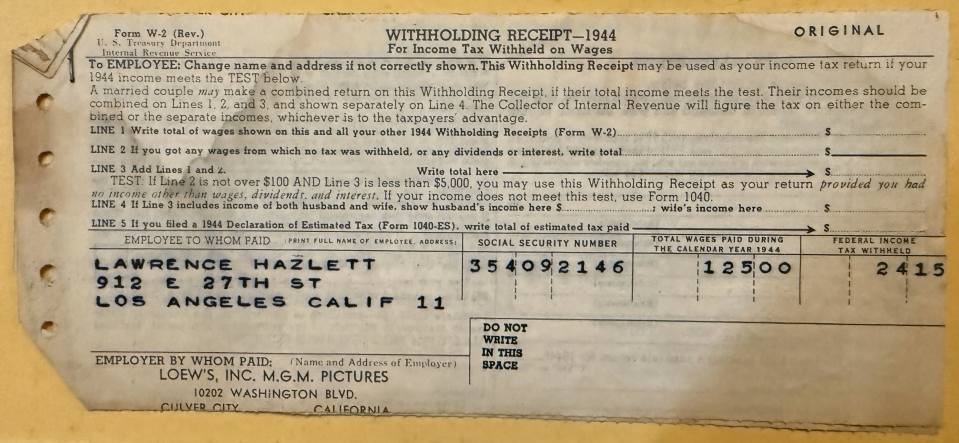


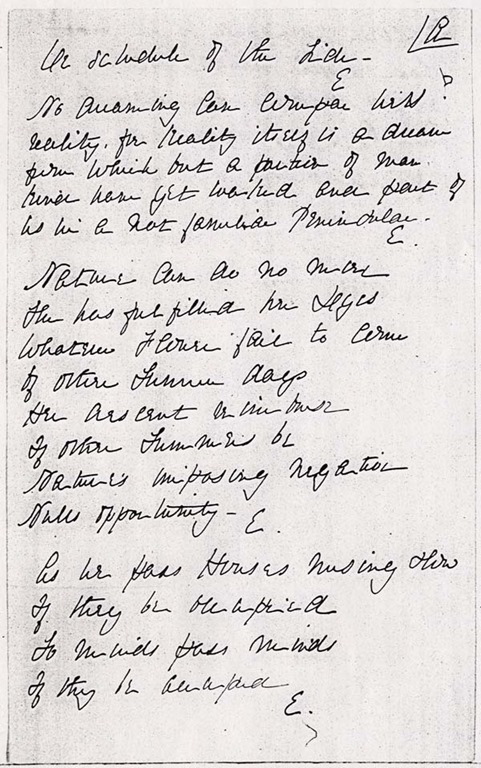

 Frank Hudson