Those cattle smaller than a Bee

It’d be possible to do something like this Project using only the poetry of the great American poet Emily Dickinson. While we’re approaching publishing our 700th piece of original music combined with various words (mostly literary poetry) — there are nearly 1800 poems that Dickinson wrote. That’s a lot of material.

The Parlando Project has featured poets all the way from classical antiquity through the first quarter or so of the 20th century,* and I like to vary moods and poetic approaches in the pieces I set to music here — but Dickinson has enough different modes that just her work alone might suffice for variety. Would I miss some of the freshness I find in early poetic Modernism? A woman of the middle of the 19th century, Dickinson was present in an America that is both like and unlike our present country, but like all poetic geniuses she has the power to make time and place fade in importance. As it happens, I was looking for and reading early 20th century poetry when this poem came across my screen, and I found it as immediately fresh and vivid as one of those newer poems. Dickinson’s poem here uses the title of convenience taken from the poem’s first line: “Those cattle smaller than the Bee,” and you can read the text at this link.  Rather than a grand poem about important life points, specific social conditions, intense feelings, existential issues, or majestic nature, this is a poem about a prosaic insect, the fly. Dickinson starts out very much like a Surrealist here, imagining as if the fly was a useful domestic animal, like a cow or the honey-producing bee, but the poem then goes on describing what could be a bothersome number of flies inside the Dickinson Homestead house.

A herd of houseflies 600

“Well Lavina, I’m thinking I’ll go for prize houseflies at the next town fair.” Surrealism manufactured by the AI art program that claims it’s trained on art work that the artists have been paid for.

.

I may be paying too much attention to detail in this playful poem, but I wondered what kinds of flies she’s observing. The season of winter is mentioned, and houseflies generally lay their eggs inside in colder parts of America to hatch during winter. Since Emily cooked for the family, I can imagine that hatching would not make for a pleasant kitchen. Noting Dickinson’s choice of an unusual word “odiouser” in the poem, that may be what that strong language is about.

The final stanza admits that the chapter of the Transcendentalist book of nature describing the worth and meaning of flies is one that Emily hasn’t yet read. Also note: she chose “remand,” a courtroom term, in that final verse — more evidence that Emily picked up some lawyerly ideas from her male family members’ line of business. The Bee mentioned in the first line is something of an Emily Dickinson touchstone, the word and animal appearing often in her poems. In contrast, the fly is quite rare in Dickinson compared to the bee or the butterfly. There is another Dickinson poem that begins “If you were coming in the fall”  that mentions a housewife brushing away a fly — but by far the most famous fly in Dickinson is inside “I heard a fly buzz when I died,”  one of her strangest and most gothic poems.

I tried to keep the music today reasonably light to go with the mode of today’s poem. You can hear my performance of Dickinson’s “Those cattle smaller than a Bee”  with the audio player below. No player to be seen? This highlighted link will open a new tab with a player then.

.

*I rather like the early Modernist era of poetry, but another reason that I generally cut things off at 1927 is that such works clearly in the public domain are free to modify and use however I wish.

Edward Thomas’ “Song”

1913. 110 years ago. Two people met in England and called each other poets. One of them you might know: Robert Frost. He was almost 40 and hadn’t been making a calling as a poet in America. The other was a British man four years younger who wrote prose furiously as a freelancer for pay, “Burning my candle on three ends” as he described it. That freelancer was Edward Thomas. Some of the freelancer’s work was literary reviews, and unlike American editors and gatekeepers, Thomas admired Frost’s work. Within a year, Frosts first poetry collection, North of Boston, would be published in England and Thomas’ appreciation of Frost’s talent helped make it a success.

A little log-rolling for the work of a nascent poet who just happened to be a friend? Well, Frost’s slim volume included “Mending Wall,” “The Death of the Hired Man,” “The Wood Pile,” “Home Burial,”  andAfter Apple-Picking.”   The evidence says that many readers know these poems over a century later without knowing the man. Friendship aside, Thomas recognized a poet worth consideration.

In looking at some of Thomas’ prose work-for-hire, Frost told Thomas that his close attention, particularly of the book of nature, was the stuff of poetry. Frost also thought Thomas already showed a grasp of musical cadence in his prose writing that was like Frost’s theory of poetic word-music. Neither man was one for high-flown language or trite metaphors — things that were present in much poetry being published then in English. Both men knew the complexity of human acts and emotions. And both men shared something else: they suffered from depression, suffered this in periods of greater or lesser depth.*

Thomas’ hard work as a freelancer was to support his wife and a young family who he loved — but that relationship, that feeling was not simple. He tried to keep some of his demons from his wife to spare her, and while I’m not knowledgeable of all the details, he had at least “emotional affairs” with others which his broadminded wife understood as helpful in keeping Edward Thomas’ spirits up.**

Edward and Helen Thomas

Edward and Helen Thomas. The iconography of a couple with one looking off to the side is inescapable.

.

Within a year of meeting Frost, taking Frost at his word, Thomas began writing poetry. He wrote it just as furiously as his reviews, criticism, or hack work. In his first six months as a new poet Thomas wrote 75 poems. Beyond that quantity, when reading his collected poems I’m struck by how fresh even his early work seems when I read it against most of his British contemporaries. Many of Thomas’ peers of this era knew how to score points technically, and which images and plots would elevate their verse to seem professionally poetic. Thomas (and Frost) don’t seem to care as much for scoring well on the required figures and rules. Even the beginning Thomas’ word-music in English is attractive, his expression rarely seems hampered by a too-tight fitting prosody.

Today’s early piece, which he called simply “Song,”  is an example. Here’s a link to the text if you’d like to read along.  A short lyric that sings off the page should not seem  difficult to do for its reader or listener — but in deed,  it is hard to do. This paradox is a big part of pulling the trick off. Though printed in quatrains, “Song”  is approximately Alexandrines. Rhyme connoisseurs make note that “June/tune” and “sigh/die” have triteness demerits, but the opening pair “beautiful/invincible” delights me. And I believe a somewhat too-common rhyme is forgivable if the matter of the poem is fresh enough.

Without being an expert on Thomas’ life, I’m going to assume this is a poem to his wife. Invincible happiness would build a wall in many relationships with a depressive, yet that difference is acknowledged in the poem, yet accepted. The “She laughs” “I sigh” refrained pairing reinforces this difference. The spoiler cuckoo is a bird known in folklore and folksong as a bird of inconstant love and cuckoldry. Yet the poem says that the couple love each other unto death, as they summarily did in life. In matter, this is one of those rarer love poems that speaks of long-term committed lovers fitting themselves together despite seeming incompatibilities.

The poem’s refraining nature makes it attractive for casting into song, and so that is what I did. I even increased that factor by repeating the 3rd stanza also between the 1st and 2nd verses. I also set my composer-self a limitation in writing the music: to try to effectively use only some of the simplest and most common chord colors in my chord sequence. All major chords, no minors. No suspended chords dropping the third. You can hear how it came out as I perform it as a piano trio with the audio player gadget below. No gadget? This link is an alternative that will open a new tab with an audio player.

.

*Again, I’m no expert on Thomas nor psychology, but the periods of high output and the periods of suicidal depression suggest bipolar.

**Not being overly knowledgeable on the marriage, I can see how some feminist analysis could have different insights and conclusions on this. All my scattered reading says this cluster of friendships was complicated, and that’s enough to give background into why this love poem isn’t one to file in the more common desire thwarted/satiated, muse, heartbreak, or betrayal folders. And yes, Frost’s marriage too had elements of a long-suffering spouse and family tragedy.

Thomas Hardy’s “Transformations”

If you’ve noticed I’ve been gone for a while, I have as well. The last few weeks have had a lot of other things to attend to. Mostly happy things: travel, and work around the teenager’s graduation from high school. Still, I found myself picking up a book from my teetering “plan to read” pile that I thought would be mildly diverting:  Donald Hall’s Old Poets. This book is a hybrid, like one of my favorite books from last year, Lesley Wheeler’s Poetry’s Possible Worlds.*   Like Wheeler’s book, Hall’s book contains some memoir elements mixed with consideration of poets the writer knows, and from there the qualities and connections of poetry and poems with the poets. Hall’s memoir material covers the bildungsroman years, that life era of a few posts about my life I’ve done this spring, while Wheeler’s examines her relationship to her parents and poets well into midlife. The time settings of the two books are different: Wheeler more in this century, Hall centered around the last midcentury.

Here’s something I found striking in Hall’s accounts from his time and place. As an undergraduate he had access to not just his Harvard contemporaries** but to Robert Frost and T. S. Eliot. Since a good portion of Hall and my lives overlap, Hall being only about 20 years older, I found it strange to read that as a 20-year-old he had a series of informal interactions with these two while they were giants in a way that no poet today is. The effect was scarcely less shocking than some SF novel where the author dines and discusses poetic topics with Shakespeare, Milton, Keats, and Whitman. I suspect much of Hall’s access is due to Ivy League effects, whereas I think today’s poetry scene is more decentralized even while being more academic/MFA connected. If I was 20 in 1949, I would have been as likely to repeatedly meet the two great poets as I am to contact them by Ouija board today.

Hall’s book has 6 sections devoted to 7 poets, including ones on Frost and Eliot. Hall’s portrait of the older Frost is particularly vivid and special, while his stories of drinking with Dylan Thomas are less unique.*** Yet, within his Thomas chapter, Hall dives into why Dylan Thomas’s poetic stock fell off by the end of the century. Hall reveals that Thomas himself told him that he had only written about three good poems.**** The one Thomas poem we all think of, the villanelle whose refrain has become memeable, was not one of those three. Thomas and Hall agreed over potent-potables that “Do Not Go Gentle Into That Good Night” was only a skilled attempt to put on Yeats’ coat.

Now to get on to today’s new audio piece. Hall compares one of the poems Thomas thought was one of his best early works unfavorably to a poem by Thomas Hardy, and Hall’s Thomas chapter gives us that Hardy poem, “Transformations”  in full.

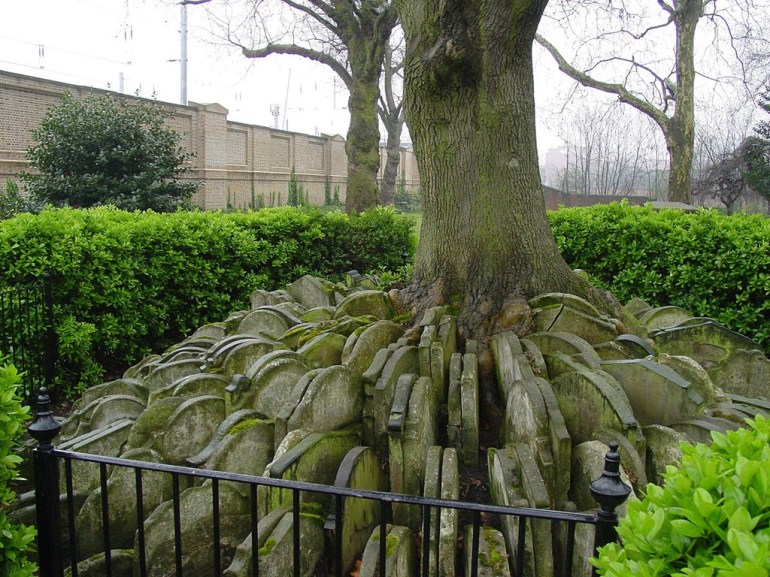
If reading Hall’s book was to be a portable replacement for work on this Project, that Hardy poem was stunning enough to cause me to try to get something composed and performed in the spaces between other things this week. Hardy’s “Transformations” is an account of the experience of a non-spiritual approach to immortality — not to life after death, but life as a thing that only changes form, of which we as people are only incarnations. Here’s a link to the text of this poem.

Hardy himself worked out this method of consolidating a graveyard’s worth of tombstones, and it makes a striking illustration for his poem.

.

Hardy, an Englishman born of the middle of the 19th century drops in but one or two anachronistic words in this poem — but while “grandsire” doesn’t sound natural on a 21st century American’s lips, the gist of this metrical and rhymed poem is easily singable in 2023 I thought. Down went Hall’s book and up went the efficient composer! I whipped up the music quickly. Long time listeners here will know that my music is usually not harmonically complex, but my simple cadences often try to confound the usual chords and progression resolutions. I hope I’ve done that with this one. The time to record the piece was scant, so I went with my go-to “I may have to hop a freight train shortly” folk music standby, the acoustic guitar and overdubbed a quick bass guitar part. You can hear it with an audio player below — or if you can’t see that graphical device, with this backup link that will open a new tab with its own audio player.

.

*Few click hyperlinks, so let me put this in a footnote. Wheeler’s book has these additional reasons to read it beside just being good: its story and poetry is contemporary, and as a writer and a woman Wheeler focuses on elements of our lifetime journeys that other poetic memoirs gloss over. Here’s those hyperlinks: Wheeler’s book. Hall’s book.

**Hall’s Harvard classmates circa 1951 included Frank O’Hara, Robert Bly, Adrienne Rich, Kenneth Koch, John Ashbery, and others. Eliot — and to a trivial extent, Frost — were Harvard alums. My personality, alas, is not socially skilled, but even at my most sociable, my circle of working-class Lake Street poets and state college teachers in my 20s is not as name-dropingly famous.

***It’s possible that everyone even vaguely literary in sundry metropolitan areas around this time had drinking with Dylan Thomas stories, even if Hall’s analysis of Thomas’ poetry is individually savvy.

****In his Eliot chapter Hall says that Eliot said more than once to him that no poet knows if their work is any good. When Eliot said this in an interview Hall did with him that was destined for print in a literary magazine, that statement was cut because it seemed too down-beat.

Emily Dickinson’s Mushroom

It’s been said of poets that they go out into a perfectly good morning only to think of glum existential thoughts. When I read something like that and look at the pieces this Project does, reflection is called forth. That certainly calls out a lot of subject matter I deal with here.

There’s a rebuttal, songwriter Townes Van Zandt said “There’s only two kinds of music: the blues and zippety doo-dah.” Poetry of course is music’s sister muse, but despite Steve Earle’s cowboy boots,* Van Zandt isn’t likely to be recognized as the world’s best songwriter. A dialectic of “blues and zippety doo-dah” risks falsely reducing Blues to a synonym for “sad songs.” One reason that Van Zandt, who was an excellent songwriter, won’t get the World’s Best award is that his songs vary between sad, sadder, and saddest. Doesn’t make them less perfect for what they are, just makes them suitable for certain moods while other songwriters might portray a range of outlooks and characters. I like Townes Van Zandt, I think “Flyin’ Shoes”  is as near a perfect song as ever written, but a playlist of 20 to 30 Van Zandt songs would not carry my attention as well as a similar-length selection of Bob Dylan, B. B. King, Joni Mitchell, or Mose Allison.

An Emily Dickinson playlist would be equally as varied as anyone in that latter quartet. There’s the goth-girl Dickinson, the satirist of religion Dickinson, the legalistic philosopher, the altered-states psychedelic Dickinson, the secret bisexual passion Dickinson, and then there’s the Dickinson I’ll perform today: the botany nerd Dickinson. Part of what makes Dickinson such a fascinating writer is that all those personas talk to each other, seem to know each other.

I’ll not go into thousand-words territory on today’s Dickinson piece — I’ve been too long-winded lately for that. I’m going to treat her poem as a simple delight in the oddities of fungi. I have every reason to estimate that that was Dickinson’s intent, and we can enjoy that intent’s achievement. Here’s a link to the full text of the poem if you’d like to read it. To briefly brag about my restraint, there’s a possible deeper, subconscious, reading of the sporocarp fruiting body — but let’s be done with that. All the other Dickinsons may have been there when this poem was written, but we can simply enjoy one of them today.

Mushroom photo by Heidi Randen (2)

Apostate mushroom, pleased grass, surreptitious summer. Emily Dickinson not pictured.

.

Player gadget below for many of you to hear my performance of Dickinson’s “The Mushroom is the Elf of Plants”  with acoustic guitar, piano, and cello. Backup link for those that can’t see the audio player below.

.

*A famous quote by fellow Texas songwriter Steve Earle was plastered on a Van Zandt album cover: “Townes Van Zandt is the best songwriter in the whole world, and I’ll stand on Bob Dylan’s coffee table in my cowboy boots and say that.” Wikipedia reports Van Zandt had a comeback when asked about that blurb too.